A practical English guide to Asuka in Nara: the Ishibutai tomb, the stone monuments, the ancient capital sites, bicycle rental and access from Nara and Osaka.
Operational details such as opening hours, admission fees, and train times can change. Prefer official pages and reconfirm before you travel (sources checked on 06 November 2026).
Why visit
- Asuka is a village in a valley south of Nara, and it was the centre of Japan in the sixth and seventh centuries, when the court moved from place to place and the first written histories were compiled. The capital moved away in 710, and the area became farmland, which is why the tombs, the temple foundations and the stone monuments have survived in the middle of rice fields.
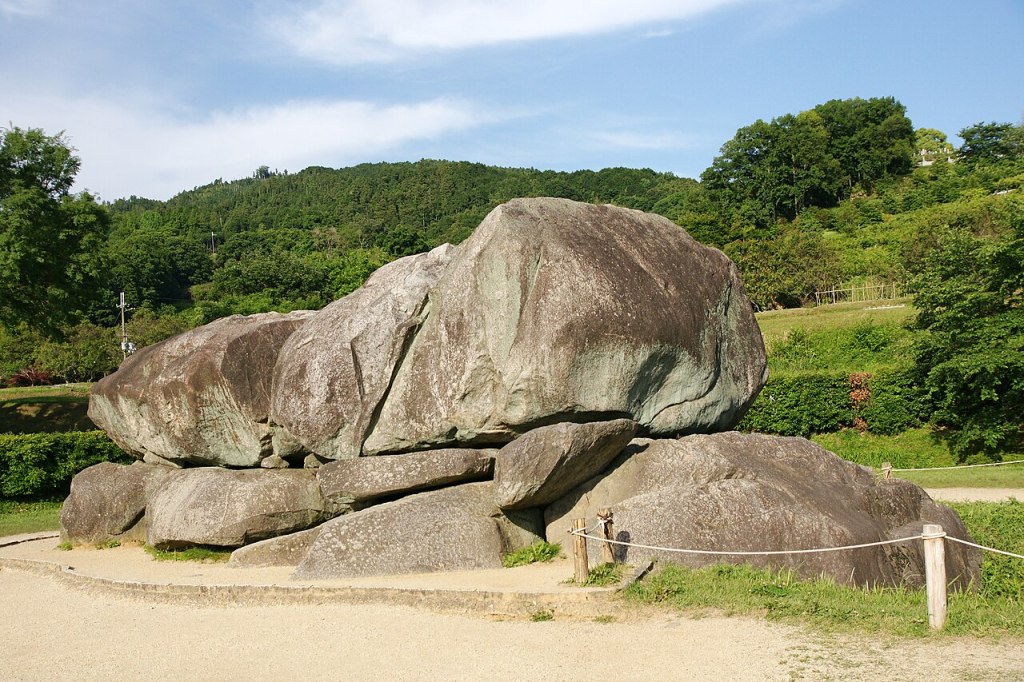
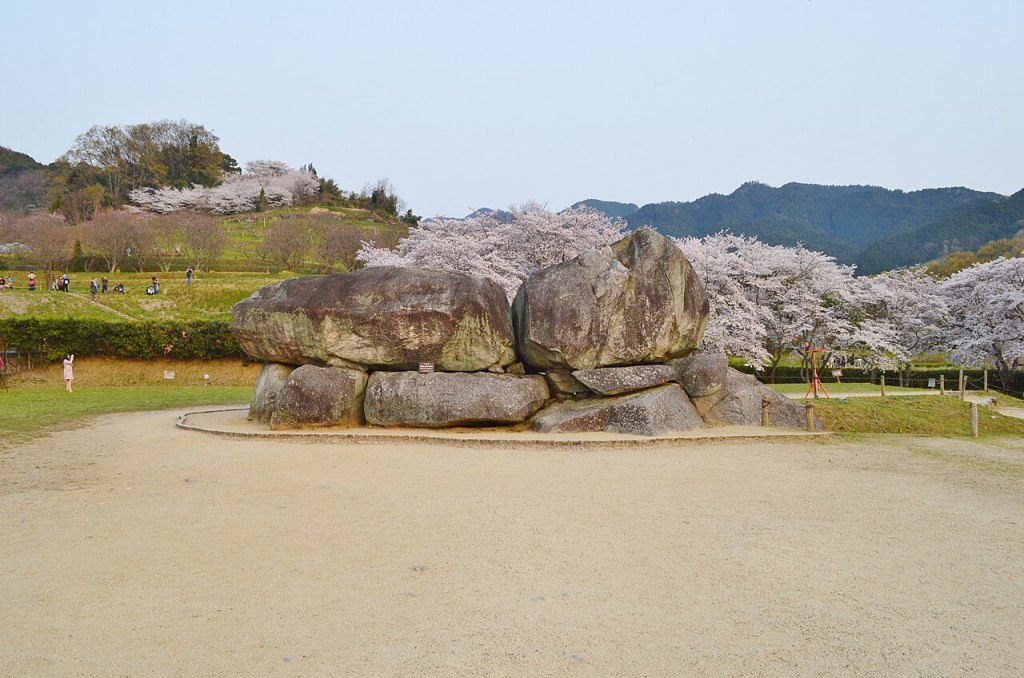
- The most famous monument is the Ishibutai, a burial mound whose stone chamber is exposed, with huge granite slabs forming a room open to the sky. It is one of the largest of its kind in Japan, and it is thought to be the tomb of Soga no Umako, the statesman who dominated the court in the seventh century. The scale of the stones is the attraction.
- The second is the set of mysterious carved stones scattered through the village: the Kameishi, a turtle-shaped stone; the Sakafuneishi, with its strange channels; the Masuda rock, carved with faces. Their purpose is unknown, and the theories range from tombs to irrigation to astronomical markers. Walking or cycling between them is the way to see the valley.
- The third is the landscape itself. The village is a patchwork of rice fields, persimmon trees and low hills, with the tombs rising out of the fields and the mountains behind. It is one of the best places in Japan to cycle, with quiet roads and short distances, and the local rental shops make it easy.
Top places and highlights
The Ishibutai tomb
The stone chamber is open to the sky, with walls and a ceiling made of enormous granite slabs, and the mound around it has eroded away. It is the largest exposed stone chamber in Japan, and the scale is startling in the middle of the fields. There is a small admission charge and a short walk from the road.
The stone monuments
The Kameishi, the Sakafuneishi and the Masuda rock are carved stones of unknown purpose, scattered along the lanes and the fields. They are small and easy to miss, and the local maps mark them. The mystery is the point, and the theories are explained on the signs.
The Asukadera site
The site of Asukadera, one of the first Buddhist temples in Japan, is marked by foundations and a small museum, with the temple’s bronze image preserved nearby. It is a key place in the story of the arrival of Buddhism, and it is quiet and free. The museum has a model of the original layout.
The Takamatsuzuka and Kitora tombs
The two painted tombs have reproductions of their murals in small museums, with the originals preserved in controlled conditions. The paintings show the court dress and the cosmology of the period, and they are among the most important artworks of the era. The sites are a short drive apart.
Cycling the valley
The village is flat and compact, with quiet roads between the tombs and the fields, and bicycle rental shops near the station. A loop of the main sites takes half a day at a slow pace. The roads are shared with farm vehicles, so ride carefully.
The seasonal landscape
The valley is beautiful in every season: blossom and rape flowers in spring, green rice in summer, ripe rice and persimmons in autumn. The low hills and the fields give long views, and the light in the late afternoon is the best. It is a place to walk slowly.
The local food
The village has small restaurants serving the local vegetables, the rice and the somen of the region, along with the persimmon sweets. The food is plain and cheap, and the cafes in converted houses are good for a break. The shops near the station sell the local produce.
Food and drink
- The local rice and vegetables are served in the village restaurants and the farm shops.
- Somen and udon are the standard lunch, with the local style of thin noodles.
- Persimmons and the persimmon sweets are the seasonal speciality.
- The cafes in converted farmhouses serve simple meals and coffee.
- The shops near the station sell the local produce and the rice.
Getting there and around
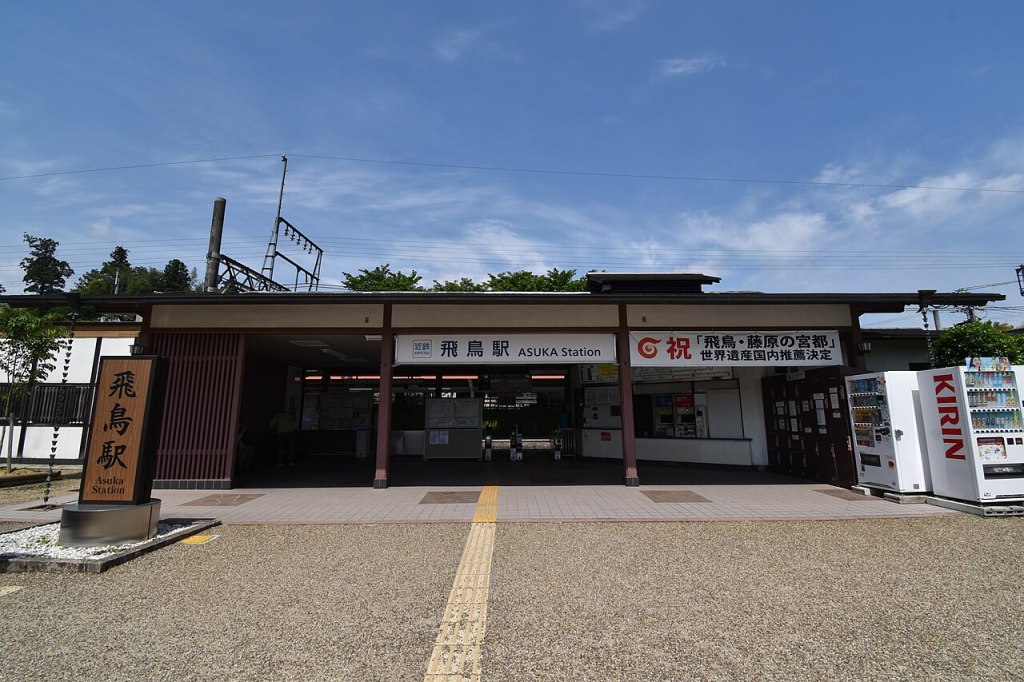
- Asuka is on the Kintetsu Yoshino line, about forty minutes from Nara and an hour from Osaka.
- The station is central, and bicycle rental shops are nearby.
- The main sites are within a few kilometres of the station, and the roads are flat.
- The bus runs to the further tombs and the museums, but the service is limited.
- A bicycle is the best way to see the valley, and a car is useful for the painted tombs.
Where to stay
- A few small inns and guesthouses operate in the village.
- Nara has the larger hotels and is within an hour.
- The farmhouse guesthouses offer meals and a quiet stay.
- Book ahead in spring and autumn, when the valley is popular.
Best time to visit
- Spring is the best season, with blossom and rape flowers in the fields.
- Summer is hot and humid, with the rice fields at their greenest.
- Autumn is clear and cool, with ripe rice and persimmons.
- Winter is cold and quiet, with bare fields and few visitors.
Practical tips
- Rent a bicycle at the station; the valley is flat and the distances are short.
- The stone monuments are easy to miss; use the local map and the signs.
- The Ishibutai and the museums charge small fees and close in the late afternoon.
- The painted tombs need a reservation for the museums in some seasons.
- Carry cash for the small restaurants and the farm shops.
- Wear shoes you can walk in the fields with; the paths are unpaved in places.
Suggested day-trip outline
- Morning: rent a bicycle at the station and ride to the Ishibutai.
- Late morning: the stone monuments and the Asukadera site.
- Lunch: a village restaurant or a farmhouse cafe.
- Afternoon: the Takamatsuzuka and Kitora museums.
- Late afternoon: the fields and the view of the hills.
- Evening: the train back to Nara or Osaka.
Before you go
Timetables, fares, admission fees, and seasonal access rules can change. Check the official tourism and transport sites linked below for the latest information before you travel.
Explore More of Japan
Published guides that pair with this one:
- Shingu Travel Guide: Kumano Hayatama Taisha and the River Road
- Yoshino Guide: Japan’s Most Famous Cherry Blossom Mountain
- Ise Jingu Travel Guide: Naiku, Geku and the Pilgrim Streets of Ise
- Nara Park and Naramachi Travel Guide: Temples, Deer, and Old Town Streets
- Osaka Castle Travel Guide: The Keep, the Park and the Siege That Ended an Era
Browse every Kansai guide on this site for the rest of the region.
Sources
- asukamura.jp (checked 2026-11-06)
- narakko.jp (checked 2026-11-06)


Leave a Reply