A practical English guide to Soja in Okayama: the Kibitsu shrine and its corridor, the hina doll workshops, the old town and access from Okayama city.
Operational details such as opening hours, admission fees, and train times can change. Prefer official pages and reconfirm before you travel (sources checked on 06 November 2026).
Why visit
- Soja is a small city in central Okayama, on the road between Okayama and the Bitchu mountains, and it holds one of the great shrines of western Japan. The Kibitsu shrine is dedicated to Kibitsuhiko no Mikoto, the legendary prince who is said to have subdued the demon of Kibi, and the story is the origin of the Momotaro legend.
- The shrine is famous for its corridor: a long, covered passage of about 400 metres that runs from the main hall down the slope to the gate, with the roof and the pillars forming a single line. The main hall is a National Treasure, built in the distinctive kibitsu style with a hipped thatch roof, and the complex is set in a grove of huge trees.
- The second attraction is the hina doll tradition. Soja was a centre for the production of the dolls used in the Girl’s Festival, and the workshops still make them, with the faces and the costumes produced by hand. The city has a museum and a few shops where you can see the work, and the dolls are sold across Japan.
- The third is the old town and the setting. The city has a small merchant quarter, a few temples and the Asahi river nearby, and the hills of the Kibi plateau rise to the west. It is quiet and ordinary, and it makes an easy half-day from Okayama, especially combined with the nearby Kibitsu shrine and the ruins of the Kinojo castle.
Top places and highlights
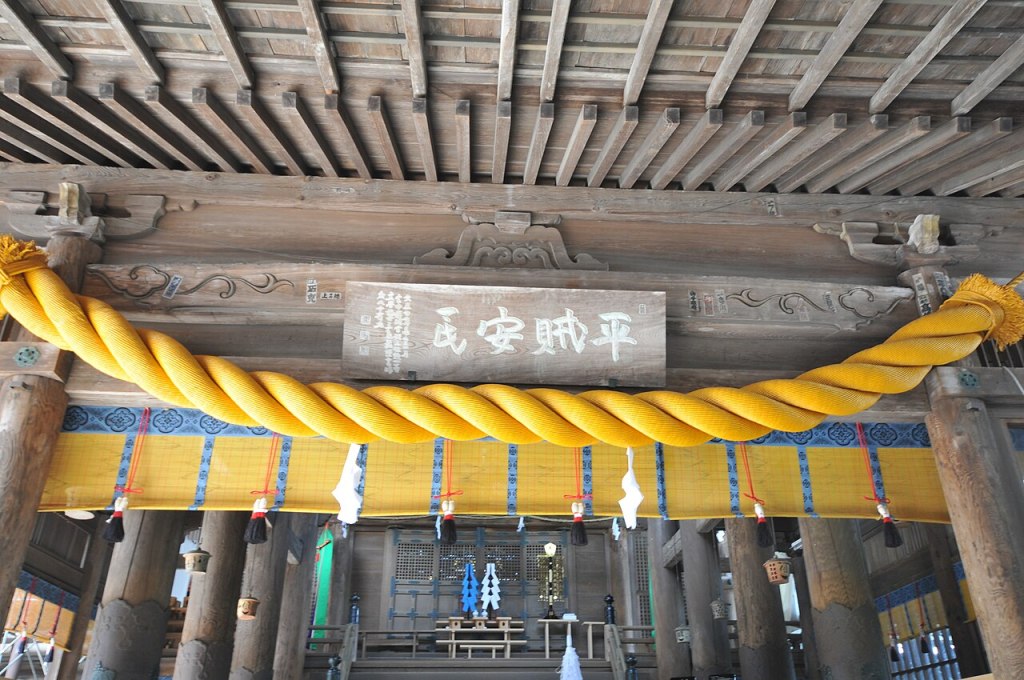
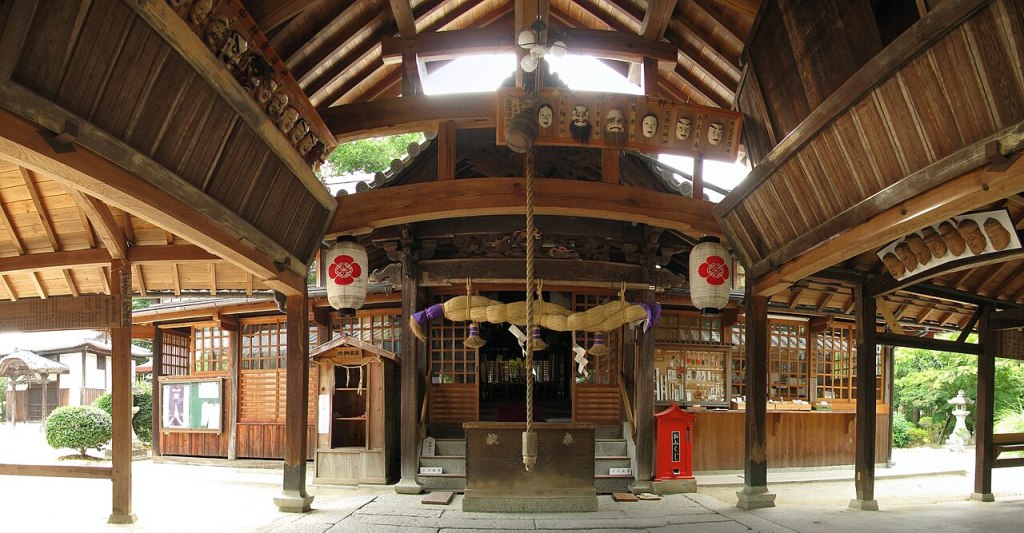
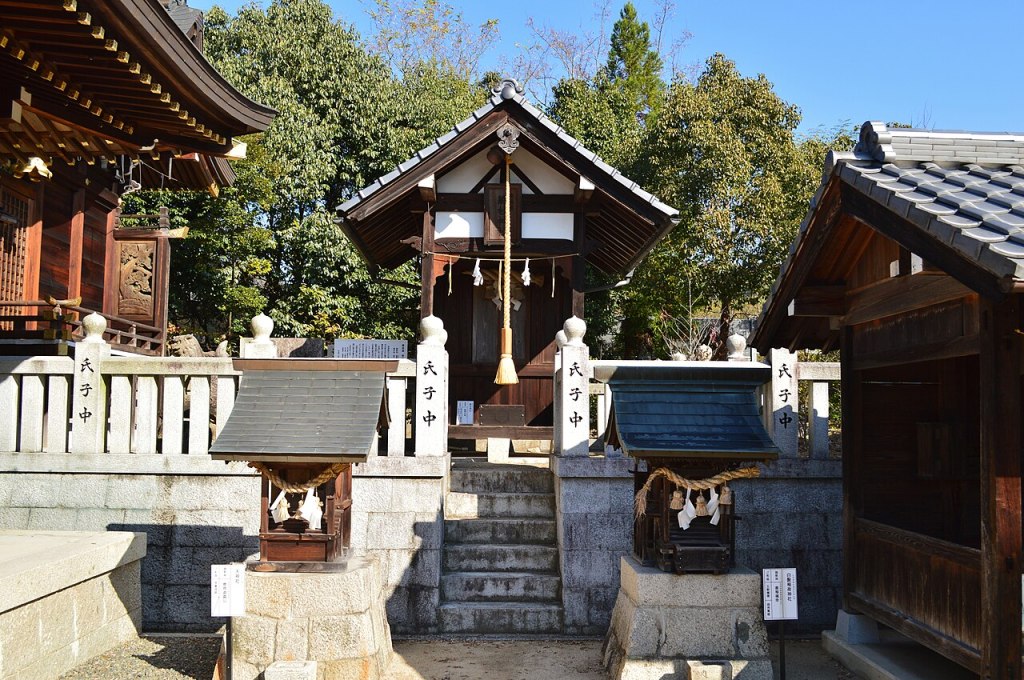
The Kibitsu shrine
The main hall is a National Treasure in the kibitsu style, with a thatched roof and a distinctive layout, and the covered corridor runs down the slope to the gate. The complex is in a grove of old trees, and the atmosphere is old and quiet. It is the main sight in the city.
The corridor
The covered passage is about 400 metres long and runs in a straight line from the hall to the gate, with the pillars and the roof forming a single perspective. It is the most photographed part of the shrine, and it is especially good in the rain. It is a public path, free to walk.
The hina doll workshops
The city has a tradition of making hina dolls, and the workshops still produce the faces and the costumes by hand. The museum shows the process and the history, and the shops sell the finished dolls. It is the craft side of the city and a good contrast with the shrine.
The old merchant quarter
The streets near the shrine have old houses, shops and a few temples, with the white walls and wooden fronts of the Edo merchant style. It is small and lived in, and the walk takes under an hour. The local sweets and the soy sauce shops are the traditional businesses.
The Kinojo castle ruins
The ruins of the mountain castle above Soja are on a ridge to the west, with earthworks, walls and a view over the plain. It is the setting of the Momotaro legend, where the demon was said to have been defeated, and the walk up takes about an hour. The view from the top is the reward.
The Asahi river
The river runs through the city with weirs, bridges and grass banks, and the walk along it is a local route. In spring the blossom and in summer the fireflies are the seasonal sights. It is a calm, ordinary riverside.
The local food
The city is known for its rice, its sake and its sweets, and the restaurants serve the local vegetables and the Bitchu chicken. The hina doll shops sell the traditional confections. The food is plain and cheap, and the portions are generous.
Food and drink
- The local rice and vegetables are served in the restaurants around the shrine and the station.
- Bitchu chicken and the local beef appear in the set meals.
- The sake of the region is soft and dry, sold at the shops.
- The sweets shops sell the traditional confections of the doll town.
- The morning market near the shrine sells produce and prepared food on festival days.
Getting there and around
- Soja is on the JR Hakubi line, about twenty minutes from Okayama station.
- The shrine is a short bus or taxi ride from the station, or a forty-minute walk.
- The old town and the doll museum are within walking distance of the shrine.
- The Kinojo ruins are a drive or a long walk up the ridge.
- A car is useful for the castle and the surrounding area, but the town is walkable.
Where to stay
- A few small inns and guesthouses operate near the station.
- Okayama and Kurashiki have the larger hotels and are within half an hour.
- The shrine area has a simple lodging for pilgrims.
- Book ahead in spring, when the shrine is busy for the New Year and the festivals.
Best time to visit
- Spring is mild, with blossom at the shrine and in the parks.
- Summer is hot and humid, with the fireflies on the river in June.
- Autumn is clear and cool, the best season for the shrine and the castle.
- Winter is cold and quiet, with the shrine at its calmest.
Practical tips
- The shrine is free and open; the corridor is a public path.
- The doll museum is closed on some weekdays; check before visiting.
- The Kinojo climb takes an hour and is steep in places.
- The restaurants are few and close early; eat lunch on time.
- A car or taxi is the easiest way from the station to the shrine.
- Combine the visit with Kurashiki or Okayama on the same line.
Suggested day-trip outline
- Morning: the Kibitsu shrine and the corridor.
- Late morning: the old merchant quarter and the doll museum.
- Lunch: a set meal in the town.
- Afternoon: the Kinojo castle ruins and the view.
- Late afternoon: the riverside walk.
- Evening: back to Okayama or Kurashiki.
Before you go
Timetables, fares, admission fees, and seasonal access rules can change. Check the official tourism and transport sites linked below for the latest information before you travel.
Explore More of Japan
Published guides that pair with this one:
- Inujima Travel Guide: A Seto Art Island Built on Copper
- Okayama City Travel Guide: Momotaro, the Crow Castle and Barazushi
- Takahashi Travel Guide: Raikyu-ji Garden and the Bitchu Castle Town
- Hiruzen Highland Travel Guide: Okayama’s Plateau of Grass and Dairy
- Hofu Travel Guide: Tenmangu Shrine and the Mori Clan
Browse every Chugoku guide on this site for the rest of the region.
Sources
- city.soja.okayama.jp (checked 2026-11-06)
- okayama-kanko.jp (checked 2026-11-06)


Leave a Reply