A practical English guide to Shinjuku in Tokyo: Shinjuku Gyoen, the Metropolitan Government Building observatory, Kabukicho, Omoide Yokocho and how to move around the station.
Operational details such as opening hours, admission fees, and train times can change. Prefer official pages and reconfirm before you travel (sources checked on 06 November 2026).
Why visit
- Shinjuku is the busiest railway station in the world, and the district around it is several different places stacked on top of each other. On the west side are the skyscrapers and the metropolitan government towers; on the east side are the department stores, the old drinking lanes and Kabukicho, the largest entertainment quarter in the country.
- The combination is what makes Shinjuku worth a day rather than a transit stop. You can walk from a formal Japanese garden to a neon canyon in twenty minutes, and the contrast is the attraction. Very little of it is historic in the way that Asakusa is historic, but it is the clearest picture of how Tokyo actually works.
- Shinjuku Gyoen is the exception: a large, formal park that combines a Japanese landscape garden, a French formal garden and an English landscape garden, laid out on the site of a daimyo residence. It is one of the best gardens in Tokyo and the best place to escape the crowds around the station.
- The rest is texture: the observation floors of the Metropolitan Government Building, free and high; the memory lanes of Omoide Yokocho and Golden Gai, tiny bars in wooden buildings; the food halls of the department stores; and the sheer density of the station itself, which is a sight in its own right.
Top places and highlights
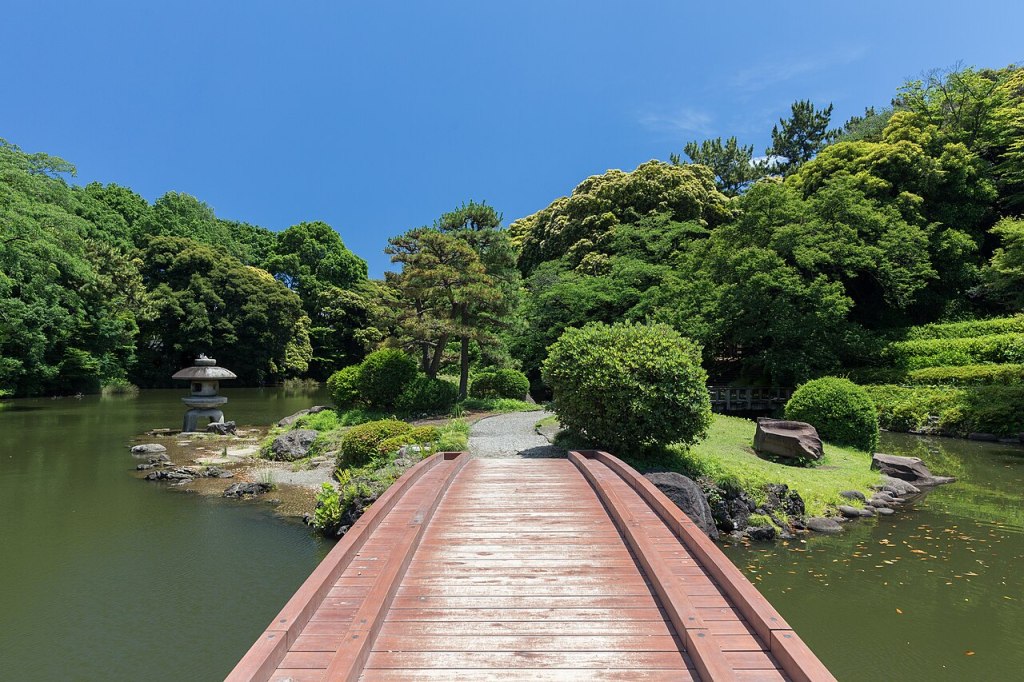
Shinjuku Gyoen
The garden covers a large area north of the station and combines three styles: a Japanese pond garden, a French formal parterre and an English landscape lawn. Cherry blossom in spring and maples in autumn are the peaks, and the garden is big enough to absorb a crowd. There is an admission charge and no alcohol is allowed, which keeps it calm.
The Metropolitan Government Building observatory
The twin towers of the Tokyo Metropolitan Government Building have free observation floors on the 45th storey, with a view over the whole city and, on clear days, Fuji to the west. It is the best free viewpoint in Tokyo, and the queues are shorter than at the paid towers. Check the opening hours, which change by season and by tower.
Kabukicho
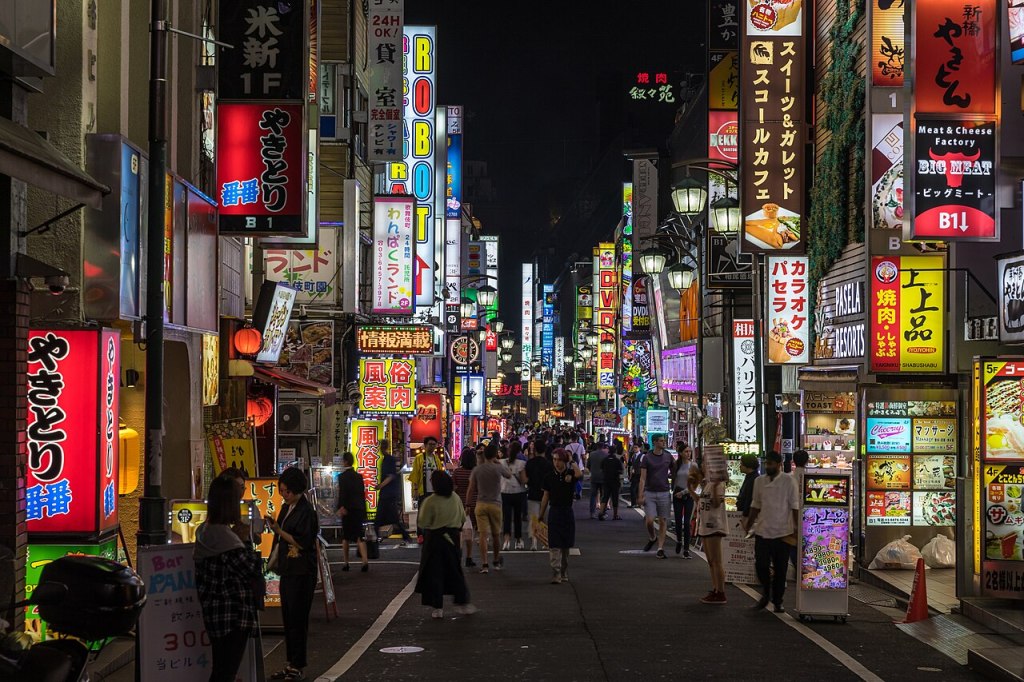
Kabukicho is the entertainment district north-east of the station, a grid of neon, bars, restaurants and clubs. It is loud, commercial and safe to walk in the main streets, though it is not a place for a quiet evening or for families after dark. The Godzilla head above the Toho building is the district’s most photographed landmark.
Omoide Yokocho
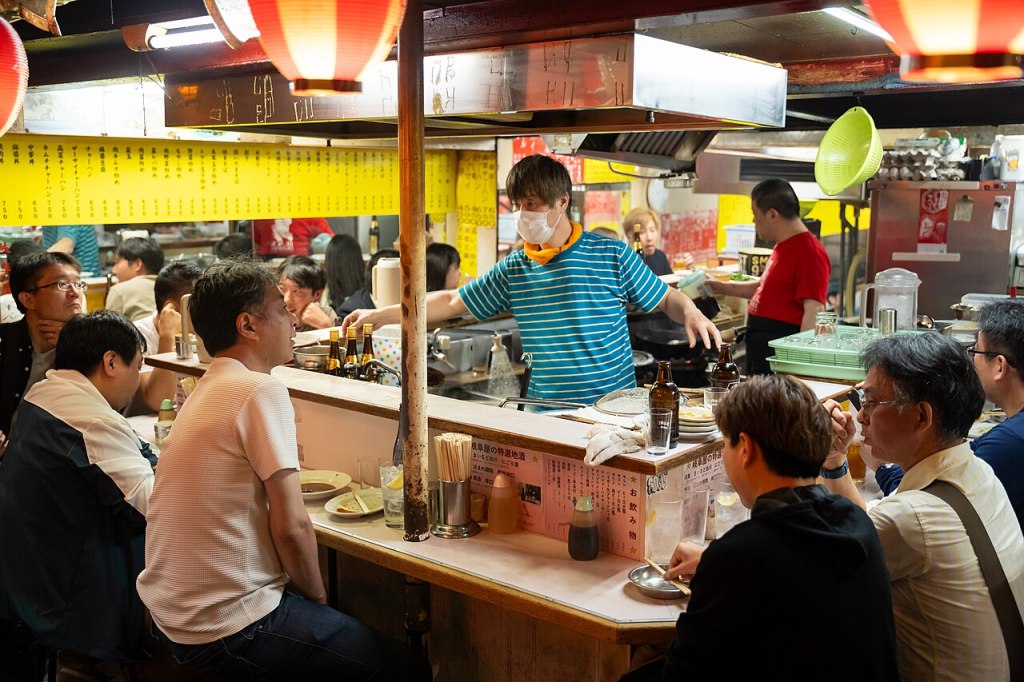
The memory lane is a narrow alley of tiny bars and yakitori counters beside the station, smoky and crowded in the evening. It is atmospheric and inexpensive, and the seats are few, so it works best for a drink and a skewer rather than a full meal. Many places have a seating charge, so ask before sitting down.
Golden Gai
A block of narrow lanes of tiny bars, each with a handful of seats and its own character. Some welcome visitors, some are for regulars and say so. The area is small enough to walk in ten minutes, and the pleasure is in choosing a door and going in. Expect a cover charge at most bars.
The department store food halls
The basements of the big stores on the east side hold food halls of extraordinary range, from prepared meals and sweets to tea, sake and seafood. They are the best place in the district for a picnic or a gift, and the discounts at the end of the day are worth knowing about. The crowds at peak hours are part of the experience.
The station itself
Shinjuku Station handles more passengers than any other in the world, and the network of passages, platforms and exits is genuinely confusing. Getting lost once is part of visiting, but use the numbered exits and the coloured floor markings, and allow extra time for any connection. The east and west sides are connected by a long underground passage.
Food and drink
- Omoide Yokocho serves yakitori, motsuni and beer in tiny counters, and it is the classic Shinjuku meal.
- The department store food halls sell prepared food, sweets and tea at every price level.
- Ramen shops are everywhere, including several well-known ones in the side streets east of the station.
- Korean and Chinese restaurants cluster in the area, reflecting the district’s demography.
- Golden Gai bars often have a cover charge; budget for it when choosing a place.
Getting there and around
- Shinjuku Station is served by the JR Yamanote, Chuo, Sobu and Saikyo lines, the Odakyu and Keio private railways, and the Tokyo Metro Marunouchi and Toei Shinjuku lines.
- The west side of the station leads to the skyscrapers and the Metropolitan Government Building; the east side to Kabukicho and the department stores.
- Shinjuku Gyoen has its own station on the Marunouchi line and is a short walk from Shinjuku-gyoemmae.
- The station is one of the most confusing in Japan; use the numbered exits and allow time.
- Airport limousine buses stop at the west side hotels and at the station.
Where to stay
- Shinjuku has the widest range of hotels in Tokyo, from capsule hotels to international chains.
- The west side is quieter and convenient for the skyscrapers and the airport bus.
- The east side is noisier and better for nightlife, but the streets stay busy late.
- Book well ahead: this is one of the most in-demand areas in the city.
Best time to visit
- Spring is the best season for Shinjuku Gyoen, with cherry blossom from late March.
- Summer is hot and humid, and the evening is the time to be outside.
- Autumn brings colour to the garden and comfortable walking weather.
- Winter is cold and clear, and the illuminated streets are at their most photogenic.
Practical tips
- Use the numbered exits at the station; the letters and numbers are the only reliable way to navigate.
- Shinjuku Gyoen does not allow alcohol and closes in the early evening, so go earlier than you think.
- The government building observatory is free and the view is as good as the paid towers.
- Ask about cover charges in Golden Gai and Omoide Yokocho before sitting down.
- Kabukicho is safe on the main streets but not a family area at night.
- Avoid rush hour with luggage if you can; the platforms are genuinely dangerous at peak.
Suggested day-trip outline
- Morning: Shinjuku Gyoen, entering when it opens.
- Late morning: walk back through the station to the west side.
- Midday: the Metropolitan Government Building observatory.
- Lunch: a department store food hall, or ramen east of the station.
- Afternoon: the east side streets and a coffee in a back lane.
- Evening: Omoide Yokocho for yakitori, then Golden Gai for a drink.
Before you go
Timetables, fares, admission fees, and seasonal access rules can change. Check the official tourism and transport sites linked below for the latest information before you travel.
Explore More of Japan
Published guides that pair with this one:
- Tokyo Travel Guide: Neighborhoods, Transport and a First-Timer’s Plan
- Shibuya Travel Guide: SHIBUYA SKY, Scramble Crossing & Things to Do in Tokyo
- Ashikaga Flower Park Guide: The Wisteria Tunnels and When to Go
- Mount Takao Travel Guide: A Temple Hike on the Edge of Tokyo
- Tokyo Skytree Travel Guide: Tembo Deck, Tickets, and How to Get There
Browse every Kanto guide on this site for the rest of the region.
Sources
- env.go.jp (Shinjuku Gyoen) (checked 2026-11-06)
- gotokyo.org (checked 2026-11-06)


Leave a Reply