A practical English guide to Okayama city: Okayama Castle, Korakuen, the Momotaro legend, the art museum, barazushi and access by Sanyo Shinkansen.
Operational details such as opening hours, admission fees, and train times can change. Prefer official pages and reconfirm before you travel (sources checked on 06 November 2026).
Why visit
- Okayama is the capital of the prefecture and the main city of the eastern Seto Inland Sea, on the Sanyo road between Osaka and Hiroshima. It is a transit city for many travellers, but it has a castle, one of the three great gardens of Japan, a strong local food culture and the Momotaro legend woven through the streets.
- The castle is the black one: Okayama Castle is painted dark on the outside, in contrast to the white Himeji Castle an hour away, and it faces Korakuen across the Asahi river. The two together, castle and garden, are the city’s main sight and the reason to get off the train.
- The city is also the setting of the Momotaro story, the boy born from a peach who goes to defeat the ogres, and the legend is used everywhere from manhole covers to the station forecourt. It is a light, commercial identity, and it suits a city that has always been a crossroads.
- The food is more interesting than the sights: barazushi, a scattered sushi of vegetables and fish over rice, is the local dish, and the city has a good market, a sake tradition and a sweet called kibi dango that appears in the Momotaro story. It is a comfortable city for a night between Osaka and Hiroshima.
Top places and highlights
Okayama Castle
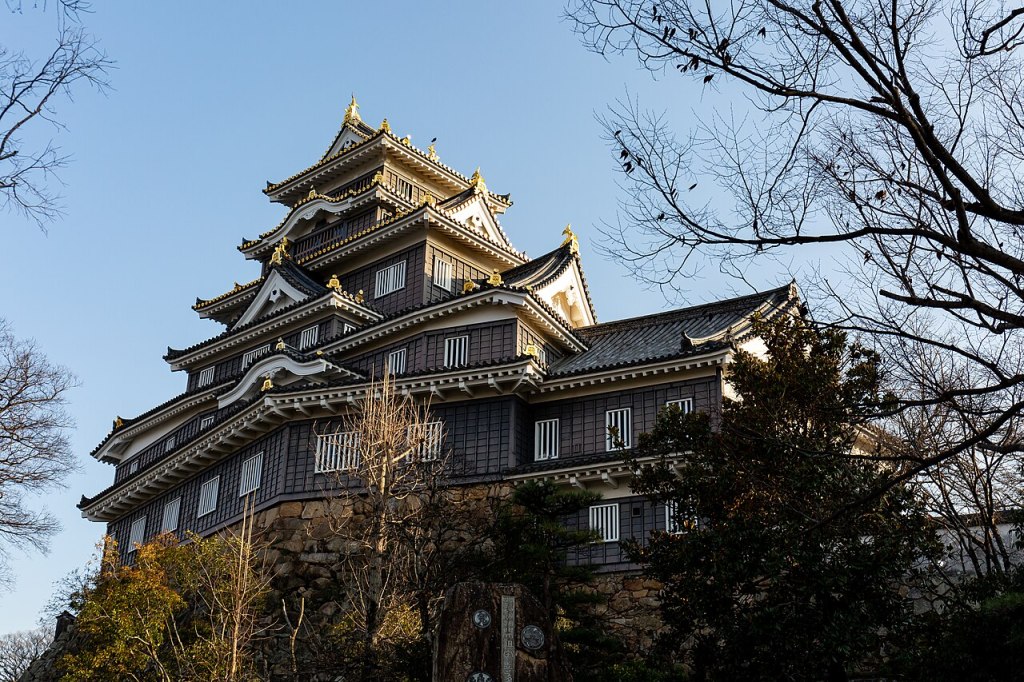
The castle is the black one on the Asahi river, rebuilt in concrete with a museum inside and a view over the roofs and the garden from the top. The exterior is painted dark, which earned it the name of the crow castle, and the contrast with the white Himeji is deliberate in the local imagination. It is a short walk from the station area across the river.
Korakuen
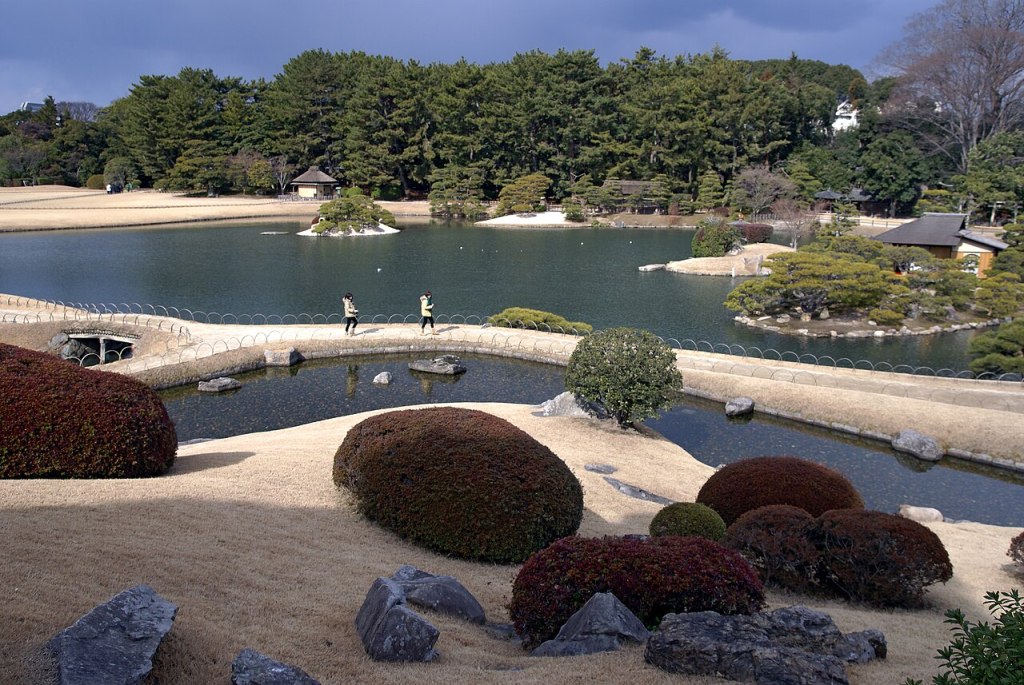
The garden is one of the three great landscape gardens of Japan, laid out in the Edo period on an island in the river, with wide lawns, a pond, tea houses and a view up to the castle. It is open in the evening in some seasons, with lighting, and it is the best place in the city to sit still. There is a separate article on this site for the garden.
The Momotaro legend
The story of the boy from the peach is set here, and the city has made it its mascot: statues at the station, peach-shaped manhole covers and a museum of the story. It is cheerful rather than profound, and it gives the city a way to talk about itself. The Korakuen area has a Momotaro statue and a small museum.
The prefectural art museum
The museum holds Japanese and Western art, with a collection that includes works by artists connected to Okayama and a good print collection. It sits near the castle and the garden, so it fits naturally into a day. It is a calm, modern building and rarely crowded.
The station area and the arcades
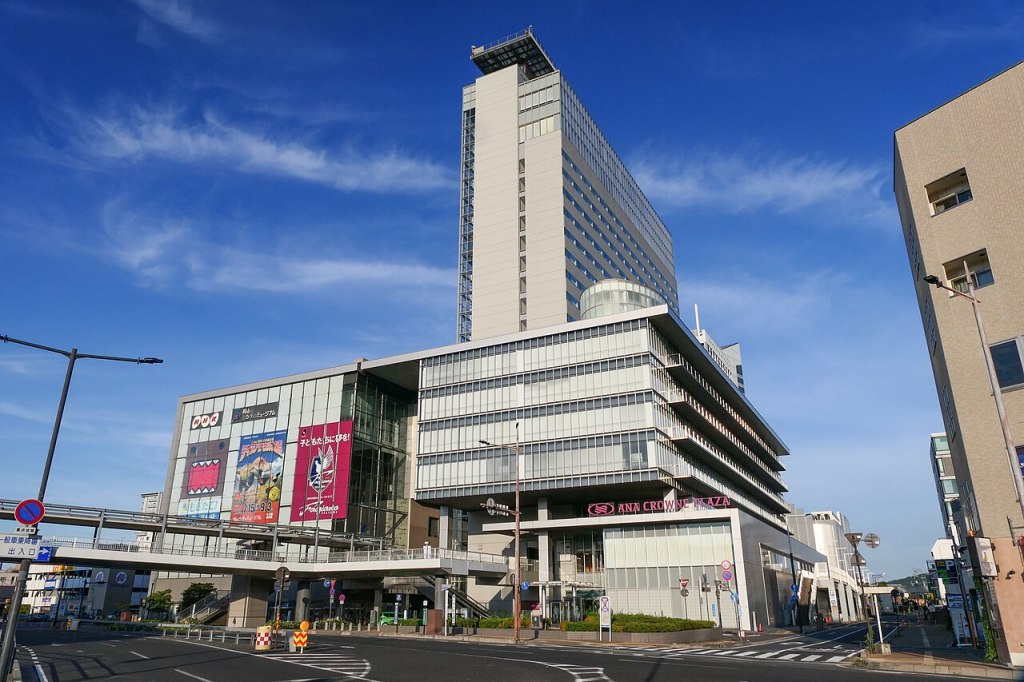
Okayama station is a major shinkansen stop with a large covered plaza, and the arcades run from it into the shopping district. The food streets and the bars are here, and the local specialities are easy to find. It is not beautiful, but it is convenient and lively in the evening.
Barazushi and the market
Barazushi is the local scattered sushi, with vegetables, egg and fish over vinegared rice, and it is served in ordinary restaurants rather than specialists. The central market sells fish from the Seto Inland Sea, and the morning is the time to see it. The local peaches and grapes in summer are among the best in Japan.
The Seto islands
The city faces the Seto Inland Sea, and ferries from the port reach the islands offshore, including the art islands further west. The coast and the bridges are a short train ride away, and they make a natural extension of the city visit. The light on the water in the late afternoon is the best of the day.
Food and drink
- Barazushi is the local scattered sushi, with vegetables, egg and fish over vinegared rice.
- Peaches and grapes from the surrounding orchards are the region’s fruit, in season from summer.
- Kibi dango, the sweet from the Momotaro story, is sold in the shops around the castle and the station.
- Fish from the Seto Inland Sea, including sea bream and octopus, is served in the city’s restaurants.
- The local sake is soft and dry, and the breweries sell bottles that rarely travel far.
Getting there and around
- Okayama Station is on the Sanyo Shinkansen, about an hour from Hiroshima and fifty minutes from Osaka.
- The castle and Korakuen are a twenty-minute walk from the station, or a short tram ride.
- The tram runs from the station through the centre to the castle area, and it is cheap and frequent.
- The Seto islands and the coast are reached by local trains and ferries from the port area.
- Kansai airport and Hiroshima airport are both within reach for international arrivals.
Where to stay
- Hotels cluster around the station and the arcades, with a wide range of business hotels.
- A few ryokan and hotels near Korakuen have views over the garden and the river.
- The islands and the coast have small inns for a quieter stay.
- Book ahead in the peach season and during the Korakuen evening openings.
Best time to visit
- Spring is mild, with blossom in Korakuen and the parks.
- Summer is hot and humid, with peaches and grapes at their best.
- Autumn is clear and dry, the best season for the garden and the islands.
- Winter is mild and quiet, with the garden at its calmest and the castle clear of crowds.
Practical tips
- Korakuen and the castle have separate tickets; a combined ticket is usually available.
- The garden is open in the evening in some seasons, which is the best time to see it.
- The tram is the easiest way between the station and the castle area.
- The market is a morning place, and the restaurants around it close early.
- Okayama is a good overnight stop between Osaka and Hiroshima rather than a destination in itself.
- If you are heading to the art islands, check the ferry times before booking a hotel here.
Suggested day-trip outline
- Morning: the tram to the castle and the museum inside.
- Late morning: Korakuen garden.
- Lunch: barazushi in the centre.
- Afternoon: the prefectural art museum, or the arcades and the market.
- Late afternoon: the riverbank walk between the castle and the garden.
- Evening: dinner near the station, then the shinkansen onwards.
Before you go
Timetables, fares, admission fees, and seasonal access rules can change. Check the official tourism and transport sites linked below for the latest information before you travel.
Explore More of Japan
Published guides that pair with this one:
- Fukuyama Travel Guide: A Castle Town on the Sanyo Road
- Bitchu-Matsuyama Castle Travel Guide: The Mountain Keep above Takahashi
- Okayama Korakuen Travel Guide: A Garden Beside the Castle
- Hiruzen Highland Travel Guide: Okayama’s Plateau of Grass and Dairy
- Inujima Travel Guide: A Seto Art Island Built on Copper
Browse every Chugoku guide on this site for the rest of the region.
Sources
- city.okayama.jp (checked 2026-11-06)
- okayama-kanko.jp (checked 2026-11-06)


Leave a Reply