Kyoto was the capital of Japan for more than a thousand years, and it still behaves like a city with a long memory. There are around 1,600 Buddhist temples and 400 Shinto shrines inside the city, seventeen UNESCO World Heritage components, and a grid of streets that has barely changed since the Heian period. It is also one of the most visited places in the country, and the difference between a wonderful day and a frustrating one is usually timing.
This guide is a planning guide, not a list of everything. It explains how the city is laid out, which area to stay in, how to use the buses and subways without losing an hour a day, a three-day plan that works, the temples that justify the trip, food, seasons and the day trips that make Kyoto a good base.
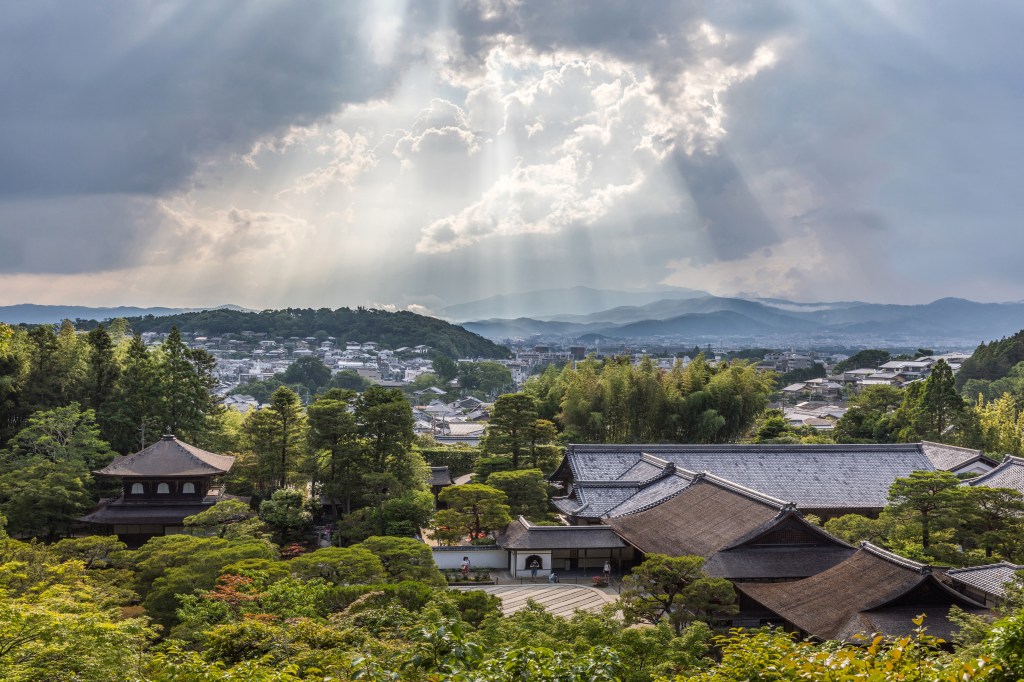
Why Kyoto
Because nowhere else in Japan has this concentration of history in a walkable city. You can see a 17th-century temple hall on stilts, a Zen rock garden, a geiko district and a 400-year-old food market in a single day, and still have time for a bowl of noodles. The city is also small enough to understand quickly: the mountains sit on three sides, the Kamo River runs north to south, and most of the sights are within a few kilometres of the centre.
The trade-off is crowds. Kyoto’s famous sites are famous for a reason, and by mid-morning the main approaches are packed. The solution is not to avoid the city but to move against the flow: early mornings at the big temples, afternoons in the quieter north, and evenings in the lanes where people actually live.
How the city is laid out
Kyoto is a grid, and the names repeat: Karasuma, Kawaramachi, Shijo, Sanjo, Gojo. The Kamo River runs between Kawaramachi and Gion, and the subway Karasuma Line runs north-south under Karasuma Street. Once you know which side of the river you are on, the city is easy.
Central Kyoto is shopping, restaurants and the Nishiki Market, with the Imperial Palace and Nijo Castle to the north-west. Higashiyama, on the east side, is the temple district: Kiyomizu-dera, Sannenzaka, Yasaka Shrine and the lanes of Gion. Arashiyama, in the west, is the bamboo grove, Tenryu-ji and the river. Fushimi, in the south, is Fushimi Inari and the sake district. North Kyoto, around Kinkaku-ji, Ryoan-ji and Daitoku-ji, is quieter and spread out.
A short history
Kyoto became the imperial capital in 794, when Emperor Kanmu moved the court to Heian-kyo, a planned city modelled on Chinese Chang’an. It remained the seat of the emperor until 1868, when the capital moved to Tokyo, and that thousand-year run is why the city has so many temples, shrines and craft traditions. The court, the nobility and the monasteries all left their mark.
The city was not untouched by war. The Onin War of the 15th century destroyed much of the centre, and the fires, earthquakes and rebuilding that followed shaped the Kyoto that exists today. The Meiji Restoration stripped the city of its political role, and it reinvented itself as a centre of education, tourism and traditional industry.
Modern Kyoto is a strange but successful mix. The 1997 Kyoto Station is a glass-and-steel landmark by Hiroshi Hara, the city hosted the climate conference that produced the Kyoto Protocol in the same year, and the historic areas were inscribed by UNESCO in 1994. The old and the new sit next to each other, sometimes awkwardly, and that is part of the city’s character.
Where to stay
Kyoto Station is the most practical base: Shinkansen, airport trains, buses and taxis all meet there, and hotels range from budget to luxury. It is not romantic, but it saves time.
Downtown, around Shijo-Kawaramachi and Karasuma, is the best balance for restaurants, shopping and nightlife, with easy access to Gion and Nishiki Market. It is the area most visitors choose on a second trip.
Higashiyama and Gion are atmospheric and expensive, with lanes, temples and river views. Staying here is lovely, but the streets are busy in the day and quiet at night, and some accommodation is hard to reach with luggage.
Arashiyama suits travellers who want nature and a slower pace, and it is a good base if you plan to explore the west. It is less convenient for the rest of the city.
Book early for spring and autumn, when prices rise sharply. The city also charges a lodging tax that varies by room rate, so check the total before you book.
Getting around
Kyoto has two subway lines, a dense bus network and several private railways. The subway is fast and predictable; the buses go everywhere but are slow and often full. For most visitors, the best strategy is to use the subway for north-south trips, the Keihan or Hankyu lines for east-west and to Osaka, and buses only for short connections or places the rails do not reach.
An IC card works on all of them. There are also one-day subway and bus passes, but do the arithmetic first: if you are making two or three trips, a card is cheaper and simpler. The city asks visitors to avoid the most crowded buses in favour of the subway, especially in peak seasons, and the request is worth following.
Walking is the best way to see Higashiyama, Gion and the central streets. A bicycle is excellent for the flat areas and the river, but not for the temple districts on the hills. Taxis are useful at night or with luggage, and expensive in traffic.
Getting to Kyoto
From Tokyo, the Tokaido Shinkansen takes about two hours and fifteen minutes to Kyoto Station. From Osaka, the JR Special Rapid takes about 30 minutes, and the Hankyu and Keihan lines also connect the two cities, more slowly but often more conveniently. From Kansai International Airport, the Haruka express runs directly to Kyoto Station in about 75 minutes. Overnight buses from Tokyo are cheaper but tiring, and they arrive early, which can be an advantage if you want to start at a temple before check-in.
Kyoto has no airport of its own, so the train is the practical choice. If you are flying into Osaka, go straight to Kyoto rather than staying in Osaka first; the transfer is easy and Kyoto is at its best in the early morning.
A three-day plan
Day 1: Higashiyama
Start at Kiyomizu-dera at opening, walk down Sannenzaka and Ninenzaka, then through Gion to Yasaka Shrine. In the afternoon, continue north to Nanzen-ji and the Philosopher’s Path, and finish at Ginkaku-ji before it closes. Dinner downtown.
Day 2: West and south
Take the early train to Inari for Fushimi Inari, walk to Yotsutsuji and back, then continue to the Fushimi sake district for lunch and a brewery visit. In the afternoon, head to Arashiyama for the bamboo grove and Tenryu-ji, and stay for the river at sunset.
Day 3: North and centre
Start at Kinkaku-ji when it opens, then Ryoan-ji and Daitoku-ji. Return to the centre for Nishiki Market and the Imperial Palace gardens, and finish with a walk along the Kamo River and dinner in Pontocho.
If you have a fourth day, use it for Nara or Uji rather than another district. Both are short train rides and make a full day.
The temples that matter
Kiyomizu-dera is the image of Kyoto: a wooden stage jutting out over the hillside, supported by a framework of pillars and beams, with a view across the city. The temple was founded in 778, and the present main hall was rebuilt in 1633. It is a UNESCO site and the approach through Sannenzaka is part of the experience.
Kinkaku-ji, the Golden Pavilion, was a villa built in 1397 for the shogun Ashikaga Yoshimitsu and later became a Zen temple. The building you see is a 1955 reconstruction after a monk burned the original in 1950. It is gold-leafed, reflected in a pond, and almost always busy; go at opening.
Ginkaku-ji, the Silver Pavilion, was built in 1482 for Yoshimitsu’s grandson Yoshimasa. It was never covered in silver, and its restraint is the point: moss gardens, a sand cone and a quiet hillside. The Philosopher’s Path connects it to Nanzen-ji along a canal, about two kilometres of walking.
Nijo Castle is a Tokugawa shogun’s palace from 1603, with nightingale floors that squeak underfoot as an alarm, painted screens and gardens. It is a UNESCO site and a useful counterpoint to the temples.
Fushimi Inari is the head shrine of the Inari network, with thousands of vermilion gates up a forested hill. It is free and open around the clock, which makes it the best early-morning or late-evening sight in the city.
Arashiyama combines the bamboo grove, Tenryu-ji’s Zen garden and the Katsura River. The grove is free and open all the time, and at 7:00 it is still possible to hear the wind in the bamboo rather than a dozen tour groups.
Daitoku-ji, Ryoan-ji, Toji and Nanzen-ji are the other names worth knowing. Daitoku-ji is a walled complex of Zen sub-temples, Ryoan-ji has the most famous rock garden in Japan, Toji has a five-storey pagoda visible from the bullet train, and Nanzen-ji has a massive wooden gate and an aqueduct.
Gion and geiko culture
Gion is a living geiko district, not a theme park. The lanes around Hanamikoji contain teahouses, restaurants and private residences, and the geiko and maiko who work there are professionals going about their day. Photographing them without permission is rude and, in some lanes, restricted; the city has tightened access to private alleys and asks visitors to respect the signs.
If you want to see the culture properly, book a public performance or a guided experience rather than chasing people in the street. Yasaka Shrine at the eastern end of Shijo Street is free and open, and the lantern-lit lanes in the evening are beautiful without intruding on anyone.
Food
Kyoto’s food is subtle and seasonal: kaiseki, the multi-course haute cuisine; obanzai, the home-style small plates; yudofu, tofu simmered in kombu broth; and Kyoto vegetables, many of them heirloom varieties. Nishiki Market, five blocks under one roof, is the place to graze: pickles, tamagoyaki, mochi, tea and seafood. It is busy by noon, so go early.
For a proper meal, Pontocho’s narrow alley has riverside terraces in summer and tiny counters year-round, and the streets around Shijo-Karasuma have everything from ramen to sushi. Matcha is everywhere, and the tea shops around Uji and central Kyoto are worth a stop. Reservations are essential for kaiseki and for the most popular counters.
Kyoto on a budget
Many of the best experiences are free. Fushimi Inari, the Arashiyama bamboo grove, the Kamo River, Yasaka Shrine, the Imperial Palace gardens and the Philosopher’s Path cost nothing, and walking the Higashiyama lanes is its own attraction. The city’s temples usually charge a small admission, but the amounts are modest and the money goes to the buildings and gardens.
Food can be cheap without being dull. Nishiki Market is better for grazing than for a full meal, and the standing counters, noodle shops and bakeries around Shijo are reliable. Convenience stores are good for breakfast, and department-store basements sell discounted food near closing. Kaiseki is the splurge, and lunch at a kaiseki restaurant is often much cheaper than dinner.
Accommodation is the main cost. Hostels and budget hotels cluster around Kyoto Station and the southern edge of downtown, and they are well connected. Staying a little outside the centre, near a subway station, can cut the price without adding much travel time. Avoid cherry blossom and autumn colour if you are on a tight budget.
Seasons and festivals
Cherry blossom usually peaks in late March to early April, and the city’s temples and riverbanks are at their best then, along with their crowds. Autumn colour runs from mid-November to early December, and the temple gardens are extraordinary. Summer is hot and humid, with the Gion Matsuri through July, including the Yamaboko processions on 17 and 24 July. Winter is cold and quiet, with fewer visitors and clear views.
The other big festivals are Aoi Matsuri on 15 May and Jidai Matsuri on 22 October. All three are worth planning around if you are interested in the city’s ceremonial life, but expect higher prices and full hotels.
Day trips
Nara is 45 minutes away by Kintetsu and offers the Great Buddha, the deer park and a quieter pace. Uji is 20 minutes by JR and is the centre of Japanese matcha, with Byodo-in and the river. Osaka is 30 minutes by train and better for nightlife and food. Kobe is a similar distance for harbour walks and beef. Koyasan, the mountain temple complex, is about two hours and rewards an overnight stay. Kurama and Kibune are 30 minutes north for a forest walk, and Ohara is 50 minutes by bus for the Sanzen-in temple.
All of these are covered in the linked guides below. The general rule is the same as in Tokyo: leave early and choose one place rather than three.
Crowds and how to avoid them
The famous sites are busiest from 10:00 to 15:00. If you visit Kiyomizu-dera, Kinkaku-ji or Fushimi Inari at opening, you will see them in a completely different light. Midday is the time for museums, food markets, a long lunch or a train to a quieter district.
North Kyoto, including Daitoku-ji and the smaller temples around Mount Hiei, receives a fraction of the crowd. Weekdays are calmer than weekends, and January and February are the quietest months apart from New Year. If you are in the city during cherry blossom or autumn colour, book accommodation months ahead and expect the main buses to be full.
Practical tips
- Start at the big temples when they open; the difference is dramatic.
- Use the subway for north-south trips and the private railways for east-west.
- An IC card works on buses, subways and trains; do not buy a pass without checking the maths.
- Wear shoes you can slip off, since some temple buildings require it.
- Carry cash for small temples, shops and market stalls.
- Do not photograph geiko or maiko without permission, and follow the signs in Gion.
- Book kaiseki and popular restaurants ahead, especially in spring and autumn.
- Expect crowds at cherry blossom and autumn colour; plan around them rather than hoping to avoid them.
Before you go
Decide your base by how you want to spend your mornings: Kyoto Station for transport, downtown for restaurants, Higashiyama for atmosphere. Check the opening days of the temples you care about, because some close on certain weekdays or require reservations in peak season. Confirm the dates of the Gion Matsuri, Aoi Matsuri and Jidai Matsuri if you want them, or avoid those weeks if you do not. Bring a small bag for rubbish, cash for small places, and shoes for stone paths and stairs. Kyoto rewards an early start more than any city in Japan, and the hour before the tour buses arrive is worth planning your whole day around.
Sources
- Kyoto City Official Travel Guide: areas, temples and transport (checked 2026-10-26)
- Japan National Tourism Organization: Kyoto and Kansai (checked 2026-10-26)
- UNESCO: Historic Monuments of Ancient Kyoto (checked 2026-10-26)
- Kyoto City: official city information (checked 2026-10-26)
Explore More of Japan
- Kyoto Higashiyama Travel Guide — temples and lanes on the east side
- Arashiyama and Sagano Travel Guide — bamboo, river and Tenryu-ji
- Fushimi Inari Travel Guide — the torii path and the hike
- Fushimi Sake District Travel Guide — breweries along the canal
- Uji Travel Guide — matcha and Byodo-in
- Nara Park and Naramachi Travel Guide — the classic day trip


Leave a Reply