Meiji Jingu and Harajuku sit on opposite sides of the same railway station, and that accident of geography is the reason this is one of the most useful half-days in Tokyo. On the west side is a shrine set inside a 70-hectare forest that was planted by volunteers. On the east side is Takeshita Street, a 350-metre shopping lane that is loud, cheap and constantly changing, and behind it the tree-lined boulevard of Omotesando.
This guide covers both, in the order most people walk them, with the shrine’s monthly opening times, the fees that are actually charged, the gates that do and do not accept cars, and the etiquette that applies at the main sanctuary. Everything that changes, such as hours and admission, is linked to the official page so you can reconfirm before you travel.
Meiji Jingu and Harajuku at a glance
| Item | Detail |
|---|---|
| Shrine address | 1-1 Yoyogi Kamizono-cho, Shibuya-ku, Tokyo 151-8557 |
| Shrine hours | Sunrise to sunset, changing every month (table below) |
| Shrine admission | Free. Open every day of the year |
| Inner Garden | ¥500 contribution for maintenance |
| Meiji Jingu Museum | ¥1,000 adults, ¥900 high school age and younger |
| Time needed | 2 hours for the shrine, 3 to 4 hours with Harajuku |
| Main stations | JR Harajuku, Tokyo Metro Meiji-jingumae, JR Yoyogi |
| Walk from gate to main hall | About 10 minutes from each entrance |
Why the shrine and the street belong together
Most first-time visitors arrive at JR Harajuku, look at the two exits and pick one. The result is either a shrine visit that feels rushed, or a shopping afternoon that leaves out the calmest place in central Tokyo. Doing both is not a compromise; the two are a ten-minute walk apart, and the contrast is the point.
Meiji Jingu is dedicated to Emperor Meiji (1852-1912) and Empress Shoken (1849-1914). The shrine was built after their deaths, and the forest around it was created for the shrine rather than preserved from an older woodland. Harajuku, meanwhile, was a post town on the old road into Tokyo, which is what the characters in its name refer to. The same district that once served travellers now sells crepes to queues of teenagers.
The forest: a hundred-year plan that is now a hundred years old
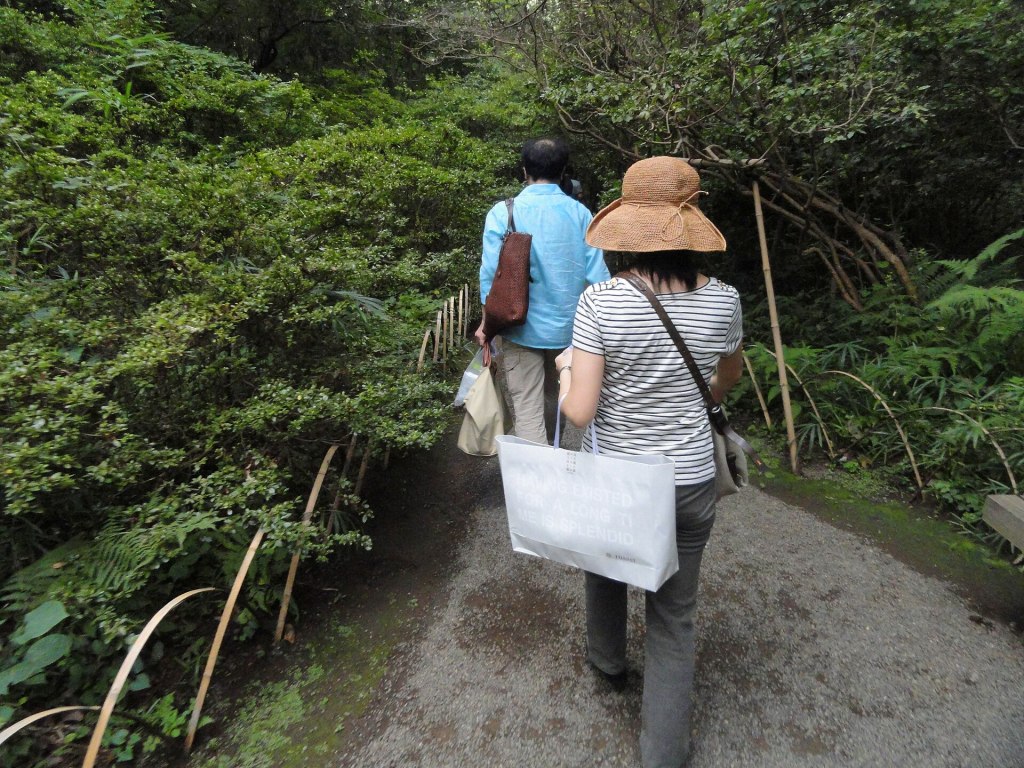
The woodland is the part of Meiji Jingu that surprises people who expect a shrine courtyard. It covers about 70 hectares and contains 234 varieties of trees, all donated from across Japan and planted by around 110,000 volunteers. The plan was led by the botanist Honda Seiroku, who also worked on Hibiya Park, and every tree was chosen for how it would look in 100 or 200 years, not for how it would look on opening day.
Since planting, the forest has been left to manage itself. Nothing is added and nothing is taken away, fallen trees stay where they fall, and the result is a wood that behaves like a natural one despite being entirely artificial. That is also why the paths are wide, flat and gravel-surfaced: this is a forest you can walk in ordinary shoes.
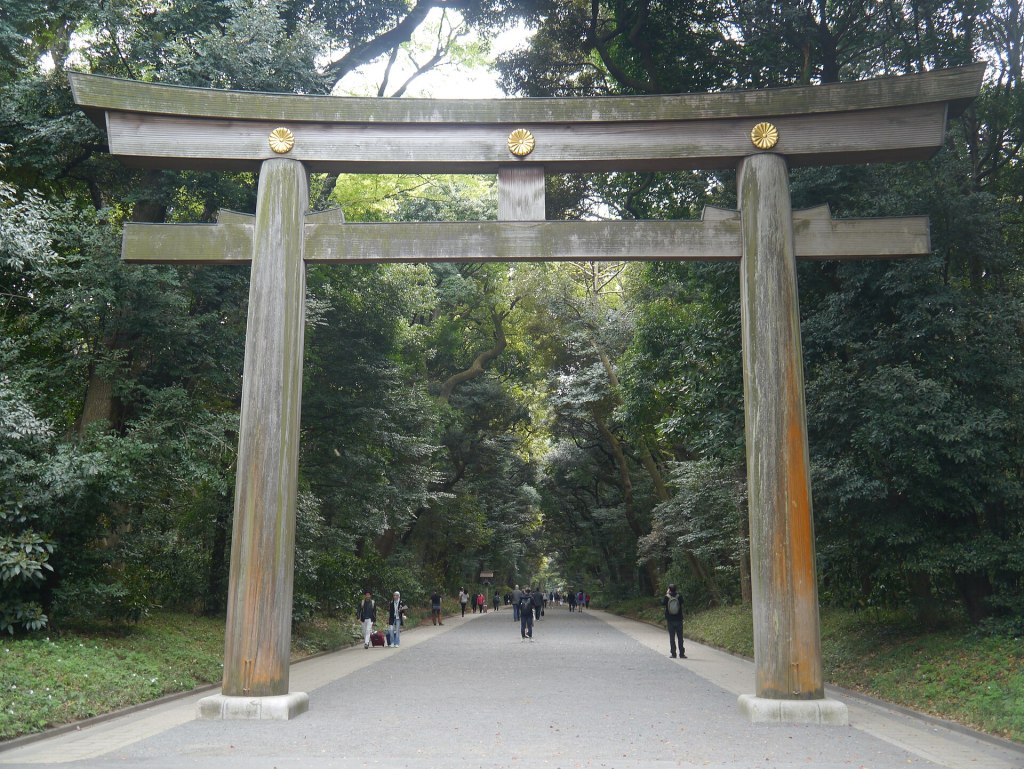
Walking in takes longer than the map suggests. The shrine’s own guidance notes that the times given for each station are only the walk to the shrine entrance, and that the main buildings are a further ten minutes inside. Budget twenty minutes from the train to the main hall and the visit stops feeling like a detour.
Opening hours month by month
The gates open at sunrise and close at sunset, which in practice means the shrine is open from before six in summer and closes before five in winter. These are the official times by month.
| Month | Opens | Closes |
|---|---|---|
| January | 06:40 | 16:20 |
| February | 06:20 | 16:50 |
| March | 05:40 | 17:20 |
| April | 05:10 | 17:50 |
| May | 05:00 | 18:10 |
| June | 05:00 | 18:30 |
| July | 05:00 | 18:20 |
| August | 05:00 | 18:00 |
| September | 05:20 | 17:20 |
| October | 05:40 | 16:40 |
| November | 06:10 | 16:10 |
| December | 06:40 | 16:00 |
Individual facilities inside keep shorter hours, generally around 9:00 to 16:00, so an early start gets you the forest and the main hall before the museum or the amulet office is open. In November the gates close at 16:10, which is earlier than many visitors expect and the single most common reason people miss the shrine on a winter trip.
Walking the shrine grounds
The route from the south gate is straightforward: the great torii, the long gravel approach, a second torii, the sake barrels, the temizuya, and then the main courtyard. Each element has a purpose, and knowing them makes the walk more than a photo stop.
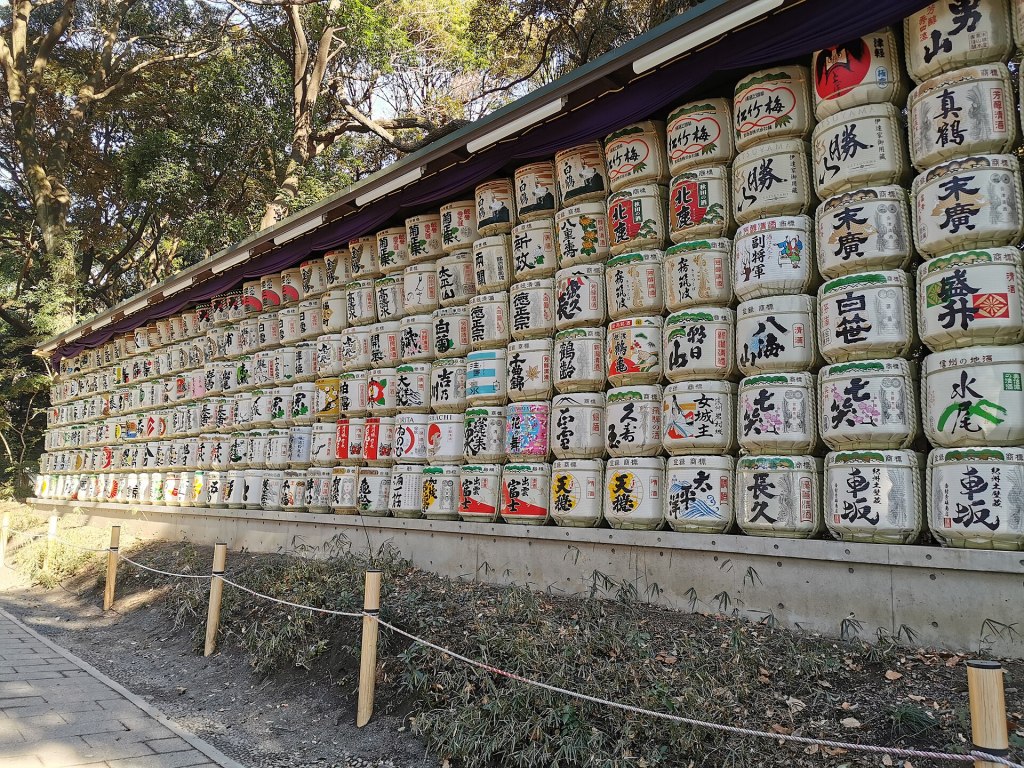
The barrels along the approach are decorative sake casks donated by breweries around Japan, displayed as an offering and as a reminder of the shrine’s connection with the sake industry.
At the temizuya, the purification font, the order is fixed: rinse the left hand, then the right, pour water into the left hand to rinse the mouth, rinse the left hand again, then let the remaining water run down the handle of the dipper. The shrine asks visitors not to put their lips to the dipper and not to throw coins into the water.
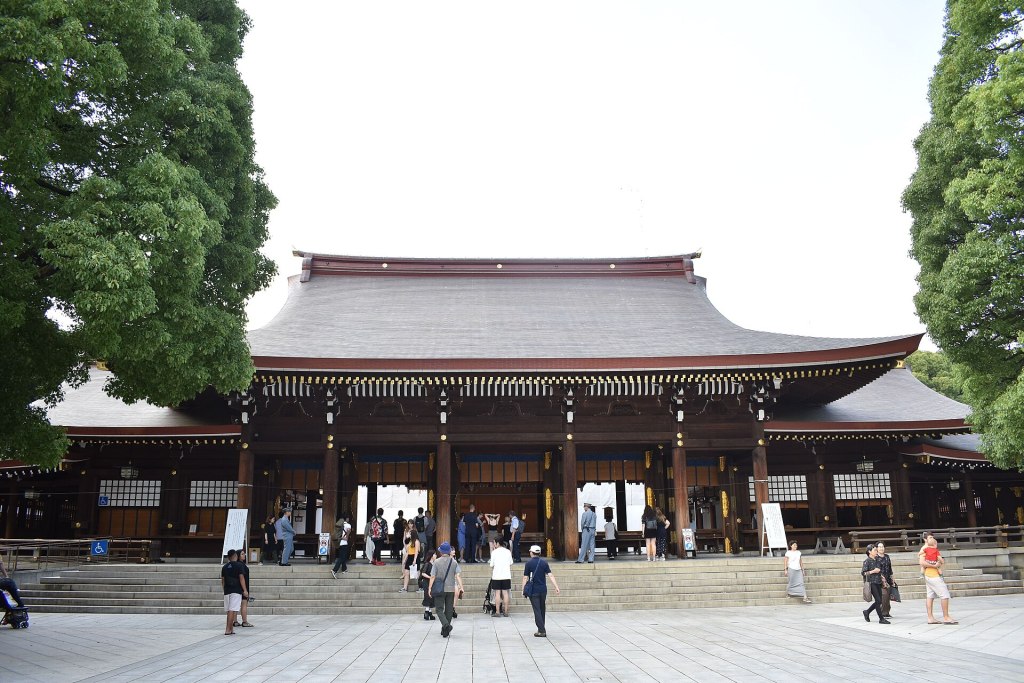
At the main sanctuary the manner is two bows, two claps, a moment with your thoughts, and one more bow. Coins go into the offertory box rather than being thrown. Photography and filming are not allowed close to the main buildings, where people are praying, and drones are prohibited anywhere in the grounds.
The Inner Garden and Kiyomasa’s Well
Behind the main shrine is the Inner Garden, once imperial property and laid out partly at the wish of Empress Shoken. Entry is by a ¥500 contribution towards maintenance, paid at the garden gate. It is a small, quiet, formal garden built around a pond, and it is the part of the visit most people skip.
Two seasons justify the detour. Azaleas colour the garden in spring, and the iris beds are at their best in June. In late autumn the maples around the pond turn, which fits neatly with a shrine visit in the second half of November.
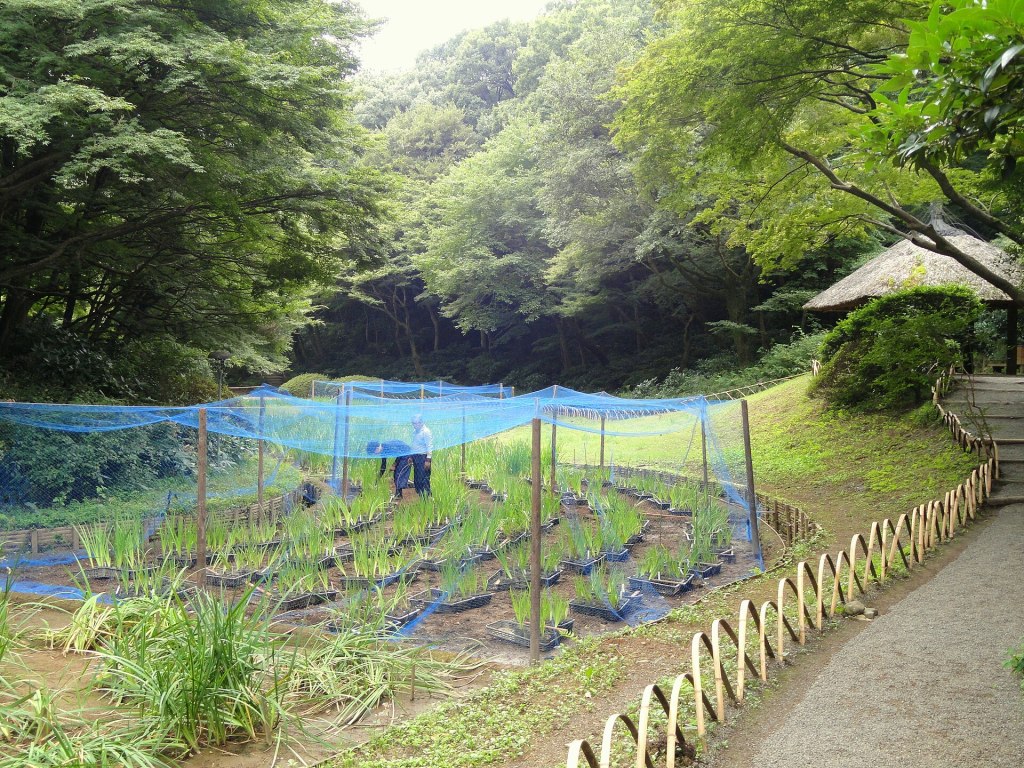
The garden also contains Kiyomasa’s Well, one of the features marked on the shrine’s precinct map, along with the South Pond and the Kaku-un-tei teahouse. It sits in the part of the garden nearest the main shrine, and it is the reason the garden’s name appears in older accounts of the shrine.
The Meiji Jingu Museum and the Treasure Museum
The Meiji Jingu Museum opened in 2019, designed by Kuma Kengo, the architect behind the New National Stadium. It is a low timber building on the north side of the precinct, with about 3,200 square metres of display space over two floors, showing objects used by or connected to Emperor Meiji and Empress Shoken.
Its hours are the ones to remember: 10:00 to 16:30, with last admission at 16:00, and it closes on Thursdays. Admission is ¥1,000 for adults and ¥900 for high school students and younger, and the museum also accepts THE TOKYO PASS. Because the shrine itself is free and open daily, it is easy to arrive after the museum has stopped admitting people.
The older Meiji Jingu Treasure Museum stands in the north part of the precinct, was designated a National Cultural Property in 2011, and is a separate building on the precinct map. If you only have time for one, the 2019 museum is the larger and more conventional visit.
Crossing to Harajuku: Takeshita Street
Leave the shrine by the south gate, cross the road at Harajuku Station, and you are at the entrance to Takeshita Street. The lane is about 350 metres long, starts at the station, and is the densest concentration of youth fashion, crepe shops and photo booths in Tokyo.
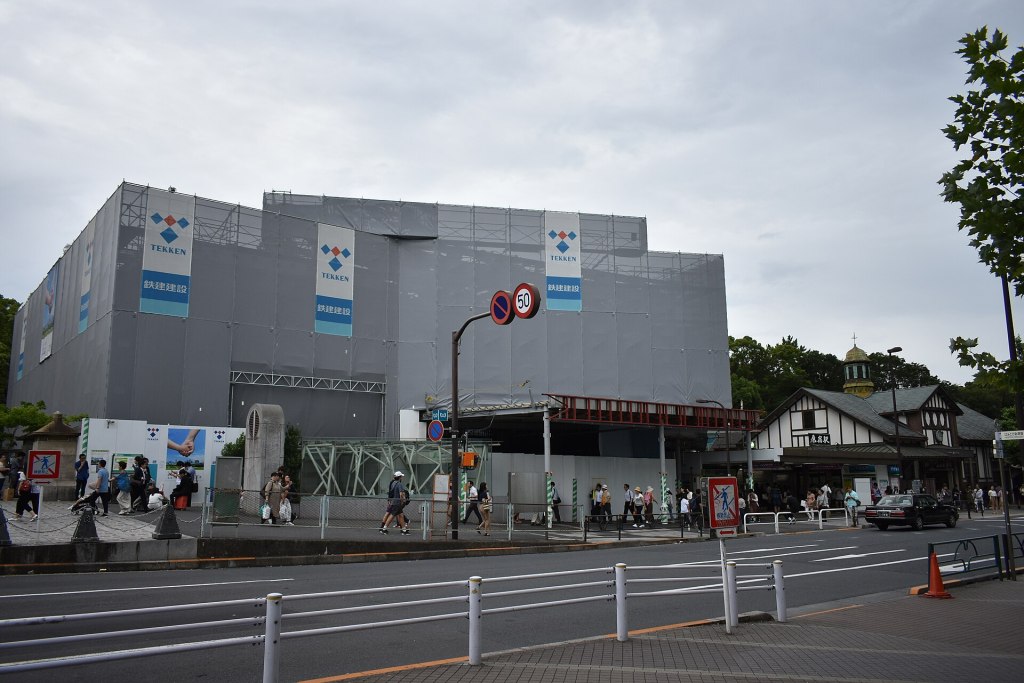
It is pedestrian-only for most of the day. The street association raises bollards between 11:00 and 18:00 to keep vehicles out, and asks walkers to keep to the left while moving through. On weekends and during school holidays the crowd moves slowly enough that the lane can take twenty minutes to walk; on a weekday morning you can have whole stretches to yourself.
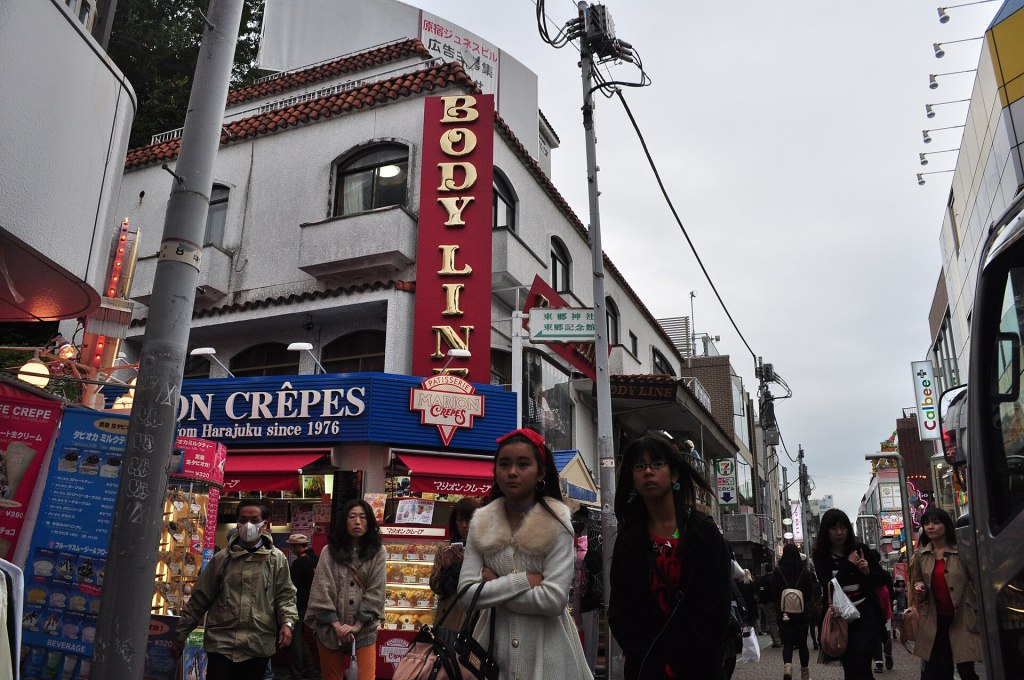
The shops change constantly, so no list survives long. What is stable is the pattern: cheap accessories and second-hand clothing at the station end, crepe stands and takeaway sweets in the middle, and a few long-running character goods stores near the far end. If the main lane is too much, take any side street; the parallel lanes are quieter and have the same mix of small shops.
Omotesando and Cat Street
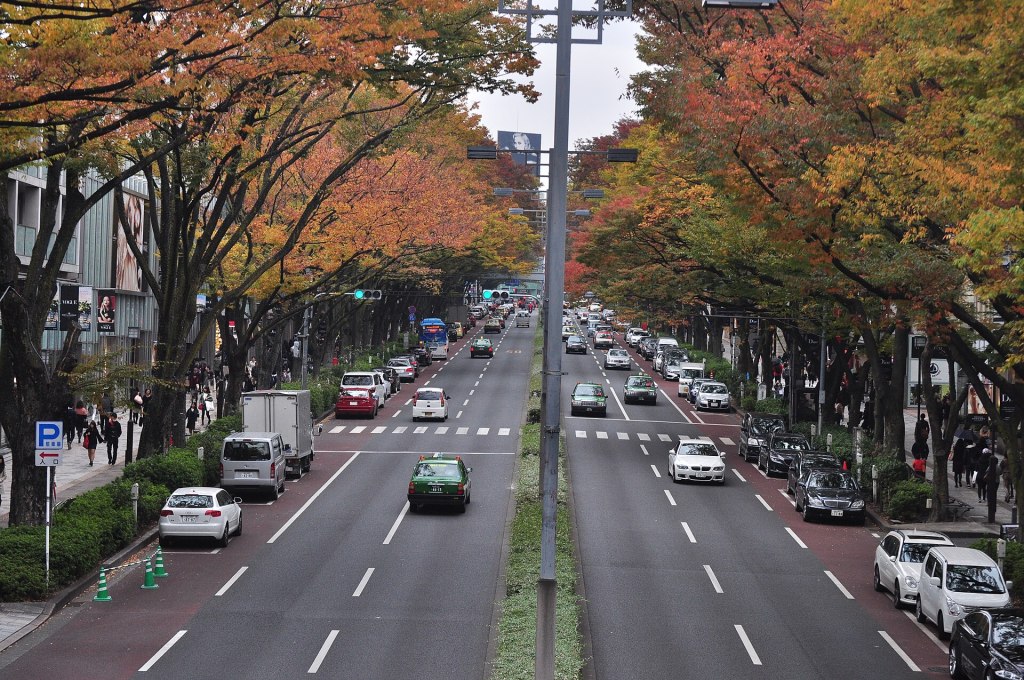
At the far end of Takeshita Street you meet the main road, and beyond it Omotesando, the broad avenue that is also the traditional approach to the shrine. It is lined with mature trees and flagship stores, and it is a completely different kind of shopping: architecture, interiors and coffee rather than crepes.
For a calmer route towards Shibuya, take Cat Street, which runs parallel to Omotesando a block or two south. It is narrower, has more independent and second-hand shops, and leads towards Shibuya rather than into it. Between the two, the side streets off Omotesando hold small galleries and the Aoyama boutiques that rarely appear on a first-timer’s list.
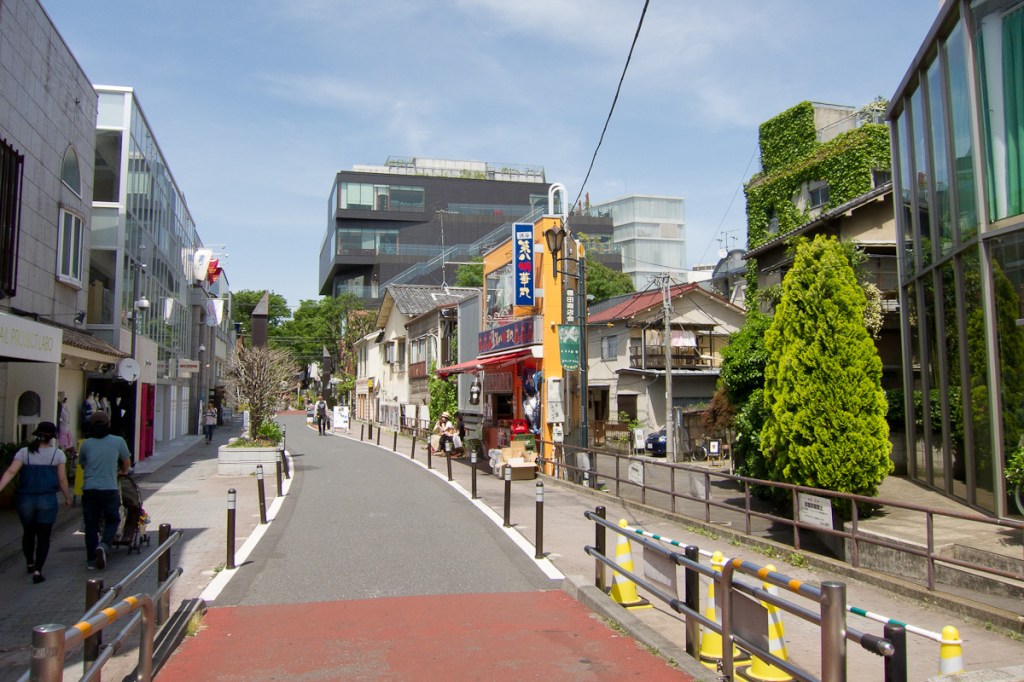
One detail worth knowing: Omotesando is not just a shopping street but the ceremonial approach to Meiji Jingu, marked by large stone lanterns along its length. Walking it from the shrine towards Aoyama is therefore historically the correct direction, not a modern invention.
Yoyogi Park and Meiji Jingu Gaien
Yoyogi Park sits immediately south of the shrine and is free, open at all times, and much less formal. The land has had several lives: army parade ground, then the Washington Heights housing area during the occupation, then the athletes’ village for the 1964 Tokyo Olympics, and finally a public park. Its water features date from a 1991 redesign.
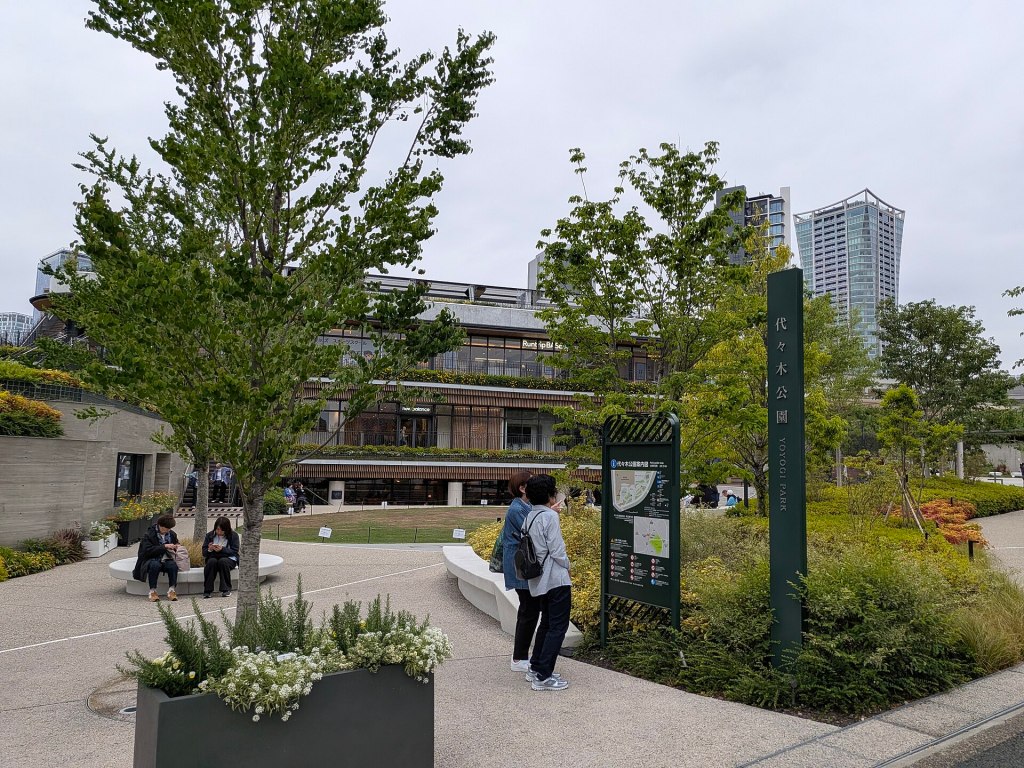
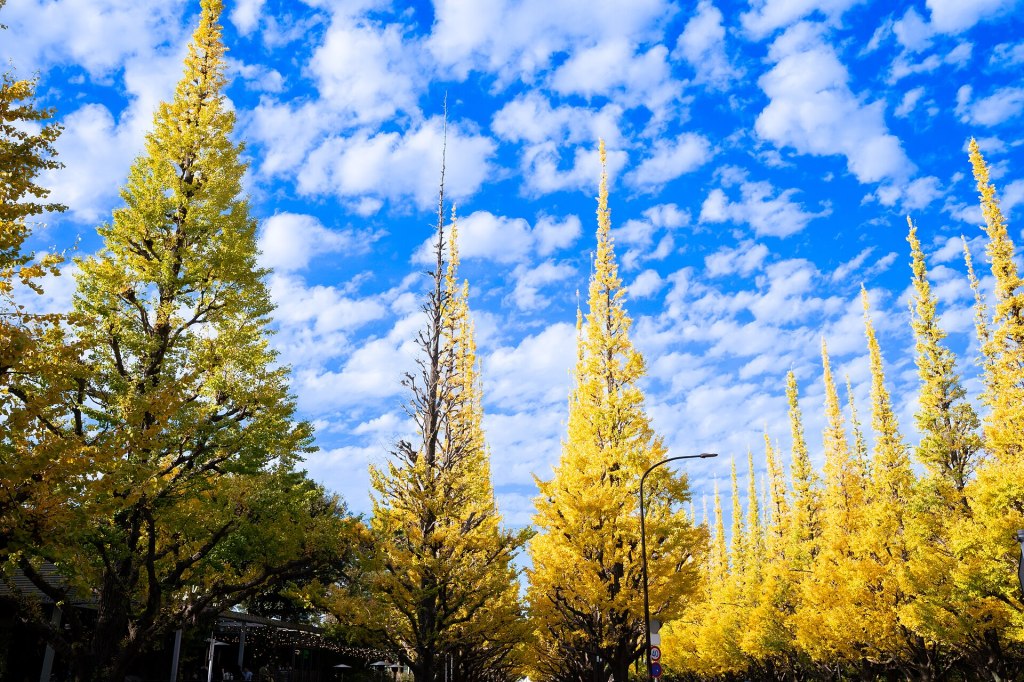
On the other side of the railway, Meiji Jingu Gaien is a separate complex with its own administration, and it is where you find the ginkgo avenue the area is known for. It also holds sports facilities and its own seasonal events. The Gaien is not part of the shrine grounds, so do not expect to walk there through the forest.
Getting there, gate by gate
The shrine has three pedestrian gates, and which one you use changes the walk. The south gate is the busiest and puts you closest to Harajuku. The north gate is quieter and comes out near Yoyogi. The west gate is the smallest and is served by a single small station.
| Gate | Stations | Notes |
|---|---|---|
| Harajuku (south) | JR Harajuku; Tokyo Metro Meiji-jingumae (Chiyoda, Fukutoshin) | Main approach, closest to Takeshita Street |
| Yoyogi (north) | JR Yoyogi; Toei Oedo Yoyogi; Tokyo Metro Kita-sando (Fukutoshin) | Quietest approach, useful from Shinjuku |
| Sangubashi (west) | Odakyu Sangubashi | Small gate, good for a quiet arrival |
Bicycles and motorbikes are not allowed inside the grounds and must be left at the parking areas by the entrances. Cars can only enter from the Yoyogi gate, and the shrine warns that the car park fills and may close; public transport is the intended way to arrive. Wheelchairs are available at the entrance.
Travel times are short because Harajuku sits on the Yamanote loop. From Shinjuku it is about four minutes to Harajuku Station, and from Tokyo Station about 26 minutes. From Haneda Airport the journey is roughly 50 minutes by train, and from Narita about one hour and 40 minutes.
When to go
| Season | What happens | Trade-off |
|---|---|---|
| January | Hatsumode crowds, cold mornings | The busiest week of the shrine’s year |
| Late March to early April | Cherry blossom in Yoyogi Park and the Gaien | Hanami crowds, especially at weekends |
| June | Irises in the Inner Garden | Rainy season, humid |
| July and August | Earliest openings, 05:00 | Heat and humidity by mid-morning |
| Late November | Maples in the garden, ginkgo in the Gaien | Gates close at 16:10 |
The practical rule is to start early whatever the season. The forest is at its best before nine, the approach is empty, and the shrine’s own opening time in summer is early enough that you can be walking back to Harajuku before the shops open at eleven.
A four-hour route that works
| Time | Where | What |
|---|---|---|
| 08:30 | JR Harajuku south exit | Cross to the great torii, start the approach |
| 08:50 | Main courtyard | Sake barrels, temizuya, greeting at the main hall |
| 09:20 | Inner Garden | ¥500 contribution, pond and iris beds |
| 10:00 | Meiji Jingu Museum | Opening hour, two floors, about 45 minutes |
| 11:00 | Takeshita Street | Bollards go up, shops open, walk south |
| 12:00 | Omotesando or Cat Street | Lunch and a slower walk towards Shibuya |
If you only have two hours, cut the museum and the garden and do the shrine and Takeshita Street. If you have a full day, add Yoyogi Park in the morning and finish in Shibuya, which is a twenty-minute walk from Harajuku or one stop on the Yamanote line.
Etiquette on both sides of the station
| Do | Do not |
|---|---|
| Bow twice, clap twice, bow once at the main hall | Photograph or film at the main sanctuary |
| Rinse hands and mouth at the temizuya in order | Put your lips to the dipper or throw coins in the water |
| Stay on the paths through the forest | Take plants, branches or nuts from the forest |
| Eat and drink in designated areas | Fly drones or run and play sport in the grounds |
| Keep left and keep moving on Takeshita Street | Stop in the middle of the lane for photos |
Harajuku adds its own unwritten rules. Many small shops forbid photography, so look for a sign before raising a phone. Staff in Takeshita Street shops generally expect you to move with the flow of the lane, and the street association’s left-hand rule is enforced by signage rather than by staff.
Common mistakes
- Arriving after the museum’s last admission. The museum stops admitting at 16:00 and closes on Thursdays, while the shrine stays open later in summer.
- Assuming the shrine closes late in winter. November closing is 16:10 and December 16:00, both earlier than most people plan for.
- Driving to the south gate. Cars can only enter from the Yoyogi gate, and the car park can fill.
- Treating the forest as a shortcut to Shibuya. The forest ends at the shrine; Yoyogi Park and the Gaien are separate.
- Doing Takeshita Street first. By eleven the lane is at its busiest; the shrine is calmest before nine.
Where to eat
Harajuku is a snack district more than a restaurant district. Crepes are the local cliche and there are several long-standing stands on Takeshita Street, along with takeaway sweets and savoury snacks aimed at people eating while walking. For a sit-down meal, Omotesando and the Aoyama side streets have the wider choice, from cafés to full restaurants, and the side streets off Takeshita Street are quieter than the main lane.
Inside the shrine grounds, eating and drinking are limited to designated areas, so a picnic belongs in Yoyogi Park rather than on the gravel approach. The shrine also runs Forest Terrace Meiji Jingu, a restaurant and shop near the precinct, whose hours are worth checking on the day.
Before you go
Opening times, museum hours, admission and temporary closures can change. Check the official Meiji Jingu pages linked below before you travel, and reconfirm the museum’s Thursday closure if that is the main reason for your visit. Tickets for special exhibitions at the museum are sometimes timed, and the shrine’s own events, such as wedding processions, can close parts of the courtyard for short periods.
This guide is independent. It is not sponsored by the shrine, any shop or any transport operator, and it contains no affiliate links.
Related guides
- Tokyo Travel Guide — the wider city: neighbourhoods, transport and where to base yourself.
- Shibuya Travel Guide — the next station south, and the other observatory in the city.
- Asakusa and Senso-ji Travel Guide — the other great temple district, on the east side.
- Tsukiji Outer Market Guide — an early-morning pairing if you start the day with the shrine.
- Tokyo Skytree Guide — a view over the city after a morning in the forest.
- Enoshima Travel Guide — the coast day trip south of Tokyo.
Explore More of Japan
Published guides that pair with this one:
- Mount Takao Travel Guide: A Temple Hike on the Edge of Tokyo
- Ikaho Onsen Guide: Gunma’s Stone-Step Hot Spring Town
- Nagatoro Guide: The Arakawa River and Saitama’s Stone Town
- Nasu Highland Travel Guide: Onsen, Farms and the Emperor’s Summer Retreat
- Oarai Coast Travel Guide: Seafood, the Aquarium and Ibaraki’s Pacific Edge
Browse every Kanto guide on this site for the rest of the region.
Sources
- Meiji Jingu: opening hours and admission (checked 2026-10-27)
- Meiji Jingu: access and walking times from each station (checked 2026-10-27)
- Meiji Jingu: gates, parking and station list (Japanese) (checked 2026-10-27)
- Meiji Jingu: etiquette and precinct regulations (checked 2026-10-27)
- Meiji Jingu: the forest, its history and 234 tree varieties (checked 2026-10-27)
- Meiji Jingu: Inner Garden, contribution and seasonal flowers (checked 2026-10-27)
- Meiji Jingu Museum: hours, closure day and admission (checked 2026-10-27)
- Meiji Jingu Gaien: the outer garden and its facilities (checked 2026-10-27)
- GO TOKYO: Harajuku area guide and travel times (checked 2026-10-27)
- GO TOKYO: Takeshita Street (checked 2026-10-27)
- GO TOKYO: Aoyama and Omotesando (checked 2026-10-27)
- Takeshita Street official map: pedestrian hours and access (checked 2026-10-27)
- Tokyo Metropolitan Parks: Yoyogi Park (checked 2026-10-27)
- Nezu Museum: collection and garden (official English) (checked 2026-10-27)
Photographs are used under Creative Commons or public domain licences; credits appear in the captions.


Leave a Reply