Plan a trip to the Oga Peninsula in Akita for the Namahage tradition, the coast, and the museum, with access and seasonal notes.
Operational details such as opening hours, admission fees, and train times can change. Prefer official pages and reconfirm before you travel (sources checked on 03 November 2026).
Why visit
- Namahage is the reason most people come to the Oga Peninsula, and it is not a mascot. On New Year’s Eve, men dressed in straw capes and grotesque wooden masks go from house to house in the villages of the peninsula, shouting and demanding to know whether there are any lazy children or crying children in the house, and the household answers on their behalf and offers food and drink. The custom was designated an Important Intangible Folk Cultural Property by the national government, and it is practised rather than performed: the museum exists to explain a living rite that continues in the villages around it.
- The Namahage Museum is the practical way to see the whole thing in one place. It holds more than 150 masks actually used in the rite, displayed together in a single hall, and the effect is not the cute demon of souvenir shops but a wall of carved faces in different regional styles, because each village has its own. There is also a hall explaining the nature and customs of Oga, a theatre showing film of the New Year’s Eve rite on a large screen, and a corner where you can put on a real namahage costume.
- What makes the museum worth the trip rather than a roadside exhibits hall is the building next door. The Oga Shinzan Folklore Museum is an old farmhouse where namahage appear in a scheduled performance several times a day, in a dark room lit by hearth fire, and the performance follows the actual form of the visit rather than a stage show. A combined ticket covers both, and the museum’s own guidance is to allow about 30 minutes for each of the museum, the folklore house and the shrine.
- The setting is a peninsula rather than a town, and that is part of the appeal. Shinzan, where the museum and the folklore house sit, is inland among rice terraces and wooded hills, with the Shinzan Shrine a five-minute walk away up a stone stairway. The coast at Nyudozaki, the aquarium at GAO and the hot spring at Oga Onsen are all on the same loop, so a day here is a landscape as much as a single sight.
- The logistics have improved and they define the trip. The Oga Peninsula share-ride taxi, called the Namahage Shuttle, connects Oga Station with the Shinzan area for 1,100 yen, with GAO at 1,600 and Nyudozaki at 2,500, and it runs on a timetable designed for sightseeing rather than commuting. It is reservation-only by 21:00 the previous day, it accepts one passenger, and it is the difference between needing a car and not. That single service is why this guide is worth writing now rather than ten years ago.
Top places and highlights
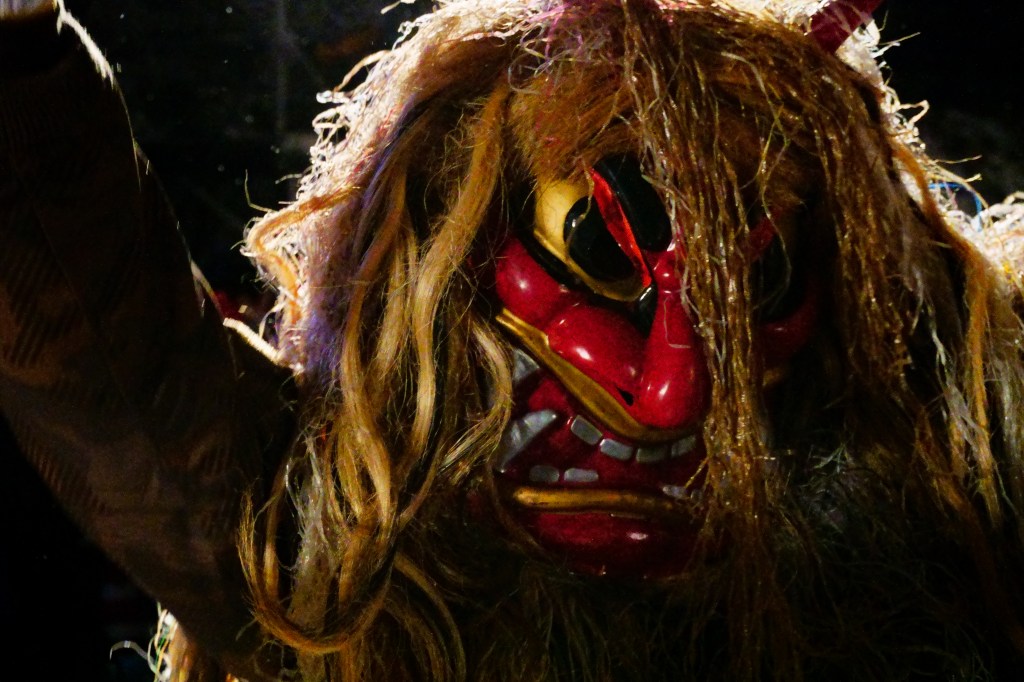
The wall of 150 masks at the Namahage Museum
The museum’s central hall displays more than 150 masks that were actually used in the rite, not replicas, and they are shown together rather than one at a time. Because each village carves its own, the faces differ in horn shape, colour, expression and size, and the accumulation is the point: it turns a single familiar image into evidence of a regional practice with many local versions. This is the sight people come for, and it takes longer than the ten minutes most visitors plan for it.
The namahage performance at the Shinzan Folklore House
The Oga Shinzan Folklore Museum is an old farmhouse next to the Namahage Museum, and its namahage visit is performed in a darkened room with the hearth lit, in the form the rite takes in the villages. It is scheduled rather than continuous, running roughly every 30 minutes from 9:00 to 11:30 and 13:30 to 16:30 from April to November, and six times a day from December to March. The folklore house has a capacity limit, so it can be full; individuals do not need to book, but groups of 15 or more must reserve in advance.
The film of the New Year’s Eve rite
The museum’s tradition hall shows film of the actual 31 December rite on a large screen. This matters because the performance in the folklore house is a scheduled re-enactment, while the film shows the thing itself, in the village, in winter, at night. Seeing both in one visit is what makes the subject legible: the performance gives you the sound and the fear, and the film gives you the context of a community that still does this every year.
The costume corner
You can put on a real namahage costume at the museum, mask and straw cape included. It is a photograph opportunity, and it is also the most direct way to understand how heavy and uncomfortable the outfit is, which is not obvious from watching. It is popular with children and with adults who came expecting to be serious about the subject, and it sits oddly well with the rest of the museum rather than undermining it.
Shinzan Shrine
Shinzan Shrine is about five minutes on foot from the museum and the folklore house, at the top of a stone stairway, and it is where the namahage of the Shinzan area are connected to the shrine’s deities. The museum’s own guidance allots about 30 minutes to it, which is generous for the building and about right for the climb and the view. It is the part of the visit that places the custom in Shinto practice rather than only in folklore.
Nyudozaki and the Sea of Japan
Nyudozaki is the cape at the western tip of the peninsula, with a lighthouse on the grass above the sea and a view out over the Japan Sea that is unobstructed in every direction. The Godzilla Rock, a formation that reads as the profile of the monster at sunset, is nearby and has become the peninsula’s most photographed natural sight. The shuttle runs directly from the station to Nyudozaki for 2,500 yen, and it is the natural end point of a day on the peninsula.
Oga Aquarium GAO
GAO is the peninsula’s aquarium, focused on the Sea of Japan and on the cold northern water rather than on tropical displays. Admission is 1,300 yen for adults and 500 yen for elementary and junior high students, with preschool children free, and there is a discount for visitors with a disability certificate. It is the obvious stop for families and the natural pairing with Nyudozaki, since the shuttle connects the two directly for 1,100 yen.
Food and drink
- The local fish is hatahata, the sandfish that comes to the Oga coast in winter, and it is eaten in several forms: grilled, as the fish sauce shottsuru that is made from it, and in the hotpot called shottsuru nabe. The sauce is a fermented fish sauce with a strong, savoury character, and it turns up in ramen and in hotpot in the restaurants around the peninsula rather than in the museum cafe.
- Oga Onsen has inns that serve kaiseki meals built around local fish, and staying there is the way to eat properly in the area. The town is small and the restaurants outside the inns are few, so anyone not staying overnight should plan on eating near Oga Station or in Akita before coming out.
- The area around the Namahage Museum has a small number of soba and set meal places, and they keep the hours of a rural sightseeing area rather than a city. The museum itself has a shop rather than a restaurant, so food is a separate part of the plan, and the realistic advice is to eat before arriving or after returning to the station.
- Akita city, about an hour away by train, is where the region’s food is easiest to eat well: kiritanpo hotpot, the local sake, and the rice that the prefecture is known for. Treating Oga as a day out from Akita and eating dinner in the city is the efficient arrangement for a short trip.
Getting there and around
- The train goes to Oga Station on the JR Oga Line from Akita, taking just under an hour. From the station, the Namahage Shuttle, a reservation-only share-ride taxi operated for sightseeing, connects to the Shinzan area where the museum, the folklore house and the shrine are, and continues to Oga Onsen, GAO and Nyudozaki.
- The shuttle fares run from 1,100 yen for the Shinzan area, 1,300 for Kanmanji, 1,500 for Oga Onsen, 1,600 for GAO and 2,500 for Nyudozaki from Oga Station, with 1,100 yen between the intermediate stops on the peninsula. Elementary school children pay half and preschool children ride free, and payment is by cash, credit card or Suica on board.
- The shuttle must be reserved by 21:00 the day before online, or by 17:00 by phone through the Oga City Tourism Association. It runs with a single passenger, it is shared with other travellers, and the vehicle size changes with the number booked. The timetable is set around the sights rather than around commuting, which is exactly why it works for a day trip without a car.
- By car, the museum is in Kitaura Shinzan in the northern part of the peninsula, and the museum directs private cars to its second or third car park rather than the first, with the third being the larger and easier of the two. Navigating to the car park by name rather than to the museum is the museum’s own advice, and it saves a wrong turn on the narrow approach.
- The peninsula is compact but the roads are slow, and the distances between the museum, GAO and Nyudozaki look shorter on a map than they drive. Anyone with a car should still count on a full day to see the museum, the folklore house, the shrine, the aquarium and the cape, and should fill the tank before leaving the city because the peninsula has few petrol stations.
Where to stay
- Oga Onsen is the place to stay, a small hot spring town on the peninsula with inns that serve local fish and shottsuru dishes. It puts the museum and the cape within reach and gives the evening a purpose, which matters in an area with little nightlife.
- Oga Station has a few business hotels and is the practical base for anyone arriving late or leaving early, with the shuttle departing from the station. It is not scenic, but it is the transport hub and the place with the most reliable food.
- Akita city is the alternative for a short trip, about an hour away by train, with the full range of hotels and restaurants. It makes Oga a day out rather than a stay, and for a two-night trip to the prefecture it is the more comfortable base.
Best time to visit
- Winter is when namahage actually happens, with the rite performed in the villages on 31 December, and it is the season with the strongest claim on a visitor’s attention. The trade is heavy snow on the peninsula, slow roads, and a museum performance schedule reduced to six shows a day from December to March. Anyone wanting the real thing should look at how the villages open their rites to visitors rather than assuming the museum is the event.
- Spring to autumn is the practical season, with the full performance schedule every 30 minutes through the day from April to November and the coast at its most accessible. Summer brings the green rice terraces around Shinzan and the best conditions for Nyudozaki, and it is the season when the shuttle timetable is at its fullest.
- The hydrangea season at Kanmanji, usually in late June and July, is the one time the peninsula sees a surge of visitors for something other than namahage, and the shuttle adds a stop there during that period only. It is worth knowing about if you are travelling in early summer, and worth avoiding if you want the museum quiet.
- Autumn is the quiet, comfortable season: the rice is cut, the sea is still warm, and the museum and folklore house run their full schedule without summer crowds. The light at Nyudozaki is at its best in the late afternoon, which is the argument for doing the cape last.
Practical tips
- Book the Namahage Shuttle the day before. It is reservation-only by 21:00 online or 17:00 by phone, it accepts one passenger, and it is the only practical public transport between Oga Station and the sights. Turning up without a reservation means a taxi at several times the fare, or not getting there at all.
- Buy the combined ticket. The Namahage Museum is 660 yen and the Shinzan Folklore House is a separate admission, but the combined ticket at 1,100 yen covers both and is the obvious choice. Allow about 30 minutes for each, plus the shrine, which the museum also estimates at 30 minutes.
- Time the folklore house performance. It runs every 30 minutes from 9:00 to 11:30 and 13:30 to 16:30 from April to November, with a break over lunch, and only six times a day in winter. The folklore house has a capacity limit and can be full, so arrive for the performance rather than after it.
- Park in the second or third car park. The museum advises private cars to use the second or third car park rather than the first, and searching for the car park by name in the navigation system is more reliable than searching for the museum. The third is the larger of the two.
- Check the museum’s notices before travelling. The museum posts operational changes on its own site, including closures of part of the building for construction and days when the building cannot be occupied after 17:00. These are announced rather than permanent, and they are the one thing that can spoil a long trip out.
- Bring cash for the small places. The museum shop and the shuttle accept cards, but the restaurants and shops around the peninsula are rural and some are cash only. The nearest reliable cluster of ATMs is around Oga Station.
- Do the cape last. Nyudozaki is the western tip and the sunset there is the reason to end the day on the coast, and the shuttle has a late return from the cape to the station. Doing the museum in the morning and the coast in the afternoon also puts you in the folklore house before the school groups arrive.
Suggested day-trip outline
- Take the JR Oga Line from Akita to Oga Station, just under an hour, and board the reserved Namahage Shuttle for the Shinzan area, about 25 minutes and 1,100 yen. Book it the day before, because there is no walk-up service.
- Start at the Namahage Museum: the masks, the hall on Oga’s nature and customs, the film of the New Year’s Eve rite, and the costume corner. Aim to be in the folklore house for a scheduled performance, which runs every 30 minutes through the morning and again from 13:30.
- Cross to the Oga Shinzan Folklore Museum for the namahage visit in the old farmhouse, then walk five minutes up to Shinzan Shrine. The museum suggests about 30 minutes for each of the three, which is a fair estimate for a first visit.
- Take the shuttle to Nyudozaki for the cape and the Godzilla Rock, or to GAO for the aquarium if you are travelling with children. The shuttle links Shinzan to either for 1,100 yen, and the return to Oga Station is 1,600 or 2,500 yen depending on where you board.
- Return to Oga Station and take the train back to Akita for dinner, or stay at Oga Onsen and eat at an inn. If you have a car, add Kanmanji in hydrangea season and drive the coast road rather than backtracking to the station.
Before you go
Timetables, fares, admission fees, and seasonal access rules can change. Check the official tourism and transport sites linked below for the latest information before you travel.
Explore More of Japan
Published guides that pair with this one:
- Aomori Nebuta Festival Guide: August Floats and Haneto
- Lake Tazawa Guide: Akita’s Deep Blue Lake
- Zao Onsen Guide: Snow Monsters, Skiing, and the Ropeway
- Shirakami-Sanchi Travel Guide: Japan’s Primeval Beech Forest
- Kakunodate Travel Guide: Samurai Streets and Weeping Cherries
- Nyuto Onsen Travel Guide: Mountain Baths near Lake Tazawa
- Aomori Museum of Art Travel Guide: Highlights, Access, and Planning
- Aquamarine Fukushima Travel Guide: Highlights, Access, and Planning
Browse every Tohoku guide on this site for the rest of the region.
Sources
- namahage.co.jp (checked 2026-11-03)
- namahage.co.jp — Visitor information (checked 2026-11-03)
- namahage-oga.akita.jp (checked 2026-11-03)
- oganavi.com (checked 2026-11-03)
- gao-aqua.jp — Prices (checked 2026-11-03)


Leave a Reply