Plan a visit to Mount Osore in Aomori, the volcanic caldera with a temple, hot springs and a landscape tied to the afterlife.
Operational details such as opening hours, admission fees, and train times can change. Prefer official pages and reconfirm before you travel (sources checked on 03 November 2026).
Why visit
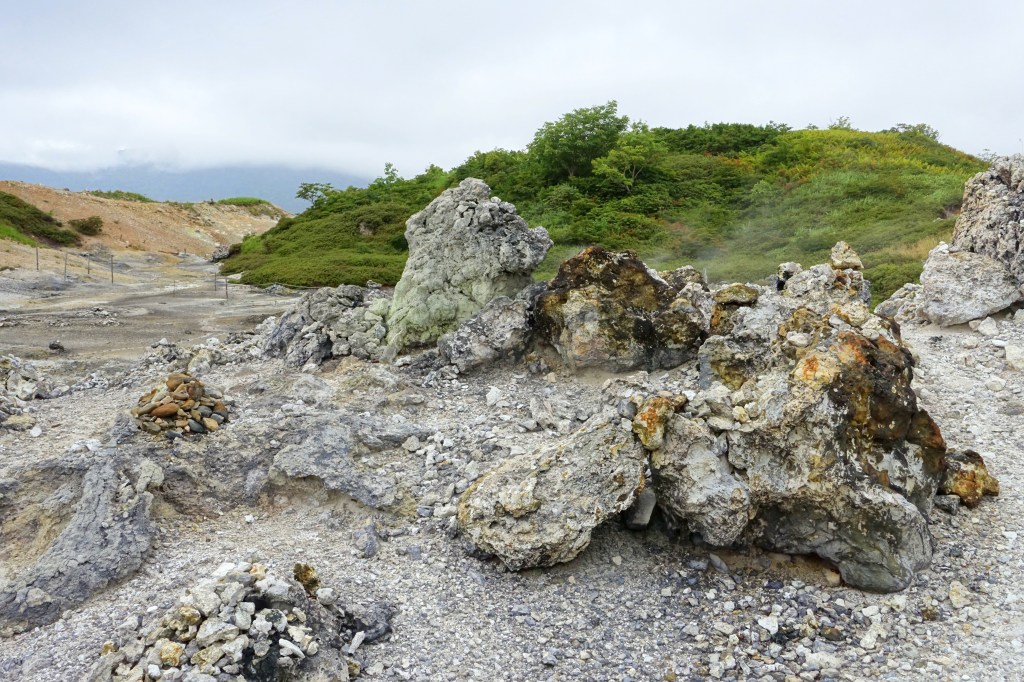
- Mount Osore is one of the three great sacred mountains of Japan, alongside Mount Hiei and Mount Koya, and it is the strangest of the three. It sits inside the caldera of a volcano that last erupted more than ten thousand years ago, around a lake of brilliant blue-green water, and the ground between the lake and the temple is bare volcanic rock, yellow and white with sulphur, steaming and stinking of it. The combination of a Buddhist temple, a hot spring and a landscape that looks like the inside of the earth is what makes the place unlike anywhere else in the country.
- The name means the mountain of fear, and the local saying is that when people die they go to Osorezan. That is not a marketing line: the geography of the place is read as the geography of the afterlife. You cross a drum bridge over a stream that is called the Sanzu River, the boundary between the living and the dead, and beyond it are the Hell Valley, the Hell of Unremitting Suffering, the Blood Pond Hell and the banks of the Sanzu where parents pile stones and leave pinwheels for children who died young. The landscape does the work, and the names follow it.
- The temple is real and old. Osorezan Bodaiji was founded in 862 by Ennin, the monk known as Jikaku Daishi, who is said to have been led here in a dream, and it belongs to the Soto school of Zen. The main hall holds a two-metre statue of Jizo said to have been carved by Ennin himself, dressed in a monk’s robe and surplice, which is almost unheard of for a Buddhist image, and the temple’s buildings and the small halls around the lake are the reason this is a pilgrimage site rather than a geological curiosity.
- The itako are the other reason the name is known. These are blind or partially sighted women who, in the tradition of the region, can call the spirits of the dead and speak in their voices, and they gather at the temple for the great festival from 20 to 24 July and for the autumn pilgrimage in early October. The practice is dying out with the last few practitioners, all of them elderly, and seeing it is a matter of timing rather than of planning.
- The baths are free with admission, which is unusual for a sacred site. There are four bathhouses inside the precinct, each with its own claimed efficacy: the Yakushi bath for eye complaints, the Hie bath for neuralgia and rheumatism, the Kotaki bath for stomach and intestinal problems, and the Hanasome bath for skin, which is currently out of use and was the mixed one. The others alternate between men and women by day, and the water is hot, sulphurous and unforgettable.
- The practical catch is the season. The temple is open from 1 May to 31 October and closed for the winter, when the road and the site are under snow. In 2026 the gates close at 18:00 until the end of September and at 17:00 from 1 October, and the last bus back to Shimokita Station leaves at 15:55 in October. It is a place that requires a plan, and the plan has to be made in the five months it is open.
Top places and highlights
The Sanzu River bridge and the approach
The approach crosses a drum bridge over a small stream that is identified as the Sanzu, the river between the living and the dead, and the crossing is the moment the site changes register. Beyond it are the temple gate with its guardian kings and the main hall, and the path continues to the lake. It is a short walk that does a lot of work, and it is worth doing slowly rather than in a group.
The Hell Valley
The area between the temple and the lake is bare volcanic ground stained yellow and white with sulphur, with steam rising from vents and the smell of hydrogen sulphide everywhere. The temple’s own guidance warns visitors not to leave the path because the gas vents are dangerous, and that warning is not decorative. The colours and the emptiness are what make the place feel like a different world rather than a shrine.
The banks of the Sanzu and the pinwheels
The Sai no Kawara is the dry riverbed where parents pile stones for children who died before them, and the windmills left there turn in the wind. In Japanese folk belief the stones are piled as a memorial and knocked down by demons, and the parents pile them again. It is the most affecting part of the site and the one that requires the most restraint from visitors: these are memorials, not props.
Lake Usoiri
The caldera lake is a strong blue-green and the shore at the far end, called Gokuraku-hama, the beach of paradise, is in deliberate contrast to the hells on the near side. The water is acidic and the lake is deep, and the name and the colour are the point: the site is laid out as a journey from suffering to paradise. It is a 20-minute walk from the temple and most visitors do not make it.
The four bathhouses
The baths are free with the admission and they are the reason many Japanese visitors come: the Yakushi bath for the eyes, the Hie bath for neuralgia and rheumatism, the Kotaki bath for the stomach, and the Hanasome bath for the skin, which is currently closed for adjustment and was the mixed bath. The others swap between men and women by day, so check the sign at the entrance. Bring a towel, and take off silver jewellery, which turns black in the sulphur.
The itako at the festivals
The itako gather at the temple for the Osorezan Great Festival from 20 to 24 July and for the autumn pilgrimage over the holiday weekend in early October, and they perform the kuchiyose, the calling of the dead. The queues are long and the practice is private and solemn rather than a show. The number of practitioners is now very small and all are elderly, so this is a tradition in its last years rather than a permanent attraction.
The shamukibo, Kichikaku
The temple runs a lodging house inside the precinct, and staying there means being on the site after the day visitors leave and before they arrive. The meals are shojin ryori with no meat or fish, the bath is fed by the same spring as the bathhouses, and guests are expected to attend the morning service and follow the house rules. It is a pilgrimage lodging rather than a hotel, and it must be booked by phone.
Food and drink
- The temple’s lodging serves shojin ryori, the vegetarian cooking of a Zen temple, with no meat or fish, and it is included in the stay rather than sold separately. The food is plain and seasonal, and eating it in a sacred site is part of the experience rather than a culinary destination.
- There is no restaurant at the site for day visitors beyond simple snacks and drinks at the rest area, and the nearest proper food is in Mutsu city, 40 minutes away. The practical advice is to eat before or after rather than to plan a meal at Osorezan.
- Mutsu and the Shimokita peninsula are known for their seafood, particularly the scallops, squid and tuna of the Tsugaru strait, and for the local sake. The town of Ominato and the port area have the restaurants, and they are the right place to eat after a morning at the mountain.
- The region’s other food is the dried fish and the miso of the peninsula, and the roadside stations on the way to Osorezan sell both. The local apples and the dairy of Aomori are the take-home items, and the prefecture’s garlic is a surprise to most visitors.
Getting there and around
- By train, take the JR Ominato Line from Noheji to Shimokita Station, about an hour and a half from Aomori, then the Shimokita Kotsu Osorezan line bus to the terminus at Osorezan, about 40 to 45 minutes. The fare is 810 yen and the bus takes cash only.
- The bus runs only during the open season and in 2026 it runs three return trips a day, with a fourth until 30 September. The last bus back to Shimokita Station leaves at 15:55 from 1 October and at 17:30 until 30 September, which sets the limit on a day trip.
- By car, the site is about 30 to 40 minutes from Shimokita Station, and there is free parking for about 300 cars. The car park is the only one, and it fills early during the July festival, when the local advice is to arrive at opening.
- The temple is open from 1 May to 31 October, from 6:00 with admission reception until 16:30, and the gates close at 18:00 until the end of September and at 17:00 from 1 October. It is closed entirely from November to the end of April, apart from limited arrangements for memorial services that must be confirmed with the temple.
- Admission is 900 yen for adults, 800 for groups of 20 or more, 400 for primary school children, free for infants, and free for holders of a disability certificate and one accompanying carer. The price was raised from 500 yen in 2026, and pets are not allowed anywhere on the site.
Where to stay
- The temple’s own lodging, Kichikaku, is the only accommodation at the site, with shojin meals, the spring bath and the morning service, from around 12,000 yen a night. Booking is by telephone in Japanese, accepted from a year ahead, and the festival periods fill within hours.
- Mutsu city, about 40 minutes away, has business hotels and is the practical base for an early start. Shimokita Station is the transport hub, and the hotels around it are inexpensive and functional.
- The Shimokita peninsula has onsen and ryokan at Yagen and along the coast, and combining Osorezan with the Yagen valley and the northern coast makes a two-day trip. The peninsula is one of the least visited parts of Honshu and the roads are quiet.
Best time to visit
- The site is open only from 1 May to 31 October, so the season is the first thing to plan around. May is cool and the snow has only just gone, and the mountain is at its quietest.
- July is the festival, with the itako and the largest crowds of the year from 20 to 24 July. It is the most culturally significant time to visit and the least peaceful, and accommodation and buses are under pressure.
- August is hot and humid in the caldera, with the lake at its most inviting and the sulphur smell stronger in the heat. The baths are a relief and the walking is short, and the site is busy with summer holiday visitors.
- Late September and early October are the best combination: the autumn pilgrimage brings the itako, the air is clear and cool, and the foliage on the caldera rim begins to turn. October also brings the earlier closing time and the 15:55 last bus, so the visit has to start in the morning.
Practical tips
- Check the season before you book anything else. Osorezan is open from 1 May to 31 October and closed for the rest of the year, and the bus does not run in winter. A visit in November or April is not possible in the normal sense.
- Take the early bus and come back on the last one. From 1 October the gates close at 17:00 and the last bus leaves at 15:55, and there are only three return services a day in 2026. Missing the bus means a taxi to Shimokita Station, which is expensive and not always available.
- Bring a towel and cash. The bathhouses are free with admission but there are no towels for hire, and the bus takes cash only at 810 yen. There is no ATM at the site.
- Follow the path and do not wander. The gas vents in the Hell Valley are genuinely dangerous, and the temple’s guidance is explicit about staying on the route. The ground is also unstable and hot in places.
- Treat the Sai no Kawara as a cemetery. The stones and the pinwheels are memorials left by parents for dead children, and they should not be moved, photographed as props or walked over. Ask before photographing anyone praying, and keep your voice low around the memorial areas.
- Take off silver jewellery before the bath. The sulphur in the water turns silver black within minutes, and it does not always polish out. The baths are hot and the water is strong, so short dips are the way.
- Consider staying at Kichikaku if you want the site to yourself. The day visitors leave in the afternoon and arrive in the morning, and the hours in between, with the steam and the lake and no one else, are the reason to sleep there. Book by phone well ahead, especially for the July festival.
Suggested day-trip outline
- Take the JR Ominato Line to Shimokita Station and the first bus to Osorezan, or drive up from Mutsu, 30 to 40 minutes. Arrive at opening at 6:00 if you are staying nearby, or by mid-morning at the latest, and pay the 900 yen admission at the reception.
- Cross the drum bridge over the Sanzu and walk the temple route: the gate, the main hall with the Jizo, and the small halls. Then go out into the Hell Valley and follow the path to the Sai no Kawara and the lake, which is the part most visitors skip and the part that makes the site.
- Bathe before you leave. The Yakushi and Kotaki baths are the two to try if you only have time for one each, and they are hot enough that ten minutes is sufficient. Bring a towel and leave your silver in your bag.
- Take the bus back to Shimokita Station, allowing for the 15:55 departure in October, and eat seafood in Mutsu or Ominato in the afternoon. If you are staying at Kichikaku, the afternoon is the quietest time on the site and the evening is for the bath and the lake.
- Add a second day for the Yagen valley and the Shimokita coast, or take the train back towards Noheji and Aomori. In July, plan the whole trip around the festival dates, because the buses and the lodging are full and the itako are the reason to be there.
Before you go
Timetables, fares, admission fees, and seasonal access rules can change. Check the official tourism and transport sites linked below for the latest information before you travel.
Explore More of Japan
Published guides that pair with this one:
- Hachinohe and Tanesashi Coast Travel Guide: Aomori’s Pacific Edge
- Aomori Museum of Art Travel Guide: Highlights, Access, and Planning
- Aomori Nebuta Festival Guide: August Floats and Haneto
- Hiraizumi Travel Guide: UNESCO Temples and Gardens in Iwate
- Lake Towada Travel Guide: Oirase Stream, Autumn Colour and the Calm Side of Aomori
- Shirakami-Sanchi Travel Guide: Japan’s Primeval Beech Forest
- Hirosaki Travel Guide: Castle Park, Cherry Blossoms, and the Old Town
- Oirase Gorge Travel Guide: Stream Walks toward Lake Towada
- Oga Peninsula and the Namahage Travel Guide: Highlights, Access, and Planning
- Tono Travel Guide: Folktales, Farmhouses, and the Iwate Countryside
Browse every Tohoku guide on this site for the rest of the region.
Sources
- reijyo-osorezan.jp (checked 2026-11-03)
- reijyo-osorezan.jp (checked 2026-11-03)
- aomori-tourism.com (checked 2026-11-03)
- aomori-tourism.com (checked 2026-11-03)
- tohokukanko.jp (checked 2026-11-03)


Leave a Reply