Plan a visit to Nozawa Onsen in Nagano, with the public bathhouses, the ski season, the fire festival and access.
Operational details such as opening hours, admission fees, and train times can change. Prefer official pages and reconfirm before you travel (sources checked on 03 November 2026).
Why visit
- Nozawa Onsen is a village rather than a resort, and the distinction is the whole reason to go. The village has 13 public bathhouses, the soto-yu, scattered through its lanes, and they are not amenities attached to hotels but communal property maintained by neighbourhood associations, the yu-nakama, a system that goes back to the Edo period. Every house in the village belongs to one, and the baths are still cleaned and looked after by the residents who use them. You are bathing in someone’s neighbourhood, not in a spa.
- The water is the real thing. The village has more than 30 sources, and the baths are 100 percent free-flowing natural hot spring water with no recirculation, heating or chlorination. The temperatures are hot, up to around 90 degrees at the source at Ogama, and the baths range from the relatively gentle Kumanote-arai at about 40 degrees to the properly hot ones that locals use for a morning dip. The chemistry varies by source, from simple sulphur springs to sulphur-bearing sodium-calcium sulphate springs, and the difference is visible in the colour and the amount of mineral deposit.
- The fire festival is the other reason the name is known. The Dosojin Matsuri on 15 January is one of Japan’s three great fire festivals and a nationally designated Important Intangible Folk Cultural Property, and it is not a spectacle staged for visitors: it is a ritual in which the village’s 25-year-old men and 42-year-old men take fixed roles, build a shrine of beech logs, and defend it against torches until it burns. It is a coming-of-age rite as much as a festival, and the village has tightened access precisely because it became too popular.
- The skiing is genuinely world class and the village sits at the bottom of it. The resort runs from 565 metres at the base to 1,650 at the top, a vertical of 1,085 metres, with 43 courses and a longest run of 10,000 metres, and 40 percent of the terrain is rated beginner. It has been a ski destination since the Nozawa Onsen Ski Club was founded in 1923, which makes the village one of the birthplaces of Japanese recreational skiing.
- What makes it different from other Japanese ski towns is that the two halves are the same place. You can ski in the morning, walk back through the village in your boots, and bathe in a 200-year-old wooden bathhouse for the price of a small donation before dinner at your inn. There is no shuttle to a separate onsen area and no resort complex in between, and that continuity is why people come back.
- The practical geography is also unusually good. The Hokuriku Shinkansen reaches Iiyama in about two hours from Tokyo, and a direct bus takes 25 minutes from the station to the village for 600 yen. For a place that feels as remote as Nozawa does in winter, the journey is short, and there is no need for a car.
Top places and highlights
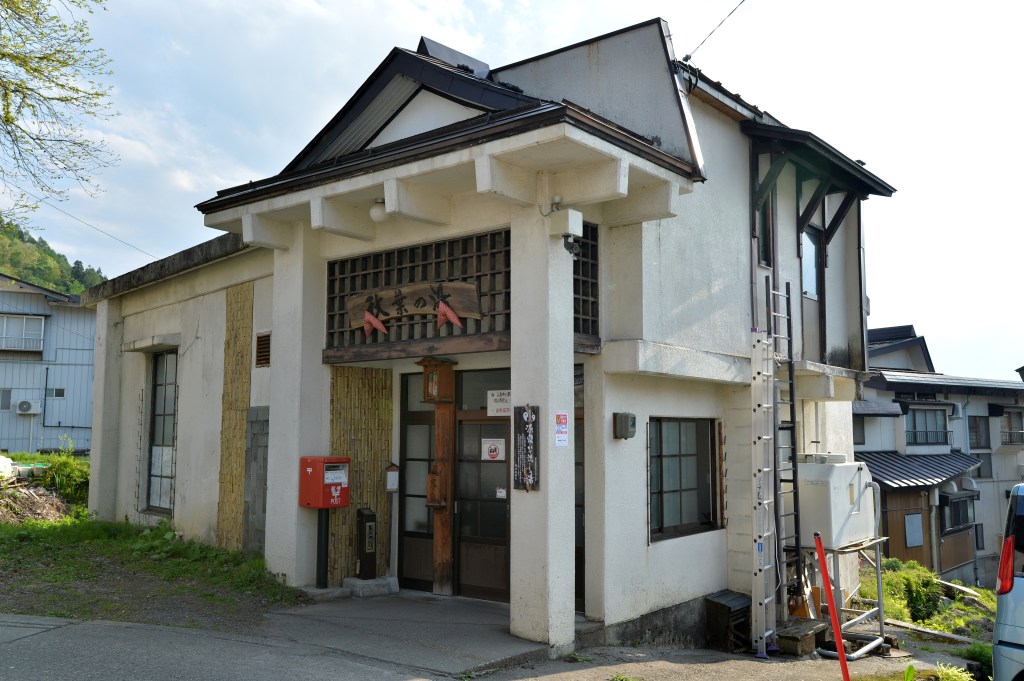
The 13 soto-yu
The village’s 13 public bathhouses are the centre of the visit, and they are free or by small donation rather than ticketed. They range from O-yu, the tall wooden bathhouse at the centre of the village with a hot and a warm pool, to small two-room baths tucked behind houses. Most open from 5:00 to 23:00 between April and November and 6:00 to 23:00 from December to March, though several keep their own hours. The etiquette is the same everywhere: wash thoroughly before entering, no soap in the bath, and keep your voice down.
Ogama and the cooking springs
Ogama is the cluster of steaming spring mouths at the top of the village where the water comes out at around 90 degrees, and it is where villagers boil vegetables and eggs in the outflow. The heat is fierce and the smell of sulphur is strong, and the sight of baskets of produce lowered into the stone channels is the most specific image of ordinary life in the village. It is a working place rather than a sight, and it is worth walking up to see it in the morning.
Four baths with egg-cooking kettles
Four of the bathhouses have a kettle where visitors can boil eggs in the spring water, and the village treats it as a family activity: you buy eggs at a local shop, put them in a net, and wait about 13 minutes. The result is a soft white and a set yolk with a faint sulphur smell. It is cheap, it takes the time of one bath, and it is the thing children remember.
The Dosojin fire festival
The Dosojin Matsuri runs over three days to 15 January, with the sacred tree dragged through the village on the 13th, the shrine assembled on the 14th, and the fire battle on the night of the 15th from about 19:00 to 22:00. Men born in the village in the relevant years hold the ritual roles, and the shrine is defended with torches until it burns. Since the 2026 festival, admission is by ticket issued only to villagers and to guests staying in the village, and visitors watch rather than participate.
The ski terrain from Yamabiko to the village
The resort’s upper mountain at Yamabiko sits between 1,366 and 1,650 metres and holds snow into early May, with the sea visible on clear days. Below it, Uchinodaira is wide and gentle and the Paradise and Rinkan courses are the ones for beginners and families, with Rinkan running five kilometres down to the base. The Skyline course drops 4,500 metres from the summit ridge, and it is the run that makes the mountain feel as big as its numbers.
The village lanes and the Yu-road
The village is steep and narrow, with stone-paved lanes, drainage channels of hot water running beside them, and skiers walking through in boots because the slopes come down to the edge of the houses. The Yu-road connects the lower village to the Nagasaka gondola, which means you can walk from your inn to the lift. Getting lost in the lanes is part of the experience, and there is usually a bathhouse within sight.
The 100-year ski history
The Nozawa Onsen Ski Club was founded in December 1923 with 23 members and a one-yen joining fee, and it set out to bring student ski parties to the village at a time when the winter economy was weaving and paper-making. The first student group came in March 1924. That history is why the village has the layout it does, with inns built for ski groups and a lift system that reaches down into the settlement rather than stopping at its edge.
Food and drink
- Nozawa’s local food is built on the things that grow in a cold mountain village: buckwheat, preserved vegetables, wild plants and mushrooms. Nozawa soba is the dish to order, and the local version is made with a high proportion of buckwheat and served cold with a dipping sauce or hot in a simple broth.
- The village’s other speciality is the pickled and fermented vegetables, including the purple-red turnip and the wild greens put down in autumn. They appear at breakfast at every inn and are sold in the shops along the main street, and they are the most portable thing to bring home.
- Eggs boiled in the spring water at the four bathhouses with kettles are the snack that costs almost nothing and takes 13 minutes. Buy eggs at a village shop, bring a net, and eat them on the spot with a little salt.
- The village has a good number of small restaurants and cafes, but they are seasonal and small, and in winter they fill with skiers. Staying half board at an inn is the practical choice, since the breakfast and dinner are included and the local cooking is what the inns do best.
- Sake from Nagano is the drink, and the prefecture is one of the largest producers in Japan. The village shops carry local bottles, and the water from the mountain is the reason the breweries in the region are as good as they are.
Getting there and around
- Take the Hokuriku Shinkansen to Iiyama Station, then the Nozawa Onsen Liner from bus stop 4 outside the station. The bus takes about 25 minutes to the village and costs 600 yen for adults and 300 for children, with stops at Kita-Iiyama, Maesaka, Nakao, Nitta and Nozawa Onsen.
- The Liner runs roughly ten times a day in each direction, with departures from Iiyama between 8:45 and 21:20 and from the village between 6:30 and 19:35 on the 2026 schedule. The village warns that some trains do not connect with a bus, so the timetable has to be checked rather than assumed, especially for a late arrival.
- Tickets can be bought from the machine at Iiyama Station or at the village terminus, by cash or credit card, or on the bus with a transport IC card such as Suica or the local Kururu card or in cash. Credit cards are not accepted on the bus itself.
- By car, the village is about 20 kilometres from the Toyoda-Iiyama interchange on the Joshinetsu Expressway, and about 55 kilometres from the Shiozawa-Ishiuichi interchange on the Kanetsu Expressway. The approach roads climb and narrow as they enter the village, and in winter they are snow-covered and require winter tyres or chains.
- There is no railway station in the village itself, and the JR Iiyama Line stations at Uwaseki and Togari-Nozawa-onsen have no public transport connection to the village. Iiyama on the Shinkansen is the only practical rail gateway, and the Liner is the only bus from it.
- Parking is split between the village’s central terminal and the Nakao car park, and the rules change by season: in summer the central terminal takes only buses for drop-off, while in winter it is for buses and requires a reservation. Visitors arriving by car should confirm which car park their accommodation uses, since the village lanes are narrow and largely closed to casual parking.
Where to stay
- Nozawa has a large number of small inns and family-run lodges, many of them ski lodges built for groups, and most offer half board with local cooking. Staying in the village is the point of the trip, since the baths, the slopes and the restaurants are all within walking distance.
- The traditional ryokan in the village are the ones with their own indoor baths fed by the same springs, and they are the quieter option for anyone who wants privacy rather than the communal bathhouses. They are also the first to fill for the fire festival and for the powder weekends.
- Iiyama, 25 minutes away by bus, has business hotels and is the practical base for a late arrival or an early Shinkansen departure. It is a town rather than a resort, and the village becomes a day trip from it.
- The village’s accommodation is limited relative to demand in January and February, and the fire festival period is booked out far in advance. Anyone planning to see the festival has to book both the room and the festival ticket through the accommodation, since tickets are issued only to villagers and village guests.
Best time to visit
- Winter is the season the village is built for, with the ski resort open from late November to early May and powder snow on the upper mountain through the coldest months. The fire festival on 15 January is the peak, and the village is at its busiest between late December and the end of February.
- Spring comes late at this altitude, and the ski season runs into early May, with the Yamabiko area holding snow longest. The village’s lower lanes clear earlier, and the combination of skiing in the morning and walking without snow in the afternoon is possible in April.
- Summer is green and quiet, with the lifts running for hiking and the mountain’s flowers out, and the baths at their most pleasant after a day on the ridge. The village empties of skiers and the pace drops, which is the appeal for anyone who wants the baths without company.
- Autumn brings the foliage and the harvest, with the wild plants and mushrooms that go into the village’s preserved food, and it is the best season for walking the ridge trails above the village. The resort’s green season ends in late October, and the village closes down for a few weeks before the snow.
Practical tips
- Learn the bathhouse etiquette before you go in. Wash and rinse thoroughly at the taps before entering the bath, do not take soap or towels into the water, and keep the noise down. The baths are village property rather than tourist facilities, and the small donation box at the entrance is how they are funded, so bring coins.
- Check the hours of the individual bath, not the general rule. Most open 5:00 to 23:00 from April to November and 6:00 to 23:00 from December to March, but Shinyu runs 6:00 to 22:00, Takinoyu 5:00 to 21:00 in the warmer months, and Yokoochi and Juodou keep different hours. A bath you have walked to can be closed.
- Book the fire festival through your accommodation or not at all. Since the 2026 festival, entry is by ticket issued only to villagers and to people staying in the village, and the tickets are arranged through the inn. Alcohol, bottles and cans are banned at the site, drones are prohibited by law, and parking in the village is prohibited entirely during the festival.
- Plan your arrival around the bus, not the train. The Liner takes 25 minutes from Iiyama and does not meet every Shinkansen, so a late train can leave you waiting at the station. The last departures are around 21:20 from Iiyama and 19:35 from the village, and a taxi is the only fallback.
- Bring cash for the baths and the small shops. The bathhouse donations are coins in a box, and several of the village’s small businesses are cash only. The bus and the ticket machines take cards, but not everywhere in the village does.
- Do not plan to drive into the village in winter without winter equipment. The approach roads are steep and snow-covered, and the village lanes are narrow and often closed to cars. Most accommodation will tell you where to park, and the resort’s car parks are free on weekdays, in the early season and in spring, and charged at weekends and over the New Year.
- Allow a full day for the village alone, even without skiing. Thirteen baths, the Ogama springs, the lanes and the egg kettles are a day’s walking, and the baths are best done in a slow loop with rests between them. Doing five in an hour is possible and is not the point.
Suggested day-trip outline
- Take the Hokuriku Shinkansen to Iiyama, then the Nozawa Onsen Liner from stop 4, about 25 minutes and 600 yen. Arrive in the village, leave your bag at the inn, and walk up to Ogama to see the spring mouths and the villagers boiling vegetables before doing anything else.
- Start the bath loop at O-yu in the centre of the village, the tall wooden bathhouse that is the symbol of Nozawa, and work outward through the lanes. Do three or four baths with rests between them rather than trying to complete all 13, and use the egg kettles at one of the four baths that has them for a mid-morning snack.
- Eat Nozawa soba for lunch, then walk the village lanes and the Yu-road towards the Nagasaka gondola. In winter, ski the afternoon on the upper mountain and come down before the light goes; in summer, take the lift up for the ridge walk and the view.
- Bathe again before dinner, which is the village’s own rhythm: the baths are busiest in the early evening when people come off the slopes. Dinner at the inn is half board and local, and the village is quiet by 22:00 outside the bars.
- On a second day, either ski the full mountain from Yamabiko down the 10,000-metre run, or walk the village properly and visit the remaining baths. If you are there for 15 January, the fire festival starts at noon with the shrine completion and the fire battle runs from about 19:00, and the following morning the villagers grill rice cakes over the embers.
Before you go
Timetables, fares, admission fees, and seasonal access rules can change. Check the official tourism and transport sites linked below for the latest information before you travel.
Explore More of Japan
Published guides that pair with this one:
- Kinosaki Onsen Guide: Yukata, Seven Baths, and the Willow Canal
- Takayama Travel Guide: Hida Old Town and Alps Access
- Kanazawa Travel Guide: Kenrokuen and Teahouse Districts
- Shirakawa-go Travel Guide: UNESCO Gassho Village, Access, and Day-Trip Tips
- Karuizawa Guide: Highland Walks, Old Ginza and Shiraito Falls
- Jigokudani Snow Monkey Park Travel Guide
- Kamikochi Travel Guide: Alpine Valley Walks in the Japan Alps
- Matsumoto Castle Travel Guide: Japan’s Original Black Keep
- 21st Century Museum of Contemporary Art, Kanazawa Travel Guide: Highlights, Access, and Planning
Browse every Chubu guide on this site for the rest of the region.
Sources
- nozawakanko.jp (checked 2026-11-03)
- nozawakanko.jp — Access (checked 2026-11-03)
- nozawakanko.jp (checked 2026-11-03)
- vill.nozawaonsen.nagano.jp (checked 2026-11-03)
- nozawaski.com (checked 2026-11-03)
- nozawaski.com (checked 2026-11-03)


Leave a Reply