Plan a visit to Sengan-en in Kagoshima, the Shimazu clan garden with views of Sakurajima, and its former residence.
Operational details such as opening hours, admission fees, and train times can change. Prefer official pages and reconfirm before you travel (sources checked on 03 November 2026).
Why visit
- Sengan-en is a daimyo garden built in 1658 by the 19th head of the Shimazu clan, Mitsuhisa, as the family’s villa, and it is the only place where the scale of the Shimazu domain becomes visible. The garden does not imitate a landscape: it borrows one. Sakurajima, the active volcano across the bay, is the garden’s borrowed hill, and Kagoshima Bay is its pond, which means the design only works because of the view. On a clear day the volcano is enormous and the garden is small beside it, and that proportion is the whole point.
- The garden is also the hinge between the old domain and modern Japan. The 28th head, Nariakira, loved this garden and used it as a base for the industrial experiments that made Satsuma one of the forces behind the Meiji Restoration: a reverberatory furnace, glassmaking, shipbuilding, and the gas lamp experiment commemorated by the Tsuru lantern in the garden. The Shoko Shuseikan museum next door is the oldest surviving Western-style factory building in Japan, completed in 1865, and the whole area is a World Heritage site as part of the Sites of Japan’s Meiji Industrial Revolution.
- The Goromon, the palace, is the part most visitors do not expect. The villa’s main building has been restored and is included in the admission, with rooms looking straight out at the volcano, and it is furnished so that you can read how a daimyo household used the space. It is the difference between looking at a garden and standing in a house that was built to look at the same view.
- The garden’s small details are unusually good. There is a shrine to cats, the Neko Jinja, which is rare in Japan and tied to the story of the cats Nariakira took with him to war as timekeepers; there is a stone lantern said to have been used in the gas lamp experiment; and there is a traditional culture experience building where you can try Satsuma kiriko glass cutting and other crafts. None of it is compulsory, and together it makes the site more than a park.
- The practical case is strong. Sengan-en Station on the JR Nippo Line is at the entrance, which makes the garden reachable from Kagoshima Chuo by train rather than by bus, and the admission covers the garden, the palace and the museum in one ticket. Kagoshima is a city where the main sight is a 20-minute train ride from the station, and that is rare for a garden of this importance.
- The Satsuma kiriko glass is the thing to buy or see being made. The gallery and workshop next to the museum show the cutting process and sell the glass, and the craft is specific to this domain: Nariakira ordered the construction of a glassworks in 1865, and the modern revival is based on the fragments that survived. It is the one souvenir here that carries the history rather than the name.
Top places and highlights
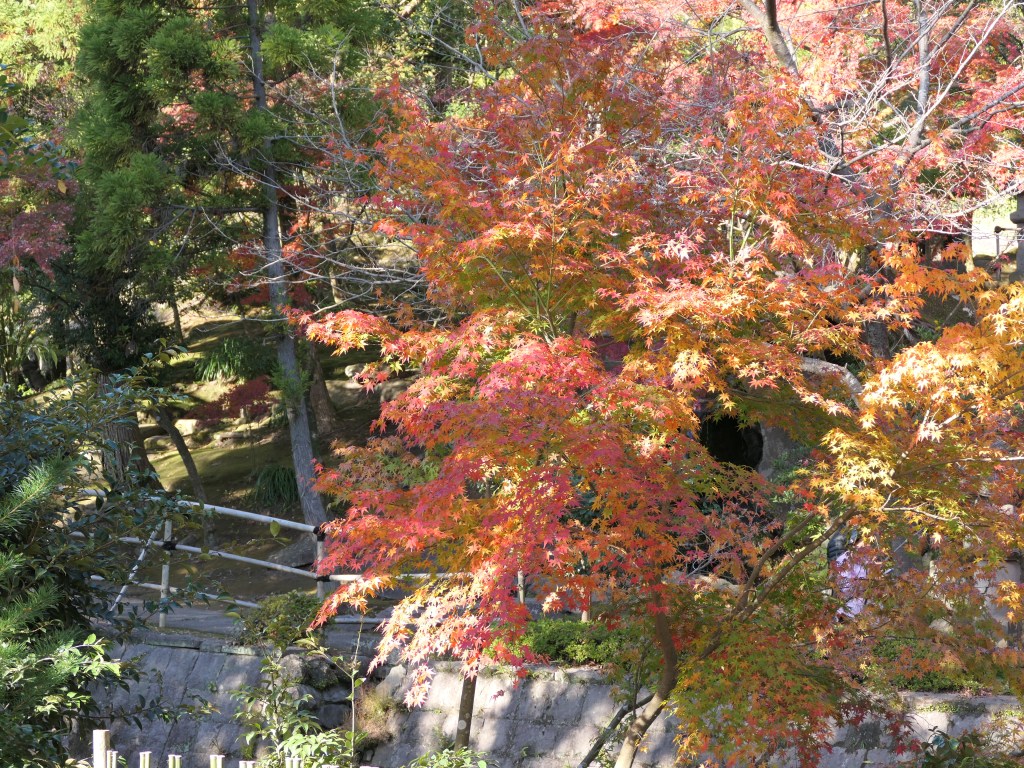
The garden and its borrowed scenery
The garden is about 15,000 tsubo, built around a pond with Sakurajima as the borrowed hill and the bay as the borrowed water, and it is a nationally designated Place of Scenic Beauty. The path circles the pond and rises to a viewpoint where the volcano fills the frame, and the composition changes with the weather, since the volcano is often in cloud and sometimes completely clear. Walk it slowly, because the design is in the relationships rather than in individual plants.
The Goromon palace
The palace at the heart of the garden was the Shimazu family’s main residence in the Meiji period, and the restored rooms open onto the pond and the volcano. It is included in the admission and it is the part that turns the garden from a landscape into a household: the rooms, the verandas and the sightlines show how the view was used rather than only looked at. Last entry is 16:50, later than the garden’s 16:30.
Shoko Shuseikan
The museum next to the garden occupies a Western-style factory built in 1865 for metalworking and the repair of steam machinery, and it is the oldest surviving example of its kind in Japan. The collection covers the Shimazu family’s 800 years and the Satsuma industrial programme, and it is the place where the garden’s beauty and the domain’s politics connect. It is included in the same ticket, and it deserves an hour rather than a glance.
The Satsuma kiriko workshop
The Iso Kogei-kan beside the museum holds a gallery and a workshop where Satsuma kiriko glass is cut, and the process is visible. Nariakira ordered a glassworks in 1865 and the craft died out, then was revived in the twentieth century from surviving fragments, and the deep coloured glass over clear glass is the technique that defines it. Watching the cutting is free with the site, and the shop is the best place in Kagoshima to buy it.
The Neko Jinja
A small shrine to cats stands in the garden, which is unusual enough to be worth the detour. The story is tied to Nariakira, who took cats with him on campaign because he needed to know the time and the cats’ eyes were his clock, and the shrine honours them. It is a two-minute stop and it is the detail that most visitors remember, along with the Tsuru lantern used in the gas lamp experiment.
The chrysanthemum festival in November
The Kiku Matsuri runs through November, with chrysanthemum displays set against the garden and the volcano, and it is one of the garden’s two big seasonal events alongside the spring plant fair. There are guided tours of the displays and performances of traditional arts on selected dates. It is the best reason to come in autumn rather than spring, and the garden is at its most photogenic when the chrysanthemums are in.
Iso and the world heritage story
The Iso district around the garden is part of the World Heritage listing for the Meiji Industrial Revolution, and the walk between the garden, the museum, the glass workshop and the former engineer’s house, the Ijinkan, is a walk through the sites that made Satsuma a modernising power. The Ijinkan is a separate building further along the shore, and it hosts occasional events including an afternoon tea with a chef. Together they make the area a half day rather than a single garden.
Food and drink
- Inside the garden there are several places to eat: Ryobira-ya, the garden’s main restaurant, Sengan-en Saryo for tea, and Sakura-tei for set meals from 11:00 with last orders at 15:30. The local dish to order is tonkotsu, the Kagoshima pork cutlet, and the garden’s version is the convenient one rather than the best in the city.
- The sweet potato stand sells soft ice cream made with Satsuma sweet potato, and it is the snack that fits the garden, since the sweet potato came to Satsuma and then to the rest of Japan. The drink stand next to it is the practical stop on a hot day.
- Kagoshima city has the serious food: black pork, karukan sweet buns, and the shochu that the prefecture is known for. Tenmonkan is the concentration, and eating there before or after the garden is better value than the garden’s restaurants.
- The garden’s food is part of the experience rather than the reason to come, and the tea house facing the pond is the one to choose if you want to sit and look at the volcano while you eat. It has the view that the restaurants inside do not.
Getting there and around
- By train, Sengan-en Station on the JR Nippo Line is at the garden’s entrance, and it is a short ride from Kagoshima Station on the same line. From Kagoshima Chuo, take the Nippo Line to Kagoshima and change, or take the city view bus.
- The Kagoshima City View bus runs from Kagoshima Chuo Station to the Sengan-en-mae stop in about 50 minutes, which is slow but direct and passes the city’s other sights. It is the option for anyone without a car who wants to combine the garden with the rest of the city.
- By car, the garden is about 20 minutes from Kagoshima Chuo Station, about 40 minutes from Kagoshima Airport via the Aira interchange and Route 10, and about 10 minutes from the Sakurajima ferry terminal. Parking is open 24 hours and costs 500 yen a day for a standard car and 2,000 for a large vehicle.
- The garden is open 9:00 to 17:00 with last entry at 16:30, every day of the year except the first Sunday in March, when it closes for the Kagoshima Marathon. Individual buildings close earlier: the palace at 16:50, the culture experience building at 16:00 to 16:40 depending on the programme, and the restaurants between 15:30 and 16:30.
- Admission covers the garden, the palace and the Shoko Shuseikan museum in one ticket: 1,600 yen for adults, 800 for school students, 700 for school groups, and 800 for holders of a disability certificate or the Kagoshima city senior pass. Children under primary school age enter free, and the annual pass at 2,400 yen pays for itself on the second visit.
Where to stay
- Kagoshima city is the base, with hotels around Kagoshima Chuo and Tenmonkan, and the garden is 20 minutes away by car or a train ride. The city also has the food, the ferry to Sakurajima and the night views of the volcano.
- The Iso area around the garden has a small number of places to stay and the Kagoshima Prince Hotel nearby, which suits anyone wanting to walk to the garden in the morning before the buses arrive.
- Sakurajima itself has accommodation and onsen, and staying there puts the volcano in front of you rather than across the water from the garden. The ferry from Kagoshima is 15 minutes, and the island is a separate day.
Best time to visit
- Spring is the garden’s traditional season, with the cherry and the spring plant fair, and the volcano is often clear in the morning. The garden is busy but not crowded, and the combination of blossom and volcano is why photographers come.
- Summer is hot and bright, with the pond and the shade of the trees, and the volcano at its most visible in the clear morning air. The trade is the heat of Kagoshima, which is one of the hottest cities in Japan, and the middle of the day is best spent inside the museum or the palace.
- Autumn is the strongest season for the garden, with the chrysanthemum festival through November, the guided tours of the displays and the traditional performances on selected dates. The air clears and the volcano is at its best, and the garden’s own events make it the liveliest time to visit.
- Winter is mild and quiet, with the volcano often snow-dusted and the garden almost empty on weekday mornings. Kagoshima rarely gets cold enough to spoil the visit, and the low winter sun across the bay is the reason some people prefer it to spring.
Practical tips
- Take the train rather than the bus if you are short of time. Sengan-en Station is at the entrance, and the change at Kagoshima Station is simple, while the City View bus takes about 50 minutes from Kagoshima Chuo. The bus is worth it only if you want the loop through the city’s other sights.
- Buy the combined ticket and see all three. The 1,600 yen adult ticket covers the garden, the palace and the Shoko Shuseikan museum, and the museum alone justifies a large part of it. There is no cheaper garden-only ticket that is worth the saving.
- Go early for the volcano. Sakurajima is often clear in the morning and clouded by afternoon, and the garden’s design depends on the view. A 9:00 arrival gives you the best chance of seeing the mountain whole, and the light is better for photographs.
- Check the March closure. The garden closes on the first Sunday in March for the Kagoshima Marathon, which is the only day it shuts. Everything else, including New Year, it is open.
- Allow time for the museum and the glass workshop rather than treating them as add-ons. The Shoko Shuseikan is the oldest Western-style factory building in Japan and the World Heritage story is there, and the Satsuma kiriko workshop next door shows the craft that the domain created. The garden alone takes an hour and a half; the whole site takes half a day.
- Do not expect to photograph the volcano from everywhere. Some areas are marked as no-photography zones and drones are banned throughout. The classic view is from the upper path and from the palace veranda, and both are accessible on the normal route.
- Bring cash for the car park and small purchases. The garden’s shops take cards and several payment apps, but the car park and some of the stands are simpler with cash, and the coin lockers at the entrance take coins or transport IC cards.
Suggested day-trip outline
- Take the JR Nippo Line to Sengan-en Station, or the City View bus from Kagoshima Chuo, and arrive at opening time at 9:00. Start with the garden path around the pond and up to the viewpoint, because the volcano is clearest in the morning and the design is about the view.
- Go through the Goromon palace and sit on the veranda facing the pond, then walk to the Neko Jinja and the Tsuru lantern. This is the part of the garden that connects the landscape to the Shimazu household, and it takes about half an hour.
- Spend an hour in the Shoko Shuseikan museum for the Shimazu history and the industrial programme, then go next door to the Satsuma kiriko gallery and workshop to see the cutting. The two together explain why this garden is a World Heritage site rather than only a pretty place.
- Eat at Ryobira-ya or Sakura-tei inside the garden, or take the sweet potato soft ice cream at the stand if you are moving on. In November, add the chrysanthemum displays and check whether a guided tour or a performance is scheduled that day.
- Finish with the walk along the Iso shore towards the Ijinkan, the former engineer’s house, which is the other World Heritage component in the area. Return to Kagoshima Chuo by train, and eat black pork and drink shochu in Tenmonkan in the evening.
Before you go
Timetables, fares, admission fees, and seasonal access rules can change. Check the official tourism and transport sites linked below for the latest information before you travel.
Explore More of Japan
Published guides that pair with this one:
- Sakurajima Travel Guide: An Active Volcano across from Kagoshima
- Ibusuki Guide: Sand Baths and the Southern Tip of Kyushu
- Yoshinogari Historical Park Travel Guide: Japan’s Yayoi Settlement
- Karatsu Travel Guide: Pottery, a Castle, and the Saga Coast
- Kirishima Onsen Travel Guide: Volcanic Peaks, Steam and Mountain Ryokan
- Yakushima Travel Guide: Ancient Cedars and UNESCO Forest Trails
- Nagasaki Atomic Bomb Museum Travel Guide: Highlights, Access, and Planning
- Nagasaki Bio Park Travel Guide: Highlights, Access, and Planning
- Kujukushima and Sasebo Guide: Islands, Cruises and the Naval Port
Browse every Kyushu guide on this site for the rest of the region.
Sources
- senganen.jp — About the museum (checked 2026-11-03)
- senganen.jp (checked 2026-11-03)
- kagoshima-yokanavi.jp (checked 2026-11-03)
- kagoshima-kankou.com (checked 2026-11-03)


Leave a Reply