Plan a visit to Yoshinogari Historical Park in Saga, the reconstructed Yayoi-period settlement, with access, hours, and what to see.
Operational details such as opening hours, admission fees, and train times can change. Prefer official pages and reconfirm before you travel (sources checked on 03 November 2026).
Why visit
- Yoshinogari is the largest Yayoi-period settlement ever excavated in Japan, a moated village that covered around 40 hectares on the Saga plain and was occupied from roughly the 3rd century BC to the 3rd century AD. What makes it worth a day is that it is not a ruin you look down at: the site has been reconstructed at full scale, with pit dwellings, raised storehouses, watchtowers and a great ceremonial hall standing on the same ground where the postholes were found. You walk through a village rather than past a dig.
- The scale is the other thing. The site is divided into a northern inner enclosure, a southern inner enclosure and a middle enclosure, all surrounded by double moats and fences, and the reconstruction follows the excavation evidence rather than a film set. The northern enclosure’s main ceremonial building is the tallest structure on the site, and standing in front of it gives a clearer sense of how a Yayoi chief demonstrated authority than any museum case could.
- The archaeological material is genuinely important. Yoshinogari produced large numbers of jar burials, bronze weapons, glass beads and Chinese mirrors, and the discovery of a large ditched settlement of this size changed the standard account of how the Yayoi period was organised. Some scholars have connected it to the country of Yamatai described in the Chinese Wei Zhi, though that identification is disputed and the park does not present it as settled fact.
- The park is built for a family day rather than a scholarly visit, and that is a strength rather than a compromise. There is a loop bus every 20 minutes between the gates, free wheelchairs and pushchairs at each entrance, a restaurant, a large lawn and play area on the west side, and hands-on workshops at the Yayoi Kurashi-kan and the Kodai no Mori Taiken-kan where you can make fire, beads or pottery. The archaeology and the picnic coexist.
- It is also unusually good value and unusually easy. Admission is 460 yen for adults, 200 yen for those 65 and over and free for junior high students and younger, the site is 15 minutes on foot from a station on the Nagasaki Main Line, and there is a direct limited express from Hakata that takes 36 minutes. For a major archaeological site, that combination of low cost and rail access is rare.
Top places and highlights
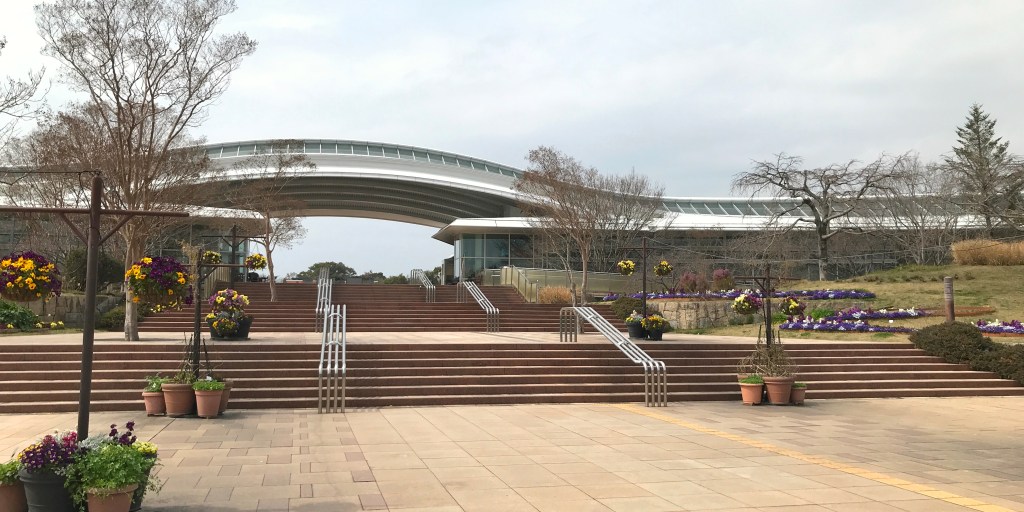
The northern inner enclosure and the main hall
The northern inner enclosure is the ceremonial core of the site, raised above the rest and surrounded by its own ditch and fence, with the main hall standing at its centre on the basis of the excavated postholes. It is the tallest reconstruction in the park and the building that most clearly expresses a hierarchy, since the chief’s compound is physically separated from the rest of the settlement. Walk the enclosure first, because everything else on the site makes more sense afterwards.
The pit dwellings and raised storehouses
The middle and southern enclosures hold rows of reconstructed pit dwellings and raised-floor storehouses, arranged as the excavation showed them rather than as a picturesque village. You can go inside several of the dwellings, and the interiors are furnished with the hearths, storage jars and tools that the digs produced. The raised storehouses, standing on posts with rat guards, are the detail most visitors photograph and the one that best explains how a surplus was kept.
The jar burials and the cemetery area
Yoshinogari’s cemetery produced large numbers of jar burials, in which the body was placed in a large ceramic jar, and the site shows both the burial jars and the raised platforms on which some of them were placed. It is the part of the park that makes the place feel like a real community rather than a set of buildings, and it is also the evidence that convinced archaeologists of the settlement’s size and duration.
The exhibition rooms and the recovered objects
The park’s exhibition spaces hold the objects themselves, including bronze weapons, glass beads and the Chinese mirrors that indicate contact with the continent. Seeing the reconstruction and then the artefacts, or the reverse, is what makes the visit more than a walk through huts: the buildings are an argument built from the objects, and the objects are what the argument rests on.
The Yayoi Kurashi-kan workshops
The Yayoi Kurashi-kan runs hands-on programmes including fire-making and bead-making, and the Kodai no Mori Taiken-kan in the northern zone runs its own workshops on ancient crafts. These are the part of the park that children remember, and they are also the fastest way for an adult to understand how much skill went into ordinary Yayoi objects. The last reception for the programmes is 15:30, so they need to be booked into the day rather than added at the end.
The loop bus and the size of the site
The park is large enough that walking everything is a real distance, and a loop microbus runs from the east gate’s moat entrance square and from the west and north gates every 20 minutes. There is also one bus with a wheelchair lift from the east gate. Using the bus to get between zones rather than walking the whole circuit is the practical way to see the archaeology and still have energy for the workshops.
The autumn buckwheat and the seasonal planting
The park grows red buckwheat and publishes its flowering status through the autumn, and the lawns and the reconstructed fields are planted to the season rather than left as grass. In late October and November the contrast between the red fields and the thatched roofs is the reason photographers come, and the park runs seasonal events including a winter candle event that uses volunteers. It is a working landscape as much as a monument.
Food and drink
- The park restaurant takes reservations for meals and boxed lunches, and it is the sit-down option inside the grounds. It is also the place to eat if you are with a group, since the park recommends the restaurant or the Yayoi Kurashi-kan for group meals and does not take bookings for the picnic areas.
- The Snow Peak grounds at the new west gate include a cafe and a chicken restaurant, with the cafe open from 7:30 to 21:00 and the restaurant from 11:00 to 18:00 on weekdays and to 21:00 at weekends and holidays. That is a more contemporary option than the park restaurant and it stays open later than the park itself.
- Bringing a lunch is the local habit: the park suggests eating on the Yayoi no Oono lawn or at the Matsuri square, and the Yayoi Kurashi-kan can hold 300 people as a rain shelter. There is no booking for these spaces, which means arriving early on a busy day.
- Saga city, about 25 minutes by car, is where to eat properly before or after, with the prefectural specialities of Saga beef and the local seafood from the Ariake Sea. Tosu, one stop away by train, is the other practical option, and both are on the line that serves the park.
Getting there and around
- By train, Yoshinogari Koen Station on the Nagasaki Main Line is about 15 minutes on foot from the east gate, which is the main gate and the one closest to the archaeological area. Kamisaki Station is also about 15 minutes from the west gate, which suits the lawns and the play area rather than the ruins.
- From Hakata, the fastest route is the Kyushu Shinkansen to Shin-Tosu in about 14 minutes and then the Nagasaki Main Line to Yoshinogari Koen in about 11 minutes. There is also a direct limited express from Hakata, which takes 36 minutes to the park station, and local trains via Tosu take about 14 minutes from Tosu.
- By car, leave the Nagasaki Expressway at the Higashisefuri interchange and take Prefectural Route 385 south for about five minutes. From Fukuoka Airport it is about 65 minutes, from Hakata Station about 60, from Saga Station about 25 and from Tosu Station about 30.
- Parking is paid, at 310 yen for a standard car and 100 yen for a motorcycle, with 540 spaces at the east gate, 310 at the west, 100 at the new west gate and 230 at the north. Large vehicles pay 1,050 yen, bicycles are free, and the new west car park is free for standard cars and motorcycles during the opening campaign that runs to 31 March 2027.
- By bus from Saga Station, take the number 40 route towards Nishitetsu Kurume or Shin’ai Gakuin Kurume and get off at Tade Yoshinogari Rekishi Koen Minami, which takes about 40 minutes and costs 600 yen, then walk about five minutes north from the Tade intersection under the railway. The same stop is served from Nishitetsu Kurume in about 40 minutes for 670 yen.
Where to stay
- Saga city is the natural base, 25 minutes by car and a short train ride away, with the full range of hotels and restaurants. It makes the park a half-day or a full day rather than a stay.
- Tosu is the other practical base, with hotels around the station and fast connections to both Fukuoka and Saga, and it puts the park one stop away on the local line. It is a commercial town rather than a scenic one.
- The new west gate has a camping field and the Snow Peak grounds, which is the option for anyone wanting to stay on the site with their own tent or in the outdoor brand’s accommodation. It is the only way to be in the park at opening time without a drive.
Best time to visit
- Spring, from April to May, runs on the shorter 9:00 to 17:00 hours and is the best season for walking the site, with the lawns green and the reconstructed fields planted. The school excursion season brings groups on weekdays, which is worth knowing if you want the main hall to yourself.
- Summer, from June to August, is the only period when the park stays open until 18:00, which makes a late afternoon visit possible. The trade is the heat of the Saga plain, which is severe and has little shade along the moats, so the morning and the late afternoon are the only sensible windows.
- Autumn is the strongest season, with red buckwheat in flower, the harvest events, and mild weather for the walk between the enclosures. It is also when the park is busiest with families, and the car parks fill at weekends, so arriving at opening time at 9:00 is worth the effort.
- Winter runs on 9:00 to 17:00 hours and is the quietest season, with clear air and no crowds. The park closes on 31 December and on the third Monday of January plus the following day, and the workshops keep their 15:30 last reception, which makes a short winter day tight for the hands-on programmes.
Practical tips
- Enter by the east gate if you want the ruins. The park says plainly that the east gate is convenient for the archaeological area, the west gate for the lawns and play equipment, the new west gate for the Snow Peak grounds and camping field, and the north gate for the ancient forest experience hall. Arriving at the wrong gate means a long walk or a bus ride before you see anything.
- Take the loop bus between zones. It leaves from the east gate’s moat entrance square and from the west and north gates every 20 minutes, and there is a wheelchair-lift bus from the east gate. The site is big enough that walking everything and still doing a workshop is a lot to ask of a family.
- Book the workshops into the day. The last reception for the programmes at the Yayoi Kurashi-kan and the Kodai no Mori Taiken-kan is 15:30, so the hands-on part has to come before the walking, not after. The same applies to the shorter winter hours.
- Know the ticket rules. Adults pay 460 yen, those 65 and over 200 with proof of age at the gate, junior high students and younger enter free, groups of 20 or more pay 280, and holders of a disability certificate and one companion enter free. A two-day pass costs 500 yen for adults and 240 for seniors, and the annual pass at 4,600 makes parking free for the year.
- Keep your ticket for re-entry. Re-entry is allowed with a stamp on the ticket, and you can leave by one gate and come back through another, which is what makes it possible to see the ruins in the morning and use the west side lawns in the afternoon. The car park ticket also covers another gate’s car park on the same day, so do not throw it away.
- Check the calendar before you go. Opening hours are 9:00 to 17:00 from 1 April to 31 May and from 1 September to 31 March, and 9:00 to 18:00 from 1 June to 31 August. The park closes on 31 December and on the third Monday of January and the day after, which are the only closures of the year.
- Bring a pushchair only if you need it, and know what is not allowed. Bicycles, kickboards, drones, model cars, golf clubs and fishing gear cannot be brought in, and the park lends wheelchairs, powered wheelchairs, a powered cart and pushchairs free at the gates. There is no bicycle riding inside, though bicycles can be rented at the station community hall for 300 yen and left outside.
Suggested day-trip outline
- Take the train to Yoshinogari Koen Station, or the limited express direct from Hakata, and walk 15 minutes to the east gate. Arrive at 9:00 when the park opens, both because the light on the reconstructions is best early and because the workshops fill later in the day.
- Start at the northern inner enclosure and the main hall, then walk the middle enclosure with its pit dwellings and raised storehouses, and the southern enclosure. This is the archaeological spine of the site, and doing it first means the rest of the day is a bonus rather than a rush.
- Go through the exhibition rooms to see the bronze weapons, glass beads, mirrors and burial jars, and connect them to the buildings you have just walked through. This is the part that turns a pleasant park into an argument about how a Yayoi chiefdom worked.
- Take the loop bus to the north gate for the Kodai no Mori Taiken-kan, or stay at the east side for the Yayoi Kurashi-kan workshops, and be at the reception before 15:30. Fire-making and bead-making are the two programmes to choose between if time is short.
- Eat at the park restaurant or at the Snow Peak grounds, and if you have children, finish on the west side with the lawns and play equipment rather than dragging them back through the ruins. Return to the station on foot or by the loop bus, and take the train back to Tosu, Saga or Hakata.
Before you go
Timetables, fares, admission fees, and seasonal access rules can change. Check the official tourism and transport sites linked below for the latest information before you travel.
Explore More of Japan
Published guides that pair with this one:
- Karatsu Travel Guide: Pottery, a Castle, and the Saga Coast
- Yanagawa Travel Guide: Canals, Boat Rides and Eel
- Fukuoka Travel Guide: Hakata Ramen, Yatai Stalls and a Compact Coastal City
- Nagasaki Atomic Bomb Museum Travel Guide: Highlights, Access, and Planning
- Shimabara Castle Travel Guide: A Reconstructed Keep in Nagasaki
- Ureshino Onsen Guide: Saga’s Tea Town and Hot Spring Water
- Nagasaki Bio Park Travel Guide: Highlights, Access, and Planning
- Kujukushima and Sasebo Guide: Islands, Cruises and the Naval Port
- Amakusa Islands Guide: Kumamoto’s Church Coast
- Nichinan Coast and Udo Jingu: Miyazaki’s Shrine in a Cave
Browse every Kyushu guide on this site for the rest of the region.
Sources
- yoshinogari.jp (checked 2026-11-03)
- yoshinogari.jp — Access (checked 2026-11-03)
- yoshinogari.jp — FAQ (checked 2026-11-03)


Leave a Reply