Plan a visit to the Tomioka Silk Mill in Gunma, a UNESCO World Heritage site and Japan’s first modern silk-reeling factory.
Operational details such as opening hours, admission fees, and train times can change. Prefer official pages and reconfirm before you travel (sources checked on 04 November 2026).
Why visit
- Tomioka Silk Mill is the place where Japan’s modern silk industry began. The Meiji government built it in 1872 as a model factory, with French machinery, French engineers and a French director, Paul Brunat, and it ran until 1987. In 2014 it became part of the UNESCO World Heritage site Tomioka Silk Mill and Related Sites.
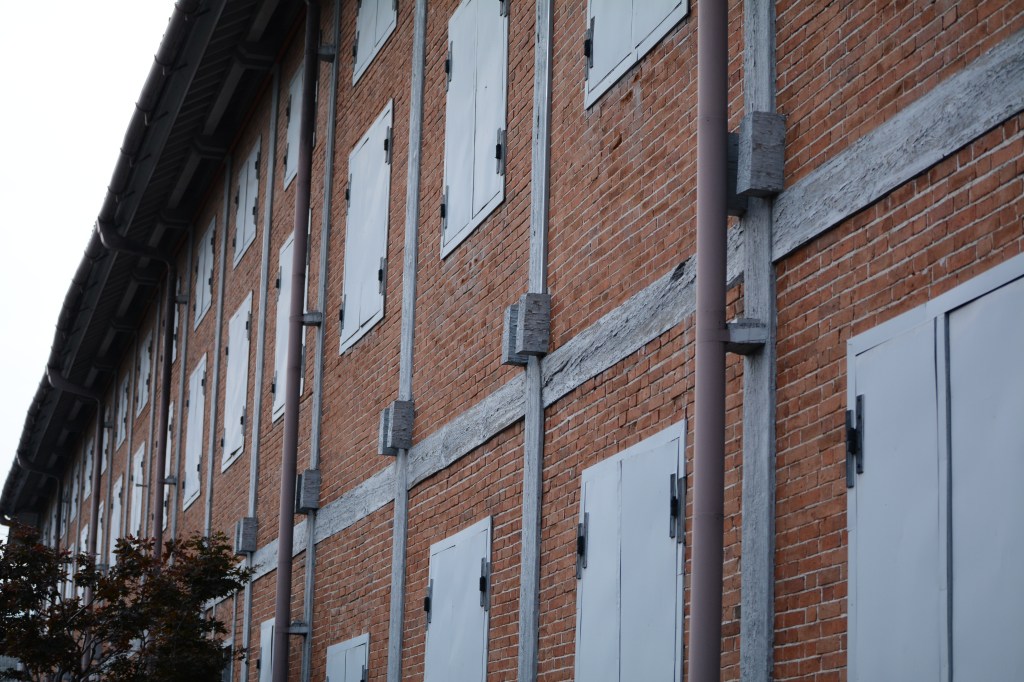
- The buildings are the reason it matters. Two long timber-framed brick cocoon warehouses, each more than 100 metres, and the reeling hall where 300 French metal reeling machines were installed at the start, survive almost completely from the founding period, along with the site layout. This is not a reconstruction: it is the industrial complex as it was built.
- The brickwork is a visible record of the technology transfer. The French-style brick bonding, the imported window glass in the reeling hall and the mixture of Japanese and Western construction methods are all still legible in the walls. For anyone interested in how Japan industrialised, the mill is a primary document rather than an illustration.
- The human story is unusually rich. The mill recruited young women from across Japan, including the daughters of former samurai families, and the dormitory life, the wages and the training they received spread the new techniques back to their home regions. The factory was a school as much as a production line.
- The town around it kept the shape of the silk era. The old Nirazuka silk mill, a private mill from 1876 that copied the Tomioka model, survives a minute away with its underground remains, and the merchant streets, the shop buildings and the riverside walks are the ordinary fabric of a silk town rather than a museum village.
- The setting adds two more reasons. Nukisaki Shrine, one of the great shrines of the region, has its hall at the bottom of a flight of stone steps rather than the top, an unusual layout that is a national Important Cultural Property. And Mount Myogi, the jagged peak that dominates the skyline, has a shrine with some of the finest carving in the Kanto region and one of the best autumn colour displays in Gunma.
Top places and highlights
Tomioka Silk Mill
The mill opened in 1872 as a government model factory and operated until 1987, and it is the core of the UNESCO World Heritage site inscribed in 2014. The two cocoon warehouses and the reeling hall survive from the founding period, and the visit is largely an exterior walk through the complex. Admission is 1,000 yen for adults, 250 for high school and university students with student ID and 150 for primary and junior high pupils, and it is open from 9:00 to 17:00 with last entry at 16:30. It closes from 29 to 31 December.
The reeling hall and the French machines
The reeling hall is the production heart of the site, a long timber and brick building lit by imported French glass, where 300 metal reeling machines from France were installed at the start. The machines that remain and the layout of the floor show how the raw cocoons were unwound into thread, and the scale of the room is the clearest statement of what a modern factory meant in 1872. The route through the site is one-way in places, and the reeling hall is the part to slow down for.
The cocoon warehouses and the brickwork
The two east and west cocoon warehouses are more than 100 metres long, timber-framed and brick-clad, and they are the image of the site. The brick is laid in the French style, the walls carry the marks of later repairs, and the interiors are open enough to see the roof structure. Looking at the bonding and the mortar is the best way to understand how much of the building came from France and how much was adapted by Japanese craftsmen.
The old Nirazuka silk mill
Nirazuka Naijiro founded this private mill in 1876, modelled on Tomioka, and it operated until about 1879. Of the roughly 20 early mechanised mills built in Japan, it is thought to be the only one surviving with its underground remains, and the city excavated and opened it in 2020. It is free, open from 9:00 to 17:00 and closed from 29 to 31 December, and it sells Tomioka mill tickets at its machine, which saves time at the main gate. It is a minute’s walk from the mill.
Nukisaki Shrine
Nukisaki is a major shrine listed in the Engi-shiki, founded in 531, and its layout is the opposite of the usual: the approach descends a long stone staircase to the hall at the bottom of the valley. The main hall, worship hall and tower gate were rebuilt in 1635 under the third shogun and repaired under the fifth, and they are national Important Cultural Properties. The grounds are free, and the treasure hall is open from 10:00 to 15:00 with a 300-yen admission, by application at the shrine office.
Myogi Shrine and Mount Myogi
Myogi Shrine sits on the flank of Mount Myogi, the jagged peak that is one of the three great mountains of Gunma, and its 12-metre vermilion gate, decorated Tang gate and black-lacquered main hall are national Important Cultural Properties. The carving on the main hall is often compared to Nikko, and the weeping cherries in spring and the maples in autumn are the seasons to go. The grounds are free, the shrine is open from 9:00 to 17:00 except from 20 December to 10 January, and the approach is a short walk from the Myogi roadside station car park.
The town centre and Otomi-chan House
The streets between Joshu-Tomioka station and the mill hold the merchant houses, shop fronts and waterways of the silk era, and the town promotes them as the Tomioka Retro Romance route. Otomi-chan House is the local products and tourist information centre, with the okkirikomi and sweets of the town, and it is where to pick up a map and a rental petanque set if the mood takes you. The walk from the station to the mill takes about 15 minutes.
Isobe Onsen
Isobe, a short train ride or drive away, is an old hot spring known for its calcium-sulphate water and for the Isobe senbei rice crackers, and it is the closest place to combine the mill with a bath. The onsen has a small streetscape, a river and a handful of inns, and it is a quieter overnight option than Takasaki. The town is also the home of Isobe senbei, the thin rice crackers sold across the region, and the local restaurants serve ayu from the nearby rivers.
Food and drink
- Okkirikomi is the dish of the town and the prefecture: thick hand-cut noodles, vegetables and mushrooms simmered in a miso broth, and the local story is that it was the quick meal of families busy with silkworms. The restaurants around the mill and Otomi-chan House serve it, and it is the right lunch after a morning on the site.
- Mayu-komori is the town’s signature sweet, a kudzu-starch confection shaped like a silk cocoon and served as a warm kudzu soup. It was created in the silk era and the name refers to the silkworm enclosed in its cocoon, and the shop that makes it has been in business since 1892.
- Tomioka crepe is the newer local speciality, invented as a meeting of the town’s French connection, Gunma’s flour-based food culture and the silk brand, with both sweet and savoury versions. Several shops around the mill serve it, and the season for some of the stands is summer to mid autumn.
- The other local foods are the cooking of Gunma: yakimanju, pork and horumon, soba, and the Isobe senbei crackers and ayu dishes of the onsen town. The silk suppon soup, made with soft-shelled turtles raised on silkworm pupae, is the most unusual thing on the menu and the most local.
Getting there and around
- By train, take the Joetsu or Hokuriku Shinkansen to Takasaki, change to the Joshin Dentetsu line and ride about 40 minutes to Joshu-Tomioka, then walk about 15 minutes to the mill. From Tokyo the whole trip is roughly 95 minutes, and the railway sells a discount set of a return ticket and mill admission.
- By car, the Joshin-Etsu Expressway’s Tomioka interchange is about 10 minutes from the town centre, and Tokyo is about 75 minutes via the Kan-Etsu and Joshin-Etsu expressways. The mill has no visitor car park and vehicles cannot enter the site, so use the city car parks and walk the last 500 metres.
- The city car parks around the centre are a mix of free and paid, and the signed ones are the easiest. The mill is a flat walk from them, and the route passes the old Nirazuka mill and the town’s shop streets.
- The station is on the Joshin Dentetsu line rather than JR, and the change at Takasaki is outside the JR ticket gates on the west side. The line is a local railway with small trains, and the ride through the countryside is part of the trip.
- Nukisaki Shrine is a 10-minute walk from Ichinomiya station on the same line, and Myogi Shrine is a short taxi ride from Matsuida station on the JR Shinetsu line or five minutes from the Matsuida-Myogi interchange. A car makes the two shrines and the mill combinable in one day.
Where to stay
- Tomioka has business hotels and small inns in the town centre, enough for a night before or after the mill, and they are practical rather than atmospheric. The town is quiet in the evening, and the restaurants close early.
- Isobe Onsen, a short ride away, has traditional inns with their own springs and is the better choice if the bath matters. Takasaki, 40 minutes by train, has the widest range of hotels and the Shinkansen connections.
- For a two-day trip, stay in Takasaki or Isobe and use the railway to reach the mill, Nukisaki and Myogi. The mill is a half-day, and the shrines and the mountain fill the other half.
Best time to visit
- Spring is the season of the weeping cherries at Myogi Shrine and the fresh green on the mountain, and the mill site is comfortable to walk. The town’s school groups are active in May, and the mornings are quieter.
- Summer is hot in the Kanto basin, and the mill is best seen in the morning. The site is largely outdoors, so a hat and water matter more than they would in a museum, and the town’s crepe stands are in season.
- Autumn is the best season for the combination: the maples at Myogi turn in early to mid November, the mill is clear of summer heat, and the mountain backdrop is at its sharpest. It is also the busiest time at Myogi, so go early.
- Winter is quiet and cold, with the mill open every day except the New Year and the brick buildings at their most photogenic in low light. Myogi Shrine closes its inner area from 20 December to 10 January, and the mountain roads can be icy.
Practical tips
- Buy the ticket at the old Nirazuka mill. The machine there sells Tomioka mill admission and the queue is shorter than at the main gate, and the Nirazuka site is free and worth 15 minutes on its own.
- Take the guided tour. The mill is a set of empty brick buildings without context, and the 40-minute guide tour costs 200 yen for adults and 100 for children. The audio guide is also 200 yen if you prefer to walk alone.
- Check the last entry. The mill closes at 17:00 with last entry at 16:30, and the site is large enough that an hour and a half is the minimum. Arriving at four leaves no time.
- Expect to be outdoors. The visit route is mostly exterior, with limited interior access, so bring rain gear and wear shoes that handle gravel and brick. There is no food service inside the site, and eating is not allowed.
- Use the railway discount. The Joshin Dentetsu return ticket and mill admission set is cheaper than buying them separately, and the train is the easiest arrival from Tokyo.
- Pair the mill with Nukisaki rather than Myogi if you are short of time. Nukisaki is 10 minutes from a station on the same line, while Myogi needs a taxi or a car and at least half a day.
- Eat okkirikomi at lunch. The town’s restaurants are lunch places and close early, and the okkirikomi is the dish that connects the food to the silk story. Buy mayu-komori for the train home.
Suggested day-trip outline
- Arrive at Joshu-Tomioka in the morning and walk to the old Nirazuka mill first, seeing the underground remains and buying the Tomioka ticket there. Continue to the main mill and join the next guided tour.
- Spend the late morning on the cocoon warehouses and the reeling hall, then walk back into the town for okkirikomi at lunch. Buy mayu-komori and a Tomioka crepe on the way.
- In the afternoon, take the train one stop to Ichinomiya and walk to Nukisaki Shrine for the descending approach and the hall at the bottom of the steps. Return to Takasaki in the evening.
- With a car, add Myogi Shrine on the second day, early in the morning before the tour buses, and drive up to the Myogi viewpoint if the weather is clear. In autumn, the maples are the reason to come.
- If you have a third day, stay at Isobe Onsen, eat the local senbei and ayu, and use the onsen as a base for the mill and the shrines. The town is small, and the slow version is the better one.
Before you go
Timetables, fares, admission fees, and seasonal access rules can change. Check the official tourism and transport sites linked below for the latest information before you travel.
Explore More of Japan
Published guides that pair with this one:
- Kawagoe Travel Guide: Warehouse Streets Near Tokyo
- Ashikaga Flower Park Guide: The Wisteria Tunnels and When to Go
- Nikko Travel Guide: Toshogu Shrine, Waterfalls, and a Tokyo Day Trip
- Ikaho Onsen Guide: Gunma’s Stone-Step Hot Spring Town
- Minakami Onsen Guide: Hot Springs, Rafting, and the Joetsu Line
- Chichibu Travel Guide: A Mountain Town and a Night Festival
Browse every Kanto guide on this site for the rest of the region.
Sources
- tomioka-silk.jp (checked 2026-11-04)
- tomioka-silk.jp — Access (checked 2026-11-04)
- tomioka-silk.jp (checked 2026-11-04)
- tomioka-silk.jp (checked 2026-11-04)
- tomioka-silk.jp (checked 2026-11-04)
- worldheritage.pref.gunma.jp (checked 2026-11-04)
- gunma-kanko.jp (checked 2026-11-04)


Leave a Reply