A practical English guide to the Amaharashi coast in Toyama: the view of the Tateyama range across the bay, the station and access.
Operational details such as opening hours, admission fees, and train times can change. Prefer official pages and reconfirm before you travel (sources checked on 05 November 2026).
Why visit
- The Amaharashi coast in Toyama is a short stretch of shore where the Tateyama range rises straight out of Toyama Bay, and on a clear day the mountains appear to float above the water. It is one of the classic views of Japan, and unlike many of them it is reached by a small railway station on the coast with a platform that faces the sea.
- The beach itself is a curve of pebbles and rocks, with a small offshore islet and a pine tree that appear in almost every photograph of the place. Behind it are low hills and the railway, and beyond the bay the three-thousand-metre peaks of the Northern Alps. In winter the mountains are snow-covered and the air is at its clearest, which is when the view is at its best.
- The area is small and there is not much to do beyond looking at the sea and walking the shore, which is exactly the point. It suits travellers who want a quiet half-day, a good photograph and a meal of Toyama fish, and it fits easily into a route between Kanazawa, Takaoka and the Noto peninsula.
- What makes it more than a viewpoint is the combination: the working fishing coast, the tiny station, the shrine on the headland and the mountain wall across the water. It is a landscape that people live in rather than a scenic spot fenced off for visitors, and that is why it stays in the memory.
Top places and highlights
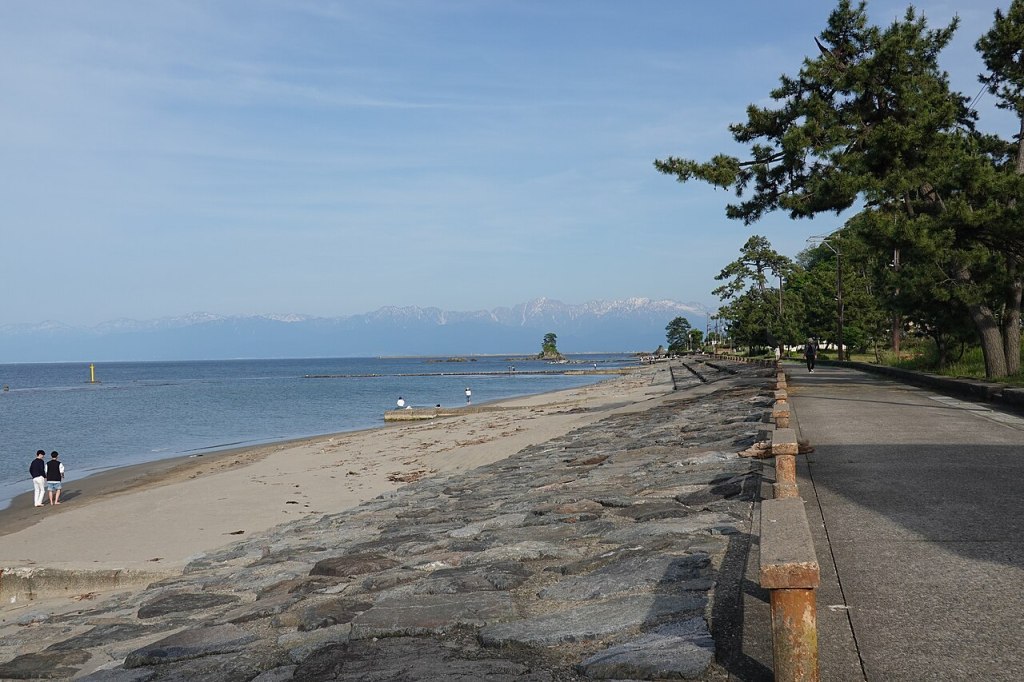
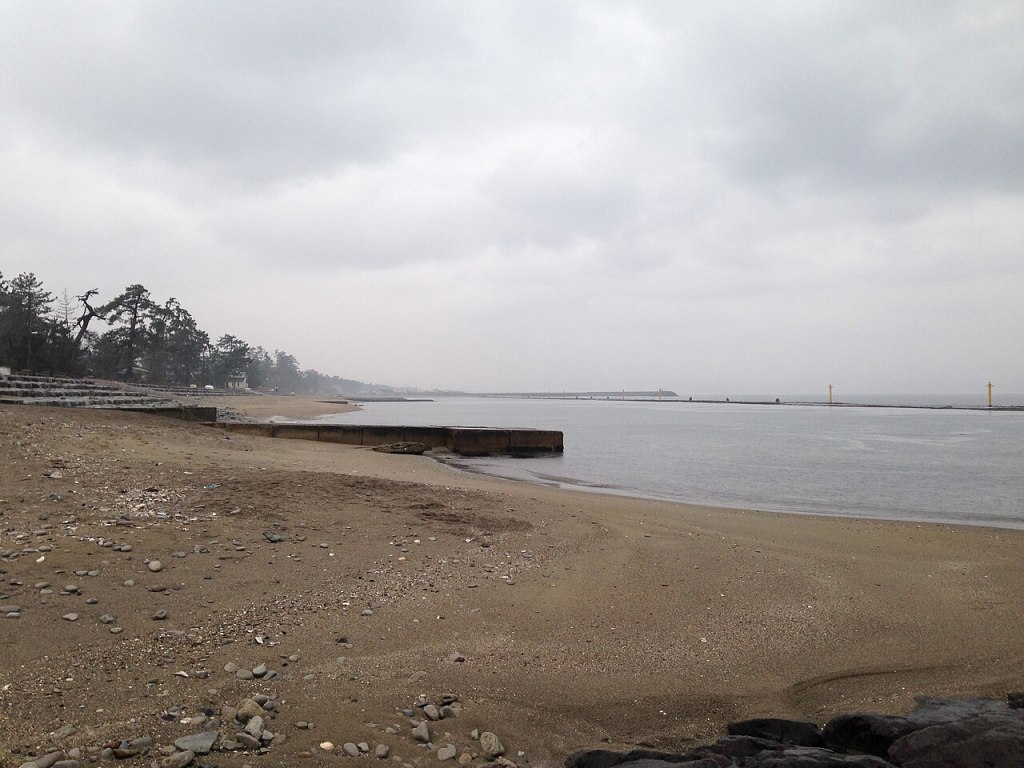
The view of the Tateyama range
The Northern Alps run across the far side of Toyama Bay, and from Amaharashi the range appears as a wall of snow-covered peaks above the water. On clear mornings the mountains seem close enough to touch, and in the afternoon the haze softens them. The classic composition includes the small islet and the pine tree in the foreground, with the peaks behind, and it works at any time of year, though winter and early spring are the sharpest.
Amaharashi station
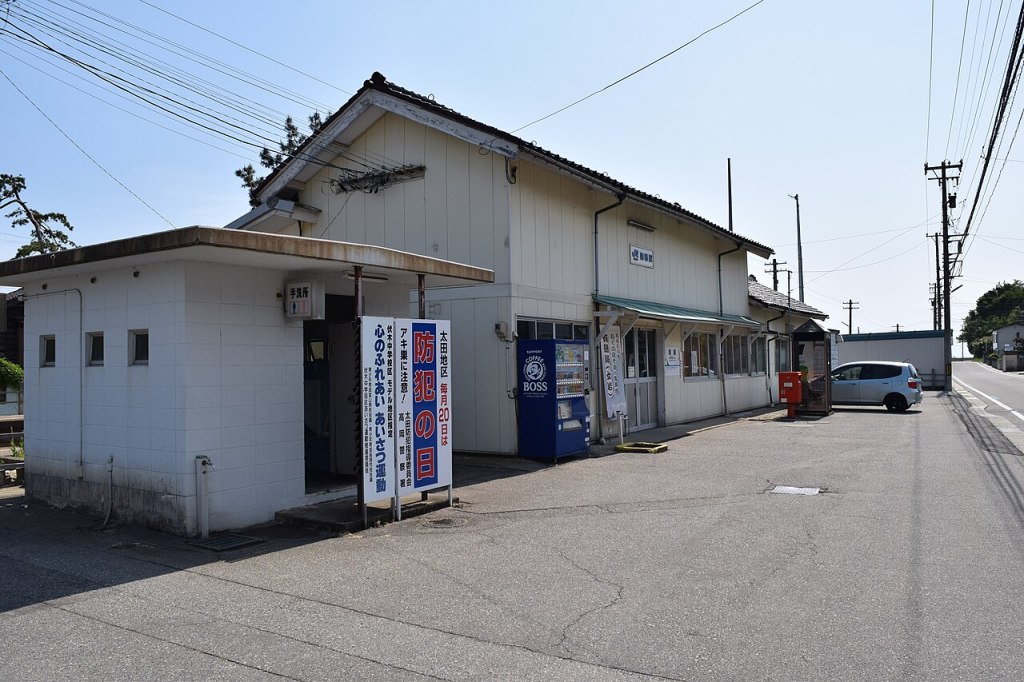
The station is a small wooden building on the JR Himi line, with a platform where you can stand and look straight out to sea. It is an unlikely place for a famous view, and that is part of its charm: commuters, schoolchildren and photographers share the same few metres of platform. Get off the train, walk to the end of the platform, and the whole bay is in front of you.
The beach and the islet
The shore is made of pebbles and flat rocks rather than sand, with a small islet offshore that carries a shrine and a few pines. At low tide you can walk out towards it, and the rock pools are full of small crabs and shells. The water is clear and cold, and in summer it is a place to paddle rather than swim. The beach is short, so a walk of twenty minutes covers it.
The shrine on the headland
A small shrine stands above the coast nearby, reached by a short climb, with a view along the bay in both directions. It is a quiet place, used by local fishermen and families, and the combination of the shrine, the pines and the sea is the other classic image of the area. The climb is short but steep, and the reward is the view south towards Takaoka and north towards the Noto peninsula.
The Himi line
The railway runs along the coast from Takaoka to Himi, and the ride itself is worth taking: the train passes between the sea and the hills, stops at small stations, and gives a view of the bay that most visitors never see from the road. It is a slow, local line, and the journey is short enough to do for its own sake.
Toyama seafood
Toyama Bay is deep and cold, and the fishing ports along it land shrimp, firefly squid in spring, yellowtail in winter and a wide range of white fish. The restaurants near the coast serve sashimi, grilled fish and rice bowls, and the quality is high without the prices of Kanazawa. A bowl of white shrimp or a plate of sashimi is the reason to stop for lunch.
The Noto and Himi coast
The coast north of Amaharashi continues towards Himi and the Noto peninsula, with fishing harbours, small beaches and a quiet road. Himi has a market and a hot spring, and the peninsula beyond is one of the least visited parts of the Hokuriku coast. If you have a car, the drive from Amaharashi north is a good half-day in itself.
The fishing harbour
A small harbour sits just along the coast from the station, with boats pulled up on the concrete and nets drying in the sun. It is a working place, not a display, and the fishermen are often mending gear or sorting the morning’s catch. Walking down in the late afternoon, when the boats come back and the light comes off the water, gives the coast a life that the viewpoint alone does not. Respect the working areas and keep clear of the equipment.
The winter light
In December and January, when the air is at its coldest and clearest, the snow-covered peaks stand out against a pale sky and the sea turns a deep blue. The wind is sharp and the platform is exposed, but this is the season most photographers wait for. Bring a warm layer, keep your hands out of the wind, and give the light time to change over the water.
Food and drink
- Toyama white shrimp are a local speciality, served as sashimi or in a sweet, translucent bowl over rice.
- Firefly squid appear in spring, and the coast’s restaurants serve them boiled, marinated or as tempura.
- Yellowtail from Himi is famous in winter, and the fish shops and restaurants along the coast sell it in various forms.
- Seafood rice bowls are the practical lunch, and the ports near Amaharashi have several small restaurants.
- For coffee and a break, the station area has a cafe or two, and Himi has more choice.
Getting there and around
- Amaharashi station is on the JR Himi line, about twenty minutes from Takaoka and forty from Toyama.
- From Kanazawa, take the shinkansen or a limited express to Toyama or Takaoka, then change to the Himi line.
- By car, the Noetsu expressway and the coastal road reach Amaharashi in about thirty minutes from Takaoka.
- The station is a short walk from the beach, and the shrine is a few minutes further on.
- Buses along the coast are infrequent, so the train or a car is the practical way to arrive.
Where to stay
- Hotels in Takaoka and Toyama are the practical base, with the coast a short train ride away.
- Himi has small inns and a hot spring, convenient for the coast and the market.
- The Noto peninsula has ryokan and guesthouses for travellers continuing north.
- For the view at dawn, stay in Himi or Takaoka and take the first train along the coast.
Best time to visit
- Winter, from December to February, is the clearest season for the mountains, though the coast is cold and windy.
- Spring brings milder weather and the firefly squid, and the mountains still hold snow in March and April.
- Summer is warm and hazy, good for the beach but less clear for the distant peaks.
- Autumn is mild and clear, with good light on the bay and fewer visitors than in spring.
Practical tips
- Check the weather before travelling; the view depends entirely on the mountains being visible.
- Come in the morning for the clearest light and the smallest crowds.
- The beach is pebbles and rock, so wear shoes rather than sandals for walking.
- The station is unmanned at times, so buy your ticket or use the machine before boarding.
- Carry cash for the small restaurants and the shrine.
- If the mountains are hidden, continue to Himi or Takaoka rather than waiting on the platform.
Suggested day-trip outline
- Morning: train from Takaoka to Amaharashi, then the platform and the beach.
- Late morning: the shrine on the headland and the walk along the shore.
- Lunch: a seafood bowl at a port restaurant nearby.
- Afternoon: the train to Himi for the market, or the coast road north.
- Late afternoon: return to Takaoka for the shrine and the town.
- Evening: dinner in Toyama or Kanazawa, with the day’s fish and local sake.
Before you go
Timetables, fares, admission fees, and seasonal access rules can change. Check the official tourism and transport sites linked below for the latest information before you travel.
Explore More of Japan
Published guides that pair with this one:
- Takaoka Travel Guide: Bronze, the Great Buddha and the Old Town
- Toyama Travel Guide: The Castle, the Glass and the Mountains
- Noto Peninsula Travel Guide: Wajima, Senmaida and the Okunoto Coast
- Kanazawa Travel Guide: Kenrokuen and Teahouse Districts
- Takayama Travel Guide: Hida Old Town and Alps Access
Browse every Chubu guide on this site for the rest of the region.
Sources
- info-toyama.com (checked 2026-11-05)
- city.takaoka.toyama.jp (checked 2026-11-05)


Leave a Reply