A practical English guide to Takeda castle ruins in Hyogo: the hilltop stone walls, the sea of clouds, the viewpoints and access.
Operational details such as opening hours, admission fees, and train times can change. Prefer official pages and reconfirm before you travel (sources checked on 05 November 2026).
Why visit
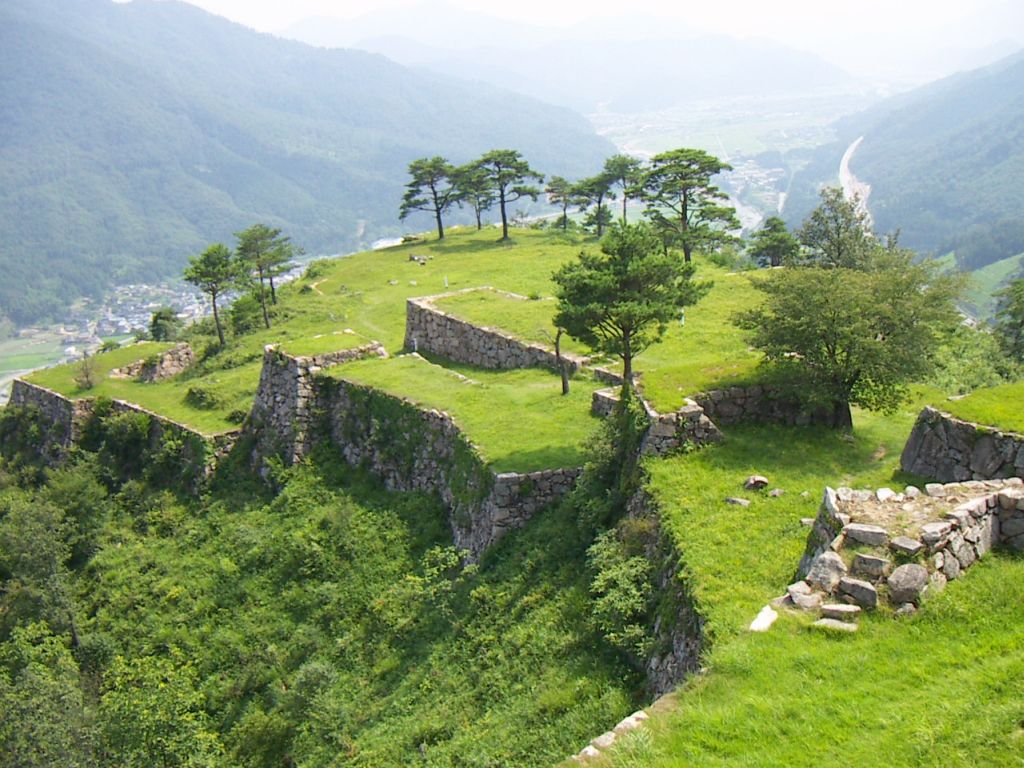
- Takeda castle ruins stand on a ridge above the Maruyama river in northern Hyogo, a long outline of stone walls with nothing on top of them. There is no keep, no gate and no roof: only the foundations, the terraces and the corner stones, laid out on the hill as they were left when the castle was abandoned in the seventeenth century.
- In the early morning of autumn, when the valley is full of mist and the ridge rises above it, the walls appear to float on a sea of cloud. That image gave the place its nickname, the castle in the sky, and it has made it famous far beyond Hyogo. The effect depends on the weather and the season, and it is never guaranteed.
- Even without the cloud, the site is remarkable. The stone walls are original, the plan of the castle is legible, and the walk around the terraces gives a clear sense of how a mountain castle worked. It is a quiet, exposed place, with wind and birdsong, and it rewards an hour of slow walking far more than a quick photograph.
- The surrounding area is part of the visit: the old post town below, the river valley, the terraced fields and the small stations of the Bantan line. It is a rural corner of Kansai that most travellers pass by, and it makes a good day from Osaka, Kyoto or Himeji.
Top places and highlights
The stone walls
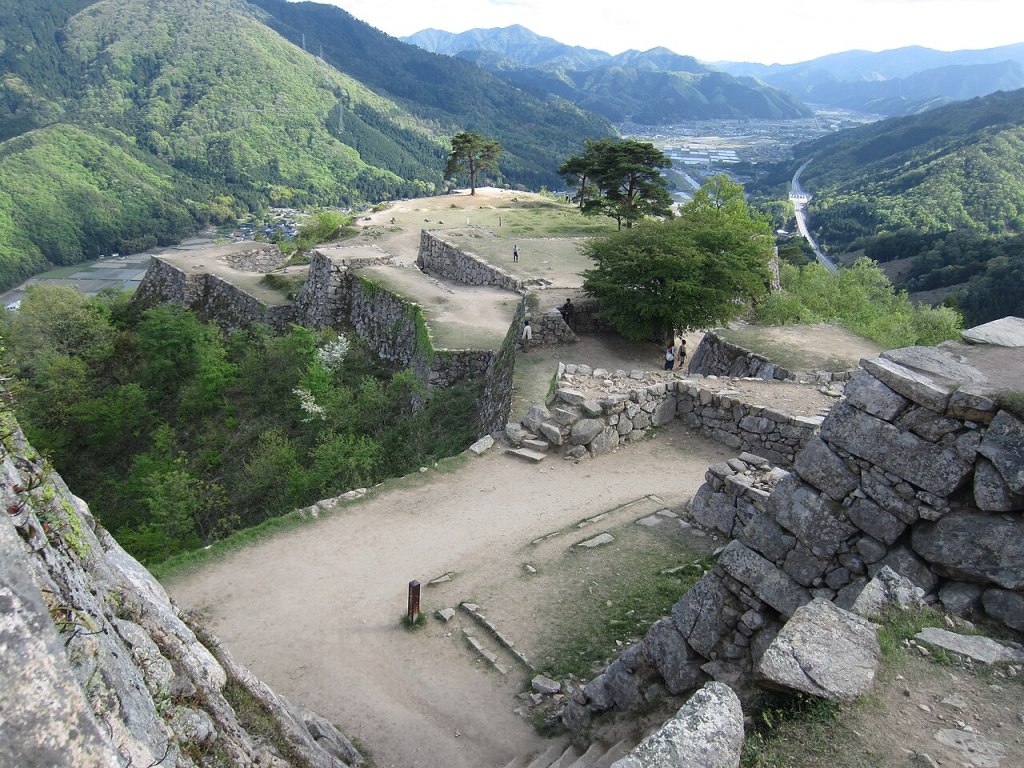
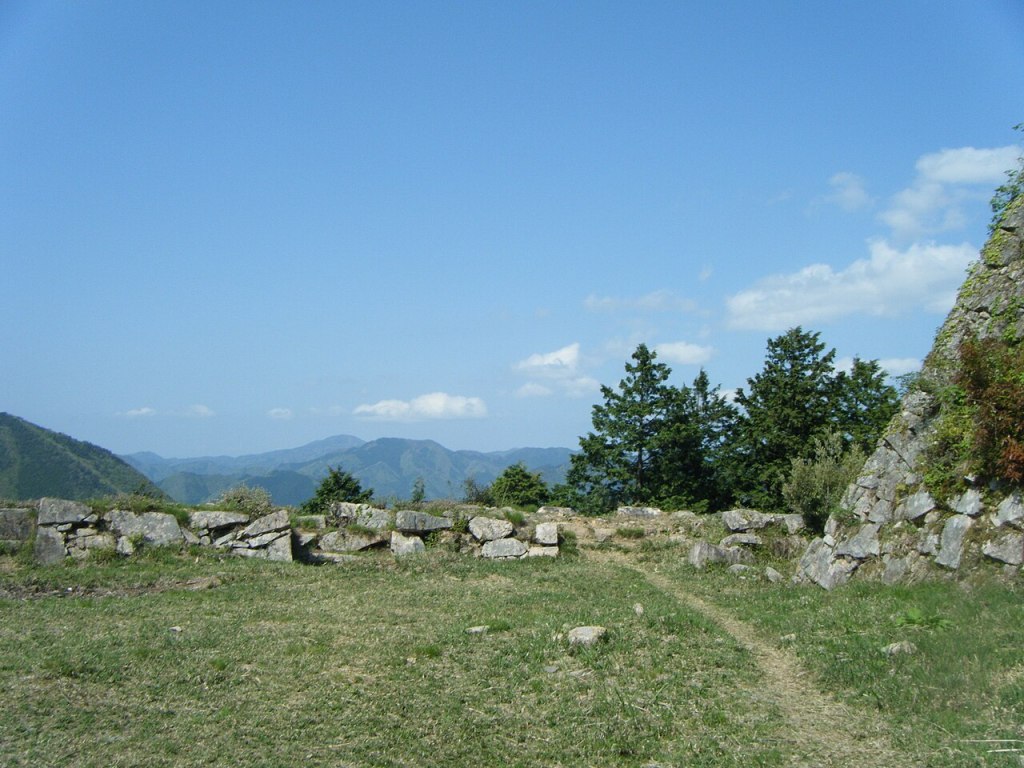
The walls are the reason to come. They run along the ridge in long curves, with corners cut in interlocking stone and terraces stepping down the slope, and they are original rather than reconstructed. Because the buildings are gone, you can read the plan: the honmaru at the top, the secondary enclosures below, the gates and the paths. The stone is rough and uneven, fitted without mortar, and the effect at a distance is of a dry-stone ridge built by hand.
The sea of clouds
On autumn mornings, when the air is cold and the valley is humid, mist forms below the castle and the ridge emerges above it. The phenomenon is most likely from late September to early December, at dawn, after a clear, cold night, and it is never certain. The classic viewpoint is the Ritsuun bridge area below the castle, where the whole ridge is visible. If you are coming for the cloud, plan several mornings or accept that you may not see it.
The walk around the terraces
A path circles the main enclosures and drops to the lower terraces, and walking it takes about an hour at an unhurried pace. The views change with every turn: the river below, the town, the hills, and the long drop from the walls. There are few railings, and the ground is uneven, so it is not a place to rush. In the late afternoon the light on the stone is at its best.
The view from the top
From the highest enclosure the whole valley is visible: the Maruyama river, the town of Wadayama, the railway line and the mountains beyond. It explains why the castle was built here, on a ridge that controls the road and the river crossing. On a clear day the view reaches a long way, and the scale of the site becomes obvious from above.
The old post town below
At the foot of the hill there is a small settlement with old houses, a temple or two and the remains of the castle town, and it is worth walking through on the way up. The streets are narrow, the buildings are wooden, and the pace is very slow. It is not a restored sightseeing district, which is precisely why it feels like the place the castle belonged to.
The Bantan line
The railway that runs through the Maruyama valley is a rural line with small stations, and the ride from Himeji takes about an hour and a half through hills and fields. The approach by train, then bus or taxi, is part of the experience, and the stations themselves are tiny. It is one of the quietest and most attractive rural lines in Kansai.
The local food
The area is known for its soba, its mountain vegetables and the small restaurants around the station, and the food is simple and cheap. Tajima beef comes from the region to the north, and the shops in the valley sell local produce and sweets. It is not a destination for dining, but a bowl of soba after the climb is exactly right.
The walk up from the town
The path from the town to the castle climbs through woods and past a few small shrines, and it takes about half an hour at a steady pace. It is the way the castle was approached on foot, and it gives a sense of the height and the isolation of the site. The path is steep in places and uneven underfoot, and in summer the trees provide the only shade on the climb.
The morning mist below
Even when the cloud does not reach the castle, the valley often fills with a low mist at dawn, and the ridge shows above it in patches. The effect is quieter than the famous sea of clouds, and it lasts only until the sun lifts it. Arrive early, find a viewpoint on the road below, and wait: the whole scene can change in ten minutes.
Food and drink
- Soba is the local lunch, served cold with a dipping sauce, and the shops near the castle and the station make it fresh.
- Mountain vegetables, wild herbs and mushrooms appear in the restaurants of the valley, especially in spring and autumn.
- Tajima beef is raised in the region and served in a few restaurants, at prices lower than in the cities.
- The shops around the station sell local sweets and rice crackers for the walk up.
- For a proper meal, Himeji and Toyooka are within reach and have far more choice.
Getting there and around
- The castle is in Asago, Hyogo, in the Maruyama valley, about an hour and a half from Himeji by train and bus.
- Take the JR Bantan line to Takeda station, then a bus or taxi to the foot of the castle; the bus service is limited.
- By car, the Bantan expressway and the national roads reach the area, with a car park below the castle and a shuttle in busy seasons.
- The climb from the car park to the top takes about twenty minutes on a steep path.
- Access to the castle is closed in winter and at night, and the opening season runs from spring to late autumn.
Where to stay
- There are few places to stay near the castle, and most visitors come from Himeji or Toyooka.
- Wadayama and the surrounding valley have small inns and guesthouses, convenient for an early start.
- Kinosaki onsen, an hour away, is a good base for combining the castle with a hot spring.
- For the sea of clouds, stay locally and start before dawn, since the first buses do not run early enough.
Best time to visit
- Autumn, from late September to early December, is the season for the sea of clouds and the best time to visit.
- Spring is green and mild, with fewer visitors and good walking conditions.
- Summer is hot and exposed on the ridge, with little shade, so go early in the morning.
- The castle is closed in winter, and snow can make the approach dangerous.
Practical tips
- Check the opening season and hours before travelling; the site is closed outside them.
- Wear proper shoes; the path is steep, rocky and unfenced in places.
- For the sea of clouds, arrive before dawn and check the weather forecast for cold, clear nights.
- Bring water and sun protection, since there is nothing on the ridge.
- The buses are infrequent, so plan the return or book a taxi in advance.
- Do not climb on the walls; the stone is old and the drop is real.
Suggested day-trip outline
- Dawn: arrive at the Ritsuun bridge viewpoint for the sea of clouds if the conditions are right.
- Morning: climb to the castle and walk the terraces.
- Late morning: the old post town below and the temple.
- Lunch: soba near the station.
- Afternoon: the Bantan line to Kinosaki or back to Himeji.
- Evening: an onsen and dinner in Kinosaki, or dinner in Himeji.
Before you go
Timetables, fares, admission fees, and seasonal access rules can change. Check the official tourism and transport sites linked below for the latest information before you travel.
Explore More of Japan
Published guides that pair with this one:
- Himeji Castle Travel Guide: The White National Treasure Keep
- Kinosaki Onsen Guide: Yukata, Seven Baths, and the Willow Canal
- Kobe Travel Guide: Beef, the Port and the Hills Above the Bay
- Hikone Castle Travel Guide: A National Treasure Keep by Lake Biwa
- Kyoto Travel Guide: Areas, Temples and a Three-Day Plan
Browse every Kansai guide on this site for the rest of the region.
Sources
- city.asago.hyogo.jp (checked 2026-11-05)
- hyogo-tourism.jp (checked 2026-11-05)


Leave a Reply