A practical English guide to Fukuroda Falls in Ibaraki: the four-tier waterfall, the tunnel viewpoint, the seasons and access from Tokyo.
Operational details such as opening hours, admission fees, and train times can change. Prefer official pages and reconfirm before you travel (sources checked on 05 November 2026).
Why visit
- Fukuroda Falls in the mountains of northern Ibaraki is one of the three great waterfalls of Japan, and it earns the name. The water drops in four distinct tiers through a narrow gorge, the column is broad and white, and the rock walls on either side are dark and wet. It is loud, cool and genuinely impressive, and it is reached by a short walk from a car park rather than a mountain trek.
- The falls are in the town of Daigo, in the Okukuji valley, an area of forest, chestnut orchards and small hot spring towns. It is not on the main tourist routes, which keeps the place calmer than its reputation suggests, and it makes a good day out from Tokyo by car or a slightly longer one by train and bus.
- The visit is short: an hour is enough for the falls and the approach. What makes it worth the journey is the combination of the waterfall, the old tunnel to the lower viewpoint and the surrounding valley, which is quiet and green and full of small stops. In autumn the whole gorge turns colour, and in winter the falls partly freeze.
- It is also a good family stop. The path is short, the tunnel gives children something to explore, and there is a viewing platform close to the water. For travellers who have seen the temples and castles of the Kanto region and want a day in the mountains, this is one of the best options within reach of Tokyo.
Top places and highlights
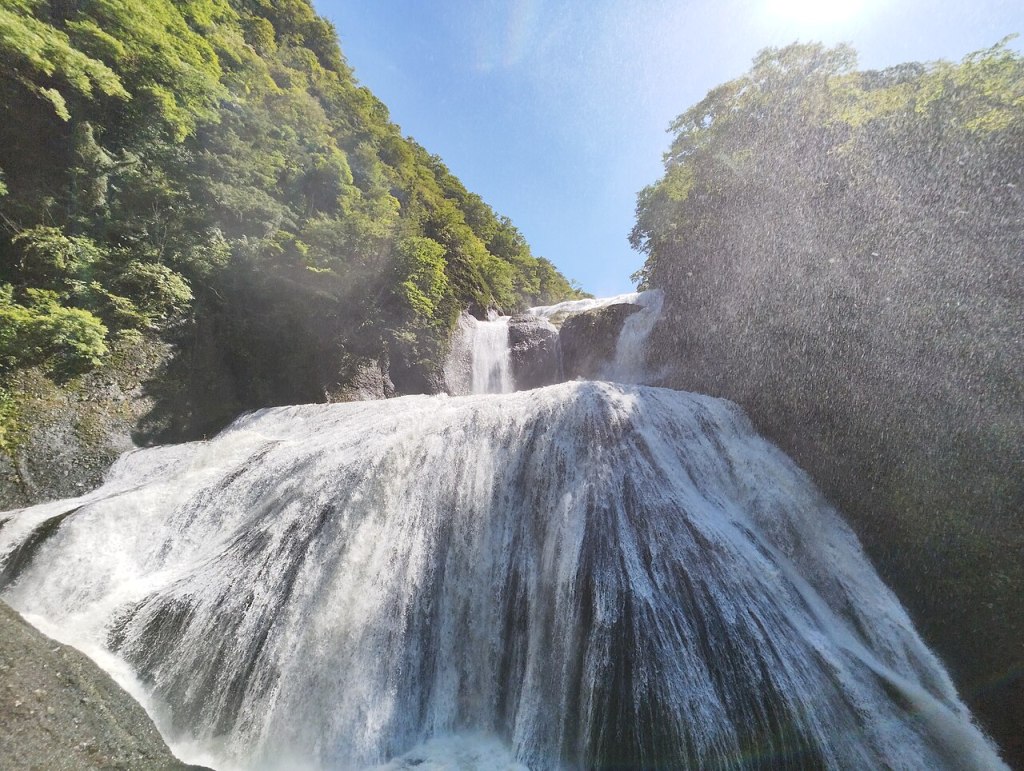
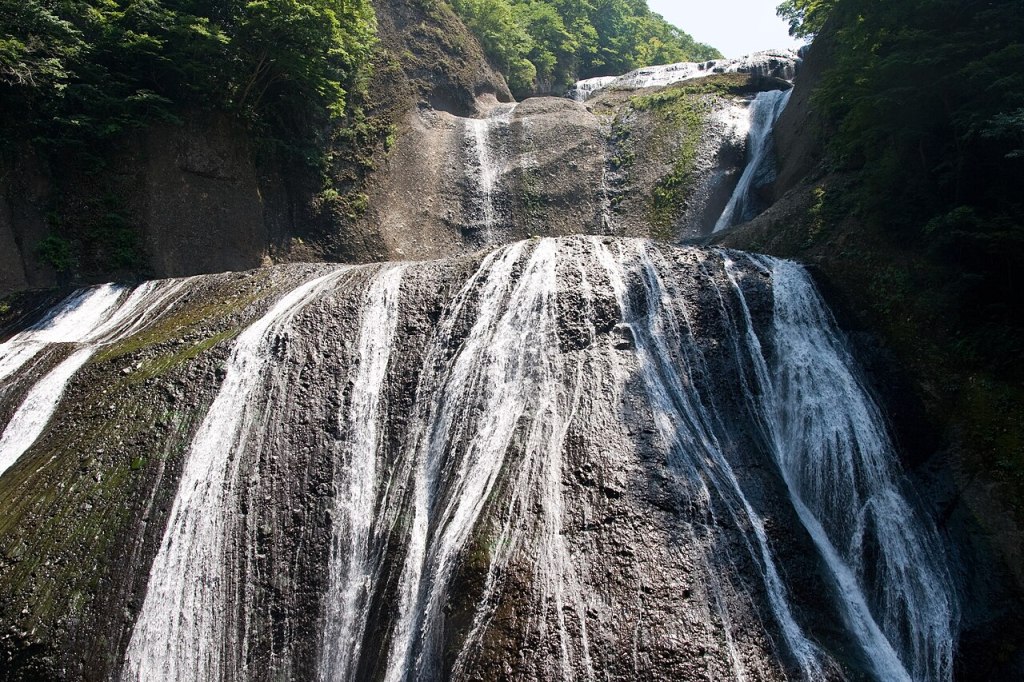
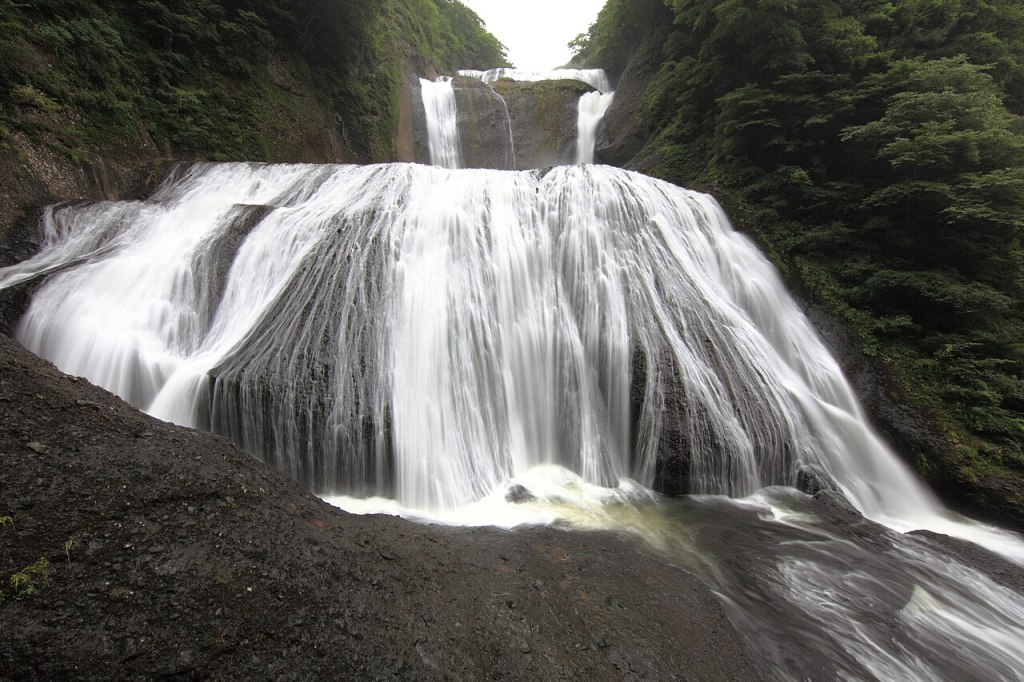
The four tiers
The waterfall drops in four steps, each with its own pool, and the whole face is wide enough that the water spreads into a curtain rather than a single column. The upper tiers are visible from the approach, and the lower ones come into view as you descend. The rock is dark volcanic stone, the spray keeps the gorge cool, and the sound is constant. It is the kind of sight that photographs badly and impresses in person.
The tunnel to the base
An old tunnel cut through the rock leads down to a viewing platform close to the bottom of the falls, and walking through it is part of the experience: it is cool, damp and dim, and the light at the end frames the water. The platform puts you almost under the spray, which is loud and wetting in a way that no photograph conveys. It is the best part of the visit and the reason to go down rather than just look from above.
The autumn colour
The gorge is lined with deciduous trees, and in late October and November the slopes above the falls turn red and yellow against the white water. It is the busiest season, and the car park fills by mid-morning at weekends. If you can come on a weekday, the combination of colour, spray and low sunlight is one of the best autumn scenes in the Kanto region.
The winter icefall
In cold winters the edges of the falls freeze and the spray builds into blue-white ice on the rock, changing the shape of the waterfall entirely. The path can be slippery and some facilities close, but the sight is worth the cold and the crowds are absent. Check conditions before travelling, since snow can close the approach road.
The Okukuji valley
The road along the valley passes orchards, small farms, roadside stations and a few hot spring towns, and it is a pleasant drive in its own right. Daigo has a roadside station selling local produce, and the surrounding area is known for chestnuts and konjac. It is the kind of countryside that rewards a slow drive with stops rather than a direct run to the waterfall.
The approach walk
The path from the car park to the falls is short and paved, with a slight descent, and it passes shops selling grilled food and souvenirs. It is not a hike, which makes the falls accessible to almost everyone, and the walk back up is the only effort involved. Families with small children and older visitors do it comfortably.
Ibaraki food
The region’s cooking is plain and seasonal: soba, grilled river fish, chestnuts, and the konjac that the Okukuji valley produces. The shops near the falls sell chestnut sweets and grilled skewers, and the roadside stations have local vegetables and pickles. It is not destination dining, but it is honest country food at low prices.
The shops at the entrance
A small row of shops and restaurants sits at the top of the path, selling grilled skewers, chestnut sweets, pickles and souvenirs. They are modest places, run by local families, and they are busiest at lunchtime in autumn. The food is simple and warm, which is welcome after the cold spray of the lower platform. It is also where you pay for parking in some seasons, so keep some cash ready.
The spring melt
After the snow melts, the falls carry the heaviest volume of the year, and the noise and spray are at their greatest. The path is often wet and the lower platform is soaked, but the force of the water is the attraction. Late April and May are also when the valley is at its greenest, and the walk from the car park is cool and fragrant.
Food and drink
- Soba is the standard lunch in the valley, served cold with a dipping sauce or hot with vegetables.
- Chestnuts from the Okukuji area appear in sweets, rice dishes and the shops near the falls.
- Konjac, made locally, is sold as blocks, noodles and snacks, and is worth trying in the roadside stations.
- Grilled skewers and simple snacks are sold at the stalls near the car park, especially at weekends.
- For a proper meal, the restaurants in Daigo town and the hot spring inns of the valley are the options, and they close early.
Getting there and around
- The falls are in Daigo, northern Ibaraki, about two and a half hours by car from central Tokyo via the Tohoku expressway.
- By train, take the JR Suigun line to Hitachi-Daigo, then a local bus or taxi to the falls; the bus service is limited.
- The approach road is narrow in places and can be congested in autumn, when the car park fills early.
- A car is the practical way to combine the falls with the valley and the nearby hot springs.
- The path from the car park is short and paved, with steps down to the lower platform.
Where to stay
- Hot spring inns in the Okukuji valley, around Daigo and the surrounding towns, offer meals and baths and are the natural base.
- The larger hotels of Nikko and Mito are within an hour or two and have more choice.
- A few guesthouses and farm stays in the valley suit travellers who want a quiet night in the countryside.
- For a day trip, Tokyo is possible but long; staying one night in the valley makes the visit much more relaxed.
Best time to visit
- Late October and November are the autumn colour season, the busiest and the most spectacular.
- Spring is green and quiet, with the valley coming into leaf and the falls at full flow.
- Summer is cool in the gorge and humid outside it, and the falls are pleasant in the heat.
- Winter can bring ice on the falls and snow on the road; check conditions and expect some closures.
Practical tips
- Come early in autumn, when the car park is still empty and the light is soft.
- Wear shoes with grip for the wet stones near the lower platform.
- Carry a rain jacket or expect to get damp from the spray.
- Check the bus timetable if you are not driving; the service is thin and the last bus is early.
- Bring cash for the parking and the small shops.
- Combine the falls with a hot spring in the valley rather than driving back the same day.
Suggested day-trip outline
- Morning: drive to Daigo and the falls car park.
- Late morning: the upper viewpoints, then the tunnel down to the base platform.
- Lunch: soba or grilled food near the falls or in Daigo town.
- Afternoon: the roadside station and a slow drive through the valley.
- Late afternoon: a hot spring in the valley, or the drive back towards Tokyo.
- Evening: dinner at an inn, or in Mito on the way home.
Before you go
Timetables, fares, admission fees, and seasonal access rules can change. Check the official tourism and transport sites linked below for the latest information before you travel.
Explore More of Japan
Published guides that pair with this one:
- Nikko Travel Guide: Toshogu Shrine, Waterfalls, and a Tokyo Day Trip
- Kairakuen Travel Guide: Mito Plum Garden and the Kobuntei
- Oarai Coast Travel Guide: Seafood, the Aquarium and Ibaraki’s Pacific Edge
- Hitachi Seaside Park Travel Guide: Nemophila, Kochia, and the Pacific
- Mount Tsukuba Travel Guide: The Twin Peaks North of Tokyo
Browse every Kanto guide on this site for the rest of the region.
Sources
- town.daigo.ibaraki.jp (checked 2026-11-05)
- ibarakiguide.jp (checked 2026-11-05)


Leave a Reply