Plan a visit to Kitakami Tenshochi in Iwate, one of Tohoku’s great cherry blossom sites, with access, timing and what to see.
Operational details such as opening hours, admission fees, and train times can change. Prefer official pages and reconfirm before you travel (sources checked on 05 November 2026).
Why visit
- Tenshochi Park in Kitakami is one of the great cherry-blossom sites of northern Japan, a long riverside avenue of trees on the bank of the Kitakami river. In the last week of April and the first days of May the whole stretch turns pale pink, the ground below is carpeted with petals, and the town fills with people who come for a single week of the year.
- Outside that week it is an ordinary, pleasant riverside park with a wide lawn, a few monuments and a view across the water to the hills. That is worth knowing, because the park is not a year-round attraction in the way a castle or a museum is: its reason for existing in the guidebooks is the blossom, and the rest of the year it belongs to the town.
- The setting is what makes the blossom work. The river is broad and slow here, the bank is flat, and the avenue is long enough that you can walk out of the crowds without leaving the trees. Boats run on the water during the festival, and the far bank gives the view back towards the rows of blossom that most photographs use.
- Kitakami itself is a small city on the Tohoku Shinkansen, which makes the park unusually easy to reach for a place of this quality. It is a natural stop between Sendai and Morioka, and a good reason to break the journey north.
Top places and highlights
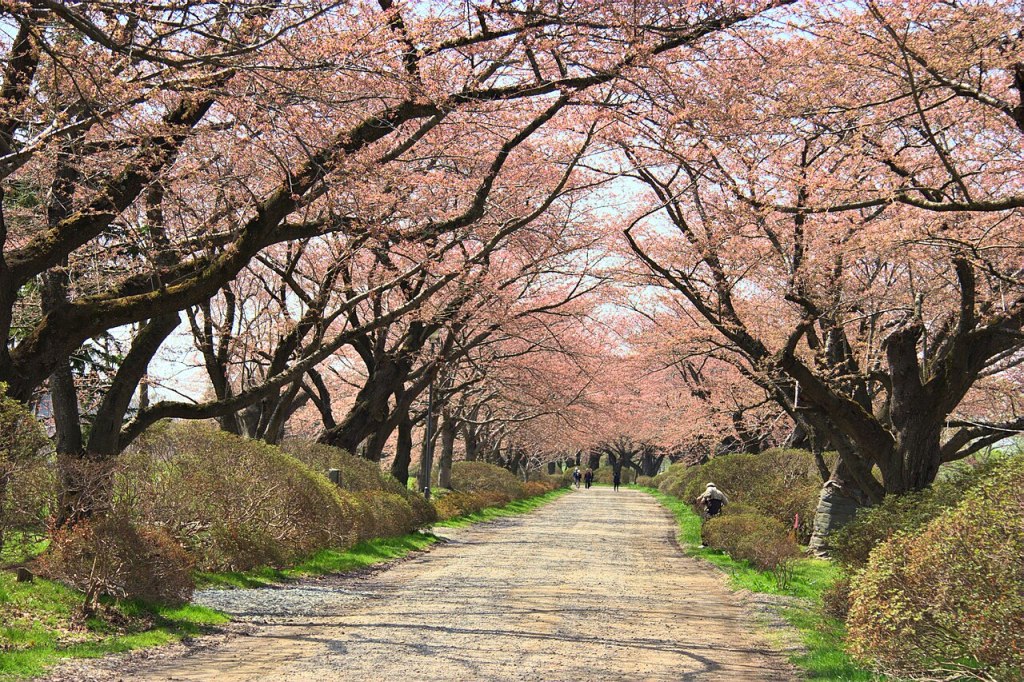
The cherry avenue
The trees line the river bank in rows that run for roughly two kilometres, and in full bloom the effect is a tunnel of pale pink with the water on one side and the grass on the other. Some are old somei yoshino, others are later double-flowered varieties, so the bloom moves through the park over a week or so rather than peaking everywhere at once. Walk the whole length if you can: the crowds cluster near the entrance, and the far end is much quieter.
The river and the boats
The Kitakami river is wide and calm at this point, and during the festival small boats run along the bank with passengers looking up at the blossom. Even without the boats, the water gives the park its space: the view across to the far bank, with the trees on both sides, is the classic image of the place. Stand at the water’s edge in the late afternoon, when the light comes low across the river and the petals start to fall.
The festival atmosphere
For a week or two the park hosts stalls, lanterns and evening illuminations, and the paths fill with families, office groups and photographers. The food stalls sell the usual festival fare, and the atmosphere is festive rather than solemn. If you want the park to yourself, come at dawn; if you want the full experience, come in the evening when the lanterns are lit and the trees are lit from below.
The view from the far bank
Crossing to the opposite bank gives the view back towards the avenue, with the rows of trees reflected in the water and the town behind them. It is a short walk from the park and it is where many of the best photographs are taken. In the morning the light is behind you, in the afternoon it is across the river, and either way the scale of the planting becomes clear.
Kitakami city
The city around the park is a ordinary regional centre with a station on the shinkansen, a shopping street and a few museums, and it is worth an hour if you are waiting for a train. The local history collections explain the river trade and the development of the area, and the cafes near the station are convenient. It is not a destination in itself, but it makes the stop feel complete.
The other seasons
Outside the blossom the park is a quiet riverside space used by joggers and families, with green grass in summer and bare branches in winter. The river is the constant, and the walk along the bank is pleasant in any month. If you are passing through on the shinkansen and have an hour, it is a better place to wait than the station concourse.
Iwate food and sake
The region’s cooking is hearty: soba, jajamen noodles with a thick miso sauce, and the local sake that comes from the rice fields of the Kitakami basin. The restaurants around Kitakami station serve these dishes without fuss, and the portions are generous. After a morning under the trees, a bowl of soba and a walk back along the river is the right way to end the visit.
The riverside walk south
Beyond the cherry avenue the river bank continues south towards the town, with a path used by joggers and cyclists and views across to the far shore. It is quieter than the park and gives a sense of how the river shapes the city. In the evening the lights of Kitakami reflect in the water, and the walk back to the station along the bank is a pleasant way to end the day.
Food and drink
- Iwate soba is the local staple, served cold with a dipping sauce or hot in a simple broth.
- Jajamen, the thick miso noodles of the region, is a filling lunch and appears on menus around the station.
- The festival stalls in the park sell grilled food, sweets and hot drinks during the blossom season.
- Local sake from the Kitakami basin is sold in the shops near the station and goes well with the regional cooking.
- For a quick meal outside the festival, the restaurants in the station building and along the main street are the practical choice.
Getting there and around
- Kitakami station is on the Tohoku Shinkansen, about forty minutes from Sendai and twenty from Morioka.
- The park is about two kilometres from the station, a twenty-five-minute walk or a short bus or taxi ride.
- During the blossom festival extra buses run from the station, and the roads near the park are congested.
- By car, the Tohoku expressway has an interchange near Kitakami, and parking is provided around the park but fills early in the season.
- The park itself is flat and easy to walk, with paths along the river bank.
Where to stay
- Hotels cluster around Kitakami station, mostly business hotels, and they fill months ahead for the blossom season.
- Sendai and Morioka are within an hour by shinkansen and have far more choice, which suits a day trip.
- A few ryokan and hot spring inns in the surrounding countryside offer meals and baths, and need a car.
- For the festival, book as early as possible; the best weekends sell out first.
Best time to visit
- Late April to early May is the blossom season and the only time the park is busy.
- Summer is green and quiet, with the river bank used by local walkers.
- Autumn is mild and clear, and the park is a pleasant stop without crowds.
- Winter is cold and bare, with occasional snow, and the park is at its emptiest.
Practical tips
- Check the bloom forecast before booking; the peak moves by a week or more from year to year.
- Come at dawn for photographs without crowds, or in the evening for the lanterns.
- Wear shoes for grass and uneven ground, and bring a mat if you plan to sit under the trees.
- The park is long, so pick a direction and walk to the end rather than circling the entrance.
- During the festival, expect queues for food and use the extra buses rather than driving.
- Keep off the roots of the trees and take your rubbish away; the park is maintained by the city.
Suggested day-trip outline
- Morning: shinkansen to Kitakami, walk or take the bus to the park.
- Late morning: walk the length of the avenue and cross to the far bank for the view back.
- Lunch: soba or jajamen near the station, or food from the festival stalls.
- Afternoon: the city’s small museums, or a boat ride if it is running.
- Late afternoon: the park again in the low light, then the train north or south.
- Evening: continue to Morioka for dinner, or stay in Kitakami and eat near the station.
Before you go
Timetables, fares, admission fees, and seasonal access rules can change. Check the official tourism and transport sites linked below for the latest information before you travel.
Explore More of Japan
Published guides that pair with this one:
- Morioka Travel Guide: Wanko Soba, the Castle Park and Mount Iwate
- Hiraizumi Travel Guide: UNESCO Temples and Gardens in Iwate
- Hanamiyama Park Travel Guide: Fukushima Flower Mountain
- Kakunodate Travel Guide: Samurai Streets and Weeping Cherries
- Sendai Travel Guide: Gyutan, Jozenji-dori and the Gateway to Tohoku
Browse every Tohoku guide on this site for the rest of the region.
Sources
- city.kitakami.iwate.jp (checked 2026-11-05)
- tohokukanko.jp (checked 2026-11-05)


Leave a Reply