A practical English guide to Koza in Okinawa City: the music town, Eisa hall, wartime history museum, gate street bars, tacos and bus access from Naha.
Operational details such as opening hours, admission fees, and train times can change. Prefer official pages and reconfirm before you travel (sources checked on 05 November 2026).
Why visit
- Koza is the old name for the centre of Okinawa City, and it is the most distinctively mixed place on the island. After 1945 the area grew up around Kadena air base, with businesses aimed at American servicemen, and the result after eighty years is a town where Okinawan, Japanese and American habits have merged into something that exists nowhere else: tacos as a local food, bars that date from the occupation, a music scene that produced some of the country’s best rock, and street signs in three languages.
- Most visitors to Okinawa go from Naha to the castles and the aquarium and skip Okinawa City entirely. That is a mistake if you are interested in how the island actually lives. Koza is not pretty in the resort sense, but it is alive, and the food, music and nightlife are better value than anything on the coast.
- There is also a serious side. The city’s postwar history museum, Histreet, documents the occupation, the land seizures, the prostitution and the way the base economy shaped everyday life, with reconstructed bars and household objects from the years when there was almost nothing. It is free, it is small, and it explains more about modern Okinawa than any of the castle ruins.
- And it is easy to reach: buses from Naha bus terminal run several times an hour to the Goya crossroads in about an hour for 850 yen, which makes Koza a realistic half-day or an evening out rather than an expedition.
Top places and highlights
Koza Music Town
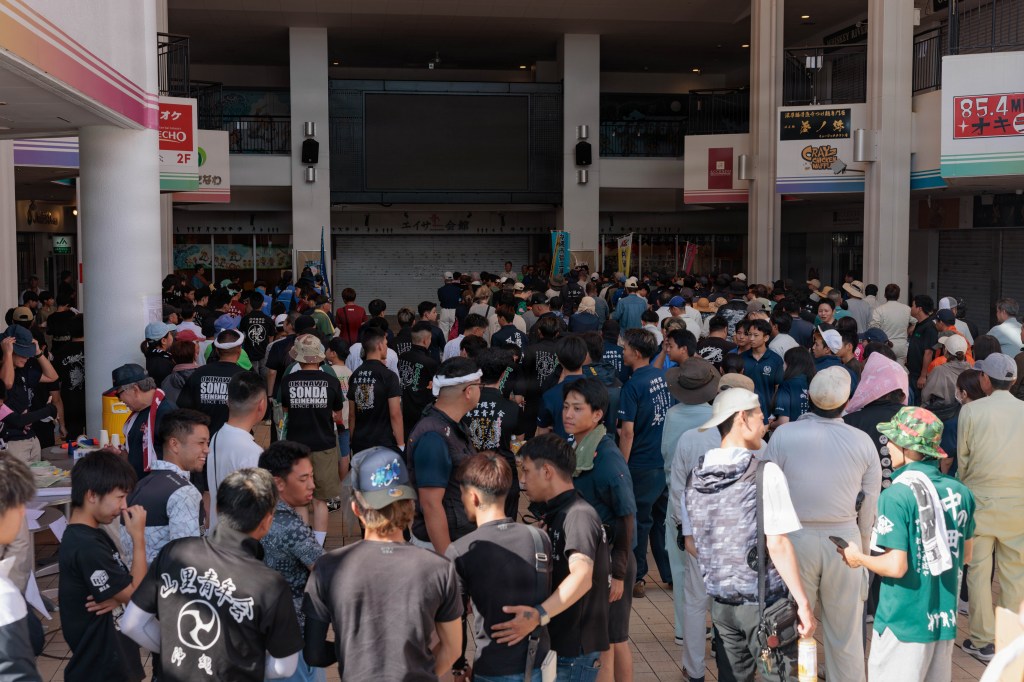
Koza Music Town stands at the Goya crossroads, the centre of the city, and it is a hybrid: a hall for concerts and theatre, a semi-outdoor music square used for events, recording and practice studios, shops, and on the ground floor the city’s tourist association and the Eisa hall. It exists because Okinawa City decided to make music its identity, and the result is a building that functions as a town square rather than a venue. Check the event schedule rather than assuming there is a show; when something is on, the square fills and the whole crossroads changes character. There is a multi-storey car park with about 230 spaces at 100 yen an hour, with discounts for tenants. Even with nothing scheduled, it is the right place to start, pick up a map and get oriented.
The Eisa hall
Eisa is the Okinawan drum dance performed at Obon, and Okinawa City is where the island-wide Eisa festival began in 1956, so it is the right place for the museum devoted to it. The ground floor is free and has a VR eisa experience, a quiz and a shop, and the upper floor is charged and holds the archive: footage of the festival, the history, the different styles of each district and the costumes. The drumming is the thing that stays with you: a dozen men and women with hand drums and sanshin, moving in a formation that takes years to learn. If you are in the city during the Obon season, the street performances are better than any museum, and the festival in late August or early September is the largest of its kind.
Histreet
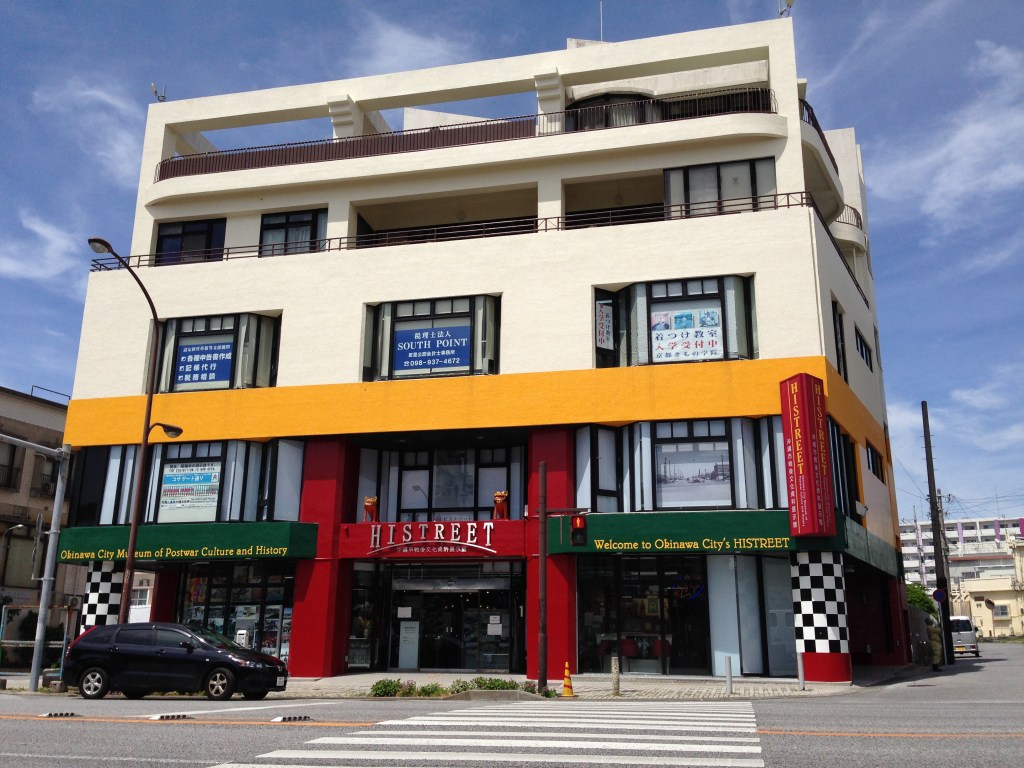
The Okinawa City postwar culture museum, Histreet, is a small two-floor exhibition in a building on the edge of the gate street area, and it covers the years from the base construction to the return of Okinawa to Japan in 1972. The reconstruction of an A-sign bar is the centrepiece, with the fixtures and the atmosphere of the era, and there are photographs, household goods and improvised objects from the years when there was nothing, along with material on the entertainment district and the base economy. It is free and takes an hour at most. It is also the honest version of the island’s recent history rather than the beach-resort version, which is why it is worth the detour even if museums are not normally your thing.
Gate Street
Koza Gate Street runs from Gate 2 of Kadena air base to the crossroads at Music Town, and it is the front door of the city in more than one sense. The shops along it were built for American customers and many still are: clothing in large sizes, imported food, bars, live houses, tattoo studios, and a few businesses that have been there for sixty years. The street is busiest at night, when it looks and sounds like nowhere else in Japan, and the mix of local residents, Filipina and American shopkeepers and Okinawan regulars is the point. The area has a reputation for roughness that is overstated, but it is a working nightlife district rather than a tourist zone, so apply ordinary city sense after midnight. The A-sign bars are the historical detail to look for: after 1953, establishments meeting American sanitary standards were licensed to serve servicemen and displayed an A sign, and one or two of the originals survive.
Tacos and the food of Koza
Tacos became an Okinawan food through the base, and Koza is where to eat them. Charlie’s Takosu has been running since 1956, when it opened as an A-sign restaurant approved for American customers, and it still serves tacos with a soft, slightly sweet shell and a choice of beef, chicken or tuna, plus the Charlie rice, taco meat and cheese over rice, which is the local hybrid. Other places along Gate Street and in the Chuo area do their own versions, including a cafe whose owner is as much of an attraction as the food. The broader food scene is cheap and mixed: Okinawan home cooking, spam and egg, taco rice, and izakaya that serve both Japanese and American dishes on the same menu.
Plaza House and the shopping streets
Plaza House, a few minutes by bus from Goya, opened in 1954 and is usually described as the first American-style shopping centre in Japan, with shops facing a car park and an open mall rather than a Japanese arcade. It still trades, with craft shops, a food market and restaurants including a Chinese place that has been in the same family for four generations. Nearer the centre, the Ichibangai arcade was the first in Okinawa to be covered, in 1975, and it changes character completely between day and night: quiet and local in the afternoon, and full of cheap red-lantern bars in the evening. Senbero, the local habit of a couple of drinks and a snack for a set low price, is the thing to try, and the arcade is where to do it.
Food and drink
- Tacos are the signature, and Charlie’s Takosu on the Chuo side is the historic one, opened in 1956 and still serving beef, chicken and tuna versions with a soft shell.
- Taco rice, the Okinawan invention of taco filling on rice, is everywhere and is the cheap lunch that defines the city.
- Okinawa soba, with pork belly and a clear pork broth, is the other local staple and better value than anything near the resorts.
- Senbero bars in the Ichibangai arcade offer a drink and a snack for a set low price, usually with a red lantern outside, and they are the cheapest night out on the island.
- The pancake house and the burger shops on Gate Street are genuine remnants of the base era and still serve the American side of the town’s cooking.
- Chinsuko and beni-imo sweets are sold everywhere as souvenirs, but the better purchase is the local awamori, which the bars in the arcade will sell by the glass.
Getting there and around
- From Naha bus terminal, routes 23, 31, 77, 90 and 190 run to the Goya stop in about an hour for 850 yen, and the stop is at the foot of Koza Music Town. Buses leave from different stands depending on the route, and together they run five or six times an hour.
- From Naha airport, take a bus into the terminal first, or a direct limousine bus to Okinawa City and a local bus from there; the rail system does not reach this part of the island.
- By car, leave the Okinawa expressway at the Okinawa Minami interchange, which is a few minutes from the centre, or take Route 330 north from Naha, about 40 minutes depending on traffic.
- The city is walkable at its core: Music Town, the Eisa hall, Histreet, the arcades and the gate street are all within fifteen minutes of each other on foot.
- Plaza House is a few minutes by bus or a twenty-minute walk from Goya, and there are buses from the Goya stop.
- Taxis are metered and plentiful in the city, and are the sensible option after a night in the arcade given that drink driving is not an option and the buses thin out.
Where to stay
- Okinawa City has business hotels and a few larger hotels near the interchange, which are considerably cheaper than Naha or the resort coast.
- Staying in the city is the way to see the nightlife without a long return trip; the arcades and Gate Street are at their best after dark.
- Naha is an hour away by bus and has the widest choice, which works for a day trip but not for an evening.
- The resort hotels on the west coast are 30 to 40 minutes by car, and staying there means driving into the city and back, which rules out drinking.
Best time to visit
- The city is a year-round destination, since almost everything is indoors or in arcades, and the summer heat is easier to handle here than on an exposed coast.
- The Eisa season is the reason to time a visit: Obon in the lunar calendar, and the island-wide Eisa festival in late August or early September, when the streets fill with dance groups.
- Winter is mild and quiet, with the bars and restaurants still open, and it is the most comfortable season for walking the gate street.
- The rainy season in May and June and the typhoon season from summer into autumn can disrupt travel, but the city itself keeps working.
Practical tips
- Go in the afternoon and stay into the evening. The gate street and the arcades only make sense after dark, and the museums are the daytime half.
- Take the bus rather than driving. The point of Koza is the bars, and the bus from Naha is cheap and frequent enough.
- Start at Music Town for a map and the Eisa hall, then walk to Histreet, then the arcade, then Gate Street after dark.
- Histreet is free and small, and it explains the town. If you only do one indoor thing, do this rather than the music venue, which may be empty.
- Eat tacos at Charlie’s for the history rather than for the food alone, and try taco rice somewhere cheaper for the everyday version.
- Gate Street is a working nightlife district, not a sight. Keep your voice down, do not photograph people without asking, and use the same sense you would in any city at night.
- Carry cash. Many of the small bars and shops in the arcade do not take cards, and some do not have a card reader at all.
- Check the Eisa hall’s opening days and the Music Town event schedule before you go, since both close on some days and the venue is only worth a stop when something is on.
Suggested day-trip outline
- Early afternoon: bus from Naha to Goya, map and Eisa hall at Koza Music Town, then a walk up Park Avenue to Charlie’s for a late lunch.
- Mid afternoon: Histreet for the postwar history, then the Ichibangai arcade while it is still quiet and local.
- Late afternoon: bus or walk to Plaza House for the shops and a coffee, and back to the centre as the light goes.
- Evening: Gate Street as it comes alive, a drink in an old A-sign bar, and tacos or Okinawan food in the Chuo area.
- Night: senbero in the arcade, then a taxi back to the hotel or the last bus to Naha.
Before you go
Timetables, fares, admission fees, and seasonal access rules can change. Check the official tourism and transport sites linked below for the latest information before you travel.
Explore More of Japan
Published guides that pair with this one:
- Naha and Kokusai Street Guide: Markets, Food and the Old Capital
- Tsuboya Yachimun Street Travel Guide: Naha’s Pottery Quarter
- Yonaguni Island Travel Guide: Japan’s Westernmost Edge
- Himeyuri Peace Museum Travel Guide: Okinawa’s Student Nurses
- Ie Island Travel Guide: Okinawa’s Ferry Escape
- Nago Castle Park Travel Guide: Okinawa’s Hilltop Ruins and Cherry Blossoms
Browse every Okinawa guide on this site for the rest of the region.
Sources
- okinawastory.jp (checked 2026-11-05)
- kozamusictown.com — Access (checked 2026-11-05)


Leave a Reply