A practical English guide to Sakata in Yamagata: Sankyo warehouse and its zelkova avenue, the Honma residence, maiko at Soma-ro, shrine and sea views, and the 200 yen loop bus.
Operational details such as opening hours, admission fees, and train times can change. Prefer official pages and reconfirm before you travel (sources checked on 05 November 2026).
Why visit
- Sakata was one of the great ports of the Japan Sea trade, a kitamae-bune stop where rice from the Shonai plain was loaded for Osaka and Edo, and for a period in the eighteenth century it was one of the richest towns in the country. The merchants who ran that trade, above all the Honma family, left a town of storehouses, merchant houses and temple districts that survived the fires and earthquakes and is now a compact, walkable port quarter.
- What makes it worth a day rather than an hour is the combination: the Sankyo warehouse with its avenue of zelkova trees is one of the most photographed sights in northern Japan, the Honma residence is a genuine Edo-period merchant mansion, and Soma-ro still trains and employs maiko, the Geisha of a small provincial port rather than Kyoto. There is also the sea, a shrine with two self-mummified monks, and some of the best seafood in the region.
- It is not a resort and it does not perform for visitors. Sankyo is free and the warehouses are still working buildings; the Honma house is a museum but a serious one; the maiko are trained dancers rather than a photo attraction. That restraint is the appeal.
- And it is easy: the station is on the coastal line, and a 200 yen city bus loops around the main sights every twenty minutes or so, which makes a car unnecessary.
Top places and highlights
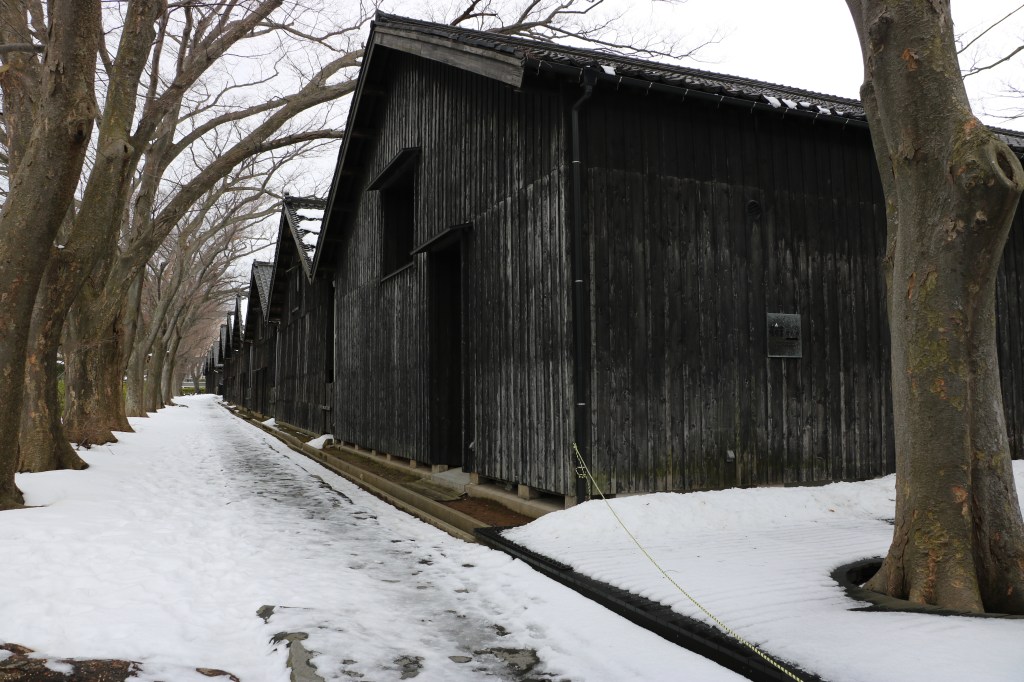
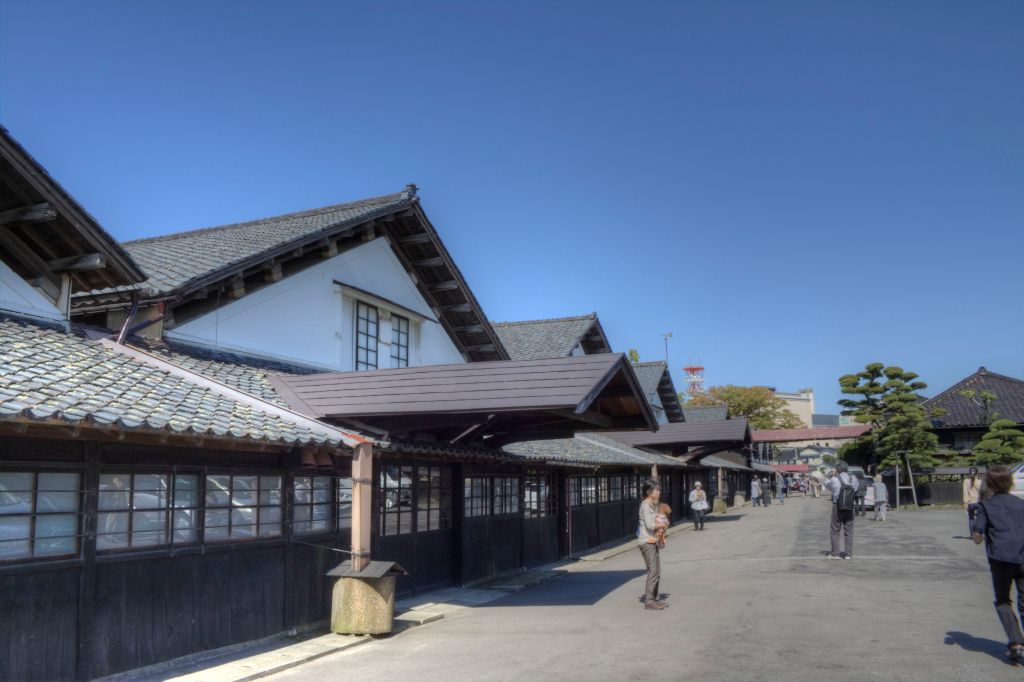
Sankyo warehouse and the zelkova avenue
Sankyo was built in 1893 as a rice store for the Shonai rice exchange, twelve white-walled kura in a row along the edge of the old canal, and nine of them were still used as agricultural warehouses until 2022. The design is a piece of practical engineering: a double roof to keep the heat out, and a row of zelkova trees planted behind to shade the north side, thirty-five trees now well over a century old. The avenue is the reason people come, and it is at its best in early morning or after rain, when the trunks go dark and the white walls carry the light. The exterior is free and open at all hours, and the buildings are lit from dusk until ten. Since 2025 the twelfth warehouse holds an information centre on the history of rice distribution, open from 9 to 4.30 and free, closed over New Year. Note that this is a designated historic site rather than a park: no pets, no smoking, no drones, and the interiors of the working warehouses are closed.
The Honma residence
The Honma family were the rice brokers and moneylenders who effectively financed the Shonai domain, and their main house was built in 1768 as lodgings for the shogun’s inspector, in the formal shoin style of a 2,000-koku retainer, then kept as the family home for generations. It is a single-storey wooden building of twenty-two rooms, 33 metres long, with a great gate and a side gate, storehouses on the north side, and a household shrine in the garden. What is remarkable is that the surrounding trees and walls saved it in the 1976 Sakata fire, which burned a large part of the centre of the town. Entry is 1,100 yen, or 2,000 yen combined with the Honma art museum next door, which has a garden and a tea house and a collection built on the family’s money. Hours run 9.30 to 4.30, and to 4 in winter, with a closure in midwinter.
Soma-ro and the Sakata maiko
Soma-ro occupies the buildings of a ryotei that served the port for two hundred years, restored and reopened in 2000, and it is where the Sakata maiko perform. These are not Kyoto geiko: the port had its own tradition of trained dancers and musicians attached to the restaurants, and the house keeps it alive with a small troupe who greet guests at the door, dance in the upstairs hall and pose for photographs afterwards. Entry to the building and the attached Yumeji Takehisa museum is 1,000 yen, and a ticket including the afternoon dance is 2,500 yen, with the dance and the lunch requiring a reservation. The timber main building, built around a storehouse that survived the 1894 earthquake fire, is itself a registered cultural property. It closes on Wednesdays, and the last entry is at 3.30.
Kaiko-ji and the self-mummified monks
Kaiko-ji is a small Shingon temple in the old entertainment quarter with two sokushinbutsu, monks who undertook a regime of fasting and meditation and were entombed while still alive, and whose bodies were later exhumed and found preserved. Seventeen survive in Japan and six of them are in the Shonai region, but Kaiko-ji is the only temple in the country with two. The temple explains the practice clearly, without sensationalism, and the two figures are displayed in a dim hall behind glass. It is a ten-minute walk from Soma-ro, open from 9 to 5, to 4 from November, closed on Tuesdays, and there is no charge for the grounds although a donation is expected for the hall.
The seafood market and the port
The Sakata seafood market near the harbour is a working fish market with a restaurant wing, and it is where to eat the fish that the port is known for: nodoguro, the blackthroat seaperch that is the luxury fish of the Japan Sea, crab in winter, and the local shimesaba. Sakatan-to, the adjacent building, has stalls and a food court, and the view out to the breakwater and the Oga peninsula on a clear day is the reason to walk down to the water. The market is busiest at lunch and closes in the late afternoon, so plan it as a lunch stop rather than an evening one.
Hiyoriyama park and the old town
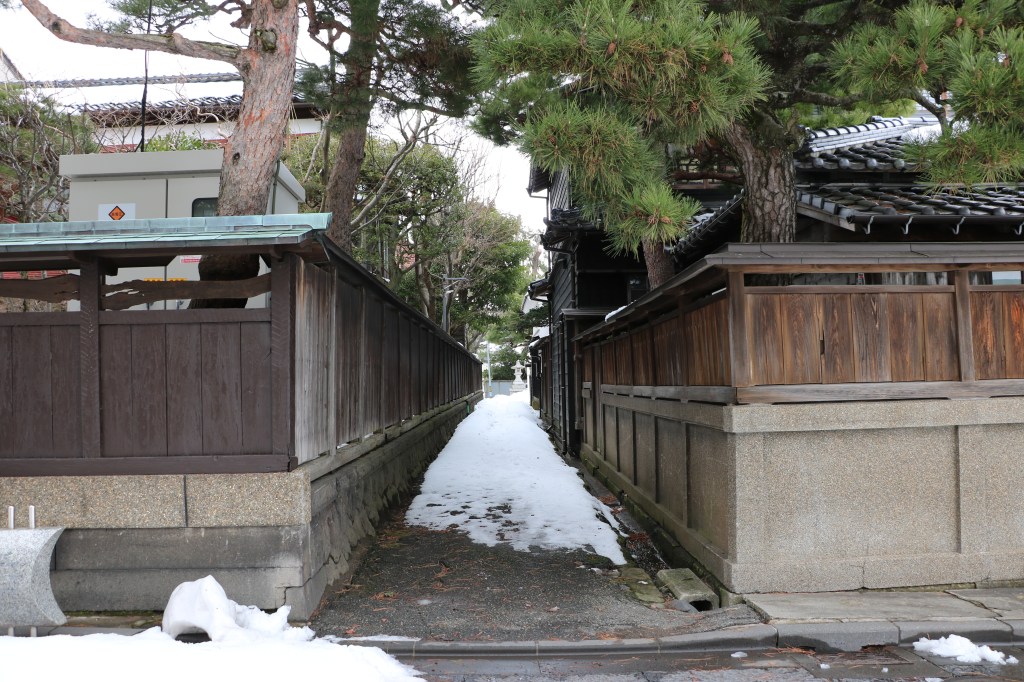
Hiyoriyama is a low hill above the harbour with a park, a lighthouse, and a view back over the town and out to the sea, and it is the place locals go for the first sunrise of the year. Below it, the streets around Nichomachi and the Sugatami alley keep the shape of the port: narrow lanes, wooden shopfronts and a few old merchant houses converted into cafes and shops. The Sugatami Koji alley is the most intact of these, a single lane of dark timber buildings that photographs well in the afternoon. It takes an hour to walk the quarter properly, and the contrast with the wide new streets near the station is the point.
Food and drink
- Nodoguro, the blackthroat seaperch, is the fish to order if you are eating one expensive meal, grilled with salt or in a shabu-shabu.
- Winter brings crab from the Shonai coast, and the market restaurants serve it simply boiled or in a hotpot.
- Shimesaba, the pickled mackerel, is a local staple, and the version here is less sour than in most of Japan.
- Dadacha-mame, the small green soybeans that are a Shonai speciality, appear as a side dish in spring and early summer, and are worth ordering whenever they are on the menu.
- Soba is the other local grain dish, and the shops around the sights serve it cold with a dipping sauce, with tempura or with the local herring.
- The rice itself is the point: Shonai grows some of the most expensive rice in Japan, and the Tsuyahime and Sasanishiki varieties are what the local sake is brewed from.
Getting there and around
- Sakata station is on the JR Uetsu line along the coast, and the Inaho limited express from Niigata takes about an hour and forty minutes. From Yamagata city the route is inland via the Ou line and a change, or by bus.
- The runrun bus, the city’s community bus, runs from the station forecourt to the main sights for 200 yen a ride, 100 yen for students. The Sakata Eki Daigaku line serves Sankyo warehouse in about 9 minutes, the Honma residence in 7 to 12 minutes, and the Soma-ro area via the Sumiyoshi-cho stop.
- Sankyo, the Honma residence and the market are all within a fifteen-minute walk of each other, and the old quarter is flat, so the bus is a convenience rather than a necessity.
- By car, the Sakata interchange on the Nihonkai Tohoku expressway is fifteen minutes from Sankyo, with 27 ordinary spaces and three for coaches. Sankyo’s car park is small and fills in the autumn and on holidays.
- The Shonai airport is twenty minutes away by road, with flights to Tokyo and Osaka, and a shared taxi service meets arrivals.
- The station forecourt has a tourist information desk inside the Mirai-ni building, with maps, bus times and bicycle rental nearby.
Where to stay
- Business hotels cluster around the station and the Mirai-ni complex, which is the practical base for a night.
- There are a few ryokan in the old quarter and near the harbour, and a couple of onsen inns in the surrounding countryside at Yura and Yunohama.
- Yunohama on the coast has hot spring hotels with sea views, twenty minutes by car, and is a good combination with a day in Sakata.
- Booking ahead matters in the cherry season and during the Sakata festival in May, when the town fills.
Best time to visit
- Late April is cherry blossom along the Nikko river and in the parks, and the town is at its most photogenic.
- May brings the Sakata festival, with floats and a procession, and the hotels fill.
- Summer is warm and humid but the sea breeze helps, and the market is at its best for early-morning fish.
- Autumn is clear and dry, with good light on the warehouse walls and the rice harvest in the plain.
- Winter is cold, grey and windy, with snow on the plain and crab at its best, and the sea can be rough enough to close the coastal road.
Practical tips
- Go to Sankyo early. The avenue faces east and the light is best before nine, and the coach parties arrive from mid-morning.
- Ride the runrun bus rather than walking between the station and the sights; it costs 200 yen and saves half an hour.
- Reserve the maiko dance at Soma-ro if you want to see a performance. Without a reservation you see the building and the museum, not the dance.
- The Honma residence and museum share a combined ticket at 2,000 yen, which is worth it if you have the time for both.
- Eat lunch at the market rather than at the tourist restaurants near Sankyo, and go before two o’clock.
- Take cash for the small shops and the temple, and check the day of the week for Soma-ro, which closes on Wednesdays.
- Do not treat Sankyo as a park: no pets, no smoking, no drones, and stay off the grass between the trees.
Suggested day-trip outline
- Morning: Sankyo warehouse before nine, the zelkova avenue and the information centre, then a walk along the canal.
- Mid-morning: the Honma residence and, if time allows, the Honma museum with its garden.
- Lunch: the seafood market for nodoguro or crab, with a look at the harbour afterwards.
- Afternoon: Soma-ro for the building and the Yumeji museum, then Kaiko-ji for the two sokushinbutsu.
- Late afternoon: Hiyoriyama for the view, and the Sugatami alley as the light goes, before the train.
Before you go
Timetables, fares, admission fees, and seasonal access rules can change. Check the official tourism and transport sites linked below for the latest information before you travel.
Explore More of Japan
Published guides that pair with this one:
- Yamadera Travel Guide: The Mountain Temple above Yamagata
- Matsushima Travel Guide: Pine Islands and a Day from Sendai
- Ginzan Onsen Travel Guide: Historic Hot-Spring Town in Yamagata
- Kakunodate Travel Guide: Samurai Streets and Weeping Cherries
- Kaminoyama Onsen Travel Guide: Yamagata’s Castle-Town Hot Spring
- Dewa Sanzan Travel Guide: Haguro, Gassan, and Yudono
- Zao Onsen Guide: Snow Monsters, Skiing, and the Ropeway
- Sanriku Coast Travel Guide: Jodogahama, Kitayamazaki and the Sanriku Railway
- Hachimantai Travel Guide: Iwate’s Volcanic Highlands
Browse every Tohoku guide on this site for the rest of the region.
Sources
- city.sakata.lg.jp (checked 2026-11-05)
- city.sakata.lg.jp (checked 2026-11-05)
- sakata-kankou.com (checked 2026-11-05)


Leave a Reply