A practical English guide to the Sanriku coast around Miyako: Jodogahama, the sightseeing boat, Kitayamazaki cliffs, the Sanriku Railway and rail access from Morioka.
Operational details such as opening hours, admission fees, and train times can change. Prefer official pages and reconfirm before you travel (sources checked on 05 November 2026).
Why visit
- The Sanriku coast is the stretch of Pacific shoreline running north from Miyagi through Iwate to Aomori, and around Miyako it reaches its most dramatic form: a rias coast where the mountains fall straight into the sea, producing cliffs two hundred metres high, white rock stacks in shallow green water, and a railway that runs along the edge of the land rather than through its middle.
- This is also the coast that the 2011 tsunami hit hardest, and visitors should know that before they come. The towns along this shoreline were rebuilt on higher ground, some of the old seafronts remain empty, and there are memorials and preserved ruins in places. That history is not a reason to stay away; it is part of what makes the place what it is, and the way the coast has rebuilt its tourism around hiking, rail travel and small boat trips is worth seeing.
- For a traveller, the Sanriku coast offers three things that fit into two days: Jodogahama, a cove of white rhyolite pinnacles and pines that is a national Place of Scenic Beauty; Kitayamazaki, a run of cliffs that Japan’s own tourism bodies rate at the top of the country’s coastal scenery; and the Sanriku Railway, a small local line that exists because the coast has no space for anything larger, and which has become a destination in itself.
- It is not a convenient place. The train from Morioka takes over two hours, the bus about an hour and forty minutes, and the coastal railway is slow by design. But that is exactly the point: this is the least crowded major coastline in Japan, and the effort of getting there keeps it that way.
Top places and highlights
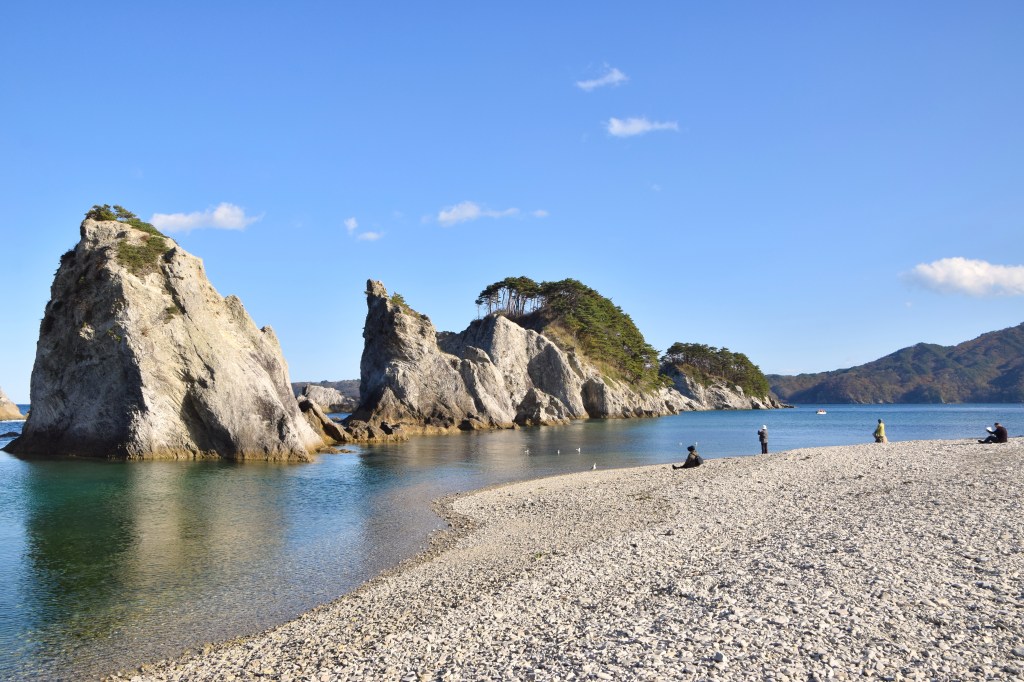
Jodogahama
Jodogahama is a small cove at the mouth of a bay where white rhyolite rock has been eroded into a row of sharp pinnacles standing in clear green-blue water, with pines growing on top of them. The name means something like Pure Land Beach, given in the 1680s by the seventh abbot of a Miyako temple who said the view resembled the Buddhist paradise, and the site is a national Place of Scenic Beauty inside Sanriku Reconstruction National Park. The water is unusually clear and calm for this coast, the beach is a swimming beach in season, and the whole thing is small: an hour is enough to see it properly, two if you swim. It is ten minutes by car from Miyako station, or twenty minutes by bus, and the bus stops right at the far end. Go early in the morning for the flat water and the light on the rocks.
The Umineko-maru sightseeing boat
The Miyako Umineko-maru runs a short sightseeing circuit from the Shitose wharf out to Jodogahama and around the bay, with a guide on board, and it is the cheapest way to see the coast from the water. The route takes about ten minutes one way between the wharf and Jodogahama, and the full bay cruise takes around fifty minutes, and you can get off at Jodogahama and re-board later, which makes it a boat rather than a tour. The draw for most passengers is the gulls: they follow the boat and take food from the hand, sold on board, and the feeding is closer and louder than anyone expects. The boat runs from 9:00 to 17:00, with adult fares around 1,500 yen for the bay cruise and 500 yen for a one-way crossing to Jodogahama, half price for children. It does not sail in bad weather, so confirm on the day rather than assuming.
Kitayamazaki
Kitayamazaki is the other great landscape of this coast: a run of cliffs up to two hundred metres high, cut into a stepped terrace, with rock pillars, caves and stacks at the waterline and nothing but Pacific beyond. The Japan Travel Bureau’s national survey of tourism resources ranks it in the top category for coastal scenery in the country, which is the kind of ranking that sounds like marketing until you stand at the first viewpoint and look down. The viewpoints are reached by a short walk from the car park, with stairs, and the first is close while the second and third require a walk of about thirty minutes each way with some climbing. Below, at Kokehama, small boats run right up to the base of the cliffs, which is the way to understand the scale. Bear in mind the yamase: in summer a cold, wet north-easterly can arrive within minutes and turn the whole coast white, so build some slack into the day rather than treating the view as guaranteed.
The Sanriku Railway
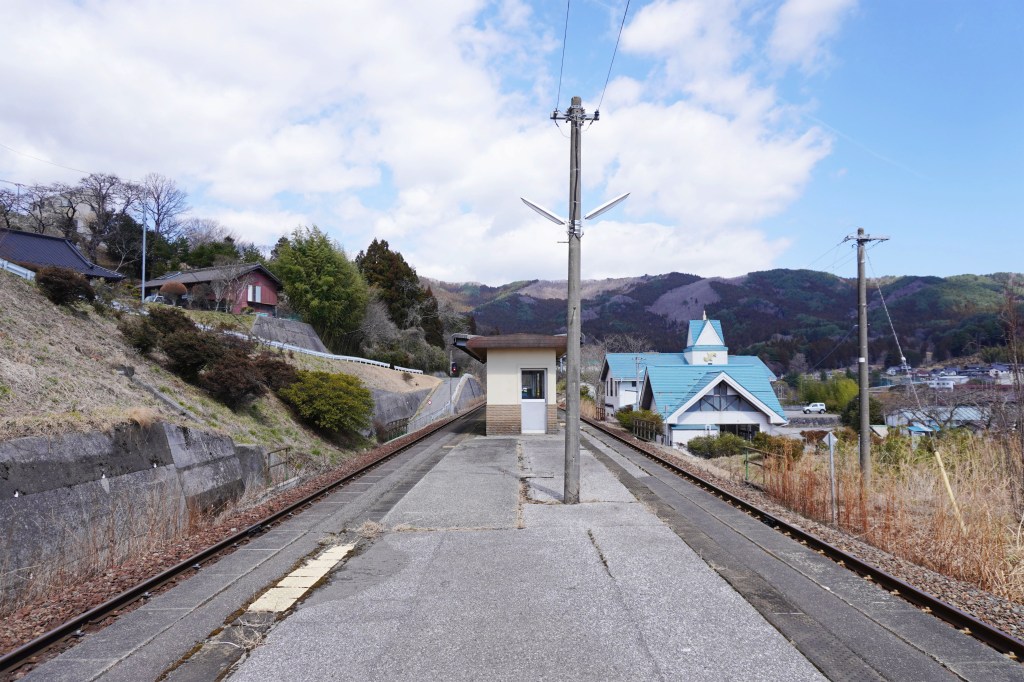
The Sanriku Railway’s Kita-Rias line runs from Miyako north to Kuji along the coast, and it is the reason this trip works without a car. The line is a third-sector railway, rebuilt and extended after the tsunami, with a single car on most services, box seats and long seats in the same carriage, a toilet, and staff who will stop at a viewpoint so passengers can take photographs. The run from Miyako to Kuji takes an hour and a half to two hours, passing fishing villages and coves, and the section between Miyako and Tanohata is the most scenic. Fares are paid on the train if you board without a ticket, and an unlimited pass is available for the whole line. Horinai station, on a headland above the sea, is the one everyone gets off at for the photograph, and the line is closely associated with the television drama Amachan, which is why some stations carry two name plates.
Tanohata, the shared taxi and the Sappa boats
Tanohata is the village below Kitayamazaki, and from Tanohata station a shared sightseeing taxi meets the trains and runs to the cliffs and to Kokehama, where the Sappa boats leave. The taxi is the practical link for anyone without a car: the run to Kitayamazaki costs about 800 yen and takes twenty minutes, the run to Kokehama about 500 yen and ten minutes, and both need reserving an hour ahead. The Sappa boats are small open fishing boats that take passengers along the base of the cliffs, with a skipper who talks about the rock, the fishing and the coast, and the trip is short, wet and the best value on the coast at around 3,800 yen for adults and 3,000 for children, with a minimum boat charge if you are alone. Confirm the day’s sailings rather than turning up, and accept that weather decides.
Miyako itself
Miyako is the base, and it is more useful than it looks. The station area has hotels, the Sanriku Railway shop selling railway goods, and the fish market, which is worth twenty minutes for the sea urchin and the dried fish rather than for a meal. The town was largely destroyed in 2011 and rebuilt inland and uphill, and the seafront at Shitose where the boats leave is a reminder of how the coast has been reorganised. The Miyako fish market and the small restaurants around the station give you a reason to stay a night rather than passing through, and Jodogahama is close enough that you can be there before breakfast. For a longer stay, the coast north towards Tanohata and south towards Yamada has more cliffs, more railway and fewer people.
Food and drink
- Sanriku seafood is the reason to eat here: sea urchin in season, scallops, abalone, salmon and squid, and the fish market in Miyako sells it cheap and fresh.
- Uni (sea urchin) is the local luxury, sold in jars at the Miyako market and served over rice in season. Prices in Miyako are noticeably lower than in Tokyo for the same quality.
- Uni-ben is the Kuji speciality: a small bento of rice topped with sea urchin and abalone, made in limited numbers each day and needing a reservation. It is the one dish people plan a train trip around.
- Wanko soba is the Morioka speciality rather than a coast dish, but it is the natural meal at either end of the journey, served in small bowls that are refilled until you stop.
- Morioka reimen, the cold noodle dish with a chewy texture and a spicy-sweet broth, is the other Morioka dish worth eating before or after the train.
- Restaurants along the coast are few and close early. Outside Miyako and Kuji, plan lunch rather than assuming you can eat at three in the afternoon, and carry something for the gaps.
Getting there and around
- From Tokyo, take the Tohoku Shinkansen to Morioka, about two hours and ten minutes, then either the JR Yamada line to Miyako in about two hours twenty minutes, or the Iwate Kenpoku 106 express bus in about one hour forty minutes. The bus is the faster and cheaper option.
- From Sendai, the drive up the Sanriku Expressway takes about three hours to Miyako, and the coastal road is scenic rather than fast. Note that the expressway has half-interchanges where you can only enter or exit in one direction.
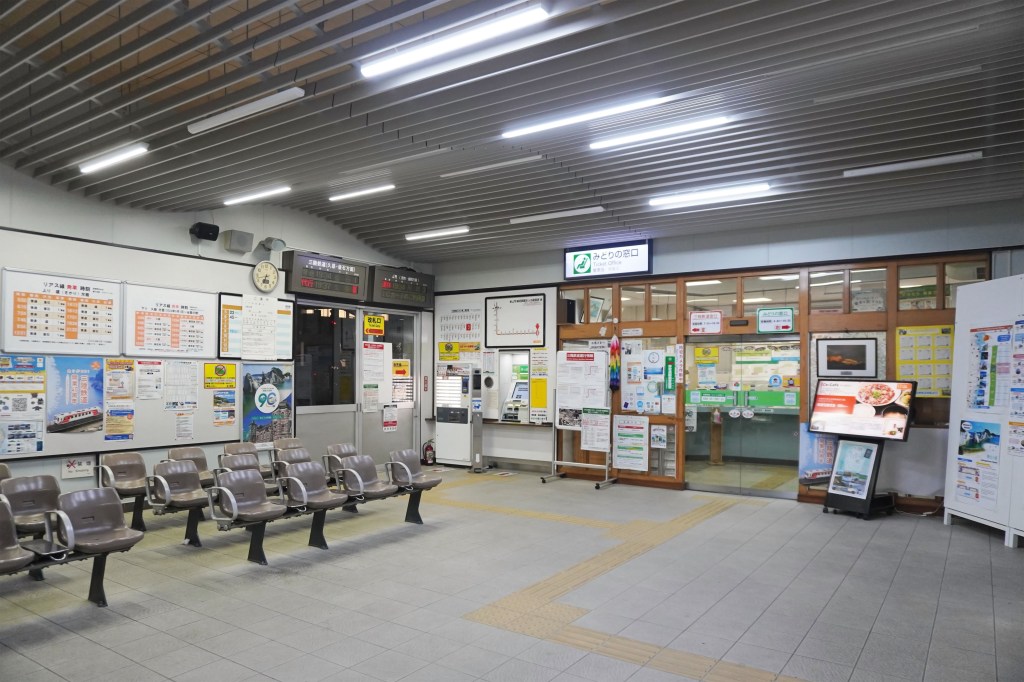
- Miyako is the base: Jodogahama is ten minutes by car or twenty by bus, the Umineko-maru wharf is eight minutes by bus, and the Sanriku Railway station is in the same building as the JR station.
- The Sanriku Railway runs north from Miyako to Kuji in about an hour and a half, with trains roughly hourly. Fares are paid on board if needed, and a one-day pass is available.
- Kitayamazaki needs the train to Tanohata plus the shared sightseeing taxi, about fifty minutes plus twenty minutes, and the taxi should be reserved an hour ahead. Allow at least three hours for the round trip from Miyako.
- Driving is the most flexible option for the coast: the Sanriku Expressway and Route 45 run the length of it, car parks at Jodogahama and Kitayamazaki are free, and rental cars are available at Miyako station.
- From Kuji, buses run back to Morioka in about two hours twenty-five minutes, and the JR Hachinohe line continues north. This makes a one-way trip Miyako to Kuji by rail and back by bus a workable day.
Where to stay
- Miyako has the widest choice: business hotels near the station, a resort hotel at Jodogahama with sea views, and small inns along the coast. Staying at Jodogahama means being on the beach before the buses arrive.
- Tanohata has minshuku and small inns, which make Kitayamazaki a morning rather than a day trip. This is the best base for the cliffs and the Sappa boats.
- Kuji at the northern end has hotels near the station, useful for anyone riding the whole Sanriku Railway line and continuing to Hachinohe or back to Morioka.
- Ryusendo, inland from the coast, has a handful of inns around the cave, which suits anyone combining the coast with the limestone cave and the Iwaizumi area.
Best time to visit
- Summer is the season for Jodogahama as a beach, with swimming from the opening of the season in July, and the Sappa boats and sightseeing boats running at full schedule. It is also the season of the yamase, the cold north-easterly that can erase the view in minutes.
- Autumn is the best all-round season: clear air, strong seafood, and the cliffs at their sharpest. The railway ride is at its best in October and November.
- Spring is mild and green, with cherry blossom inland around Morioka and fewer visitors on the coast. Some boat services run a reduced schedule before the summer season.
- Winter is cold, windy and quiet, with rough seas that can suspend the boats and the Sappa trips. The cliffs in snow and grey water are spectacular in a bleak way, but the coast is not set up for visitors in the way it is in summer.
Practical tips
- Base yourself in Miyako and do Kitayamazaki as a half day. Trying to see both Jodogahama and the cliffs on a day trip from Morioka is not realistic by public transport.
- Reserve the Tanohata shared taxi an hour ahead, and check that it meets your train. It is the only practical way to reach Kitayamazaki without a car.
- Accept that the yamase can hide the view. The visitor centre at Kitayamazaki shows footage of the cliffs in all seasons, which is a consolation rather than a substitute.
- Take the Sappa boat at Kokehama if the sea allows. Looking up at the cliffs from water level is a different landscape from the viewpoint, and it is the highlight for many visitors.
- Buy the Sanriku Railway one-day pass if you are doing more than one hop, and sit on the sea side. On some services the crew stops the train at a viewpoint for photographs.
- Bring cash for the shared taxi, the boats and smaller restaurants along the coast; card acceptance is patchy outside the hotels.
- Do not plan a tight connection at Miyako between the JR line, the Sanriku Railway and the buses. Delays happen, and the coastal timetable is thin.
- Treat the tsunami history with respect. Some seafront areas are empty by design, and memorial sites are not photo opportunities. Follow the signage and keep your voice down.
Suggested day-trip outline
- Day 1, morning: bus from Morioka to Miyako, drop bags, then the bus or a taxi to Jodogahama for the rocks and the water before the day trippers arrive.
- Day 1, midday: walk to the Umineko-maru wharf, take the boat to Jodogahama or the bay cruise with the gulls, then lunch at the fish market.
- Day 1, afternoon: Sanriku Railway north to Tanohata, shared taxi to Kitayamazaki for the viewpoints, and back to Miyako or stay in Tanohata.
- Day 2, morning: if staying in Tanohata, the Sappa boat at Kokehama in the morning light, then the railway north to Kuji.
- Day 2, afternoon: uni-ben or the Kuji amber museum, then the bus back to Morioka or the train north to Hachinohe.
Before you go
Timetables, fares, admission fees, and seasonal access rules can change. Check the official tourism and transport sites linked below for the latest information before you travel.
Explore More of Japan
Published guides that pair with this one:
- Hiraizumi Travel Guide: UNESCO Temples and Gardens in Iwate
- Geibikei Gorge Travel Guide: A Boat Ride in Iwate
- Tono Travel Guide: Folktales, Farmhouses, and the Iwate Countryside
- Matsushima Travel Guide: Pine Islands and a Day from Sendai
- Hachimantai Travel Guide: Iwate’s Volcanic Highlands
- Hachinohe and Tanesashi Coast Travel Guide: Aomori’s Pacific Edge
- Kaminoyama Onsen Travel Guide: Yamagata’s Castle-Town Hot Spring
- Kitakata Travel Guide: Fukushima’s Storehouse Town and Ramen
- Shiroishi Castle Travel Guide: Miyagi’s Rebuilt Castle Town
Browse every Tohoku guide on this site for the rest of the region.
Sources
- city.miyako.iwate.jp (checked 2026-11-05)
- iwatetabi.jp (checked 2026-11-05)
- sanrikutetsudou.com (checked 2026-11-05)
- iwate-kenpokubus.co.jp (checked 2026-11-05)


Leave a Reply