Plan a trip to Hachimantai in Iwate for its volcanic plateau, alpine ponds, autumn colour and mountain onsen.
Operational details such as opening hours, admission fees, and train times can change. Prefer official pages and reconfirm before you travel (sources checked on 04 November 2026).
Why visit
- Hachimantai is a shield volcano rather than a peak, a broad high plateau on the border of Iwate and Akita where the top is a rolling plain of ponds, marshes and small volcanic cones. The highest point is 1,613 metres, and because a road runs almost to the top, the alpine zone is reachable in a morning rather than a day of climbing.
- The signature sight is the Dragon Eye. Kagami-numa, a small crater pond near the summit, thaws in a ring each spring, and for a few weeks the remaining snow and the blue water form the shape of an eye. It is a genuinely rare combination of snow depth, meltwater and temperature, and the town and prefecture publish a daily observation diary while it lasts, usually from late May into mid June.
- The plateau is volcanic in the most visible way. Steaming fumaroles, mud volcanoes, a pond of hot blue-grey mud and a river of highly acidic water all sit within a short drive of each other, and the walking trails are boardwalks through the smell of sulphur and the sound of escaping steam. This is not a distant view of a volcano but a walk through one.
- The Aspite Line, the 27-kilometre road that crosses the plateau, is a destination in itself. It opens in mid April with several metres of snow standing on both sides, forming the snow corridor, and in autumn it turns into one of the best drives for colour in northern Tohoku. It closes for the winter in early November, and the date is published each year.
- The hot springs are unusually varied. Toshichi sits at about 1,400 metres, among the highest in Tohoku, Goshogake keeps the wooden buildings and the mixed bathing of a mountain cure resort, and Tamagawa is one of Japan’s most acidic springs, with a flow said to be among the largest in the country. Staying overnight is the way to see the plateau without the day-trip traffic.
- In winter it becomes a ski destination. Appi Kogen, on the eastern side of the same plateau, is one of the largest ski areas in Tohoku, with long groomed runs and tree skiing, and the surrounding resorts and pensions stay open when the Aspite Line is buried. The mountain does not shut down in winter, it changes shape.
Top places and highlights
The Dragon Eye at Kagami-numa
Kagami-numa is a small pond near the summit that thaws in a ring while the centre stays frozen, and for a few weeks it looks like a blue eye ringed with white. The phenomenon usually appears from late May to mid June, but the timing moves with the snow and the spring temperature, and the prefecture and the visitor centre publish updates through the season. In 2026 the eye opened on 11 June and had broken up by late June, an unusually late and long season. The walk from the summit car park takes about 20 minutes, mostly over snow, and the route is marked with bamboo poles.
The summit circuit and Gama-numa
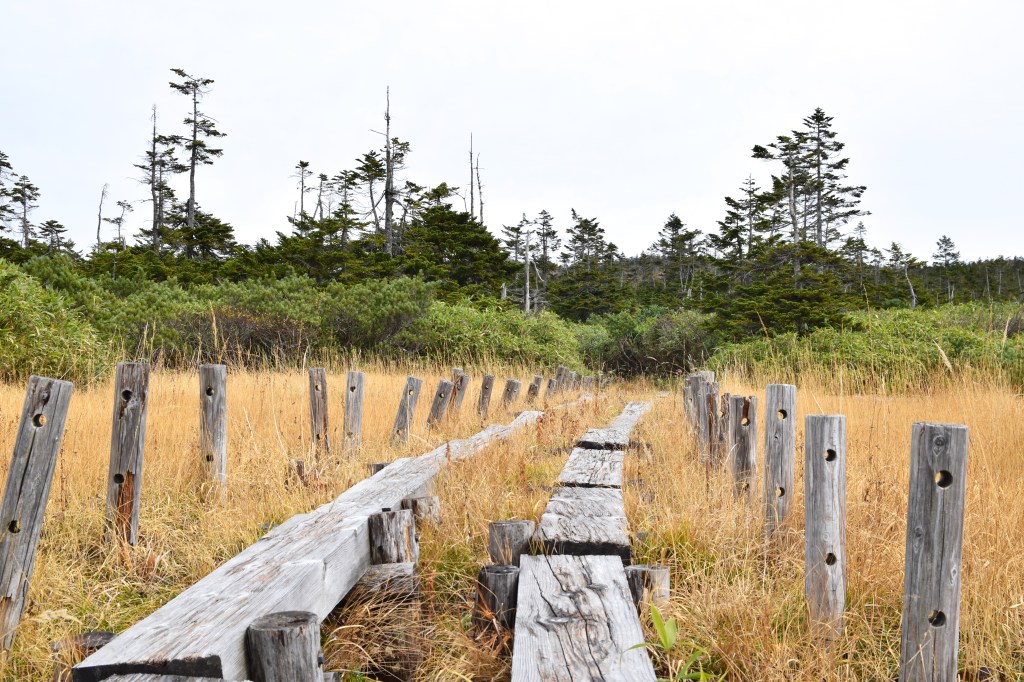
From the summit rest house a loop of about 60 to 90 minutes passes Kagami-numa, the summit itself and the viewpoint over Hachiman-numa and Gama-numa. The ponds sit in old craters among stands of maries’ fir, and the boardwalk sections make the marsh accessible without damaging it. In green season the route is a wildflower walk, and in autumn it is one of the first places in the region to turn.
The Aspite Line and the snow corridor
The Aspite Line runs about 27 kilometres across the plateau between Iwate and Akita, and it opens in mid April while the snow is still several metres deep on either side, leaving walls of snow along the roadside for the first weeks. It closes for the winter in early November, with the 2026 closure set for 17:00 on 4 November, so the road is a seasonal experience rather than a permanent one. The summit car park has 107 spaces and charges a fee, and the rest house at the top is open only while the road is open.
Onuma and its marsh boardwalk
Onuma is the plateau’s best easy walk: a 1.2-kilometre path around a pond and marsh, taking about 50 minutes, with wooden boardwalks over the wet ground. From the snowmelt in late spring the sequence runs from skunk cabbage to marsh marigold, rhododendron and azalea, and the surrounding birch and beech turn in autumn. The Hachimantai Visitor Centre sits across the road and is the place to pick up current trail and wildlife information.
Goshogake Onsen and its mud volcano
Goshogake is a small hot spring resort with a natural research trail of about 50 minutes that passes fumaroles, the blue-black mud pool called Konya Jigoku, a bubbling mud volcano and the hot pond of Oyu-numa. The ryokan keeps the atmosphere of a mountain cure house, with wooden buildings and simple baths, and the trail starts from its door. It is about 20 minutes by car from the summit area and is the best place to see the volcano’s machinery up close.
Tamagawa Onsen
Tamagawa is one of the most acidic hot springs in Japan, with a large flow of acidic water and clouds of steam rising from the hillside. The natural research trail of about 30 minutes passes the O-buki, the main spring, and the fumaroles, and the site is also known for the rock baths where bathers lie on heated stone. It is on the Akita side, roughly 30 minutes by car from the Goshogake area, and the access road is seasonal.
Appi Kogen in winter
Appi Kogen is one of the largest ski resorts in Tohoku, with long runs, a gondola and terrain that suits intermediate skiers, and it stays open through the winter when the plateau road is closed. The resort has its own hotels and pensions, and the surrounding beech forest is used for guided snowshoe and nature walks. It is the winter face of the same mountain and a separate trip from the summer plateau.
Food and drink
- The signature dish of the summit is Genta curry, served at the Hachimantai Summit Rest House: beef sinew from Iwate stewed until soft, served over rice or as Genta curry Inaniwa udon. The rest house is open from 9:00 to 17:00, with the food counter running from 10:00 to 15:30 and last orders at 15:00, and only while the Aspite Line is open.
- The plateau food is mountain food: soba, udon, rice bowls and hot pots in the rest houses and the onsen inns, with Iwate beef and local vegetables. In the surrounding town, Hachimantai’s cool climate is used for highland vegetables, and the roadside stations and farm shops sell them in season.
- Iwate is sake country, and the towns around the plateau have breweries, with the rice and the water of the region behind them. Morioka, an hour away, has the prefecture’s densest restaurant scene and its own noodle culture, including reimen and wanko soba.
- In winter, eating is concentrated in the ski resorts and the onsen villages, and several mountain restaurants close with the road. Appi’s hotels run their own restaurants, and the pensions around the resort serve set dinners, so booking half board is the practical choice.
Getting there and around
- By car from the Iwate side, the Tohoku Expressway’s Matsuo-Hachimantai interchange is about 40 minutes from the summit via Route 45 and the Aspite Line, a distance of roughly 26 kilometres. From the Akita side, the Kazuno-Hachimantai interchange is about 50 minutes from the summit.
- By public transport, the Iwate Kotsu nature walk bus runs from Morioka station to the summit in about two hours, and it operates through the green season rather than all year. The timetable is published by the Hachimantai City Tourist Association and should be checked before planning a car-free trip.
- The plateau is crossed by the Aspite Line and the Jukai Line, and both close for the winter, usually from early November to mid April. The Jukai Line has also been closed by road subsidence in recent seasons, which cuts the through route from the Matsukawa side, so check the current road status before relying on a loop.
- The summit car park at Mikaeri Pass has 107 spaces and charges a fee, and it fills early on weekends in Dragon Eye season. The summit rest house, the trailheads and the toilets are all there, and the toilet is the only one on the upper road, so use the facilities at the base before driving up.
- Distances on the plateau are short in kilometres but slow in time. Allow 20 to 30 minutes between the summit and Goshogake, and about 30 minutes more to Tamagawa, and do not plan to see all of it between two buses.
Where to stay
- The Hachimantai Onsenkyo is a string of small hot spring villages around the plateau, including Toshichi at about 1,400 metres, Goshogake with its mud volcano, Fukenoyu, Obuka and Onuma. The inns are traditional and small, and staying in one is the way to see the mountain in the early morning and the evening.
- Tamagawa Onsen has its own lodging, simple and oriented to long cures, and the experience is closer to a mountain sanatorium than a hotel. It is on the Akita side and is the natural base for the volcanic trails.
- Appi Kogen has hotels and pensions at the base of the ski resort, which is the winter base and also a green-season base for walking and golf. Morioka, about an hour away, has the widest range of city hotels and the best transport connections.
- Book ahead for the Dragon Eye weeks and for the autumn colour, when the small inns and the summit parking are at their busiest. In winter, check that the inn you choose is actually open and reachable, since several mountain properties close with the road.
Best time to visit
- Spring is the season of the snow corridor and then the Dragon Eye. The Aspite Line opens in mid April with walls of snow along the road, and the eye usually forms from late May to mid June. The 2026 season opened on 11 June and lasted into late June, later than usual, which shows how much the timing moves.
- Summer is the green season, from July to August, when the marshes flower and the summit is cool enough to walk in comfort. The nature walk bus runs, the rest house is open, and the plateau is at its most accessible, though the weather can change fast and fog is common.
- Autumn is the colour season, usually from late September to mid October, when the birch, rowan and beech turn and the Aspite Line becomes a slow procession of cars. It is the most reliable season for a first visit, but the road closes in early November, so the window is short.
- Winter buries the plateau and closes the Aspite Line from early November to mid April. The mountain does not close, though: Appi Kogen and the lower resorts run their ski season, and the onsen villages stay open. Winter visitors need to accept that the summit and the Dragon Eye are out of reach.
Practical tips
- Check the road status before you leave. The Aspite Line and the Jukai Line close for the winter, the Jukai Line has had subsidence closures, and the opening date in spring and the closing date in autumn change with the weather. The tourist association posts the status early in the morning.
- For the Dragon Eye, bring boots rather than trainers. The walk is about 20 minutes uphill over snow, the path is marked with bamboo poles, and the visitor centre warns that people are injured every year on the descent. Boots can be rented at the summit area in limited sizes, but bringing your own is safer.
- Do not go down to the pond. The snow at the edge is undercut and the pond itself is dangerous, and the ropes are there for a reason. The view from the trail is the intended one.
- Go on a weekday if you can. Dragon Eye weekends produce queues on the Aspite Line and a full car park, and the summit road has no toilets along it. An early start or a weekday visit changes the experience completely.
- Dress for 1,500 metres. The summit is around 1,541 metres at the rest house, the Dragon Eye season averages about 15 degrees, and rain or cloud can drop it below 10 with strong wind. A windproof layer and long trousers are the minimum.
- The rest house is seasonal. It opens with the road in mid April and closes with it in early November, and even in season the food counter stops at 15:30. Do not plan a late lunch at the summit.
- Combine the summit with the onsen villages rather than doing a there-and-back day trip. Goshogake and Tamagawa are the other half of the mountain, and staying one night turns a rushed drive into a proper visit.
Suggested day-trip outline
- Start from the Matsuo-Hachimantai interchange and drive up the Aspite Line, stopping at the viewpoints as the forest gives way to the plateau. If it is spring, the snow corridor is the first sight, and if it is autumn, the colour starts before the summit.
- At the top, walk the 60-to-90-minute summit circuit: Kagami-numa first if it is Dragon Eye season, then the summit and the viewpoint over Hachiman-numa and Gama-numa. Have Genta curry at the rest house before the food counter closes at 15:30.
- Drive down to Onuma and walk the 1.2-kilometre marsh boardwalk, then stop at the visitor centre for the current trail and wildlife information. Continue to Goshogake for the 50-minute volcanic trail and a bath before dark.
- Stay overnight at Goshogake, Toshichi or Tamagawa. The evening and early morning on the plateau are the reason to break the journey, and the onsen villages are small enough to be quiet even in season.
- On the second day, drive to Tamagawa Onsen for the O-buki and the rock baths, then return via the Akita side or back across the plateau. In winter, replace the whole plan with a day at Appi Kogen and a night in one of the resort hotels.
Before you go
Timetables, fares, admission fees, and seasonal access rules can change. Check the official tourism and transport sites linked below for the latest information before you travel.
Explore More of Japan
Published guides that pair with this one:
- Kitakata Travel Guide
- Shiroishi Castle Travel Guide
- Zao Onsen Travel Guide
- Kaminoyama Onsen Travel Guide
- Nyuto Onsen Travel Guide: Mountain Baths near Lake Tazawa
- Lake Tazawa Guide: Akita’s Deep Blue Lake
- Lake Towada Travel Guide: Oirase Stream, Autumn Colour and the Calm Side of Aomori
- Kakunodate Travel Guide: Samurai Streets and Weeping Cherries
Browse every Tohoku guide on this site for the rest of the region.
Sources
- hachimantai.or.jp (checked 2026-11-04)
- pref.akita.lg.jp (checked 2026-11-04)
- env.go.jp (checked 2026-11-04)
- env.go.jp (checked 2026-11-04)
- hachimantai-vc.com (checked 2026-11-04)
- hachimantai.co.jp (checked 2026-11-04)
- jaiwate.or.jp (checked 2026-11-04)
- spa.or.jp (checked 2026-11-04)


Leave a Reply