A practical English guide to the west coast of Izu: the Dogashima boat into Tensodo cave, the tombolo, Toi onsen, Koibito Misaki and bus access from Shuzenji.
Operational details such as opening hours, admission fees, and train times can change. Prefer official pages and reconfirm before you travel (sources checked on 05 November 2026).
Why visit
- The west coast of the Izu peninsula faces Suruga Bay, and the sun sets into the sea there, which is unusual in Japan and the reason the coast has built its tourist identity around the evening. Between Toi in the north and Matsuzaki in the south the road runs along cliffs and small coves, with Mount Fuji visible across the bay on clear days, and the whole stretch is quiet in a way the east coast of Izu no longer is.
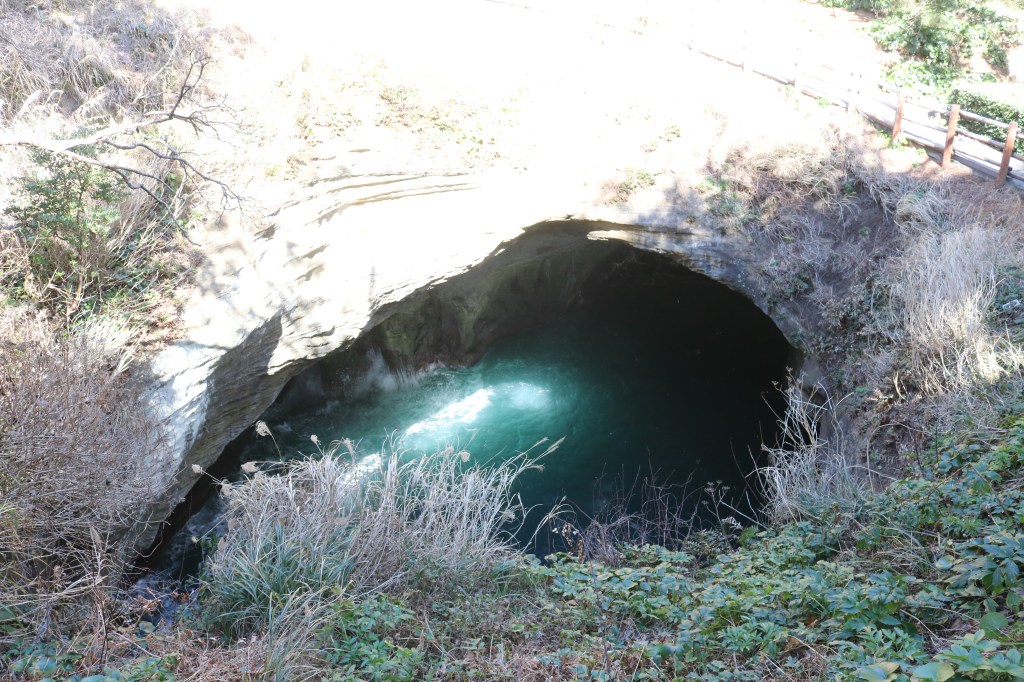
- Dogashima is the centre of it. The village sits on a cove where a tombolo sandbar connects the shore to Sanjiro Island, appearing and disappearing with the tide, and just offshore is Tensodo, a sea cave whose roof has collapsed in a large opening so that daylight falls straight onto the water. The cave is a national Natural Monument, and the twenty-minute boat trip into it is the single best thing to do on this coast.
- The area also has a working onsen tradition. Toi has been a hot spring resort since the Edo period, with public baths and a handful of inns, and Dogashima itself has several hotels with open-air baths on the cliff. This is a place to sleep and eat fish rather than to tick off sights.
- It is not easy to reach without a car: the bus from Shuzenji takes seventy to eighty-five minutes, and the coast road is slow. But that is the trade. West Izu gives you sea cliffs, a cave, a sunset and a hot spring at a fraction of the crowds of Hakone or Kawaguchiko, and it rewards a night rather than a day trip.
Top places and highlights
Tensodo and the cave boat
Tensodo is a sea cave at Dogashima whose ceiling has fallen in, leaving a large opening through which sunlight reaches the water, and the effect is a pool of shifting blue that changes with the angle of the sun and the clarity of the sea. It is designated a national Natural Monument. The cave is entered by boat: the Dogashima Marine sightseeing boat runs a cave circuit of about twenty minutes, departing every fifteen to twenty minutes from 10:00 to 16:00, at 1,500 yen for adults and 750 yen for children. There is no advance booking, so you queue and go on the next departure; on weekdays the wait is short, but in the Golden Week and summer holidays the first boats of the morning fill quickly. The blue is strongest around midday, when the light comes from directly above. The boat does not sail in rough weather, which is more likely from winter into spring when the west wind gets up, so check before travelling.
The tombolo to Sanjiro Island
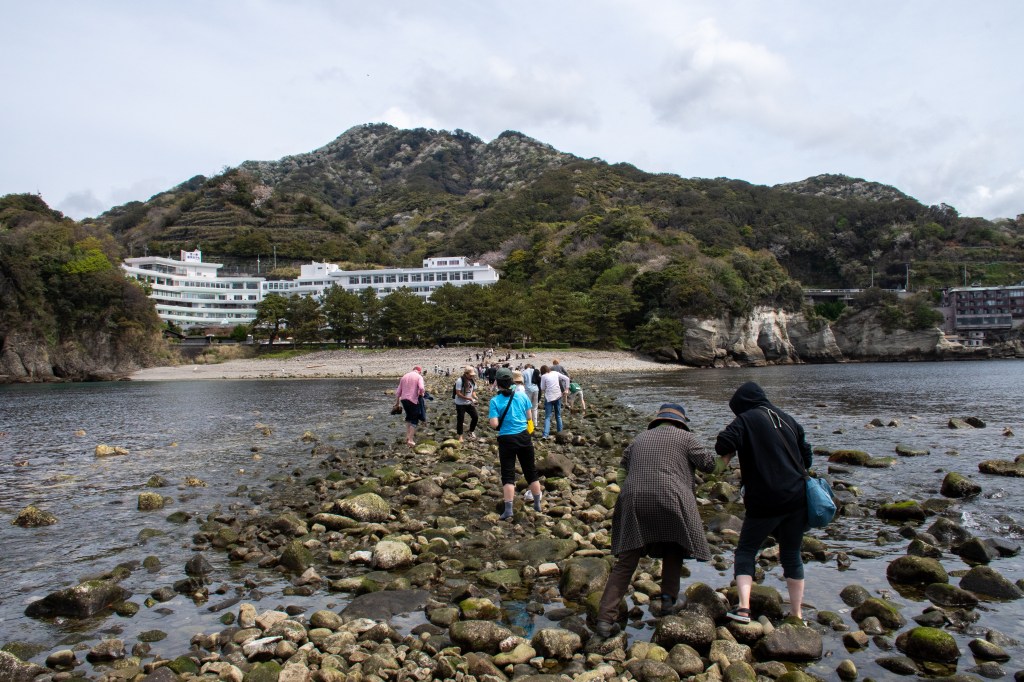
At low tide a sandbar emerges between the beach at Dogashima and Sanjiro Island, and you can walk across to it on dry sand. The island is small, wooded and topped with a shrine, and the crossing takes a few minutes. At high tide the bar disappears and the island is cut off again, so the timing matters and the tide table is worth checking before you plan the walk. The sandbar is one of the better free experiences on the coast, and it is the view from the shore that most photographs of Dogashima show. Even when the tide is in, the shape of the bay and the island is worth the ten minutes it takes to walk the seafront, and the sunset from here, with the island silhouetted, is the reason people stay the night.
Toi onsen
Toi is a small hot spring town at the northern end of the west coast, with a history going back to the Edo period and a cluster of inns and public baths above the sea. It is not a resort strip: the streets are quiet, the baths are mostly small, and several of the inns accept day visitors. The water is hot and slightly salty, and the appeal is the setting rather than the facilities. Toi is also where the Suruga Bay ferry from Shimizu arrives, which makes it a natural entry point if you are coming from Shizuoka rather than from Mishima. The town has a couple of places to eat, a small port and a view across the bay to Fuji, and it works as a base for the northern end of the coast as well as a stop on the way south.
Koibito Misaki
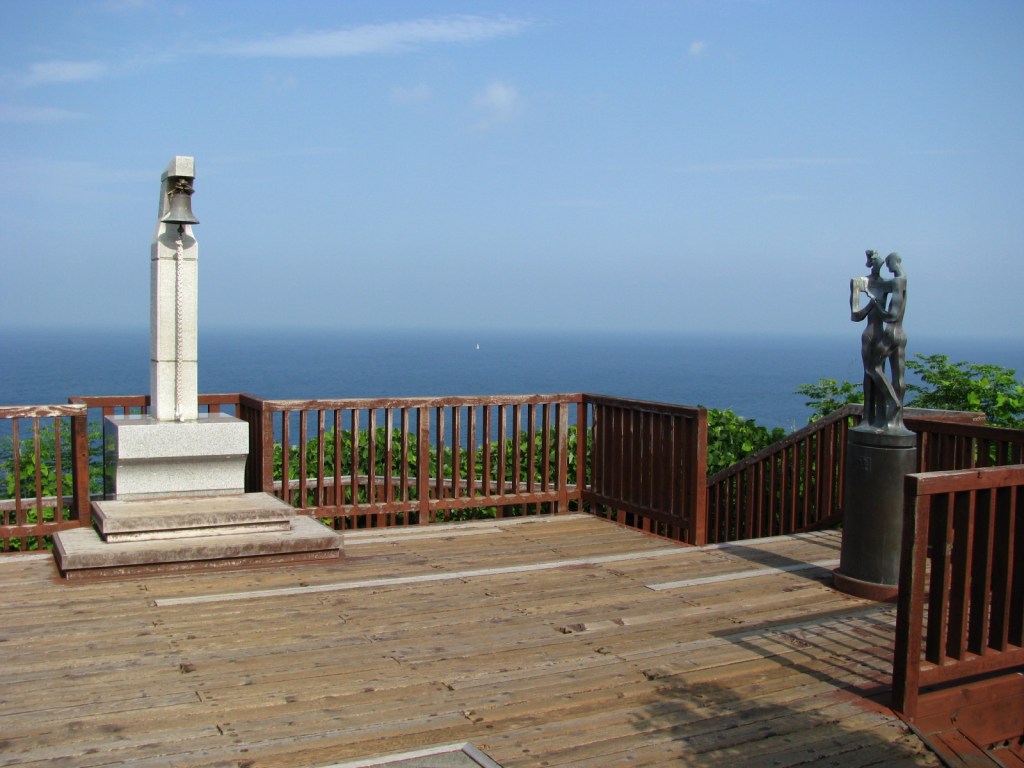
Koibito Misaki, Lovers’ Cape, is a headland on the coast road between Toi and Dogashima, with a small park, a shop and a bell that couples ring. It is unashamedly a romantic spot, and on a clear evening the draw is real: the sun goes down into Suruga Bay and, in the right season and weather, Mount Fuji stands in silhouette across the water. The bus stop is Fujimidai, five minutes on foot, and there is a car park. It is a fifteen-minute stop rather than an attraction, but it is on the way and the view at sunset is the best free one on the coast. Come with low expectations about the facilities and high ones about the light.
Matsuzaki and the namako walls
South of Dogashima, Matsuzaki is a small town with a street of old houses finished in namako-kabe, the dark tiles set in white plaster in a grid pattern that was once common on this coast and is now rare. The street is a short walk from the bus terminus, and the town also has a shrine and a handful of shops selling dried fish and local produce. It is not a major sight, but it is the most intact old streetscape on the west coast, and the bus from Shuzenji terminates here, which makes it a natural end point. Allow an hour, more if you stop for lunch, and note that the last buses back leave in the late afternoon.
The sunset and the onsen
The west coast’s real attraction is the combination of a hot bath and a sunset over the sea, and it is worth choosing your accommodation for it. Several hotels at Dogashima have open-air baths on the cliff edge facing the water, and the Sawada Park open-air bath a few minutes from the village is a public option perched above the sea. The sun sets over Suruga Bay rather than the open ocean, so the light is soft and the horizon is the far shore, and on clear evenings Fuji is visible to the north. This is the reason to stay a night rather than passing through: the coast is pleasant by day and memorable at dusk, and the buses stop running before the best light.
Food and drink
- The fish here is Suruga Bay fish, landed at Toi, Dogashima and Matsuzaki: kinmedai alfonsino, shimaji horse mackerel, tuna, and in season the deep-sea shrimp known as sakura-ebi from the bay.
- Himono, the dried fish that is a Shizuoka speciality, is sold in the shops along the coast and served at breakfast in the inns. It is the thing to buy to take home.
- Wasabi comes from the Izu mountains inland, and the region’s soba and rice bowls often come with fresh wasabi to grate yourself. It is sharper and sweeter than the tube version.
- Seafood bowls at Dogashima and Toi are the standard lunch, built around whatever came in that morning. They are not cheap, but the fish is the point of the coast.
- Sakura-ebi, the small pink shrimp of Suruga Bay, appears in kakiage and rice dishes in spring. It is the local delicacy worth asking for.
- The dining options are limited outside the hotels, especially in the evening, so eat at your inn or arrange dinner in advance rather than arriving after dark and looking for a restaurant.
Getting there and around
- From Tokyo, take the Tokaido Shinkansen to Mishima, then the Izuhakone Railway to Shuzenji, about 35 minutes, and from Shuzenji station the Tokai bus towards Matsuzaki on route W30, which reaches Toi in about 50 minutes and Dogashima in about 70 to 85 minutes.
- The JR Odoriko limited express runs directly from Tokyo to Shuzenji in about two hours ten minutes, which avoids the change at Mishima and is the easiest rail route from the capital.
- From the Izu Kyuko line, buses run from Izukyu-Shimoda station to Dogashima in about 58 to 60 minutes, which is the route from the east coast and Shimoda.
- A direct Tokai express bus runs from Mishima station to Dogashima in about one hour fifty minutes without a change, but it is infrequent, so check the timetable before planning around it.
- By car, take the Tomei or Shin-Tomei to Numazu or Nagaizumi-Numazu, then the Izu Jukan road and Shuzenji road, about 90 minutes to Dogashima. The coast road south from Toi is slow and winding but the drive is the attraction.
- From Shizuoka, the Suruga Bay ferry crosses from Shimizu to Toi in about 70 minutes and takes cars, which is the scenic way to arrive from the west.
- The buses along the coast are infrequent and stop early. Plan the day around two or three places rather than trying to cover the whole coast by bus.
Where to stay
- Dogashima has the largest concentration of accommodation: hotels and inns with sea views and open-air baths, plus a few smaller places near the port.
- Toi is quieter and cheaper, with traditional inns and public baths, and the ferry terminal makes it convenient if you are arriving from Shimizu.
- Matsuzaki at the southern end has minshuku and small inns in the old town, which suits anyone wanting the namako walls and a slow evening.
- Book early for weekends and the summer season. The coast has a limited number of rooms relative to demand from Tokyo, and the best sea-view rooms go first.
Best time to visit
- Summer is the beach season, with swimming at Dogashima and the coves, and the busiest period on the coast. The sea is calmest then and the boats run most reliably.
- Spring and autumn are the best all-round seasons: mild weather, clear air and a much better chance of seeing Fuji across the bay, with fewer people on the boats and the tombolo.
- Winter is quiet but the west wind makes the sea rough, which can suspend the cave boats, and several shops and restaurants close. The sunsets are at their most dramatic, and the onsen is at its best.
- The rainy season in June and the typhoon season from late summer can bring cancellations, and the coast road is exposed. Build a spare half day into the plan if the boats are the reason for coming.
Practical tips
- Check the tide table before you go if you want to walk the tombolo to Sanjiro Island. At high tide the sandbar is under water and the crossing is not possible.
- Ride the cave boat around midday for the strongest blue in Tensodo. The light comes from directly above and the effect is weakest in the early morning and late afternoon.
- There is no advance booking for the cave boat. Arrive and queue, and go for the first departure in busy periods.
- Stay a night. The buses stop before sunset and the sunset is the best thing on the coast, so a day trip from Shuzenji misses the point.
- Carry cash for the boats, the small shops and the public baths. Card acceptance outside the hotels is patchy.
- Confirm the boats are running before committing to the trip, especially in winter and spring when the west wind can close them for days.
- Eat dinner at your accommodation. Restaurants on the coast close early and there are very few of them outside the hotels.
- If you are coming from Tokyo, take the Odoriko direct to Shuzenji rather than changing at Mishima; the transfer is easy but the direct train is easier still with luggage.
Suggested day-trip outline
- Morning: Odoriko from Tokyo to Shuzenji, then the W30 bus down the west coast to Toi, with a stop at Koibito Misaki if the timing works.
- Midday: continue to Dogashima, drop bags, and take the cave boat into Tensodo around noon for the light.
- Afternoon: walk the seafront, cross the tombolo to Sanjiro Island if the tide allows, and take the cliff path above the cave for the view down through the skylight.
- Evening: an open-air bath at the hotel or the Sawada Park bath, then dinner and the sunset over Suruga Bay.
- Next morning: bus south to Matsuzaki for the namako walls, then back to Shuzenji, or the ferry from Toi to Shimizu if you are heading west.
Before you go
Timetables, fares, admission fees, and seasonal access rules can change. Check the official tourism and transport sites linked below for the latest information before you travel.
Explore More of Japan
Published guides that pair with this one:
- Izu Peninsula Travel Guide: Coast, Hot Springs and the Geopark
- Kawaguchiko Travel Guide: The Fuji Lake in Yamanashi
- Mount Fuji Climbing Guide: Yoshida Trail, Fees and Huts
- Hida Furukawa Travel Guide: White Storehouses, Sake and the Furukawa Festival
- Ise Jingu and Ise-Shima Travel Guide: Naiku, Geku and the Coast
- Narai-juku Travel Guide: The Nakasendo Post Town That Time Forgot
- Noto Peninsula Travel Guide: Wajima, Senmaida and the Okunoto Coast
- Nozawa Onsen Travel Guide: Hot Springs, Snow, and the Fire Festival
Browse every Chubu guide on this site for the rest of the region.
Sources
- dogashimamarine.jp — Access (checked 2026-11-05)
- izu-letters.jp (checked 2026-11-05)
- transfer-cloud.navitime.biz (checked 2026-11-05)


Leave a Reply