A practical English guide to Showa Kinen Park in Tachikawa: the seasons, the bicycle paths, the water park area and access from central Tokyo.
Operational details such as opening hours, admission fees, and train times can change. Prefer official pages and reconfirm before you travel (sources checked on 05 November 2026).
Why visit
- Showa Kinen Park is the largest park in Tokyo, about a hundred and sixty-five hectares on the site of a former airfield in Tachikawa, and it is the best place in the city to see a proper seasonal landscape without leaving the metropolitan area. It opened in the 1980s as a national commemorative park, and it has the scale that most Tokyo parks lack: long avenues, wide lawns, a lake, a Japanese garden and enough distance between the entrances that you can walk for hours.
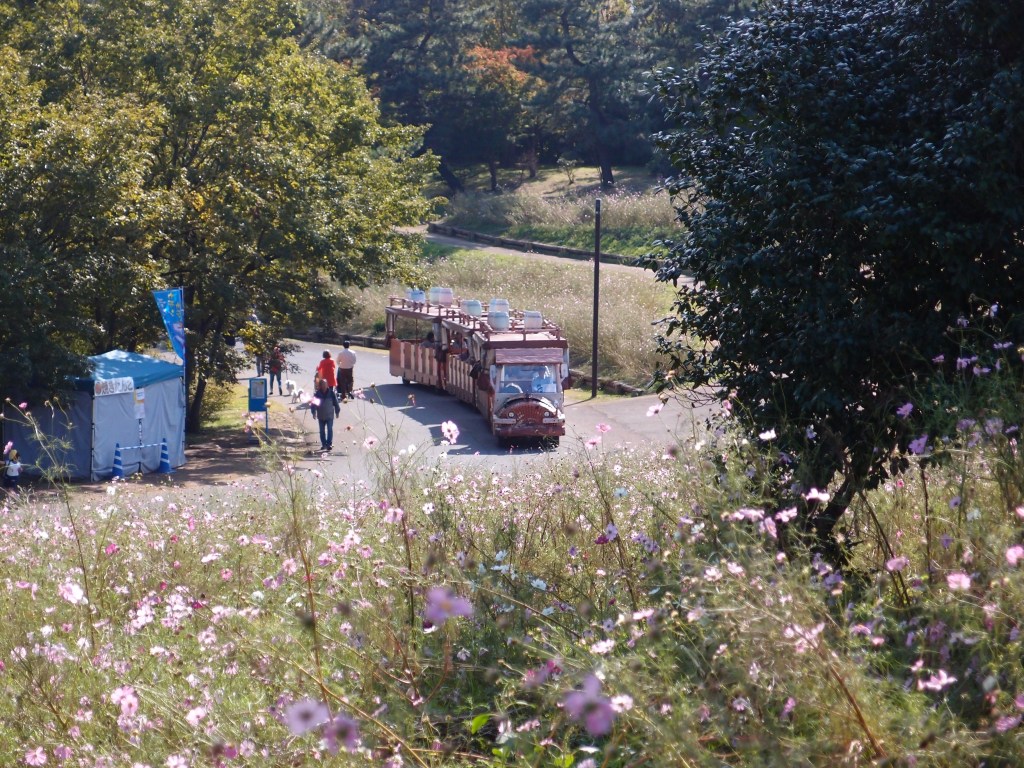
- The seasons are the reason to come. Cherry blossom in early April, tulips and poppies in spring, the great ginkgo avenue in late November, cosmos in autumn and snow on the pines in winter. The planting is designed for mass effect, with blocks of a single species that bloom at once, and the result is the kind of scene that would normally require a trip to the countryside.
- It is also a park built for use rather than for looking at. There are bicycle paths and rentals, a large water park in summer, a children’s forest with climbing structures, barbecues, boats on the lake and acres of lawn for picnics. Families come for the day with a tent and a cooler, and the atmosphere on a sunny weekend is closer to a festival than a garden.
- For a traveller based in Tokyo, it is a half-day escape that costs almost nothing and requires no planning beyond checking the season. The trains from Shinjuku and Tokyo are direct, the park is flat and easy to walk, and it is one of the few places in the city where you can hear birdsong over the traffic.
Top places and highlights
The Japanese garden
The Japanese garden occupies a corner of the park around a pond, with a tea house, stone lanterns, bridges and a circuit path designed to be walked slowly. It is a formal garden in the traditional style, and it is the quietest part of the park even when the rest is busy. The planting is chosen for the seasons, with plum and cherry in spring, irises in early summer and maples in autumn, and the tea house serves matcha on certain days. Walk the full loop and sit at the far end, where the view across the water is best.
The ginkgo avenue
The long avenue of ginkgo trees is the park’s most photographed sight, and in late November it turns a solid gold, with the leaves falling to make a yellow carpet along the path. The trees are mature and evenly spaced, and the effect from the middle of the avenue, with the perspective running away, is the reason people come from all over the region. It lasts about two weeks, and the timing shifts with the weather, so check the park’s seasonal updates before you go.
The flower gardens
The park plants in blocks for impact, and the flower gardens change through the year: tulips in April, poppies and nemophila in May, sunflowers and cosmos later. The beds are large and laid out along the paths, so you can walk between them without stepping on anything. The colours are intense and the scale is unusual for a city park, and on a clear day the combination of flowers and sky is worth the trip on its own. The park publishes a flowering calendar, and it is accurate.
The bicycle paths
A network of cycle paths runs through the park, and bicycles can be rented at the entrances by the hour. The loop is flat, wide and separate from the pedestrian paths, and it is the fastest way to see the whole site, especially if you have children or limited time. The rental queues are long on holidays, so go early or bring your own bicycle if you have one. Helmets are available, and the paths are shared with joggers and families, so keep left and go slowly.
The water park and the children’s forest
In summer the water park opens with pools, slides and a lazy river, and it is one of the biggest in the Tokyo area. The children’s forest has climbing nets, a bouncy dome and wooden play structures set among trees, and it is free with the park admission. Both are aimed at families, and both are loud and crowded in the school holidays. If you are travelling without children, the far side of the park, around the lake and the Japanese garden, is the place to be.
The lake and the open lawns
The lake at the centre of the park has boats for hire, a bridge and a shoreline path, and the lawns around it are where people spread out for the day. Bring a mat, food and drink, and settle in; there are shops and kiosks but the queues are long at lunch. The open space is the point of the park, and on a fine day the combination of water, grass and the distant skyline is a reminder of how big Tokyo actually is.
The winter illumination
From December into February, part of the park is lit for a winter illumination, with light installations along the paths and around the lake. It is a large, walk-through display rather than a single show, and it is popular with families in the evenings. The park stays open later during the illumination period, and the combination of bare trees, lights and cold air is very different from the summer visit. Check the dates and the last entry time before you go.
Food and drink
- The park has several restaurants and kiosks, serving curry, noodles, rice bowls and snacks, and the queues at lunch are long. Eat early, or bring a bento and use the picnic areas.
- The park allows food and drink, and the lawns are set up for picnics. Buy supplies at Tachikawa station before you go, where there are supermarkets, bakeries and convenience stores.
- Tachikawa itself has a good restaurant scene around the station, with ramen, izakaya and cafes, and it is worth an hour if you leave the park in the late afternoon.
- In spring and autumn, seasonal stalls appear near the entrances selling sweets, roasted chestnuts and hot drinks. They are part of the experience and the prices are reasonable.
- There are vending machines throughout the park and water fountains near the main facilities. Bring a bottle, since the park is large and the distances between shops are long.
Getting there and around
- The park has several entrances, and the most convenient are at Tachikawa station on the JR Chuo line, about ten minutes on foot from the north exit, and at Nishi-Tachikawa station, five minutes from the park gate.
- From central Tokyo, the JR Chuo line runs from Tokyo station to Tachikawa in about forty minutes, and from Shinjuku in about thirty. The trains are frequent and the walk from the station is signposted.
- The Tama monorail and the JR Nambu line also serve the area, and the park is within reach of the Keio line via a short bus ride. For most visitors, the Chuo line is the simplest route.
- By car, there are large car parks at the main entrances, but they fill early on weekends and holidays. The park is a good destination by train and a difficult one by car on a sunny Sunday.
- Bicycles can be brought to the park and parked at the racks near the gates, and the cycle paths inside make it a good day out for cyclists based in the western suburbs.
Where to stay
- Tachikawa has business hotels and a few larger ones around the station, which is convenient if you want to be at the park at opening time. It is a straightforward base for the western suburbs.
- Central Tokyo is a thirty to forty minute train ride away, with the full range of accommodation. Most visitors stay in the city and treat the park as a day trip.
- The hotels around Shinjuku and Nakano are a good compromise, with fast trains to Tachikawa and plenty of restaurants in the evening.
- For a quieter stay, the smaller cities along the Chuo line, such as Kichijoji and Mitaka, have guesthouses and small hotels and are close to the park by train.
Best time to visit
- Spring is the peak: cherry blossom in early April, followed by tulips, poppies and nemophila in late April and May. The park is crowded then, and the flower areas are the busiest.
- Summer brings the water park, green lawns and long days, but also heat and humidity. Go early in the morning, use the shade and the water, and avoid the middle of the afternoon.
- Autumn is the best all-round season: mild weather, cosmos in September and October, and the ginkgo avenue in late November. It is also the most photogenic time, and weekends are busy.
- Winter is quiet and cold, with bare trees, clear views and the illumination from December. The park is at its emptiest on weekday mornings, and the low light is beautiful.
- The rainy season runs from early June to mid-July. The park is still worth a visit for the fresh green and the irises, but carry an umbrella and expect muddy paths.
Practical tips
- Check the flowering calendar on the park’s website before you go. The ginkgo and the tulips are short windows, and the park publishes accurate updates.
- Arrive at opening time. The car parks and the bicycle rentals fill quickly, and the flower areas are quietest in the first hour.
- Wear comfortable shoes. The park is huge, the paths are long, and you will walk several kilometres without noticing.
- Bring a mat, food and water if you want to picnic, and take your rubbish out with you. Bins are limited and the park asks visitors to carry it home.
- Buy a one-day pass if you plan to use the bicycle rental and the train, since the combination is cheaper. Check what is included at the ticket office.
- Do not pick the flowers or step into the beds for photographs. There are marked paths and viewing spots, and the staff enforce them.
Suggested day-trip outline
- Morning: train to Tachikawa, enter by the nearest gate and walk the flower gardens while they are quiet.
- Late morning: rent a bicycle and ride the loop, stopping at the Japanese garden and the lake.
- Lunch: a picnic on the lawn, or a bento bought at the station before entering.
- Afternoon: the children’s forest or the water park if you have family, or the far side of the park and the bird sanctuary if you do not.
- Late afternoon: the ginkgo avenue in November or the cosmos in autumn, then walk back to the station for an early dinner in Tachikawa.
- Winter evening: return for the illumination, with a hot drink from a kiosk and a slow walk around the lit paths.
Before you go
Timetables, fares, admission fees, and seasonal access rules can change. Check the official tourism and transport sites linked below for the latest information before you travel.
Explore More of Japan
Published guides that pair with this one:
- Nikko Travel Guide: Toshogu Shrine, Waterfalls, and a Tokyo Day Trip
- Shibuya Travel Guide: SHIBUYA SKY, Scramble Crossing and Things to Do in Tokyo
- Tokyo Travel Guide: Neighborhoods, Transport and a First-Timer’s Plan
- Okutama Travel Guide: Nippara Cave, Hatonosu Gorge and Lake Okutama
- Yanaka, Nezu and Sendagi Travel Guide: Old Tokyo on Foot
- Kawagoe Travel Guide: Warehouse Streets Near Tokyo
Browse every Kanto guide on this site for the rest of the region.
Sources
- showakinen-koen.jp (checked 2026-11-05)
- tokyo-park.or.jp (checked 2026-11-05)


Leave a Reply