A practical English guide to Tsuyama in Okayama: the castle walls of Kakuzan park, the cherry blossoms, the old merchant streets and the steam locomotive.
Operational details such as opening hours, admission fees, and train times can change. Prefer official pages and reconfirm before you travel (sources checked on 05 November 2026).
Why visit
- Tsuyama is a castle town in the mountains of northern Okayama, and its hilltop park holds the stone walls of a castle that was dismantled in the nineteenth century and never rebuilt. The result is unusual: instead of a concrete keep, you get the original sloping walls, the moat lines and the terraces, with a thousand cherry trees planted across them. In spring it is one of the great blossom sites of western Japan, and the rest of the year it is a quiet walk with a view over a town that few foreign travellers reach.
- The castle was built in the early seventeenth century for the Mori clan, who ruled a domain of about 187,000 koku, and the walls that remain are among the finest in the region: high, angled and built of large cut stones fitted without mortar. When the castle was demolished in the 1870s the site became a park, and the cherry trees were planted on the terraces, which is why the blossom and the walls appear together in every photograph.
- Below the hill, Tsuyama has a compact old merchant district, a museum of Western learning that explains the town’s surprising role in the introduction of Western science to Japan, and a railway museum with working steam locomotives. It is a town of small, specific pleasures rather than a single blockbuster sight, and it rewards a full day rather than an hour.
- The food alone justifies the trip: Tsuyama is the birthplace of horumon udon, a grilled offal and noodle dish cooked on a hot plate at the table, and the town is proud of it. It is cheap, loud, served in smoky little restaurants, and unlike anything you will eat in the big cities.
Top places and highlights
The castle walls of Kakuzan park
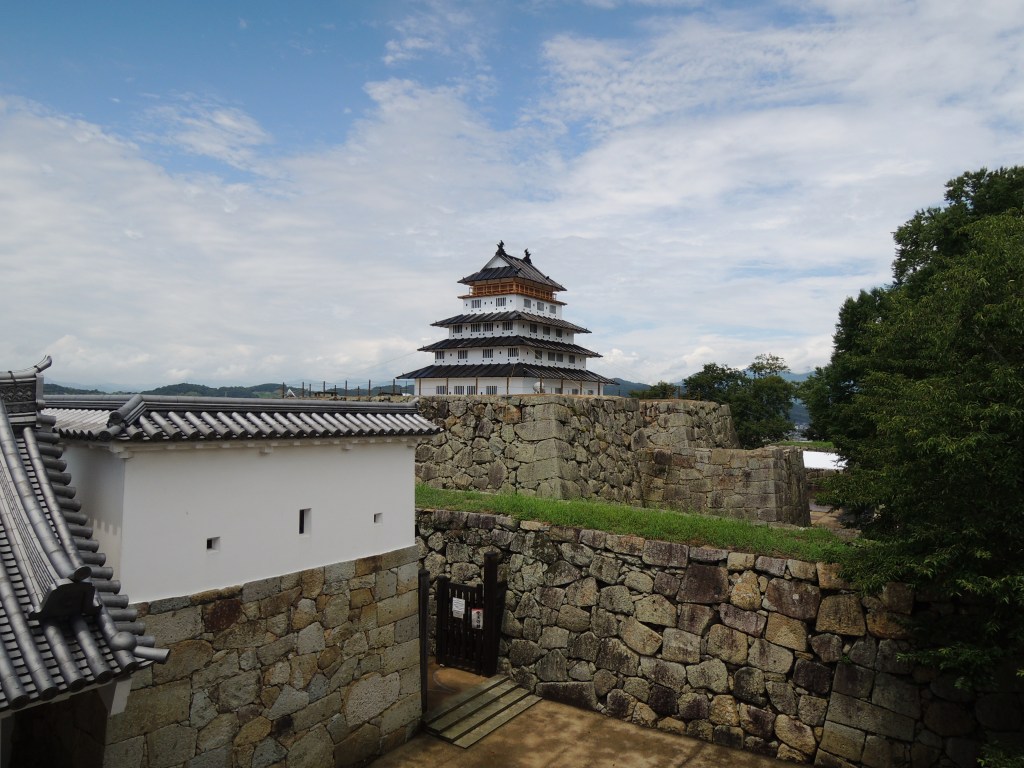
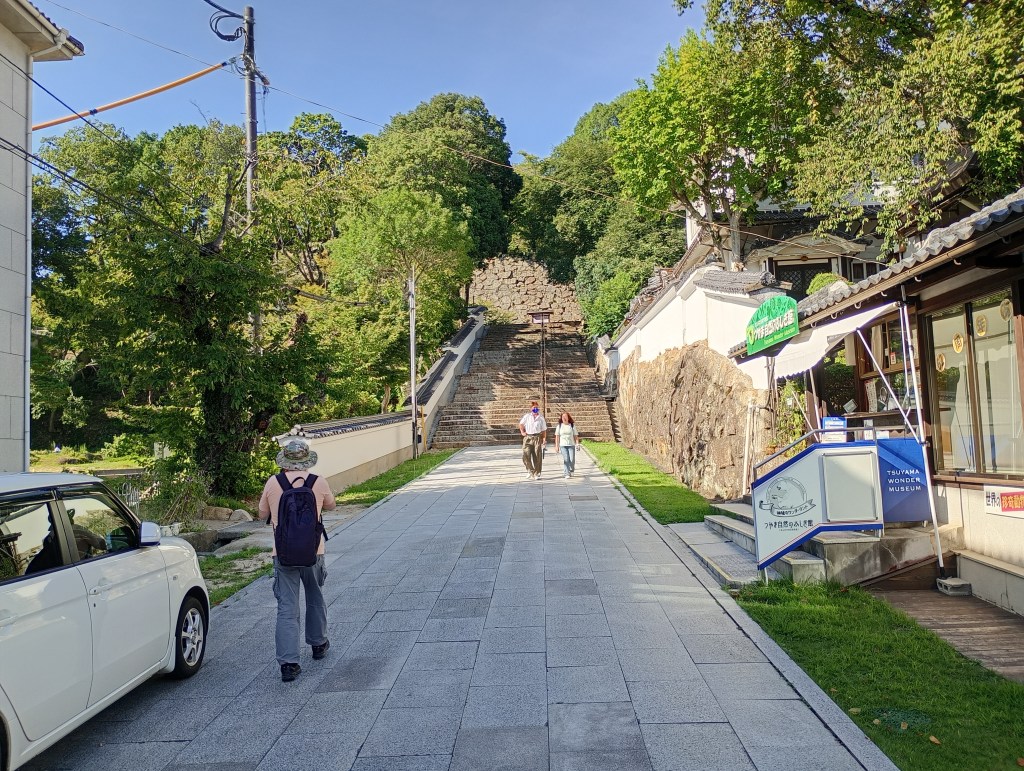
The stone walls run across the hill in long, sloping lines, with corners that curve upward and blocks that fit so tightly you cannot see the joints. Walk the terraces from the lower gate to the top, and look at the way the walls follow the shape of the ground rather than a rectangle. There is no keep, and that absence is the point: you are looking at the military engineering without the later reconstruction. The views from the upper terraces take in the town, the river and the mountains, and the walls themselves are best photographed in the late afternoon light.
The cherry blossom
The park is planted with around a thousand cherry trees, mostly Somei Yoshino, and in early April the terraces, the paths and the walls are covered in blossom. The combination of pink flowers, grey stone and the town below is the reason the site is on the national lists of great blossom spots. The park holds a festival with lanterns in the evenings, and the trees are lit, which changes the mood completely. It is busy, but the site is large enough that you can find a quiet corner on the upper terraces.
The old merchant district
The Joto district, east of the station, keeps a street of merchant houses with white plaster walls, dark timber and heavy tiled roofs, some of them open to visitors. It is a small area, a few blocks, and it is quiet enough to hear your own footsteps. The houses date from the eighteenth and nineteenth centuries, and the interiors show the deep rooms, the earthen floors and the household fittings of a provincial trading family. Walk it slowly, look at the details above the doors, and check which buildings are open on the day.
The museum of Western learning
Tsuyama produced a remarkable number of scholars who studied Western science and medicine in the Edo period, and the museum explains how a small mountain town became a centre for that knowledge. The exhibits include books, instruments, maps and letters, and the story is told with care. It is a niche subject, and that is what makes it interesting: this is not the national narrative, it is the local one, and it connects a provincial castle town to the wider world of the nineteenth century.
The railway museum and the steam trains
The Tsuyama railroad museum holds locomotives, carriages and equipment from the era of steam, and the town is associated with the steam-hauled trains that still run on the local lines for excursions. The collection includes a working locomotive and a turntable, and on certain days there are rides and demonstrations. It is a good stop for families and for anyone interested in the machinery, and it is close enough to the park to combine with a morning on the hill.
The view from the top
The upper terrace of the park looks out over the town and the surrounding basin, with the river, the roofs and the mountains beyond. It is a good place to sit at the end of the day, when the light softens and the town below starts to turn on its lights. In autumn the trees on the hill turn, and the view becomes a study in brown and gold. There is a small shrine at the top, and a path that continues around the back of the hill for a longer walk.
The town’s small cafés and shops
Tsuyama is not a tourist town, and its cafes and shops are for local people, which makes them pleasant to sit in. Look for the old-fashioned coffee shops near the station, the bakeries and the shops selling local sweets and pickles. The pace is slow, the prices are low, and the staff are patient with visitors who do not speak Japanese. It is the kind of place where an afternoon disappears without anything dramatic happening.
Food and drink
- Horumon udon is the local dish and the reason many Japanese visitors come: grilled offal, cabbage and thick udon noodles cooked with a sweet-savoury sauce on a hot plate at the table. It is smoky, rich and best eaten in the small restaurants that specialise in it.
- Tsuyama is also known for its soy sauce and miso, made in the old storehouses, and the shops in the merchant district sell both. The local brand is used in the udon sauce, which is part of why it tastes the way it does.
- The town has a handful of soba and ramen shops near the station for a quick lunch, and the cafes in the old district serve light meals and coffee. The choice is limited in the evening, so eat before eight.
- Okayama, an hour and a half away by train, is the place for the regional specialities: barazushi, the scattered sushi of the prefecture, and the peaches and grapes that the area is famous for in summer.
- For a picnic on the hill, buy food at the station or the supermarket before you go, and carry water. The park has vending machines but few places to buy a proper meal.
Getting there and around
- Tsuyama is on the JR Tsuyama line from Okayama, about an hour and a half by local train, and on the Chizu express line from Osaka and Tottori, which is faster and stops at Tsuyama station. The station is a short walk from the park and the old district.
- From Okayama, the Tsuyama line runs through the mountains and is slow but scenic. The Chizu express is the better option if you are coming from Osaka or Kyoto, with limited express services.
- From Tottori, the Chizu express line runs east to Tsuyama in about an hour, which makes the town a natural stop between the Sanin coast and Okayama.
- Buses and taxis are available at the station, but the centre is compact and walkable. The climb to the park is the only real effort, and there is a road up for those who need it.
- By car, the Chugoku expressway and the national roads connect Tsuyama with Okayama, Tottori and Hiroshima, and there are car parks near the park and the station.
Where to stay
- Business hotels around Tsuyama station are the practical choice, with a few within walking distance of the old district and the park. They are cheap and quiet.
- The hot spring inns in the surrounding valleys, towards Yunogo and the mountains, offer outdoor baths and kaiseki dinners, and they are a good base if you have a car.
- Okayama is an hour and a half away and has a much wider range of hotels, but the trade-off is the journey and the loss of the early morning in the park.
- For the blossom season, book well ahead. The town fills up for the festival, and the hotels near the park are the first to go.
Best time to visit
- Early April is the peak, when the thousand cherry trees on the castle terraces come into flower and the park holds its festival with evening lanterns. It is busy and beautiful, and the weather is mild.
- Summer is hot and humid, with green trees and few visitors. The park is best in the early morning or the evening, and the old district’s cafes are a good place to wait out the heat.
- Autumn, from late October to November, brings colour to the hill and clear air for the view. It is the second-best season for the park and the most comfortable for walking.
- Winter is cold and quiet, with occasional snow on the stone walls. The park is at its emptiest, and the town’s coffee shops and museums are the places to be.
- The rainy season runs from early June to mid-July. The stone walls and the moss look their best in the rain, and the crowds are thin.
Practical tips
- Wear shoes with grip for the park. The paths between the terraces are stone and earth, and they are slippery after rain.
- Check which buildings in the old district are open on the day. Some are private and some keep limited hours.
- Book accommodation early if you are coming for the blossom, and expect the park to be crowded at the weekend.
- Try the horumon udon at a specialist restaurant rather than a generic one. The dish is cooked at the table, and the staff will explain how.
- Allow a full day: the park, the old district, the museum and the railway museum are spread out, and the town is best seen slowly.
- Carry cash for the small restaurants and shops. The town is not set up for foreign cards, and the ATMs are limited.
Suggested day-trip outline
- Morning: train from Okayama or Osaka, walk to Kakuzan park and climb through the terraces to the upper walls.
- Late morning: the view from the top and a walk around the back of the hill, then down to the old merchant district.
- Lunch: horumon udon at a local restaurant, cooked at the table.
- Afternoon: the museum of Western learning and the railway museum, with a coffee stop in the old district.
- Late afternoon: back up to the park for the light, or a walk along the river below the walls.
- Evening: dinner in the station area and a train back to Okayama, or a night in a hot spring inn in the valley.
Before you go
Timetables, fares, admission fees, and seasonal access rules can change. Check the official tourism and transport sites linked below for the latest information before you travel.
Explore More of Japan
Published guides that pair with this one:
- Iwami Ginzan Travel Guide: UNESCO Silver Mine in Shimane
- Hagi Travel Guide: A Castle Town That Shaped Modern Japan
- Okayama Korakuen Travel Guide: A Garden Beside the Castle
- Kurashiki Travel Guide: Bikan Canal District
- Tsuwano Travel Guide: The Little Kyoto of San’in
- Miyajima Travel Guide: Itsukushima Shrine, the Floating Torii, and a Hiroshima Day Trip
Browse every Chugoku guide on this site for the rest of the region.
Sources
- okayama-kanko.jp (checked 2026-11-05)
- pref.okayama.jp (checked 2026-11-05)


Leave a Reply