Plan a visit to Arita in Saga, the birthplace of Japanese porcelain, with its kilns, museum and the Kyushu Ceramic Museum.
Operational details such as opening hours, admission fees, and train times can change. Prefer official pages and reconfirm before you travel (sources checked on 04 November 2026).
Why visit
- Arita is where Japanese porcelain begins. In 1616, according to the town’s own account, the Korean potter Yi Sam-pyeong found the porcelain stone at Izumiyama and the kilns followed, and the hill behind the town is still pitted with the marks of four centuries of quarrying. The stone was the rare ingredient, and Arita sat on it.
- The town is not a single museum piece but a working pottery town. Kilns still fire here, the families that made the famous wares still run their workshops, and the streets between them hold the walls, the climbing kilns and the shrines that the industry paid for. Arita is one of the few places in Japan where a craft is still the main street rather than a demonstration for visitors.
- The physical traces are unusually rewarding. The tonbai walls, built from the firebricks and saggers of abandoned climbing kilns and bound with red clay, line the back lanes of the Uchiyama district, and the effect is a wall that looks like it grew from the pottery rather than being built. The district is a nationally designated Important Preservation District for Groups of Historic Buildings.
- At Tozan Shrine, the porcelain isn’t in a case: it is the building. The torii is porcelain, dedicated in 1888 by the Hinegoba district, 3.7 metres high and painted in blue underglaze scrollwork, and the shrine also has a porcelain fence, porcelain lanterns and a pair of porcelain guardian dogs. The shrine is dedicated to the industry and holds the monument to the founding potter.
- Arita also explains the trade. The wares went out through the port at Imari, which is why the export porcelain of the Edo period is called Imari ware regardless of where it was made, and the Dutch and Chinese competition, the Kakiemon palette and the Nabeshima kiln of the Saga domain all belong to this one small valley. Seeing the town makes the names on the museum labels make sense.
- Finally, the scale is manageable. The Uchiyama district, the Kyushu Ceramic Museum, the art museum and the shrine are all within a walk or a short drive of Arita station, and the whole town can be seen properly in a day without committing a week. It combines naturally with Karatsu, Ureshino or Nagasaki.
Top places and highlights
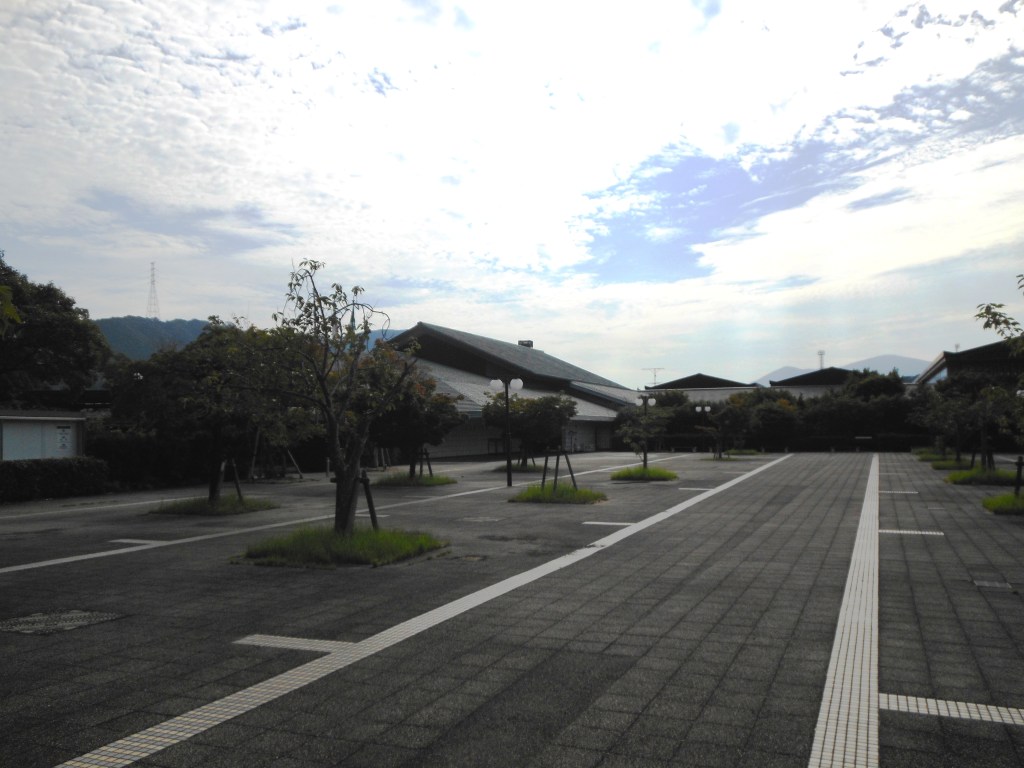
The Kyushu Ceramic Museum
The prefectural museum is the best single introduction to Kyushu ceramics anywhere, and it is free. It covers the history of porcelain in the region from the earliest wares through the Edo-period styles, including Imari, Kakiemon and Nabeshima, and it also shows contemporary work. It is open from 9:00 to 17:00. It closes on Mondays, but if Monday is a public holiday it opens and closes the following Tuesday instead, and it closes over the New Year from 29 December to 3 January. Special exhibitions may charge separately.
Izumiyama quarry
The quarry behind the town is the site of the porcelain stone discovery of 1616, the event that starts the story of Japanese porcelain, and part of it is a nationally designated historic site. The face of the hill still shows the cuts and the tunnels where the stone was taken, and the walk up from the Uchiyama district takes a few minutes. It is an outdoor site rather than a museum, so it is best combined with the museum for context.
Tozan Shrine and its porcelain torii
The shrine on the hill above the Uchiyama district is the guardian shrine of the pottery industry, and its torii is made of porcelain: dedicated in 1888 by the Hinegoba district, 3.7 metres tall, with a 3.9-metre lintel and blue underglaze scrolling painted across the white body. It was restored in 2020 and is a nationally registered tangible cultural property. The shrine also has a porcelain fence from 1846, porcelain lanterns and a pair of porcelain guardian dogs from 1887 that were repaired by the Imaemon kiln. The hill behind the shrine carries the monument to Yi Sam-pyeong and a view over the Uchiyama rooftops.
The tonbai walls and Uchiyama streets
The back lanes of Uchiyama are lined with tonbai walls, built from the discarded firebricks of climbing kilns and old kiln furniture, set in red clay. They run from near the great ginkgo at Izumiyama towards the Arita Ceramic Art Museum, and they are the most photographed thing in town for good reason. The surrounding streets hold merchant houses, kiln workshops and the small gutters and alleys of a town built around water and fire.
The Arita Ceramic Art Museum
The town museum, in the Uchiyama district, holds old Imari, Kakiemon and Nabeshima wares along with Chinese Jingdezhen and German Meissen pieces that show what Arita was competing with and learning from. Admission is 100 yen for adults, 50 yen for high school and university students and 30 yen for primary and junior high pupils, and it is open from 9:00 to 16:30. It closes on Mondays, or the next day when Monday is a holiday, and it stays open through the Golden Week pottery market.
The great ginkgo at Izumiyama
The Oicho, a ginkgo said to be around a thousand years old, stands 30.5 metres tall with a trunk circumference of about 12 metres, and it is a nationally designated natural monument. It predates the porcelain industry and marks the old checkpoint site where the Saga domain inspected what left the valley. In late November it turns the colour that the autumn festival is timed around.
Kakiemon and Imaemon kilns
The Kakiemon kiln is where the overglaze enamel palette that bears the family name was developed in the 17th century, and the Imaemon kiln is the home of Iro-Nabeshima, the domain’s own coloured porcelain. Both are working kilns with small museums or showrooms rather than theme attractions, and both sit in the Uchiyama area. Hours and whether the kiln floor is open vary, so check directly before travelling.
Arita Será and China on the Park
Arita Será is a large ceramics shopping and gallery complex on the edge of town, with workshops and restaurants, and it is where to see the commercial side of the industry. China on the Park, the Fukagawa family’s site, holds a collection built over some 350 years and is free to enter, with a shop and a restaurant. Both are useful on a rainy day and both are outside the historic core, so plan transport.
Food and drink
- Arita is a small inland town and its restaurants are few, so lunch is the meal to plan. The Uchiyama district and the streets around Arita station have soba, set-meal and cafe options, and Arita Será has a cluster of restaurants that stay open when the town centre is quiet.
- Saga prefecture is beef country, and Saga beef appears on menus in the larger restaurants around the town. The other regional staples are the seafood of the Ariake Sea and the Karatsu coast, the nori and the small dried fish, and the local sake, which is brewed in the surrounding towns rather than in Arita itself.
- The tea and the sweets are worth a stop. Arita has cafes in old houses and in the ceramics complexes, and the local confectionery is built around the tea culture of the region. A cup of coffee in a hand-thrown cup is the town’s own version of a souvenir.
- The pottery markets change the food situation. During the Golden Week Arita Ceramic Market and the autumn ceramics festival, stalls and temporary kitchens fill the streets and the normal restaurants are stretched, so expect queues and eat early or late. Outside those weeks, several places close on weekdays.
Getting there and around
- Arita has two stations on the JR Kyushu Sasebo line: Arita and Kami-Arita. Arita station is the main one, with the town centre and the Uchiyama district a walk or a short bus ride away, and Kami-Arita is closer to the northern kilns and the shrine. The line runs from Saga and from Sasebo, with connections at Haiki and at Saga to the Shinkansen.
- By car, the Nishi-Kyushu Expressway has the Hasami-Arita interchange about 10 minutes from the centre, and the town is roughly 40 minutes from Sasebo, an hour from Nagasaki and about an hour and a half from Fukuoka. The Uchiyama streets are narrow, so park at one of the signed lots rather than driving into the lanes.
- The Kyushu Ceramic Museum and the Arita Ceramic Art Museum are on opposite sides of the Uchiyama area, and the walk between them passes the tonbai walls and the ginkgo. Allow a full afternoon for the two museums and the streets, and a second day if you want the kilns and Arita Será.
- Public transport inside town is thin. The community bus and the temporary shuttles during festivals help, but a car or a bicycle makes the spread-out sites much easier. Rental cycles are available in town during the festivals.
- The autumn ceramics festival in 2026 runs from 19 to 23 November, with free shuttle buses on three routes from the Arita station area and free temporary car parks open from 9:00 to 17:00. The Golden Week pottery market runs from 29 April to 5 May. Both change the traffic and the opening hours, so plan around them.
Where to stay
- Arita has a small number of hotels, ryokan and guesthouses, and staying the night is the way to see the town without the day-trip rush. The accommodation is spread between the station area, the Uchiyama district and the edge of town, and it fills early for the festival weeks.
- The nearest larger bases are Ureshino Onsen, about 30 minutes by car, with its hot spring hotels, and Karatsu on the coast, about 40 minutes, with a wider choice and the castle. Sasebo and Nagasaki are further but workable for a two-centre trip.
- For the ceramics festivals, book months ahead. The Golden Week market and the November festival are the two busiest periods, and the town’s small inventory is taken quickly. At other times, a weekday stay is quiet, inexpensive and gives you the Uchiyama streets almost to yourself in the morning.
Best time to visit
- Spring is the classic season, and the Golden Week Arita Ceramic Market from 29 April to 5 May is the biggest event of the year, with stalls along the streets and the kilns open. The trade-off is crowds and full hotels. Outside the market week, April and May are mild and the hills are green.
- Summer is hot and humid in the Saga basin, and the town is best walked in the morning. The museums are air-conditioned, which makes them the middle of the day, and the kilns are at their busiest before the autumn fairs.
- Autumn is the other great season. The November ceramics festival, held from 19 to 23 November in 2026, includes special firings open to visitors at the Kakiemon, Imaemon, Gen’emon and Momasa kilns, and the great ginkgo turns gold at the same time. The festival is spread across the town with no single main venue and no pedestrian zone, so the shuttle buses matter.
- Winter is quiet and cold, with shorter museum hours around the New Year and some restaurants closed. The upside is the town without visitors: the tonbai walls, the shrine and the museum are all still there, and the light on the white porcelain walls is at its best.
Practical tips
- Check the day of the week before you go. The Kyushu Ceramic Museum and the Arita Ceramic Art Museum both close on Mondays, with the holiday rule pushing the closure to Tuesday, so a Monday visit costs you the two best collections in town.
- Start at the Kyushu Ceramic Museum even if you think you already know porcelain. It is free, it explains the sequence of styles, and everything you see in the kilns afterwards makes more sense. Then walk the Uchiyama streets and finish at the shrine.
- Do not skip the shrine’s details. The torii gets the photographs, but the porcelain fence is behind the main hall and the guardian dogs sit in front of it, and the monument to Yi Sam-pyeong up the hill gives the view back over the district.
- Wear shoes you can walk in and expect narrow lanes. The Uchiyama district is a preserved street rather than a pedestrian-only zone in the normal way, and cars do use the roads. The walk from Arita station to the district is about 15 to 20 minutes.
- Buy less than you think you will. The problem in Arita is not finding a piece but carrying it home: the ceramics are heavy and the shipping is not cheap. The museums and the larger shops can arrange delivery, and a small piece from a kiln is a better souvenir than a box of seconds.
- Use the festivals deliberately. The November festival is the only time the wood-fired kilns open to the public, but the town is busy and the shuttle buses are essential. The Golden Week market is bigger and more commercial. If you want the kilns and the atmosphere, November is the better choice.
- Combine Arita with Karatsu or Ureshino rather than treating it as a standalone day. The three together make a coherent trip through Saga’s pottery, coast and hot springs, and the driving between them is short.
Suggested day-trip outline
- Arrive at Arita station in the morning and take the 15-to-20-minute walk into the Uchiyama district, or drive to a signed car park. Start with the tonbai walls and the great ginkgo at Izumiyama, then climb to Tozan Shrine for the porcelain torii and the view.
- Spend the late morning in the Arita Ceramic Art Museum, then eat lunch in the town centre or at Arita Será. In the afternoon, take the Kyushu Ceramic Museum at the other end of the district, which is free and needs at least an hour.
- If the kilns are open, add one of the Kakiemon or Imaemon workshops, and finish with a walk back through the merchant streets. Buy a piece from a working kiln rather than from the station shops.
- Stay the night in Arita or in Ureshino Onsen, and use the second day for Arita Será, China on the Park and the surrounding kilns, or drive to Karatsu for the coast and the castle.
- In the festival weeks, reverse the plan: use the shuttle buses and the temporary car parks, see the kiln firings when they are scheduled, and leave the museums for the quieter morning. Check the day’s firing timetable at the tourist association before setting out.
Before you go
Timetables, fares, admission fees, and seasonal access rules can change. Check the official tourism and transport sites linked below for the latest information before you travel.
Explore More of Japan
Published guides that pair with this one:
- Karatsu Travel Guide: Pottery, a Castle, and the Saga Coast
- Ureshino Onsen Guide: Saga’s Tea Town and Hot Spring Water
- Shimabara Castle Travel Guide: A Reconstructed Keep in Nagasaki
- Kujukushima and Sasebo Guide: Islands, Cruises and the Naval Port
- Yoshinogari Historical Park Travel Guide: Japan’s Yayoi Settlement
- Nagasaki Atomic Bomb Museum Travel Guide: Highlights, Access, and Planning
- Sengan-en Travel Guide: Kagoshima’s Shimazu Garden and Volcano Views
- Nagasaki Bio Park Travel Guide: Highlights, Access, and Planning
- Amakusa Islands Guide: Kumamoto’s Church Coast
Browse every Kyushu guide on this site for the rest of the region.
Sources
- arita.jp (checked 2026-11-04)
- arita.jp (checked 2026-11-04)
- town.arita.lg.jp (checked 2026-11-04)
- town.arita.lg.jp (checked 2026-11-04)
- asobo-saga.jp (checked 2026-11-04)
- arita.jp (checked 2026-11-04)
- arita.jp (checked 2026-11-04)


Leave a Reply