A practical English guide to Gyokusendo cave at Okinawa World: the limestone passages, the underground river, the craft village and access from Naha.
Operational details such as opening hours, admission fees, and train times can change. Prefer official pages and reconfirm before you travel (sources checked on 05 November 2026).
Why visit
- Gyokusendo is a limestone cave in the south of Okinawa’s main island, and it is the longest public cave route in the country: about nine hundred metres of walkway through a system that runs for kilometres into the hillside. It is part of Okinawa World, a park that also holds a craft village and a snake museum, and the cave alone justifies the trip.
- The scale is what makes it different from the small caves of the main islands. The chambers are enormous, the stalactites hang in curtains, and the path crosses underground rivers and pools that reflect the lights. There are said to be more than a million stalactites in the cave, and the formations are still growing, with water dripping everywhere and the sound of it filling the space.
- The cave is also a welcome relief from the Okinawan heat. The temperature inside stays around twenty degrees all year, the air is humid and still, and the walk takes about half an hour at an easy pace. On a day when the sun is too strong, it is the best air conditioning on the island.
- Okinawa World, the park around the cave, adds the craft side of the island: glass blowing, bingata dyeing, pottery and sanshin making, with workshops where you can watch or try. There is also a snake museum with habu, the local pit viper, and a small recreated village. It is a family attraction, and it is well done, but the cave is the reason to come.
Top places and highlights
The cave route
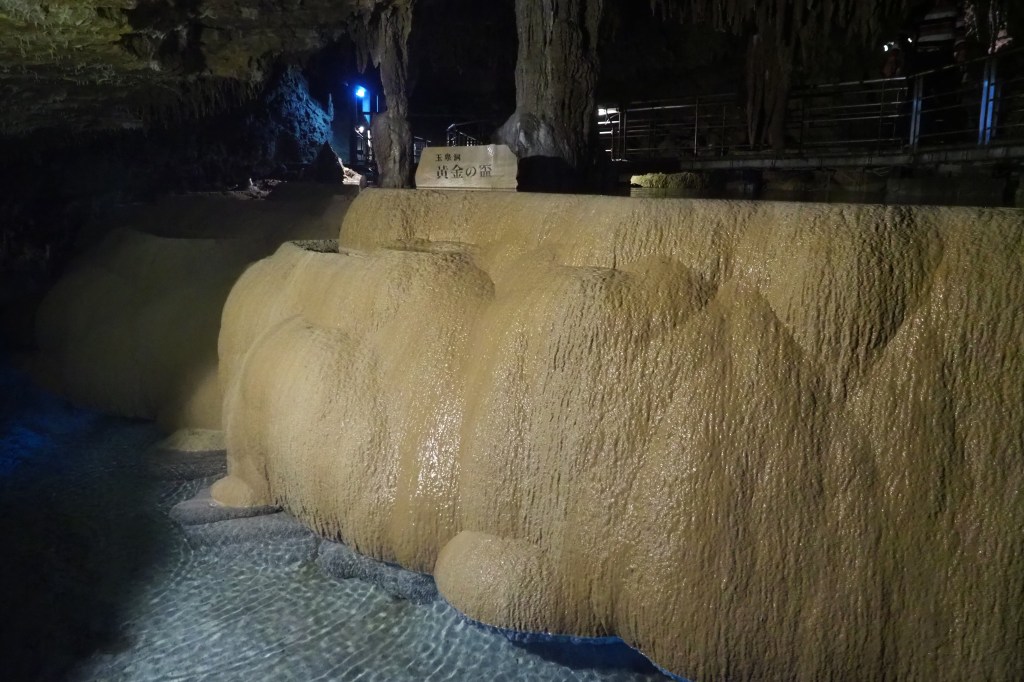
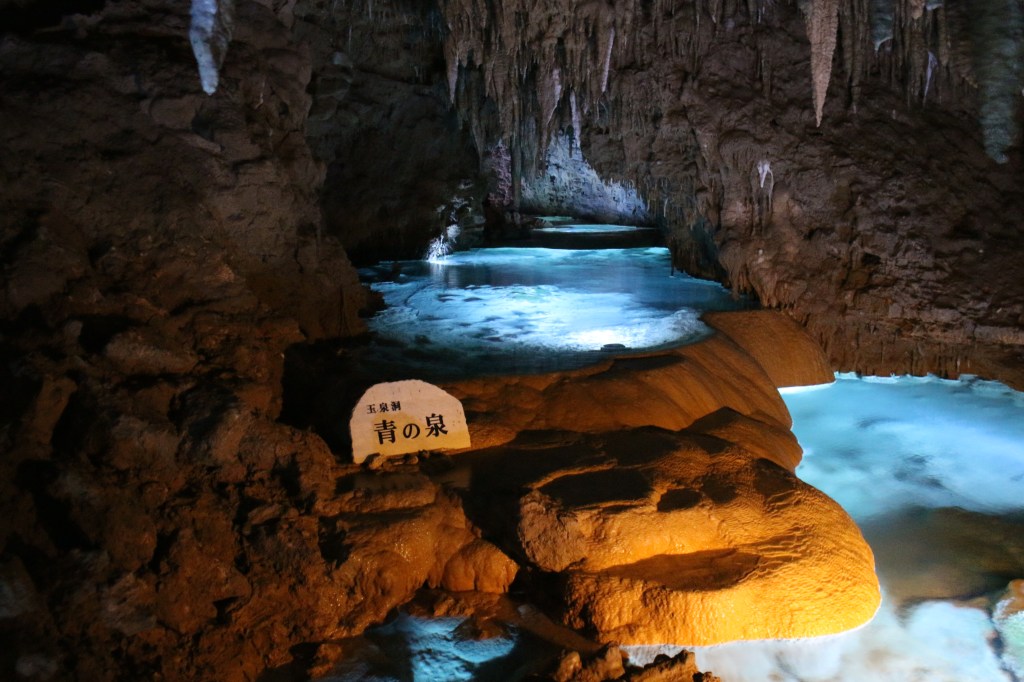
The walkway runs one way through the cave, with handrails, steps and a few low sections, and it passes through chambers of increasing size. The lighting is warm and restrained, placed to show the formations rather than to colour them, and the effect is closer to a cathedral than an amusement ride. The route takes about thirty minutes if you walk steadily, and longer if you stop to look. It is wet underfoot, and the air is heavy with humidity, so take your time and watch the steps.
The stalactites and the underground river
The ceiling is covered with stalactites of every size, some thin as straws and some thick as columns, and in places they meet the floor to form complete pillars. The path crosses bridges over the underground river, and the water is clear enough to see the rock beneath. Look for the flowstone on the walls, the sheets of calcite that look like frozen curtains, and the small pools where the water collects. The cave is still active, which is why it is wet and why the formations look alive.
The craft village
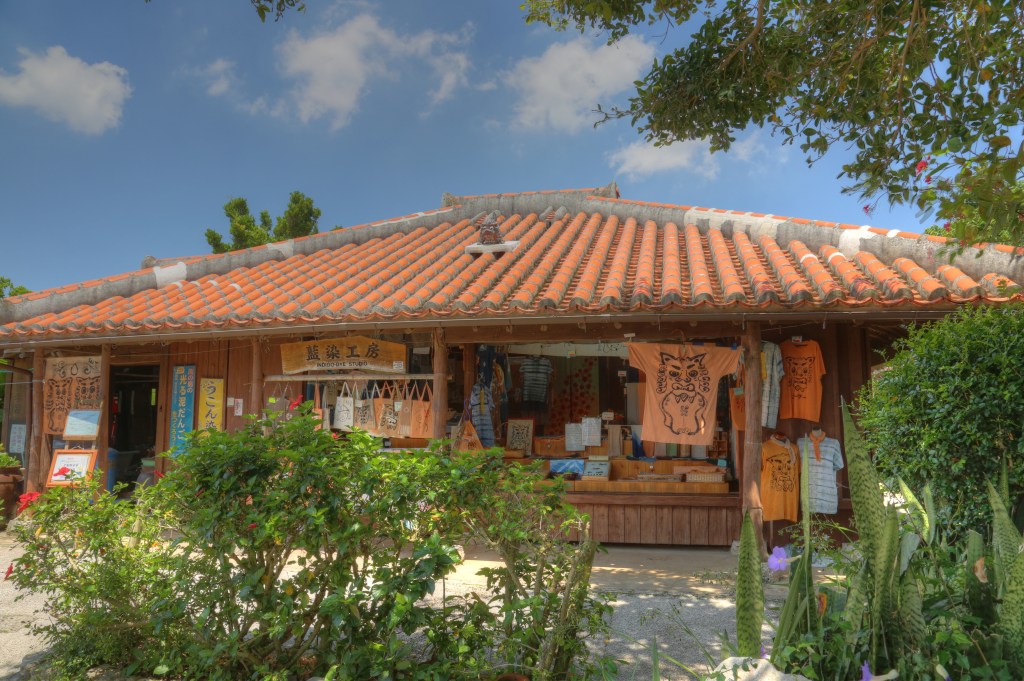
The village inside Okinawa World is a reconstruction of a traditional Okinawan settlement, with stone walls, tiled roofs and workshops for the island’s crafts. Glass blowing, bingata dyeing, pottery and sanshin making are demonstrated through the day, and some workshops let visitors try a short session. The crafts are not a performance for tourists: the pieces are sold in the shops and the artisans are working. It is a good way to spend an hour after the cave, and the glass workshop in particular is worth watching.
The snake museum
The habu museum houses the Okinawan pit viper and a collection of other snakes and reptiles, with displays on the venom, the habitat and the history of habu on the islands. There are live specimens in glass cases and a demonstration of the traditional method of catching them, which is more interesting than it sounds. It is not for everyone, and it is small, but it is a genuinely local subject and the exhibits are well presented. Children tend to love it.
The eisa performance
Okinawan eisa drumming is performed at the park several times a day, with taiko drums, dancing and the distinctive costumes of the islands. The shows are short, loud and energetic, and they are a good introduction to the festival culture of Okinawa. The performers are local, and the audience is invited to join at the end. Check the times at the entrance and plan the cave around one of the shows.
The garden and the tropical planting
The park is planted with tropical trees and flowers, including hibiscus, bougainvillea and palms, and the paths between the attractions run through a dense green garden. It is a pleasant walk even if you skip some of the attractions, and the shade is welcome in summer. The fruit trees and the orchids are labelled, and the grounds are maintained to a high standard. Allow time to wander rather than rushing from the cave to the exit.
The surrounding Nanjo coast
Gyokusendo is in Nanjo city, on the south-east coast, and the area around it has some of the least developed coastline on the main island: small fishing ports, cliffs, beaches and the Sefa Utaki sacred site, which is a short drive away. Combining the cave with the coast makes a full day, and the roads are quiet compared with the west coast resort strip. The area is also good for a simple lunch of Okinawa soba at a local shop.
Food and drink
- Okinawa soba is the staple, and the shops near the park serve it with pork belly and a mild broth. It is cheap and filling, and it is the local thing to eat after the cave.
- The park has restaurants and food stands serving taco rice, curry and noodles, and the queues are long at lunch. Eat early or bring snacks.
- Nanjo and the surrounding area have small cafes and farm stands selling tropical fruit, juice and ice cream. Look for the local mango and pineapple in season.
- The craft village sells sweets and tea, including the Okinawan brown sugar and the purple sweet potato sweets, which are better than the airport versions.
- For a proper dinner, Naha is about forty minutes away by car and has the full range of Okinawan restaurants, from izakaya to the high-end places in the city centre.
Getting there and around
- Gyokusendo is in Nanjo city, about forty minutes by car from Naha, on the south-east coast. The route follows the national road and is well signposted, with a large car park at the park entrance.
- Buses run from Naha bus terminal to the park, with a journey of about an hour, and the service is infrequent. Check the timetable and the return times before you go.
- A taxi from Naha takes about forty minutes and costs a reasonable amount if you are a group. For a single traveller, the bus or a rental car is cheaper.
- The park is a stop on some of the organised tours of the south of the island, which combine it with Sefa Utaki and the peace memorial park. It is a convenient option if you do not want to drive.
- From the airport, the drive is about thirty minutes, and the park is a possible stop on the way to or from the south coast.
Where to stay
- Naha is the practical base, with the widest range of hotels and restaurants and a forty-minute drive to the park. Most visitors stay in the city and visit the cave as a day trip.
- The south coast around Nanjo and Chinen has small guesthouses and a few resorts, with sea views and quiet roads. They are a good base if you want to combine the cave with Sefa Utaki and the coast.
- The resort strip on the west coast is about an hour away, and the drive is easy outside rush hour. It is a good option for families who want a beach hotel.
- For a longer stay, the islands off the south coast, such as Kudaka, have simple lodgings and a very different pace. Access is by ferry from Chinen.
Best time to visit
- The cave is comfortable all year, with a constant temperature around twenty degrees, which makes it a good choice in the heat of summer and the occasional cold spell in winter.
- Summer, from June to September, is hot and humid, with typhoon risk. The cave is a refuge from the sun, and the park’s shaded paths are pleasant, but the outdoor attractions are best in the morning.
- Autumn, from October to November, is the best season overall: warm, dry and clear, with fewer crowds than summer. The coast around Nanjo is at its best for driving.
- Winter is mild, with temperatures around twenty degrees and occasional rain. The park is quiet, and the cave is a comfortable stop on a day of sightseeing.
- The rainy season runs from May to mid-June. The cave is unaffected, but the outdoor paths are wet and the coast road can be slippery.
Practical tips
- Wear shoes with grip. The cave path is wet and there are steps, and the railings are essential in places.
- Bring a light layer. The cave is cool and humid, and the air conditioning in the restaurants is strong.
- Check the park’s opening hours and the eisa performance times on arrival, and plan the cave around a show.
- Buy the combined ticket if you want the cave, the village and the snake museum. It is cheaper than separate admissions.
- Avoid the middle of the day in summer. The park is exposed outside the cave, and the queues at the entrance are longest around noon.
- Do not touch the formations. The oils on your hands stop the calcite from growing, and the cave asks visitors to keep their hands off.
Suggested day-trip outline
- Morning: drive or bus to the park, and go straight to the cave before the tour groups arrive.
- Late morning: the craft village and a workshop, then the snake museum if you are interested.
- Lunch: Okinawa soba at a shop near the park, or a meal inside the park if you are short of time.
- Afternoon: the eisa performance and the garden, then a drive along the Nanjo coast to Sefa Utaki.
- Late afternoon: the coast road back towards Naha, with a stop at a beach or a farm stand.
- Evening: dinner in Naha, with the city’s izakaya and the Kokusai street area.
Before you go
Timetables, fares, admission fees, and seasonal access rules can change. Check the official tourism and transport sites linked below for the latest information before you travel.
Explore More of Japan
Published guides that pair with this one:
- Nakagusuku Castle Ruins Travel Guide: A Gusuku without a Keep
- Katsuren Castle Ruins Travel Guide: A Gusuku above the East Coast
- Okinawa Peace Memorial Park Guide: Mabuni and the Battle Sites
- Sefa Utaki Travel Guide: The Ryukyu Sacred Grove in Nanjo
- Shuri Castle Guide: The Heart of the Ryukyu Kingdom
- Himeyuri Peace Museum Travel Guide: Okinawa’s Student Nurses
Browse every Okinawa guide on this site for the rest of the region.
Sources
- gyokusendo.co.jp (checked 2026-11-05)
- okinawastory.jp (checked 2026-11-05)


Leave a Reply