A practical English guide to Chatan in Okinawa: American Village, Sunset Beach, Araha beach, Chatan castle ruins and bus access from Naha.
Operational details such as opening hours, admission fees, and train times can change. Prefer official pages and reconfirm before you travel (sources checked on 05 November 2026).
Why visit
- Chatan is the middle of Okinawa’s west coast, and it is where the island comes closest to a beach resort without leaving the town. The Mihama district has the American Village, a purpose-built shopping and entertainment complex of pastel buildings, a big wheel and a boardwalk on the sea, and next to it the Sunset Beach, a town beach facing due west with one of the best sunsets on the island.
- The name is not an accident. Chatan grew up around the air base next door, and the American presence is part of the fabric: burger shops, import stores, English on the signs, and a beach promenade that fills at dusk with families, runners and people sitting on the sea wall. It is not a cultural sight in the way Shuri is, and it does not pretend to be.
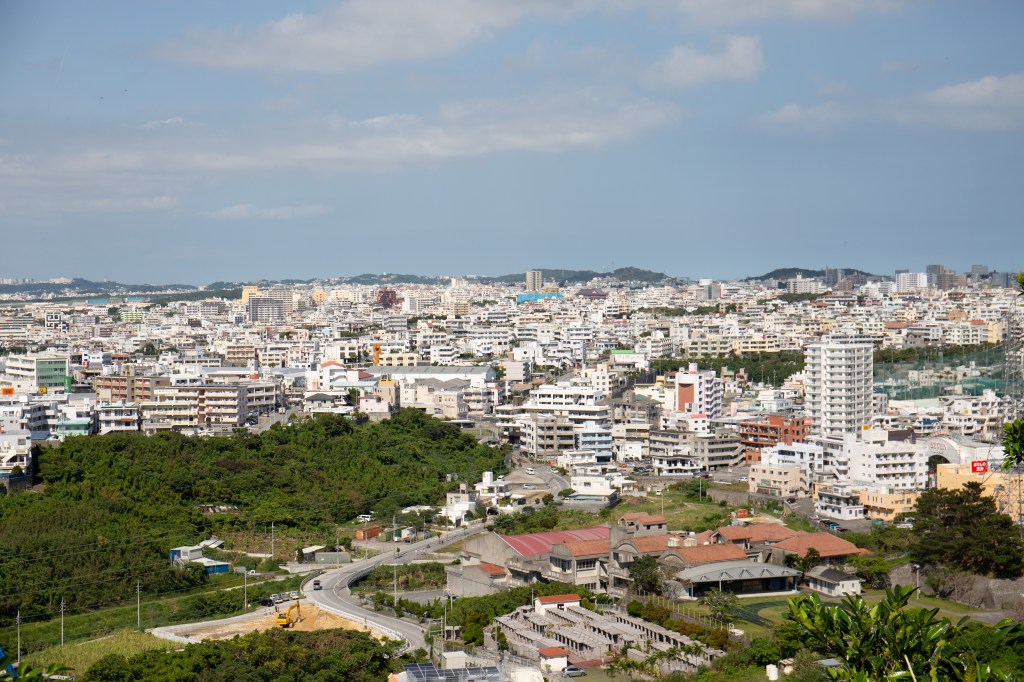
- What makes it worth more than an afternoon is the combination: the beaches are free and swimmable from April to November, the sunsets are genuinely good, there is a castle site on the hill with a view over the whole coast, and the food is some of the most varied on the island. It is also twenty minutes from the airport and forty from Naha, which makes it the obvious first or last stop of a trip.
- It is also a good base. There are hotels on the beach, the bus along Route 58 runs constantly, and the whole coast from Naha to Nago is reachable without a car.
Top places and highlights
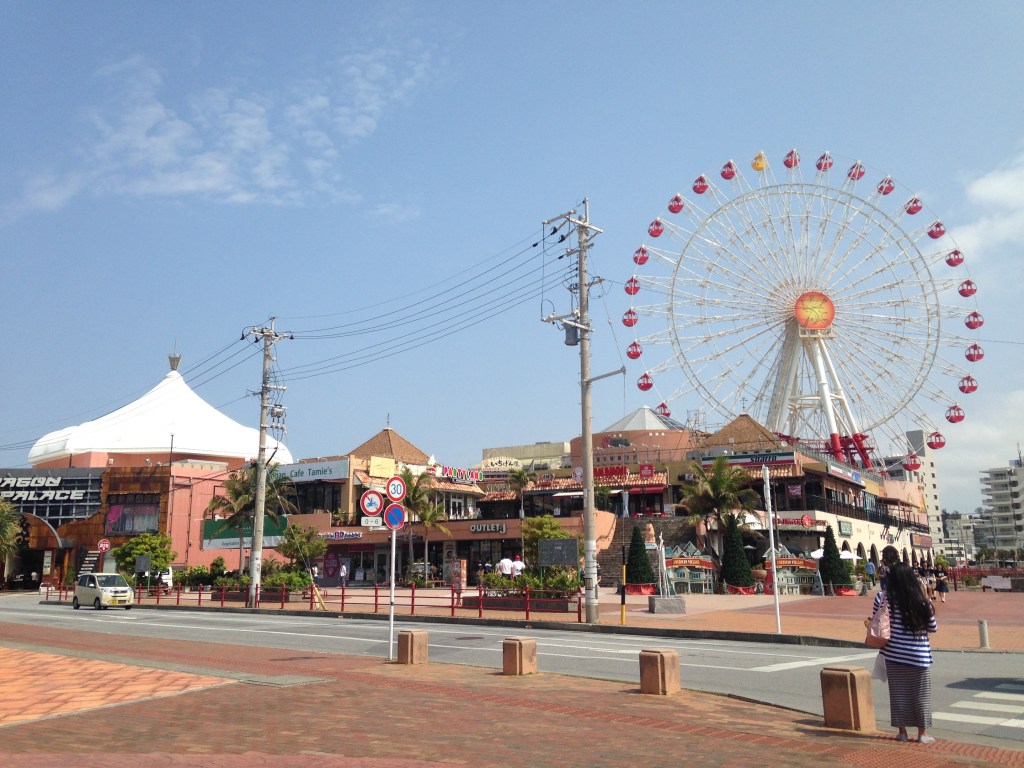
American Village
The American Village is a shopping and entertainment district at Mihama, built from the 1990s onwards in a bright, vaguely Californian style: low buildings in pastel colours, a big Ferris wheel, a cinema, restaurants, shops selling imported goods, and a boardwalk along the sea. It is a resort rather than a town, and it is aimed squarely at visitors, but it is pleasant in the evening when the lights come on and the sea breeze comes through. The Ferris wheel gives a view along the coast, the cinema shows films in English and Japanese, and there are enough places to eat that you do not need to plan. Parking is free and large, but fills at sunset on weekends.
Sunset Beach
The beach at Chatan park faces west across the East China Sea, and the sun sets into the water in front of it for much of the year, which is why the name is not marketing. The sand is white and the water shallow and calm, with a net for jellyfish in season and lifeguards on duty, and the swimming season runs from about 10 April to the end of November, with hours from nine in the morning to the late afternoon. It is free, with showers, lockers, toilets and a shop, and a barbecue area that can be booked. Parking is free for 450 cars from seven in the morning to ten at night. The best time is the hour before sunset, when the beach fills and the light is at its best.
Araha beach
Araha is the other beach, a 600-metre curve of sand inside Araha park, with a promenade, a basketball court, and a huge wooden play ship modelled on the Indian Oak, a British ship that ran aground off Chatan in 1840 and whose crew were rescued and looked after by the people of the village until they could be sent home. The swimming season runs from about 10 April to the end of October, with a possible extension into November that is decided each year, and there are showers, lockers and marine activities including parasailing and dragon boats. It is a fifteen-minute walk from American Village along the coast, or five minutes by car, with 118 free spaces. It is the better beach for families and for anyone who wants to swim seriously, and it is quieter than Sunset in the morning.
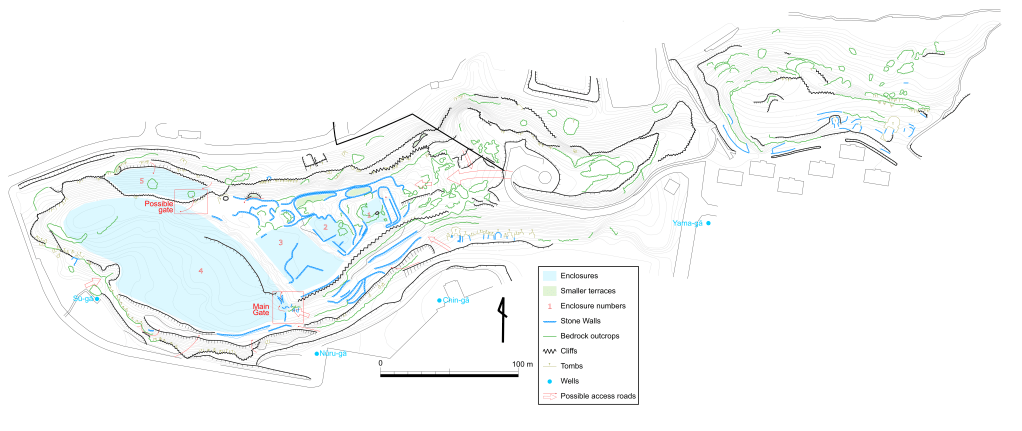
Chatan Gusuku
On the hill behind the town there is the site of a Ryukyu castle, Chatan Gusuku, a small fortified enclosure of stone walls on the edge of the plateau, with a view over the coast and the base. It is a minor gusuku compared with Katsuren or Nakijin, and it is unstaffed and free, but the walls are substantial, the site is quiet, and the excavation produced iron arrowheads and Chinese ceramics that show it was part of the trade network of the Ryukyu kingdom. The walk up from the town takes about twenty minutes, and the view from the top, with the coast on one side and the hills on the other, is the best in Chatan.
The sunset and the sea wall
The west coast road has a sea wall and a promenade running north from the beaches, and in the evening it fills with people running, walking dogs, fishing and sitting on the concrete watching the sun go down. It is free, it is where locals go, and it is the most honest thing in a district built for tourists. The sun sets behind the horizon for much of the year, with the islands of the Kerama group visible on a clear day, and the concrete is warm enough to sit on until well after dark. Bring something to drink and stay for the green flash if you are lucky.
The food and the base culture
Chatan eats better than most of the island because it has been feeding Americans for seventy years: burgers, tacos, steak, pizza, and Okinawan food that has adapted to those tastes, alongside proper soba shops and izakaya. The bars around the Village and the back streets of Mihama range from expat dives to music venues, and there is a cluster of small places on the Sunset Beach side that are open late. It is the least Japanese and the most mixed part of Okinawa, and the food shows it. For anyone tired of resort buffets, this is where to eat.
Food and drink
- Tacos and taco rice are the local staples, inherited from the base, and the shops around Mihama do both well.
- Burgers and steak are taken seriously here, with several long-running places that predate the current fashion.
- Okinawa soba is available alongside the American food, and the shops in the back streets are cheaper than the Village.
- Blue seal ice cream, the Okinawan brand with American roots, has shops in the Village and is the standard cold thing to eat.
- The bars around Mihama range from live music venues to small counter places, and many stay open past midnight.
- Seafood is landed at the port just north, and the restaurants along the coast serve it grilled and in sashimi.
Getting there and around
- From Naha airport, take route 120 or one of the resort limousine buses; the local bus to Kuwae or Mihama takes about 40 to 50 minutes depending on traffic on Route 58.
- From Naha bus terminal, routes 20, 28 and 29 run north along Route 58 to the Kuwae stop, about three minutes from American Village, for around 700 yen.
- For Sunset Beach, get off at the Mihama American Village entrance stop and walk seven minutes, or at Kuwae and walk three minutes to the Village and then ten to the beach.
- For Araha beach, get off at the Hamby Town stop and walk about five minutes, or walk fifteen minutes from the Village along the coast.
- By car, take Route 58 north from Naha and turn left at the Kuwae crossroads when you see the Ferris wheel, or the Mihama crossroads just before it. From the Okinawa expressway, leave at the Okinawa Minami interchange and follow the signs for Chatan, about ten minutes.
- A taxi from the airport takes about 45 minutes and costs 3,500 to 4,000 yen.
- The Yui rail does not reach Chatan, so the bus or a car is the only public option.
Where to stay
- There are resort hotels on the beach at Mihama, with sea-view rooms and pools, and they are the reason many people stay here rather than in Naha.
- Condominium-style hotels and apartments in the back streets are cheaper and suit families and longer stays.
- Naha has the widest choice and is thirty to forty minutes away by bus or car, which works for a short trip.
- Booking ahead matters in July and August and around the New Year, when the coast hotels fill.
Best time to visit
- The swimming season at Sunset Beach runs from about 10 April to the end of November, with lifeguards and a jellyfish net.
- Summer is hot, bright and busy, with the best beach weather and the highest prices.
- Autumn is warm, the sea is still swimmable into November, and the light is clear.
- Winter is mild and quiet, too cool for most people to swim but good for walking and for sunsets without crowds.
- The rainy season in May and June and the typhoon season from August to October can disrupt plans, and the beaches close when a typhoon is near.
Practical tips
- Come for the sunset rather than the middle of the day. The beach and the sea wall are at their best in the last hour of light.
- Take the bus from Naha rather than driving if you are going to drink; Route 58 buses run frequently and late.
- Swim at Sunset or Araha only inside the marked season and the net; the current outside the net is stronger than it looks.
- Parking at the Village is free but fills at sunset and on weekends, and the beach car park fills first.
- Walk from the Village to Araha along the coast, which takes fifteen minutes and is the nicest stretch of the district.
- Climb to Chatan Gusuku for the view if you want a break from the beach and the shops; it is free and empty.
- Carry cash for the smaller bars and the bus, and remember that many places close on one weekday.
Suggested day-trip outline
- Afternoon: bus from Naha to Kuwae, walk through American Village and along the boardwalk.
- Late afternoon: Araha beach for a swim or a walk, then back along the coast as the light drops.
- Sunset: Sunset Beach, with something cold, and the sea wall afterwards.
- Evening: dinner at one of the burger or taco places in Mihama, then a bar in the back streets.
- Optional morning: Chatan Gusuku for the view before the heat, then the bus back to Naha or on to Nago.
Before you go
Timetables, fares, admission fees, and seasonal access rules can change. Check the official tourism and transport sites linked below for the latest information before you travel.
Explore More of Japan
Published guides that pair with this one:
- Cape Zanpa Travel Guide: Yomitan’s Cliffs and Lighthouse
- Naha and Kokusai Street Guide: Markets, Food and the Old Capital
- Churaumi Aquarium Travel Guide: Whale Sharks, Mantas and the Okinawa Coast
- Koza Travel Guide: Okinawa City’s Music, Eisa and Gate Street
- Kouri Island Travel Guide: The Heart Rock and a Bridge over Emerald Water
- Tokashiki Island Guide: A Kerama Day Trip from Naha
- Cape Manzamo Travel Guide: Elephant Rock, Sunset and the Onna Coast
- Hateruma Island Travel Guide: Japan’s Southernmost Inhabited Island
- Ishigaki Island Travel Guide: Yaeyama Beaches and the Ferry Hub
Browse every Okinawa guide on this site for the rest of the region.
Sources
- okinawa-americanvillage.com — Access (checked 2026-11-05)
- okinawastory.jp (checked 2026-11-05)
- chatantourism.com (checked 2026-11-05)


Leave a Reply