A practical English guide to Kishiwada in Osaka: the castle, the Danjiri festival, the old town and access from Osaka.
Operational details such as opening hours, admission fees, and train times can change. Prefer official pages and reconfirm before you travel (sources checked on 05 November 2026).
Why visit
- Kishiwada, on the coast south of Osaka, holds one of the most physical festivals in Japan. For two days in September, teams drag carved wooden floats through the streets at a run, swinging them around corners with nothing but ropes, timing and nerve. The danjiri are heavy, the streets are narrow, and the crowds are close enough to feel the speed.
- The rest of the year the town is a quieter place, with a castle, a good museum of the festival, and a compact centre that is easy to walk. What the festival shows in two days, the castle and the danjiri hall explain for the rest of the year, and together they make Kishiwada worth a day from Osaka even outside September.
- It is also a very accessible festival. The Nankai line runs straight from Namba, the station is a few minutes from the route, and the event is free to watch. That accessibility is exactly why it is crowded, and why planning the day matters.
- For travellers who want to see a Japanese matsuri that is not staged for visitors, this is one of the best options in the Kansai region. The floats are maintained by neighbourhood teams all year, the participants are local, and the atmosphere on the day is competitive rather than decorative.
Top places and highlights
The danjiri in motion
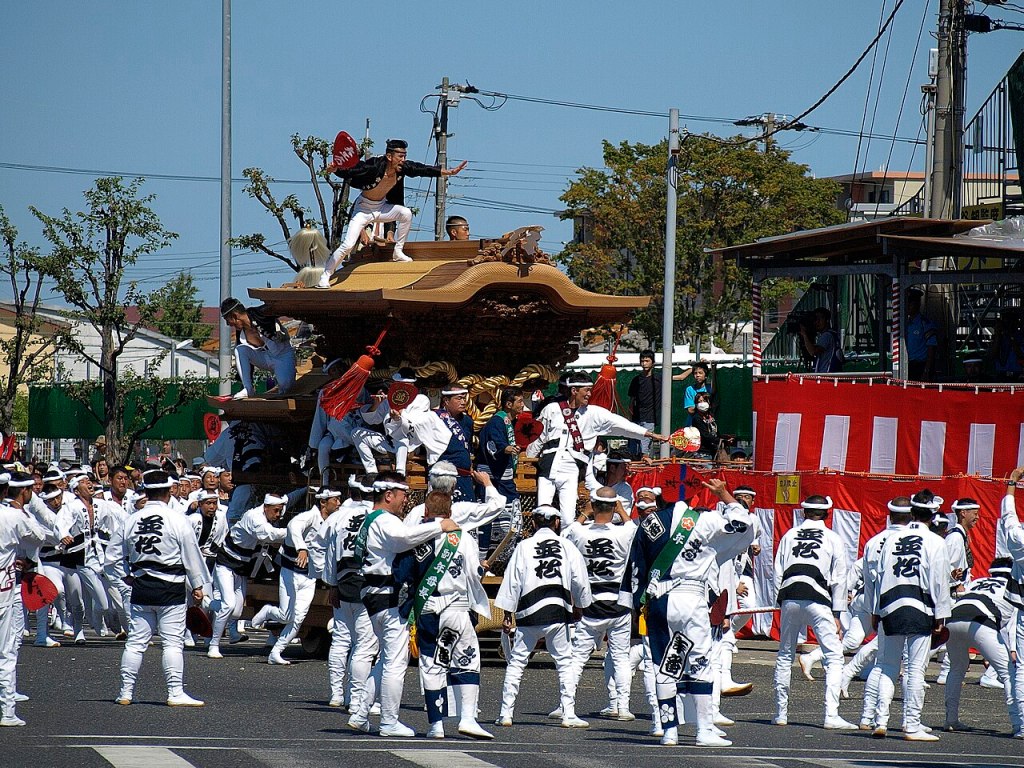
Each float is a tall wooden structure with a carved roof, a drum and a small crew on top, pulled by dozens of people on ropes and steered by men at the front and back. The teams run, the float tilts, and at corners the leaders jump aboard and the whole thing is swung around at speed, sometimes on one wheel. It is dangerous, and the crowd is held back by little more than goodwill and a rope. Watching one turn is enough to understand why the festival matters so much here.
The route through the old town
The floats run on a circuit that passes narrow streets, shrines and the castle, and the best viewing is not at the official stands but on the corners where the turns happen. The route changes over the two days, with the main procession on the first day and the return to the shrines on the second, and the crowd moves with it. Pick a corner near a shrine and stay there: the same teams pass repeatedly, and you see the turns up close without walking far.
Kishiwada castle
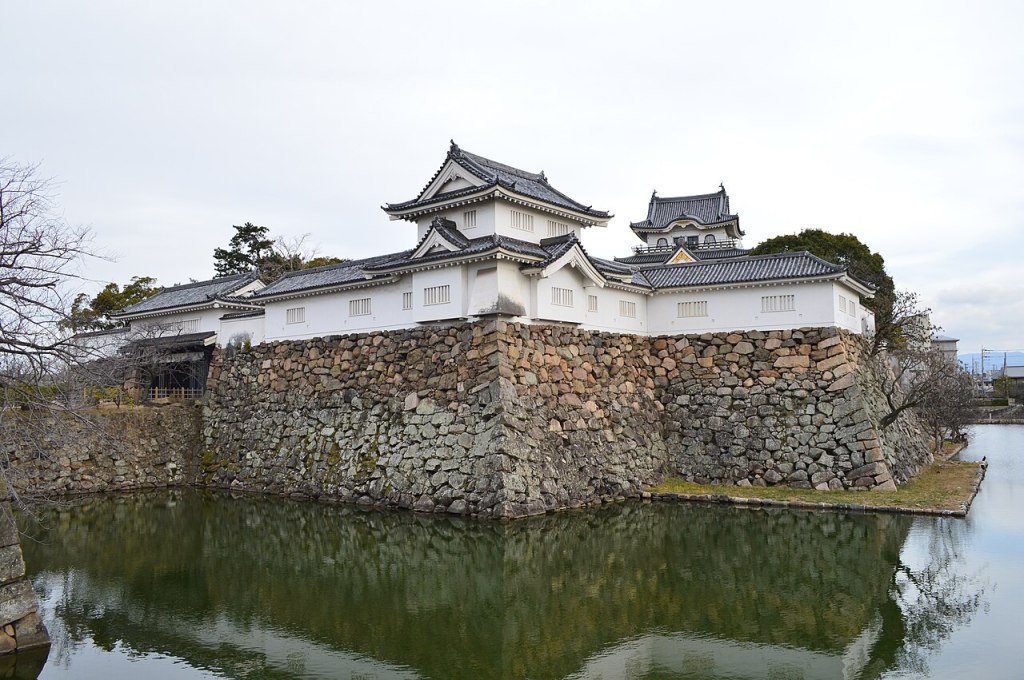
The castle stands on a small hill in the middle of the town, with a reconstructed keep, a moat and a garden by the twentieth-century master Shigemori Mirei, built of stones arranged in a pattern of eight formations. The keep has a view over the town and the coast, and the garden is quiet even when the streets below are full. During the festival the castle grounds are a useful place to escape the crowd for half an hour.
The danjiri museum
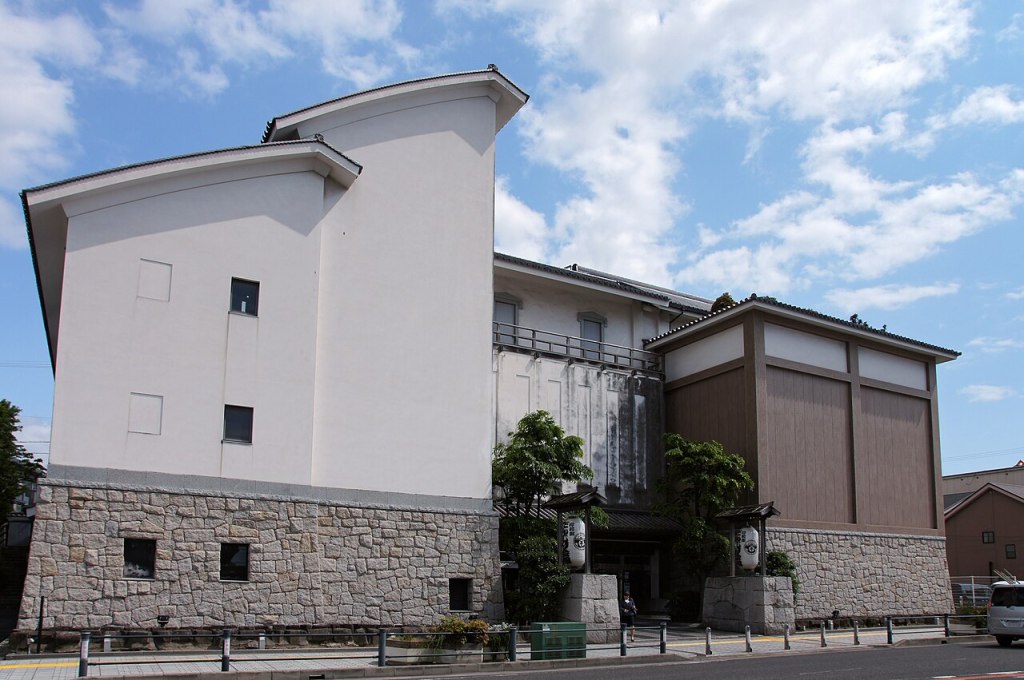
A hall near the castle displays several of the floats at close range, with their carving, their lacquer and the ropes and fittings used on the day. It explains the organisation of the teams, the role of the shrine, and the way the festival has been maintained since the Edo period. Seeing a danjiri standing still makes the movement on the day easier to read, and the museum is the reason a visit outside September still makes sense.
The shrine and the teams
The festival is tied to a shrine, and each neighbourhood team belongs to it, with its own float, its own colours and its own hierarchy. On the days before the festival the floats are assembled in the streets, and in the weeks after they are taken apart and stored. If you are in town outside the festival, look for the storehouses and the notice boards, which show how tightly the event is woven into the district.
The coast and the old harbour
Kishiwada faces Osaka bay, and the waterfront has a park, a fishing harbour and a long view across the water. It is a working coast rather than a resort, and the walk along it gives a sense of the town’s older life as a port and a castle town. On clear days the bridge to Kansai airport is visible, and the evening light over the bay is a good end to a festival day.
Osaka food in a smaller town
Kishiwada eats like Osaka but with less queueing: okonomiyaki, takoyaki, kushikatsu and the local noodle and rice bowls, served in family shops around the station and the castle. During the festival the stalls along the route sell grilled food and drinks, and the restaurants fill quickly after the procession passes. Prices are lower than in the city centre, and the cooking is just as good.
Food and drink
- Okonomiyaki and takoyaki are the everyday Osaka dishes here, and the shops near the station cook them well and without ceremony.
- Kushikatsu, the deep-fried skewers of Shinsekai fame, has its own local following in the towns south of Osaka.
- Festival stalls along the route sell grilled squid, yakisoba, candy apples and cold drinks, and they are part of the day.
- Kishiwada is close to the fishing ports of the bay, and the restaurants around the harbour serve the local catch.
- For a sit-down meal during the festival, book ahead or eat early; the restaurants near the route fill as soon as a team passes.
Getting there and around
- The Nankai main line runs from Namba to Kishiwada in about thirty minutes, with the station a few minutes from the castle and the festival route.
- From Kansai airport the Nankai airport line connects at Izumisano, and the whole trip takes under an hour.
- The castle, the danjiri museum and the old centre are within a fifteen-minute walk of the station.
- During the festival, roads along the route are closed and buses are diverted, so the train is by far the easiest way in.
- By car, the Hanshin expressway and the coastal roads reach Kishiwada, but parking near the route is closed on the festival days.
Where to stay
- Hotels in Kishiwada are few, and the festival weekend fills them early; most visitors stay in Osaka and take the train.
- Namba and Tennoji have the widest choice of accommodation and a thirty-minute ride to the festival.
- A handful of business hotels near Kishiwada station suit travellers who want to be close to the route.
- The coast south of the town has a few larger hotels, useful if you are combining the festival with the airport.
Best time to visit
- Mid-September is the festival, with two days of processions over the long weekend around Respect for the Aged Day.
- Spring is mild and the castle garden is at its best, and the town is quiet enough to walk without crowds.
- Summer is hot and humid, with the bay providing some relief in the evening.
- Autumn outside the festival is clear and comfortable, and the castle and museum are easy to visit.
Practical tips
- Arrive early in the morning to claim a spot at a corner where the floats turn; the best places fill by mid-morning.
- Wear shoes you can stand in for hours, and keep your bag in front of you in the crowd.
- The floats pass close to the spectators; follow the marshals and never step into the route.
- Bring water and a hat, since the September sun is still strong and shade is limited.
- Check the route map for the year, because the order of the processions changes between the two days.
- If you want to see the floats without the crowds, visit the museum and the castle on a weekday.
Suggested day-trip outline
- Morning: train from Namba, then a walk past the castle to the festival route.
- Late morning: find a corner near a shrine and watch the first teams turn.
- Lunch: an early meal at a shop away from the route, before the crowds fill the restaurants.
- Afternoon: the castle keep and the garden, then the danjiri museum.
- Late afternoon: the return procession, when the teams are tired and the turns are wildest.
- Evening: the train back to Osaka, or the harbour for the light over the bay.
Before you go
Timetables, fares, admission fees, and seasonal access rules can change. Check the official tourism and transport sites linked below for the latest information before you travel.
Explore More of Japan
Published guides that pair with this one:
- Arima Onsen Travel Guide: Kobes Old Hot Spring Town
- Shirahama Travel Guide: The White Beach and the Hot Springs
- Nagahama Travel Guide: Kurokabe Glass and the Lake Biwa Town
- Iga Ueno Travel Guide: Ninja, Castles and the Poet Basho
- Koyasan Travel Guide: Temples, Cedars, and a Night on the Mountain
Browse every Kansai guide on this site for the rest of the region.
Sources
- city.kishiwada.lg.jp (checked 2026-11-05)
- osaka-info.jp (checked 2026-11-05)


Leave a Reply