A practical English guide to Moerenuma Park in Sapporo: the glass pyramid, the sculpted hills, the seasons and access from the city.
Operational details such as opening hours, admission fees, and train times can change. Prefer official pages and reconfirm before you travel (sources checked on 05 November 2026).
Why visit
- Moerenuma Park is a large park on the northern edge of Sapporo, built on what was a waste treatment site and designed by the Japanese-American sculptor Isamu Noguchi. It opened in stages from 1988 and was completed in 2005, and it is his most complete piece of landscape work: a flat plain turned into a sculpture you can walk on.
- The centrepiece is a glass pyramid, a three-storey structure of steel and glass that houses a gallery, a cafe and a viewing level, and it sits at the end of a long axis that runs through the park. Around it are a sculpted hill called Playmountain, a fountain that runs on a timed cycle, a beach, a forest and a series of earth forms and water channels that Noguchi designed as a single composition.
- In summer the park is a place for picnics, bicycles and children in the water, and in winter it is a wide white field with the pyramid and the hills standing out against the snow. It is free to enter, it is never crowded in the way that the city centre is, and it is one of the few places in Japan where you can see a major artist’s landscape work at full scale.
- It is also a good counterpoint to the rest of Sapporo. After the beer museum, the seafood market and the shopping arcades, a morning in a piece of sculpture that happens to be a park gives the city a different shape.
Top places and highlights
The glass pyramid
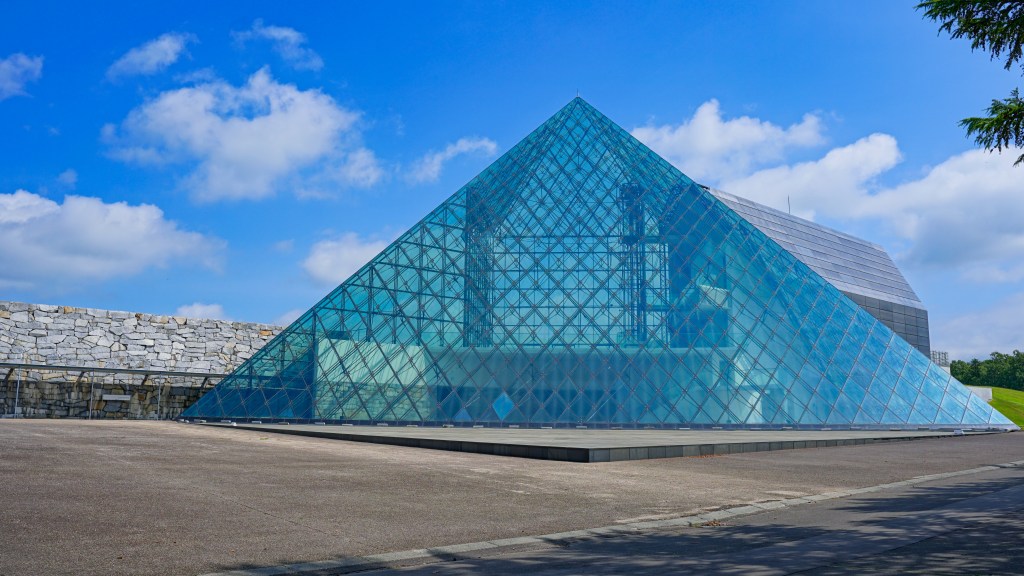
The pyramid is the park’s symbol: a three-storey frame of steel and glass, with a spiral ramp inside and a gallery, a shop and a cafe around the base, and a viewing level at the top. The light through the glass changes with the weather, and in winter the structure glows against the snow. Entry is free, and the building is open every day, with the cafe and the gallery on the ground floor. Climb to the top for the view over the whole park and the city beyond.
Playmountain
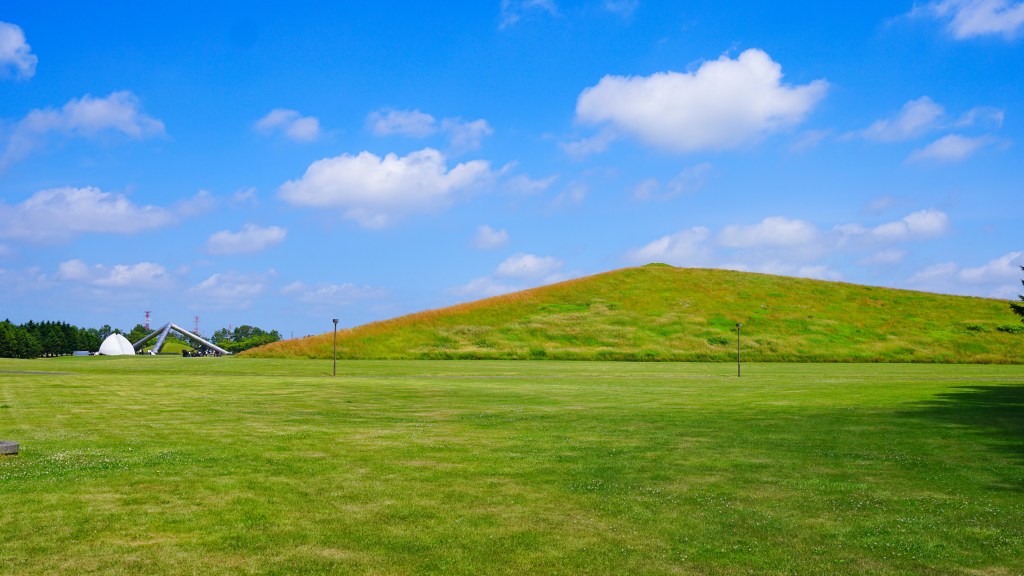
Playmountain is a sculpted hill with a smooth, curved profile that looks artificial and natural at the same time, and a path that spirals up to the top. From the summit the whole composition of the park is visible: the pyramid, the fountain, the water channels and the rings of trees. It is a short climb and a good place to sit, and in winter it becomes a sledding slope. The shape is the point: it is a piece of sculpture that children run up and down.
The fountain and the water channels
A large fountain runs on a timed cycle through the day, throwing water high into the air, and the channels that Noguchi designed carry water through the park in straight lines and curves. In summer the fountain is the centre of the park for families, with children playing in the spray, and the sound carries across the lawns. Check the schedule at the entrance, since the fountain is not always running.
Moere Beach
The park has a shallow artificial beach around a pool, with sand and a line of trees, and it opens in the summer for wading and play. It is not a swimming beach in the sea sense, and the water is shallow and supervised. It is the most family-oriented part of the park, and the lawns around it are good for a picnic. The name is a piece of the park’s playful approach to its artificial landscape.
The forest and the cherry trees
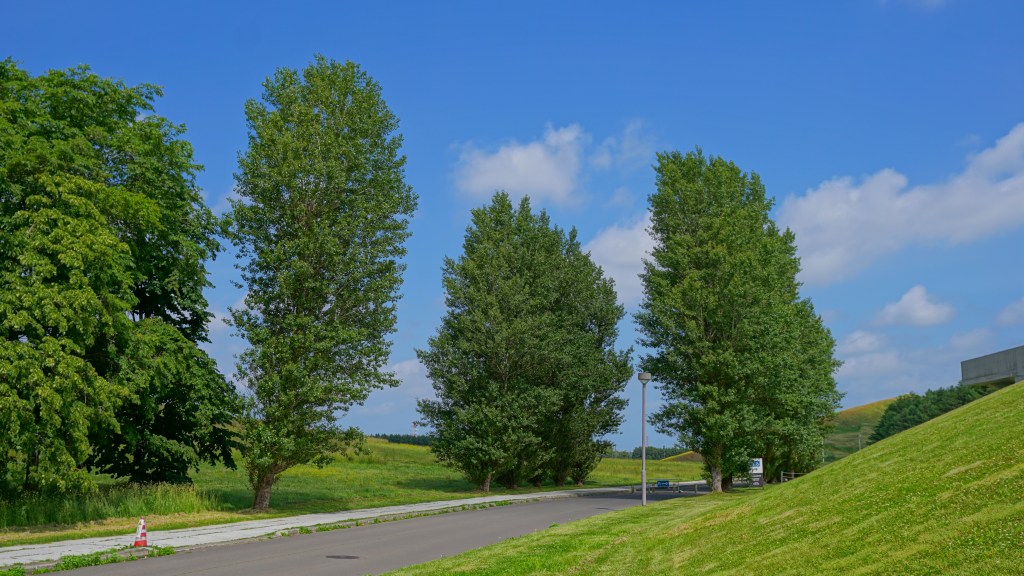
The park is ringed with a forest of several thousand trees, planted when the site was reclaimed, and there are cherry trees that flower in early May, later than in the city because of the open exposure. The paths through the trees are quiet, and the forest gives the park a boundary and a sense of enclosure. In autumn the leaves turn, and the contrast with the white sculpture of the park is at its best.
The Tetra Mound and the other earthworks
Beyond the main axis, the park has smaller works: a mound of earth with a triangular cut, a ring of stones, a long bench and a series of channels. They are easy to miss if you stay near the pyramid, and they reward a slow circuit of the whole site. Noguchi designed the park as a sequence of experiences rather than a set of objects, and the smaller pieces are part of the rhythm.
Sapporo beyond the park
The park is a bus or a subway ride from the centre, and it pairs well with the city’s other attractions: the beer museum, the seafood market, the clock tower and the shopping arcades of Susukino. The Nopporo forest and the Historical Village of Hokkaido are further east, and the city is compact enough to combine two or three of them in a day.
Food and drink
- The cafe in the glass pyramid serves light meals, coffee and sweets, and it is the only food inside the park. The menu is simple and the prices are reasonable, and the seating looks out over the park.
- Bring a bento and eat on the lawn. The park is designed for picnics, and the supermarkets and convenience stores near the subway stations sell everything you need.
- Sapporo is the place for a proper meal afterwards: soup curry, miso ramen, Genghis Khan lamb and the seafood of the market. The city is twenty minutes away by subway and bus.
- In summer there are food trucks and stalls near the fountain on busy days, and in winter the park is quiet and the cafe is the only option.
- The park is close to the suburban districts of Kita-ku, which have local ramen shops and bakeries. They are cheaper than the centre and used by residents.
Getting there and around
- Moerenuma Park is in Higashi-ku, on the northern edge of Sapporo, about thirty minutes by bus from the subway terminus at Kanjo-dori-higashi or from Sapporo station. The bus stop is at the park entrance.
- By subway, take the Toho line to Kanjo-dori-higashi and change to the bus for Moerenuma. The whole trip from the centre takes about forty minutes.
- By car, the park is close to the Sasson expressway and the national roads, with a large free car park. It is the easiest option if you are combining the park with the Historical Village or the airport.
- The park is large and flat, with paved paths and lawns, and a bicycle is a good way to cover it. Rentals are available in the city, and the park has cycle paths.
- From New Chitose airport, the drive takes about an hour, and the train and subway combination takes about an hour and a half.
Where to stay
- Sapporo is the practical base, with the full range of hotels and restaurants, and the park is under an hour away. Most visitors stay in the centre or around the station.
- The hotels in Kita-ku and the northern suburbs are cheaper and closer to the park, and they suit travellers with a car.
- The hot spring inns outside the city, towards Jozankei, are within an hour by car and offer outdoor baths after a day in the park. They are a good base for a slower trip.
- The pensions and guesthouses in the eastern suburbs are quiet and cheap, and they are close to the park and the Historical Village of Hokkaido.
Best time to visit
- Summer, from June to August, is the best season for the park: the fountain runs, the beach opens, the lawns are green and the days are long. It is busy at weekends but never crowded.
- Autumn, from September to October, brings colour to the forest and clear light, and the park is quiet. The fountain may still be running in September.
- Winter, from December to March, turns the park into a white field, and the pyramid and the hills stand out against the snow. The paths are cleared but the cold is severe, and the cafe is the only warm stop.
- Spring arrives late, with the snow melting through April and the cherry trees flowering in early May. The park is quiet and the ground is wet.
- The rainy season is less pronounced in Hokkaido, but June can be wet. The pyramid and the cafe make it manageable.
Practical tips
- Check the fountain schedule before you go. It is the centre of the park in summer and it does not run all day.
- Bring food and water. The cafe is the only option inside the park, and the nearest shops are a bus ride away.
- Allow at least two hours. The park is large, and the walk from the pyramid to the far earthworks takes time.
- Wear shoes for walking, not sandals. The paths are paved but the distances are long and the lawns are uneven.
- In winter, wear boots and check the bus service. The park is exposed to the wind, and the cold is stronger than in the city centre.
- Visit on a weekday if you want the park to yourself. Weekends in summer bring families and picnic groups.
Suggested day-trip outline
- Morning: subway and bus from Sapporo station, arrive at the park and climb the pyramid for the view.
- Late morning: Playmountain, then the fountain and the water channels, with a stop at the cafe.
- Lunch: a bento on the lawn or a light meal at the pyramid cafe.
- Afternoon: the forest paths, the beach in summer, and the smaller earthworks on the far side of the park.
- Late afternoon: the bus back to the subway, and the city centre for coffee or shopping.
- Evening: dinner in Susukino or around the station, with soup curry or ramen.
Before you go
Timetables, fares, admission fees, and seasonal access rules can change. Check the official tourism and transport sites linked below for the latest information before you travel.
Explore More of Japan
Published guides that pair with this one:
- Sounkyo Gorge Travel Guide: Waterfalls, Kurodake and Daisetsuzan
- Noboribetsu Onsen Travel Guide: Hell Valley and Hokkaido Hot Springs
- Sapporo Travel Guide: Food, Parks, and a Hokkaido Base
- Otaru Travel Guide: Canal Warehouses, Seafood, and a Day Trip from Sapporo
- Asahiyama Zoo Travel Guide: Hokkaido Animals in Winter
- Historical Village of Hokkaido Travel Guide: Kaitaku no Mura
Browse every Hokkaido guide on this site for the rest of the region.
Sources
- moerenumapark.jp (checked 2026-11-05)
- visit-hokkaido.jp (checked 2026-11-05)


Leave a Reply