A practical English guide to the Naha Otsunahiki, the giant rope pull held every October: the route, the rope, the crowds and how to watch it.
Operational details such as opening hours, admission fees, and train times can change. Prefer official pages and reconfirm before you travel (sources checked on 05 November 2026).
Why visit
- Every October, a rope about two hundred metres long and well over a metre thick is carried out onto the main street of Naha, and tens of thousands of people take hold of it and pull. The Naha Otsunahiki is not a demonstration for tourists: it is a city festival with a documented history going back to the seventeenth century, suspended by the war, and revived in the 1970s as a statement that the city had come back.
- The scale is hard to picture until you see it. The main rope is made of rice straw, assembled in sections, and it has hundreds of thinner branch ropes coming off it so that people can actually get a grip. Two teams, east and west, pull against each other along the street, with a wooden pole at the centre as the marker, and the whole thing is accompanied by drums, whistles, flags and a great deal of shouting. It is one of the largest tug of war events in the world and the city is justifiably proud of it.
- Around the pull is a full festival: a procession in Ryukyu kingdom costume, music and dance, food stalls along the route, and crowds that fill the pavements and the side streets. For a visitor it is the single best day of the year to see Okinawan public culture all at once, and it is free.
- Outside the festival, the rope is not forgotten. Sections of it are displayed at sites around the city, and the craft of making it, twisting rice straw into a cable of that size, is part of the local identity. If you are in Okinawa at another time of year, you can still see what the fuss is about and understand the engineering behind it.
Top places and highlights
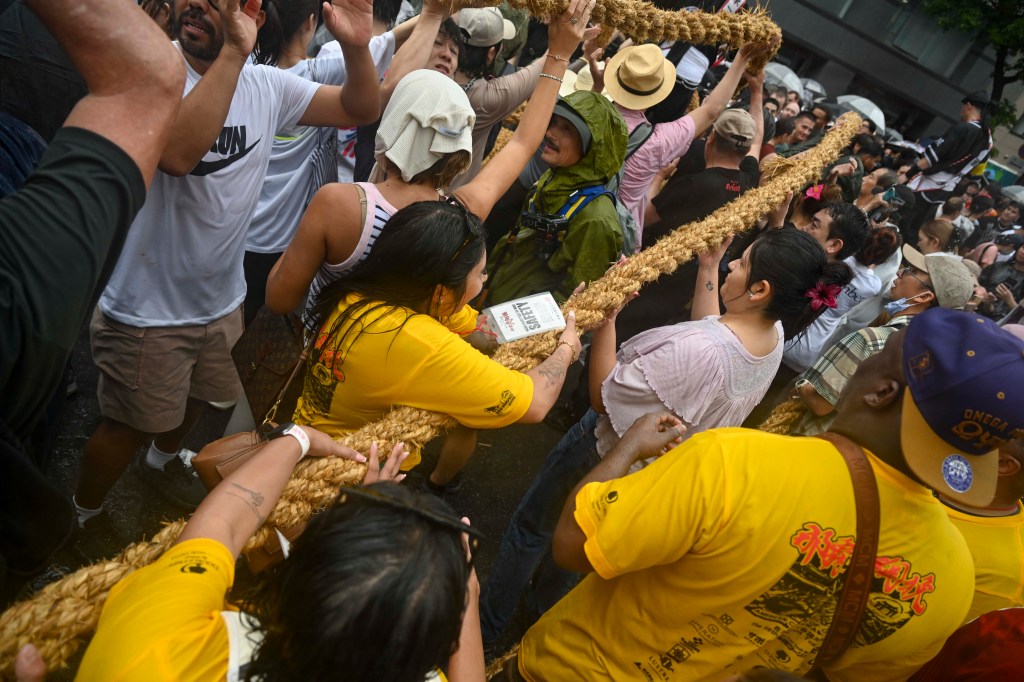
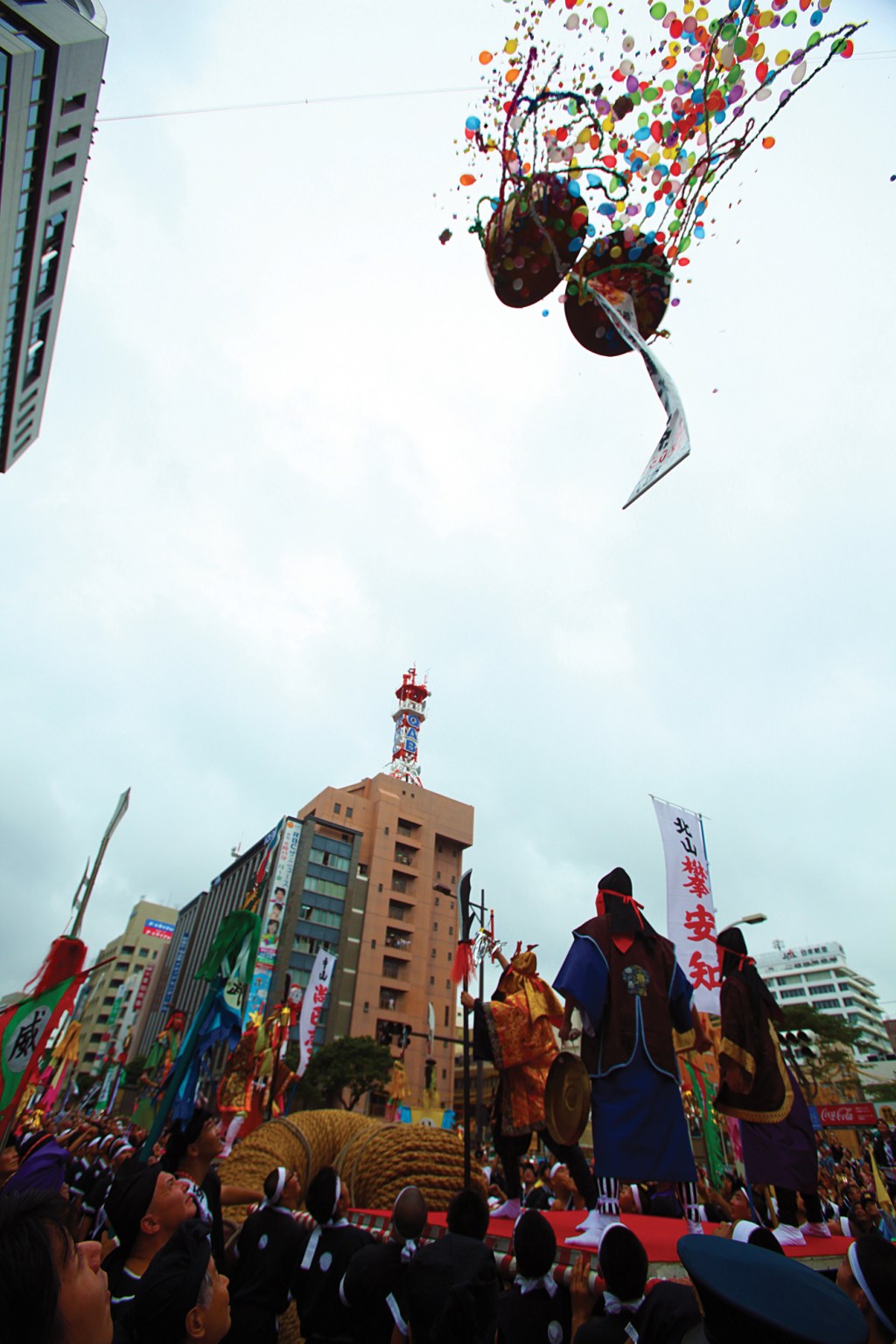
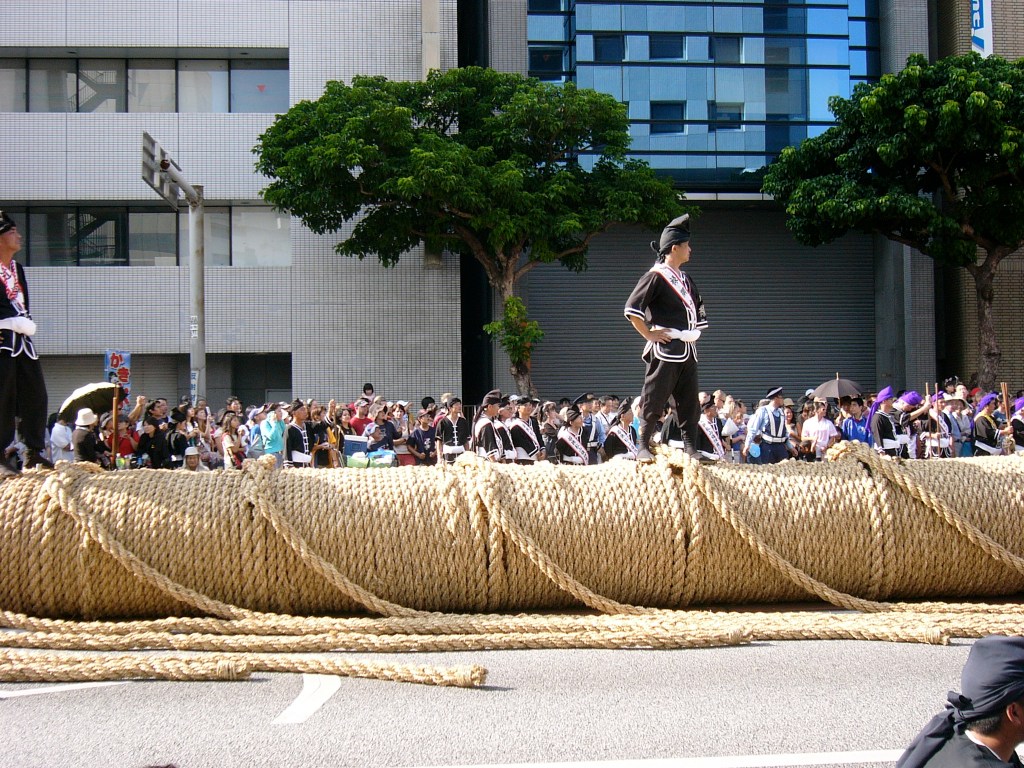
The giant rope itself
The main rope is built from bundles of rice straw twisted into a cable, then bound and braided into something that looks less like a rope than a fallen tree. It is laid out along the street in sections before the pull, and the assembly is as much of a spectacle as the event: crews working along its length, branch ropes being attached, the centre pole being set. Walk the route before the start to see the scale, and take the chance to look at the cross-section where the end is exposed. The weight is measured in tens of tonnes, and the number of people needed to move it becomes obvious very quickly.
The pull
At the signal, the two sides lean into the branch ropes and the main cable shifts, slowly, a few centimetres at a time. The centre pole moves with it, and the aim is to drag it a set distance towards one side. What makes it worth watching is the organisation: team leaders calling the rhythm, whole groups pulling together, the rope surging and going slack, and the crowd on the pavements shouting for the east or the west. It is not a long event, and the decisive movement happens in bursts. Get a position near the centre pole where you can see both teams and the marker.
The Ryukyu costume procession
Before and around the pull, a procession of people in Ryukyu kingdom dress moves through the streets: robes, hats, banners and attendants, with music and dance groups following. It is a reenactment rather than a historical ritual, but it is well done and it gives the festival its character, connecting the modern city to the kingdom that ruled these islands until the nineteenth century. The costumes are the ones you see in the old paintings and in the museum collections, and the procession is the easiest place to photograph them in daylight.
Kokusai street and the route
The pull takes place along Kokusai-dori, the main shopping and entertainment street of Naha, and the festival takes it over completely for the day. The street is normally a river of souvenir shops, restaurants and bars, and seeing it closed, filled with straw and people, is part of the experience. Arrive early to walk the route, and use the side streets and the monorail to move around, since the closures make driving and taxis slow. The monorail stations at Kencho-mae and Makishi put you at either end of the action.
The food stalls and the festival food
Along the route and in the side streets, stalls sell the things you expect at a Japanese festival, plus the Okinawan versions: grilled squid, yakitori, taco rice, awamori cocktails and cold Orion beer. The eating is part of the day, and the queues are long but move quickly. Look for the stalls run by local shops rather than the generic ones, and try the Okinawan doughnuts and the purple sweet potato sweets. Carry cash, since many stalls do not take cards.
The rope on display out of season
Sections of the festival rope are kept and displayed at a few sites in and around Naha, including the reconstructed village of Ryukyu Mura, where a length of the rope is shown with an explanation of how it is made. It is not the same as the festival, but it makes the scale concrete and explains the craft. If you are visiting outside October, this is the way to see the object itself rather than a photograph of it.
The rest of Naha within walking distance
The festival sits in the middle of a city with a great deal to see, and a visit can easily become two days. The Makishi public market, the pottery street of Tsuboya, the peace memorial park and the rebuilt Shuri castle are all a short monorail or bus ride away, and the covered arcades around Kokusai-dori are good for a rainy afternoon. Plan the festival as the centre of the trip and the sights as the days around it, rather than trying to do both in one afternoon.
Food and drink
- Okinawa soba is the staple: a mild pork and bonito broth with thick wheat noodles and a slice of braised pork belly. It is served everywhere, costs little, and is the thing to eat for breakfast or lunch.
- Goya champuru, bitter melon stir-fried with tofu, egg and pork, is the other everyday dish. The bitterness is the point, and it is at its best in the small restaurants rather than the hotel buffets.
- Rafute is pork belly simmered in soy, sugar and awamori until it is soft enough to cut with a spoon. It appears in set meals and in the izakaya, and it is the richest thing in Okinawan cooking.
- Taco rice is the local fusion dish: rice, minced beef, lettuce, cheese and salsa. It came from the American military presence and it is genuinely good after a few beers.
- Awamori is the Okinawan spirit, distilled from rice and aged in clay pots. Drink it on the rocks or with water, and look for the older vintages, which are smoother and more expensive. Orion beer is the local lager and the standard festival drink.
Getting there and around
- Naha airport is close to the city, and the Yui Rail monorail runs from the terminal to the centre in about fifteen minutes. Kencho-mae station is at the city hall, at one end of the festival route, and Makishi is at the other.
- The festival takes place on Kokusai-dori, which is closed to traffic for the event. Use the monorail and walk, or take a bus that stops outside the closed section.
- From the outer islands, ferries arrive at Tomari port, a short taxi or bus ride from the centre. From the main Okinawan resorts, buses run to Naha in one to two hours depending on traffic.
- Driving in Naha on the festival day is a bad idea: the road closures are extensive and parking is full by mid-morning. If you have a hire car, leave it at the hotel.
- Naha is compact and walkable, and most of the central sights are within half an hour on foot. The monorail is useful for the airport, Shuri and the peace park.
Where to stay
- Hotels around Kokusai-dori and Makishi put you in the middle of the festival and the nightlife, at the cost of noise. Book months ahead for the festival weekend, when the city fills up.
- The area around Kencho-mae and the city hall is quieter and still central, with business hotels and a few larger ones. It is a good compromise for a festival visit.
- The Naha port area and the streets towards the peace park have cheaper hotels and guesthouses, with a more local feel and easy bus connections.
- Beach resorts on the main island’s west coast are an hour away and suit a longer stay, but they are a poor base for the festival itself because of the traffic and the late-night return.
Best time to visit
- The festival is held in October, when the heat has broken but the sea is still warm. Days are around thirty degrees and the evenings are pleasant, and it is one of the best months to be in Okinawa.
- Typhoon season runs from August into September, with the highest risk of a storm disrupting travel. If you are visiting then, build flexibility into the itinerary and watch the forecasts.
- The rainy season runs from May to mid-June, with heavy showers and high humidity. It is quieter and cheaper, and the rain usually comes in bursts rather than all day.
- Winter is mild, with temperatures around twenty degrees and occasional windy, wet days. It is the low season for swimming but a good time for the city, the museums and the castle.
- Cherry blossom in Okinawa comes in January and February, months before the main islands, and the castle parks and the northern hills are the places to see it.
Practical tips
- Check the date and route before you book. The festival is held in October but the exact day and the layout of the route have changed between years.
- Arrive in the morning to walk the route and see the rope being assembled. The pull itself is short, and the hours around it are the best part.
- Wear clothes you do not mind getting dirty and shoes you can stand in for hours. The street is covered in straw, the crowds are dense, and it will be hot.
- Keep hold of your belongings and agree a meeting point with your group. Mobile networks get congested in the crowd.
- Do not step over the rope or cross the pulling lines. Follow the marshals, and keep children behind the barriers during the pull.
- Stay for the evening. The street refills with food stalls and music after the pull, and the atmosphere is better than at midday.
Suggested day-trip outline
- Morning: monorail to Kencho-mae, walk the route, watch the rope being laid out and the branch ropes attached, and find a spot near the centre pole.
- Late morning: the procession and the opening ceremonies, then the pull itself.
- Lunch: Okinawa soba or taco rice at a stall or a side-street restaurant, and a cold Orion.
- Afternoon: the Makishi public market and the Tsuboya pottery street, both within walking distance of the route.
- Evening: dinner and awamori in the Makishi area, with the festival still going on the street outside.
- Second day: Shuri castle and the peace memorial park by monorail and bus, with a stop at the covered arcades on the way back.
Before you go
Timetables, fares, admission fees, and seasonal access rules can change. Check the official tourism and transport sites linked below for the latest information before you travel.
Explore More of Japan
Published guides that pair with this one:
- Churaumi Aquarium Travel Guide: Whale Sharks, Mantas and the Okinawa Coast
- Koza Travel Guide: Okinawa City’s Music, Eisa and Gate Street
- Shuri Castle Guide: The Heart of the Ryukyu Kingdom
- Naha and Kokusai Street Guide: Markets, Food and the Old Capital
- Tsuboya Yachimun Street Travel Guide: Naha’s Pottery Quarter
- Okinawa Peace Memorial Park Guide: Mabuni and the Battle Sites
Browse every Okinawa guide on this site for the rest of the region.
Sources
- naha-otsunahiki.org (checked 2026-11-05)
- city.naha.okinawa.jp (checked 2026-11-05)


Leave a Reply