A practical English guide to Izu Oshima: the Mount Mihara crater walk, the black scoria desert, Habu port, camellia gardens and ferry access from Tokyo.
Operational details such as opening hours, admission fees, and train times can change. Prefer official pages and reconfirm before you travel (sources checked on 05 November 2026).
Why visit
- Izu Oshima is the closest of the Izu islands to Tokyo and the only one with an active volcano you can walk up to, which makes it the easiest way to be standing on a lava field two hours after leaving the city. The jet boat from Takeshiba takes about an hour and forty-five minutes, and the overnight ferry is cheaper and arrives at dawn.
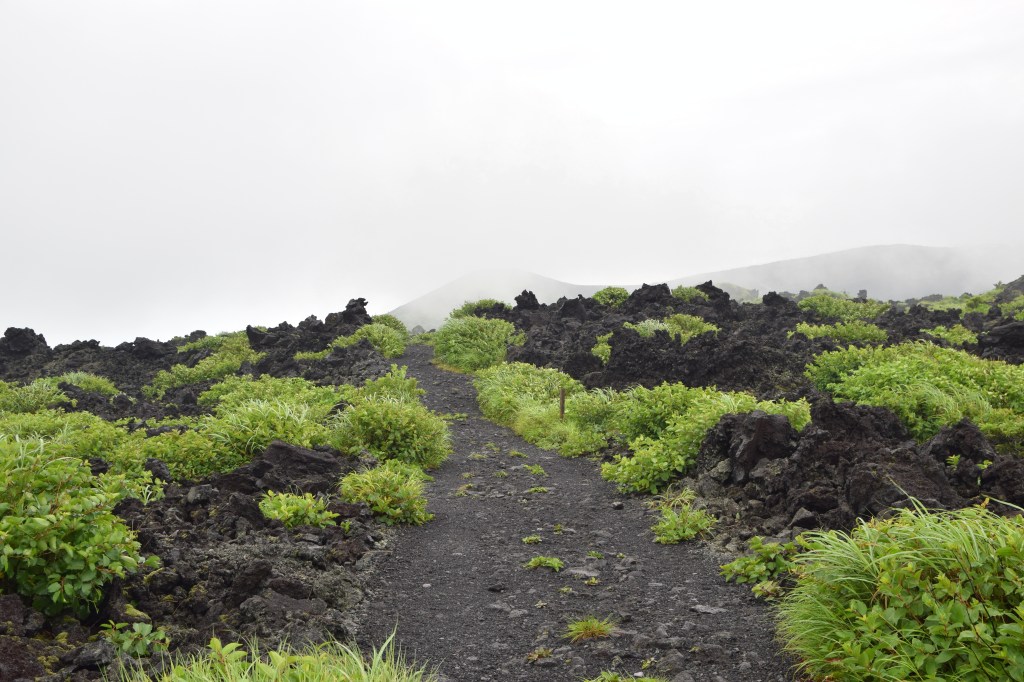
- The island is a single volcano, Mount Mihara, rising to 758 metres out of the sea, with a crater about 400 metres across that you can walk around on a maintained path. The 1986 eruption sent lava down the eastern flank, and that flow is now the black scoria landscape called Ura Sabaku, the only place in Japan officially labelled a desert on the map.
- The south of the island has Habu port, a circular harbour formed when the sea broke into an old crater, with a small streetscape of Meiji and Taisho buildings that has barely changed. The west coast has a 30-metre road cutting through 800 metres of layered ash and lava, and the north has the camellia gardens for which the island is famous.
- It is also cheap and quick enough for a weekend: a jet boat out on Saturday morning, a night in a guesthouse, and the last boat back on Sunday. The climate is milder than Tokyo, the food is island fish, and there are onsen fed by the volcano.
Top places and highlights
Mount Mihara and the crater walk
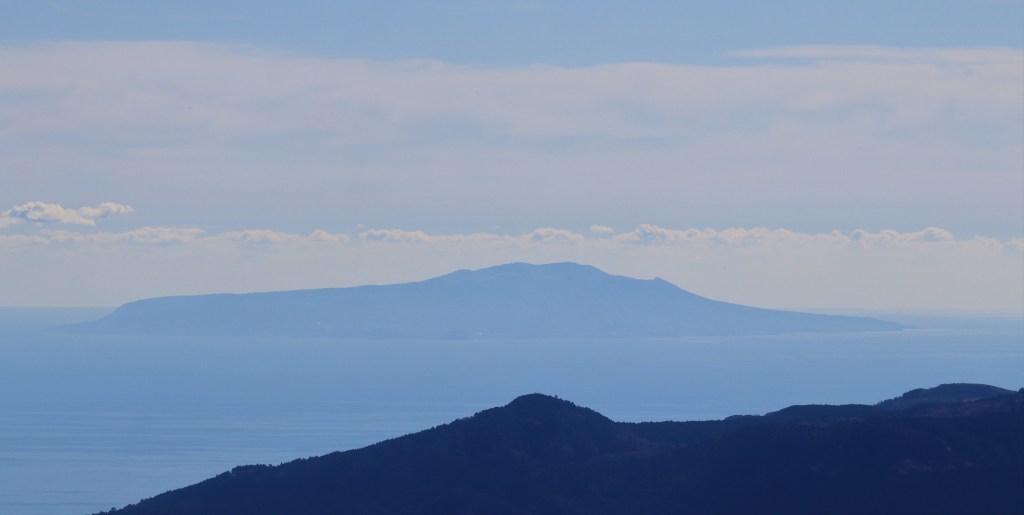
The bus climbs the Mihara-san line from the port to the trailhead, and from there a path leads up to the rim of the crater, about forty-five minutes each way at an easy pace, with the option of walking the full circuit around the rim, the ohachi-meguri, which takes another hour. The crater is 400 metres across and 200 deep, with steam coming off the walls, and the path runs along the edge with no fence in places, so keep children close. On a clear day the view takes in the whole island, the sea on both sides and Izu Oshima’s smaller neighbours, and on a very clear day Fuji. The Mihara-san bus runs only on weekends and holidays, twice a day, so check the times and be prepared to take a taxi otherwise. Bring a jacket: it is windy and several degrees cooler than the port.
Ura Sabaku, the black desert
The 1986 lava flow covered the eastern side of the island in black scoria, and the result looks like a piece of Iceland dropped into the Pacific: bare black gravel in ridges and waves, with the sea visible over the edge and almost nothing growing. It is the only landscape in Japan marked as desert on the national map, and it has been used for films and commercials for that reason. Access is by the desert bus to the stop, then a fifteen-minute walk, or by car to a car park and twenty minutes on foot. There is no shade and no water, the wind carries grit, and the surface is loose and abrasive, so wear proper shoes and take sunglasses. It is at its best in the early morning and in the late afternoon when the low sun shows the texture of the ground.
Habu port
Habu is a nearly circular harbour at the south of the island, formed when a magma and groundwater explosion left a hollow that was flooded by the sea after the 1703 earthquake, then cut into a proper port in the late Edo period. The village around it keeps a streetscape from the Meiji and Taisho eras: dark timber houses, a red post box, stone-paved lanes, and the former Minatoya inn, a rare three-storey wooden building from the 1920s that is now a free museum with figures arranged as they would have been. The view from the Habu lookout above the west side of the port takes in the whole circle of water and the open sea beyond, and there is a monument to the engineer who cut the channel. Buses from Motomachi take about thirty minutes.
The geological cut face
On the coast road between Motomachi and Habu, a road cutting exposes thirty metres of layered volcanic ash and lava flows, eight hundred metres long, one band on top of another from tens of thousands of years of eruptions. It is a road cut rather than a site, free, unfenced and visible from the bus, which is part of its charm: the strata are right at the edge of the asphalt, folded and faulted where the ground moved. Photographers will want the low light of the afternoon, when the layers show as bands of colour. The bus stop is right in front of it, and a stop of twenty minutes is enough unless you are a geologist.
The camellia gardens
Oshima is the camellia island, and the metropolitan Oshima park in the north has the largest camellia garden in Japan, with around a thousand varieties and three thousand plants, plus a museum, a small zoo and a coastal path, all free. The separate camellia garden on the Mihara-san road charges about 950 yen, has a lawn with a view to Fuji, and sells camellia oil pressed on the island. The season runs from late January to late March, with the island’s camellia festival in that period, and some early varieties flower from October. Even outside the season the park is a good walk, and the camellia oil and the cosmetics made from it are the souvenir worth buying.
The onsen and the island food
The volcano heats the water, and there are several onsen around Motomachi, including the public bath and pool complex five minutes from the port, and the hotels on the mountain with outdoor baths looking at the crater. The island food is what you would expect from a fishing island with a volcano in the middle: sushi and sashimi from the port, dried fish, and the local speciality of bekkou-zuke, fish marinated in sake lees. The restaurants are concentrated in Motomachi and Habu, they close early, and the choice is small, so book dinner with your accommodation or eat before six.
Food and drink
- Bekkou-zuke, fish marinated in sake lees and grilled, is the island’s signature dish and appears on most menus.
- Sushi and sashimi are cheap and good, especially in the shops around Motomachi port where the boats come in.
- Shimazushi, the island version of pressed sushi, is sold at the port and at the ferry terminal as a takeaway.
- Camellia oil, salt and the cosmetics made from camellia are the local products, and the oil is genuinely good for cooking.
- There are only a few dozen restaurants on the island, mostly in Motomachi and Habu, and most close by early evening.
- The supermarkets in Motomachi are the practical option for a late arrival, and the ferry terminal has a shop for the crossing.
Getting there and around
- The jet boat from Takeshiba pier in Tokyo takes about one hour and forty-five minutes to two hours, with two or three departures a day, and there is a second service from Atami in about 45 minutes.
- The overnight ferry from Takeshiba leaves at about ten in the evening and arrives around six the next morning, and is considerably cheaper, with cabins and a communal area.
- Boats dock at either Motomachi or Okada port depending on the sea conditions that day, and the two are about ten minutes apart by car or twelve by bus. Check which port before you arrange anything.
- There are flights from Chofu airfield in Tokyo taking about 25 minutes, which is the fastest option and the most weather sensitive.
- Oshima bus runs three main lines from Motomachi: the Oshima park line, the Habu line and the Mihara-san line. The first two run frequently, the Mihara-san line only on weekends and holidays, twice a day.
- A rental car or scooter is the practical way to see the island in a day, and there are several agencies at both ports.
- The island is small enough to cycle, but the roads are steep and the wind is strong, so an electric bike is a better idea than a road bike.
Where to stay
- Motomachi has the most accommodation, from guesthouses and minshuku to hotels, and is the most convenient base for the port and the buses.
- The hotels on the Mihara-san road have outdoor onsen with views of the mountain and the stars, and are the splurge option.
- Habu has a couple of small inns, which suits anyone wanting the port at dawn and the old streets to themselves.
- Camping is possible at the island’s campsites in summer, and there are a few cabins.
- Book ahead for the camellia festival in February and March, when the island fills with Japanese visitors.
Best time to visit
- The camellia season from late January to late March is the island’s peak, with the festival and the gardens at their best.
- Spring and autumn are the best times for walking the crater and the desert, with clear air and comfortable temperatures.
- Summer is hot and humid, good for swimming and diving, and busy with Tokyo day trippers at weekends.
- Winter is mild compared with Tokyo, and the air is clearest for views of Fuji and the other islands, but the sea can be rough enough to cancel the jet boats.
- Typhoon season from August to October is the main risk to travel plans, since the boats stop first.
Practical tips
- Check which port you will arrive at before booking anything; it is decided on the day and changes with the weather.
- The Mihara-san bus only runs on weekends and holidays, twice a day. If you are there on a weekday, take a taxi or rent a car.
- Book the jet boat in advance for weekends and the camellia season, and take the overnight ferry if you want to save money and arrive at dawn.
- The crater rim path has unprotected edges and loose ground, so wear shoes with grip and do not go close to the edge in wind.
- Take water and sun protection to the black desert. There is no shade whatsoever.
- The restaurants close early and there are few of them, so arrange dinner with your accommodation.
- Take cash; not every guesthouse or restaurant takes cards, and the buses are cash only.
Suggested day-trip outline
- Day one, morning: jet boat from Takeshiba, bus from the port to the Mihara-san trailhead, walk to the crater rim and back.
- Day one, afternoon: down to Ura Sabaku for the walk on the black scoria, then back to Motomachi for the onsen.
- Day one, evening: sushi in Motomachi and an early night, or the outdoor bath at a mountain hotel.
- Day two, morning: bus to Habu, the old streets, the lookout and the former Minatoya inn, then the geological cut face on the way back.
- Day two, afternoon: the camellia park and the coastal path, then the last jet boat or the overnight ferry back to Tokyo.
Before you go
Timetables, fares, admission fees, and seasonal access rules can change. Check the official tourism and transport sites linked below for the latest information before you travel.
Explore More of Japan
Published guides that pair with this one:
- Enoshima Travel Guide: Island Shrines and a Coastal Day Trip from Tokyo
- Kamakura Travel Guide: Great Buddha, Temples, and a Tokyo Day Trip
- Hakone Travel Guide: Onsen, Ropeways, and Mount Fuji Views
- Yanaka, Nezu and Sendagi Travel Guide: Old Tokyo on Foot
- Okutama Travel Guide: Nippara Cave, Hatonosu Gorge and Lake Okutama
- Meiji Jingu and Harajuku Travel Guide: Shrine Forest, Takeshita Street and Omotesando
- Tokyo Travel Guide: Neighborhoods, Transport and a First-Timer’s Plan
- Asakusa and Senso-ji Travel Guide: Temple Gates, Nakamise and the Sumida River
- Mount Takao Travel Guide: A Temple Hike on the Edge of Tokyo
- Shibuya Travel Guide: SHIBUYA SKY, Scramble Crossing & Things to Do in Tokyo
- Tokyo Skytree Travel Guide: Tembo Deck, Tickets, and How to Get There
- Tsukiji Outer Market Guide: What to Eat and When to Go
- Tomioka Silk Mill Travel Guide: Japan’s First Modern Silk Factory
- Mount Nokogiri and Nihonji Travel Guide: Cliffs, Carvings, and the Boso Peninsula
Browse every Kanto guide on this site for the rest of the region.
Sources
- tokaikisen.co.jp (checked 2026-11-05)
- oshima-bus.com (checked 2026-11-05)
- skyticket.jp (checked 2026-11-05)


Leave a Reply