A practical English guide to cycling the Shimanami Kaido: the route, how long it takes, rental bikes and drop-off, the islands worth stopping on and access from Onomichi or Imabari.
Operational details such as opening hours, admission fees, and train times can change. Prefer official pages and reconfirm before you travel (sources checked on 05 November 2026).
Why visit
- The Shimanami Kaido is a 70-kilometre cycle route that runs from Onomichi in Hiroshima Prefecture to Imabari in Ehime, hopping across six islands in the Seto Inland Sea by way of nine bridges. Most of it is on dedicated cycle lanes, separated from the road, often a few metres above the water with nothing between you and the islands but the guardrail and the view.
- It exists because of the bridges: the Nishiseto Expressway opened in 1999 to connect the islands to the mainland, and the cycle path was built alongside the motorway as an afterthought that turned into one of the best cycling routes in Asia. The blue line painted on the road guides you the whole way, and the route is signposted and continuous in a way that Japanese cycling infrastructure almost never is.
- The appeal is not the distance, which is modest, but the texture of the crossing. You pass through fishing villages, lemon groves, shipyards, a shrine with a collection of armour and swords, a temple built by a steel magnate, and a series of bridges that are each a different engineering solution to the same strait. The islands are inhabited, the food is good, and the pace of the trip is set by your legs rather than a timetable.
- It is also genuinely accessible. Rental bikes can be picked up at one terminal and dropped at another, the one-day rate is 3,000 yen for an ordinary bike and 4,000 for electric assist, helmets are free, and the route is flat enough for a fit beginner. The main constraint is time: the full crossing takes most people ten hours with stops, so a one-day ride is a serious undertaking and two days is the sane way to do it.
Top places and highlights
The route and how long it takes
The full crossing is about 70 kilometres with a modest amount of climbing, and the operator’s own estimate is four to five hours for a fast rider, five to six for someone with reasonable fitness, and around ten hours for a beginner or anyone riding slowly with stops. Those numbers assume you keep moving; in practice the ferries, the ice cream, the shrine and the photographs add hours. The route is marked with a blue line painted along the road, and the signposting at junctions is good enough that you do not need to navigate constantly. Most people who do the whole thing in a day start early and finish in the dark, which is not ideal: cycling after dark is discouraged and the rental terminals close in the early evening. Two days, staying on Omishima or Ikuchijima, is the better plan and lets you actually see the islands.
The bridges
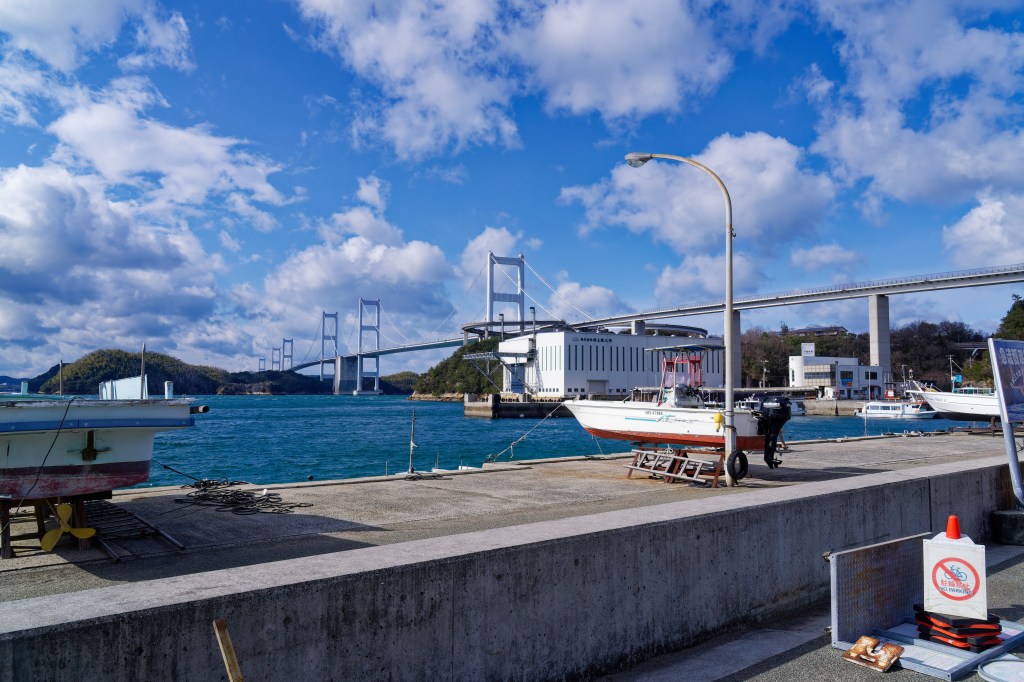
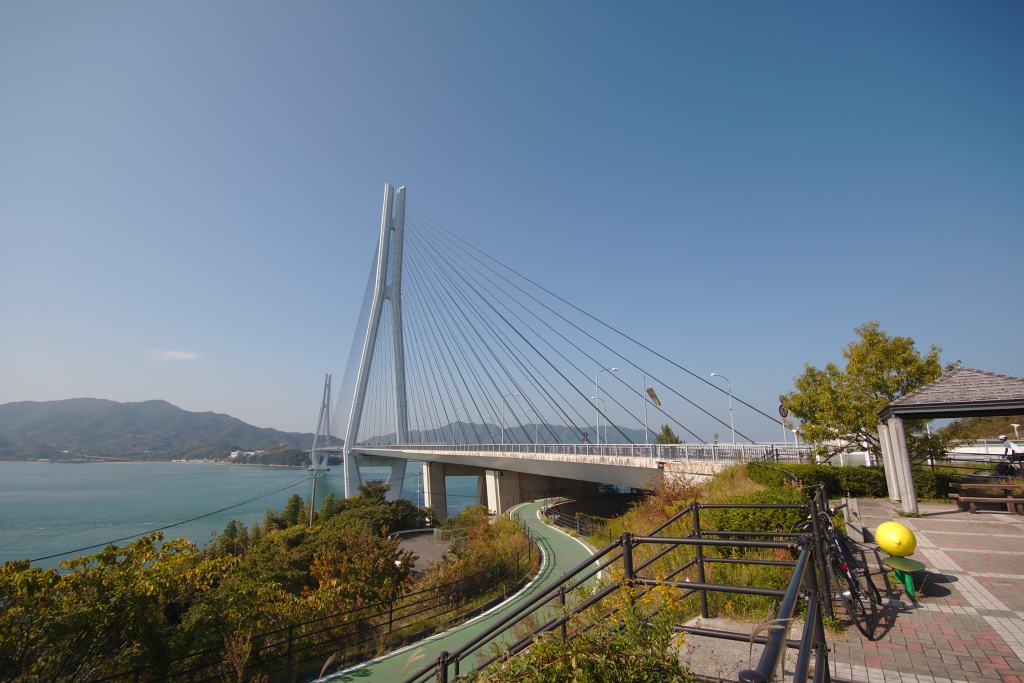
Nine bridges carry the route, and each one is worth a pause. The Kurushima strait bridges, three linked suspension spans at the Imabari end, are the longest and the most dramatic, running over a channel with one of the strongest tidal flows in Japan. The Tatara bridge, between Omishima and Ikuchijima, is a cable-stayed span with tall pylons and a view down the strait that makes it the most photographed point on the route. The approach ramps to each bridge are the only real climbs of the day, short but steep, and the descent on the far side is fast enough that the operator warns about speed. The cycle path is separated from the motorway traffic on every crossing, which is why the route works for families and not just for road cyclists.
Ikuchijima and Kosan-ji
Ikuchijima, the fourth island from Onomichi, holds Kosan-ji, a temple complex built from the 1930s onwards by a steel company founder who spent his fortune on it, and the result is unlike any other temple in Japan: halls in concrete and lacquer, a vast hall of a thousand Buddhas, a five-storey pagoda, and a hill of stone statues. It is a monument to one man’s taste and money rather than to centuries of devotion, and it is fascinating for exactly that reason. The island also has Setoda, a small port town with a beach and a sunset spot, and lemon groves that supply most of Japan’s lemons. Entry to the temple is charged and the complex is large enough to take an hour.
Omishima and Oyamazumi Shrine
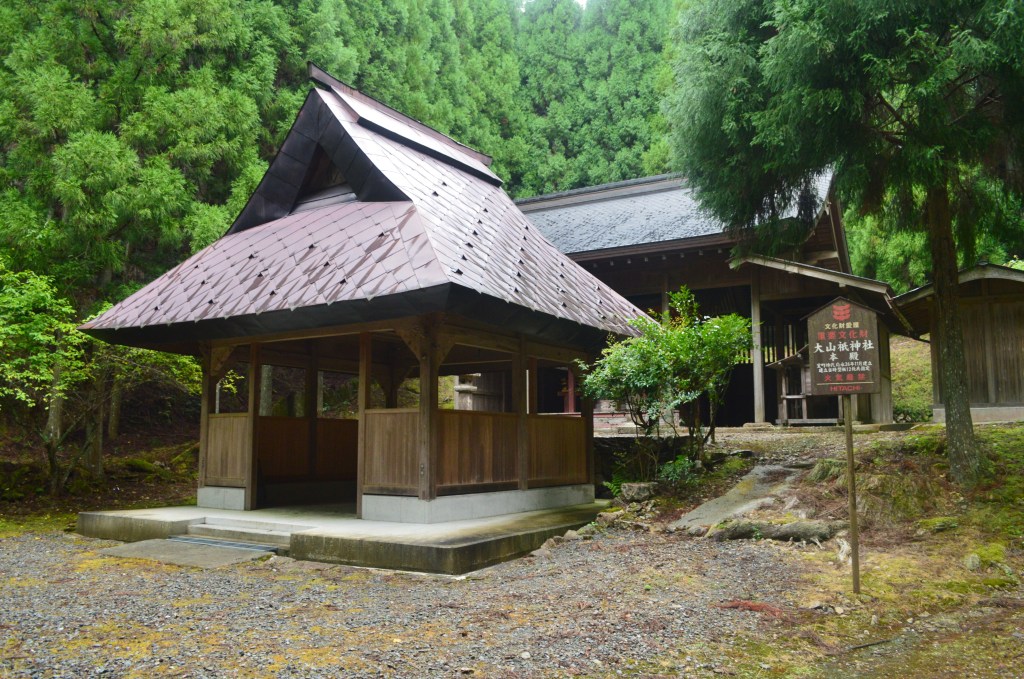
Omishima is the largest island on the route and the natural halfway point, and Oyamazumi Shrine is its reason to stop. The shrine is the head of some ten thousand Oyamazumi shrines across Japan, dedicated to the gods of mountains and the sea, and its treasure hall holds a collection of armour, helmets, swords and bows donated over the centuries by warriors praying for victory, much of it designated national treasure or important cultural property. It is one of the best collections of samurai armour in the country, in a quiet shrine rather than a museum, and it is a ten-minute detour from the route. The island also has the Oyamazumi museum of sculpture and a cycling hub with a shop and cafe, and it is the most sensible place to spend the night.
Onomichi and the start
Onomichi is a small port town stacked up a hillside, with a temple walk, narrow lanes, cats, and a view over the channel to Mukaishima, which is where the route begins. Getting from the mainland to Mukaishima means a short ferry from Onomichi port, about five minutes, paid on board, because the cycle route does not use the road bridge at that point. The town is worth a night before you start: the Senko-ji temple walk, the old shopping arcade and the ramen are all within a morning. The rental terminal at Onomichi station opens at 8:00 from March to November and 8:00 to 18:00 in winter, and that is where the bikes are.
Imabari and the finish
Imabari is a shipbuilding and towel town at the Ehime end, with two rental terminals: one at the station and one at the Itoyama viewpoint, which sits on a headland above the Kurushima bridges and is the classic photograph of the route. The finish is less romantic than the start, but the town has a castle, a good yakitori culture and the towel museum, and the train back to Matsuyama takes under an hour. If you are riding one way and returning by train, dropping the bike at Itoyama and walking up to the viewpoint before the train is the better ending than finishing at the station.
Food and drink
- Onomichi ramen is the local bowl: a soy and pork broth with flat noodles and a layer of fat that keeps it hot, and the town has a cluster of shops near the station.
- Lemons are the crop of Ikuchijima, and the island sells lemon cakes, lemon juice and lemon-flavoured everything. The Setoda area is the place to buy them.
- Seafood from the Seto Inland Sea is the staple: sea bream, octopus, oysters in season, and the small fish used for sashimi at the ports along the route.
- Imabari yakitori is grilled chicken on skewers with a sweet soy glaze, and the town has shops within walking distance of the station for a post-ride meal.
- The islands have small cafes and shops at the cycling hubs, but they close early and are not everywhere. Carry water and something to eat between stops rather than relying on finding lunch on the bridge approaches.
- Imabari is also a towel town: the towel museum and shops sell what is, genuinely, some of the best cotton towelling in Japan, and it makes a light souvenir if you are travelling with a bike.
Getting there and around
- To start at Onomichi, take the Sanyo Shinkansen to Fukuyama and change to the Sanyo line, about 20 minutes, or take a direct train from Hiroshima in about an hour and a half. The JR Onomichi station is next to the rental terminal.
- To start at Imabari, take the JR Yosan line from Matsuyama, about 40 to 50 minutes, and the station terminal is a short walk from the platforms. From Tokyo or Osaka, the route via Okayama and Matsuyama is long, so starting at Onomichi is easier.
- The ferry from Onomichi port to Mukaishima takes about five minutes and costs a few hundred yen, paid on board. The cycle route begins on the island, not at the bridge.
- There are ten rental terminals along the route, from Onomichi station to Imabari station, all run by Shimanami Japan, and bikes can be returned to any of them, with a drop-off surcharge of 1,000 yen for adults and 500 yen for children.
- Rental prices are 3,000 yen per day for a cross bike or city bike, 4,000 for electric assist, 8,000 for an E-bike, and 1,000 for children; helmets are free with a rental. Electric assist is only stocked at some terminals, so check before you plan on one.
- Buses run across the islands on the expressway, and the bridges carry a bus lane, which is the fallback if the weather turns or you run out of time. Island buses also connect the ports to the terminals.
- Bringing your own bike is possible, but it must be carried in a bag on trains and buses, and the rental option removes the logistics for a one-way crossing.
Where to stay
- Onomichi has the widest choice, from hostels and guesthouses in the old town to business hotels near the station. Staying here before the ride means an early start from the terminal.
- Omishima is the best midpoint: guesthouses, a cycling hub with a shop, and the shrine within reach. It splits the route into two comfortable days.
- Ikuchijima has minshuku and small hotels around Setoda, convenient for Kosan-ji and the sunset beach.
- Imabari has business hotels near the station, which suits anyone finishing the ride and taking the train to Matsuyama the next morning.
Best time to visit
- Spring and autumn are the best seasons: mild temperatures, dry roads, and clear views across the strait. Cherry blossom on the islands in late March and early April is a bonus.
- Summer is hot and humid, and the route has little shade on the bridge approaches. Start at dawn, carry more water than you think you need, and expect to stop more.
- Winter is cold and windy on the bridges, and the wind can make the exposed crossings unpleasant, but the route is quiet and the light is clear. The terminals close an hour earlier from December to February.
- Typhoon season from late summer into September can close the bridges to bicycles in high winds, and the ferries can be suspended. Check the forecast before a one-day crossing.
Practical tips
- Decide between one day and two before you book anything. The whole route in a day means starting at 8:00 and riding until dusk, with no time to stop.
- Reserve a bike in advance for weekends, Golden Week and Obon. There are around 2,000 rental bikes in the fleet and they all go in busy periods, sometimes by 10:00.
- Choose electric assist if you are not a regular cyclist. The bridge approaches are short but steep, and the assist makes the difference between enjoying the day and surviving it.
- Ride with the drop-off option in mind: returning the bike to a different terminal costs 1,000 yen extra for adults, which is worth it for a one-way crossing.
- Wear the helmet. It is free with the rental, and the descents off the bridges are fast.
- Do not plan to ride after dark. It is discouraged, the terminals close in the early evening, and the unlit sections between islands are genuinely dark.
- Take the ferry from Onomichi to Mukaishima rather than trying to ride over the road bridge. The cycle route starts on the island and the ferry is part of the experience.
- Carry cash for the ferry, the smaller shops and the island buses. Not every cafe on the route takes cards.
Suggested day-trip outline
- Day 1, morning: Onomichi temple walk and ramen, collect the bike at the station terminal, ferry to Mukaishima and start riding, crossing to Innoshima and Ikuchijima.
- Day 1, afternoon: Kosan-ji on Ikuchijima and the Setoda sunset beach, then over the Tatara bridge to Omishima.
- Day 1, evening: Oyamazumi Shrine and its armour collection, then stay on Omishima.
- Day 2, morning: cross to Hakatajima and Oshima, with the Kurushima strait bridges ahead.
- Day 2, afternoon: finish at Imabari, drop the bike at Itoyama, walk up to the viewpoint over the bridges, then the train to Matsuyama.
Before you go
Timetables, fares, admission fees, and seasonal access rules can change. Check the official tourism and transport sites linked below for the latest information before you travel.
Explore More of Japan
Published guides that pair with this one:
- Onomichi Travel Guide: Temple Walks and the Shimanami Kaido Gateway
- Miyajima Travel Guide: Itsukushima Shrine, the Floating Torii, and a Hiroshima Day Trip
- Hiroshima Peace Memorial Travel Guide: The Park, the Dome, and the Museum
- Kurashiki Travel Guide: Bikan Canal District
- Sandankyo Gorge Travel Guide: Trails, Boats, and Access from Hiroshima
- Shukkeien Garden Travel Guide: Hiroshima’s Daimyo Landscape
- Hiroshima City Museum of Contemporary Art Travel Guide: Highlights, Access, and Planning
- Okunoshima Travel Guide: The Rabbit Island with a Difficult History
- Tomonoura Travel Guide: A Tide-Waiting Port in Fukuyama
Browse every Chugoku guide on this site for the rest of the region.
Sources
- shimanami-cycle.or.jp (checked 2026-11-05)
- shimanami-cycle.or.jp (checked 2026-11-05)
- shimanami-cycle.or.jp (checked 2026-11-05)
- env.go.jp (checked 2026-11-05)


Leave a Reply