A practical English guide to the Yokote kamakura festival in Akita: the snow huts, the February dates and access from the city.
Operational details such as opening hours, admission fees, and train times can change. Prefer official pages and reconfirm before you travel (sources checked on 05 November 2026).
Why visit
- For two evenings in the middle of February, the small city of Yokote in southern Akita fills with snow huts. Families build a kamakura in their yard or on the pavement, children sit inside and call out to passers-by, and strangers are invited in for sweet sake and a rice cake. It is a festival that has more to do with neighbourhoods than with stages, and that is exactly why it is worth the trip.
- The event is compact enough to walk. The main clusters are around the castle park and along the Janosaki riverbed, where hundreds of miniature kamakura are lit with candles and left to glow in the snow. Above them stands the rebuilt keep of Yokote castle, lit at night, and the whole scene fits into a couple of hours on foot.
- Outside the festival days Yokote is a quiet castle town in a snow country landscape, with a museum that keeps a kamakura at freezing temperature all year, good local noodles, and easy rail access from Akita and from the Tohoku Shinkansen at Omagari. It is a place that rewards a night’s stay rather than a hurried stop.
- The timing is unusual for travellers, which is part of the appeal: February in Akita is genuinely cold, the streets are banked with snow, and the reward is a festival that has kept its local character. If you plan around the dates and dress for the weather, it is one of the most distinctive winter experiences in Japan.
Top places and highlights
The kamakura of the castle park
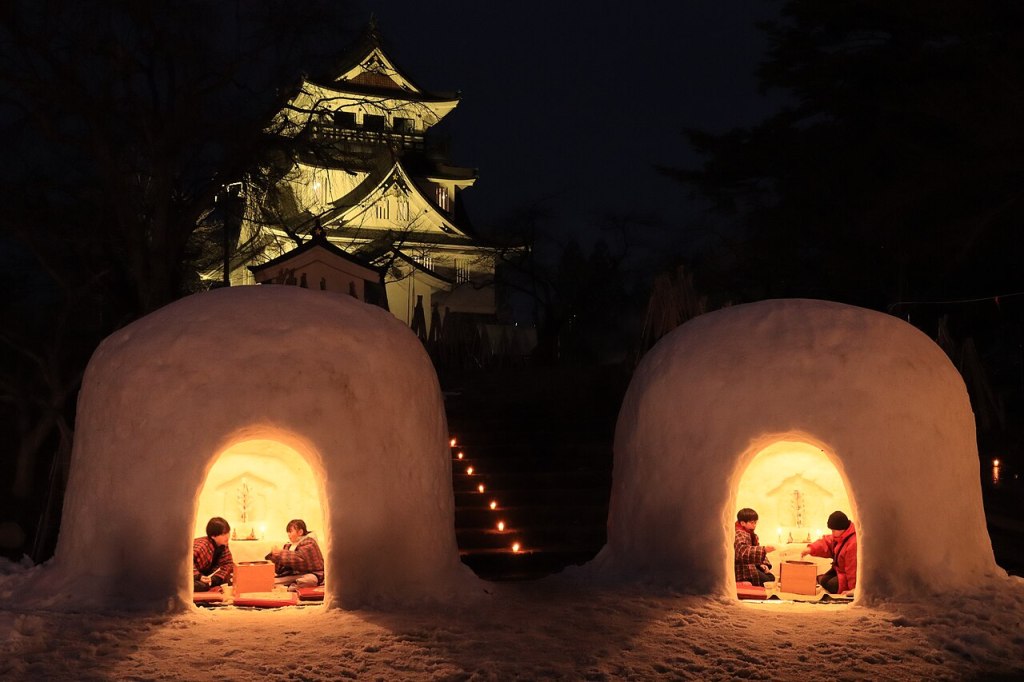
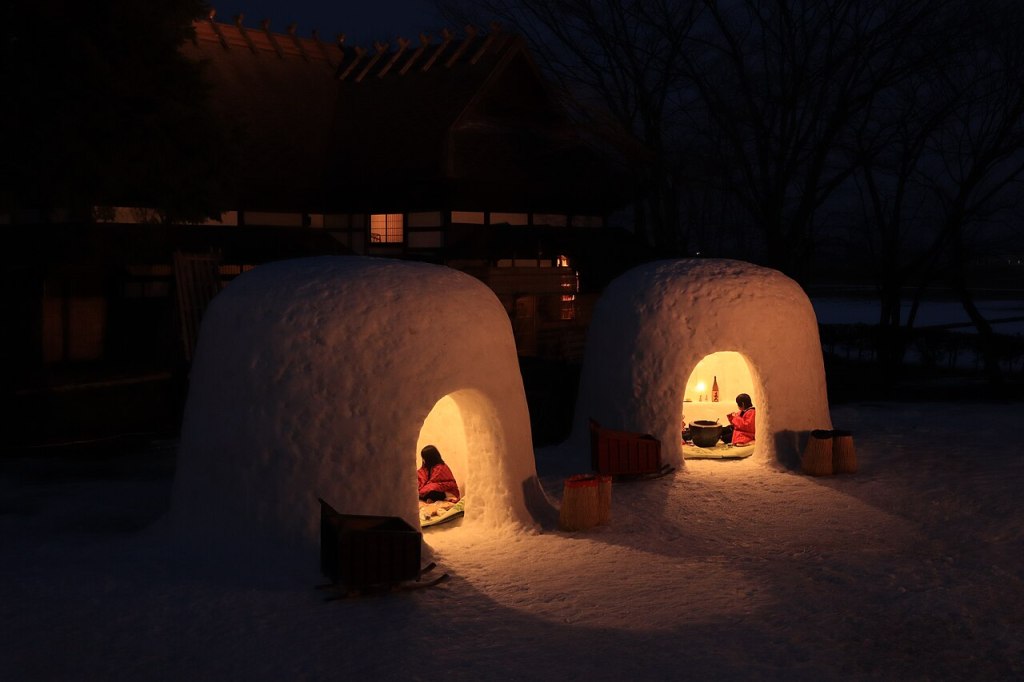
The slope below Yokote castle fills with snow huts built by local families and organisations, each with a small entrance and a floor of straw mats. Children sit inside and invite visitors in with a call, offering amazake and a piece of mochi, and a candle or a lamp lights the interior. The huts are close enough together to walk from one to the next, and the atmosphere is that of a neighbourhood party rather than a performance. Go after dark, when the candles are lit and the snow reflects the light.
The mini kamakura on the Janosaki riverbed
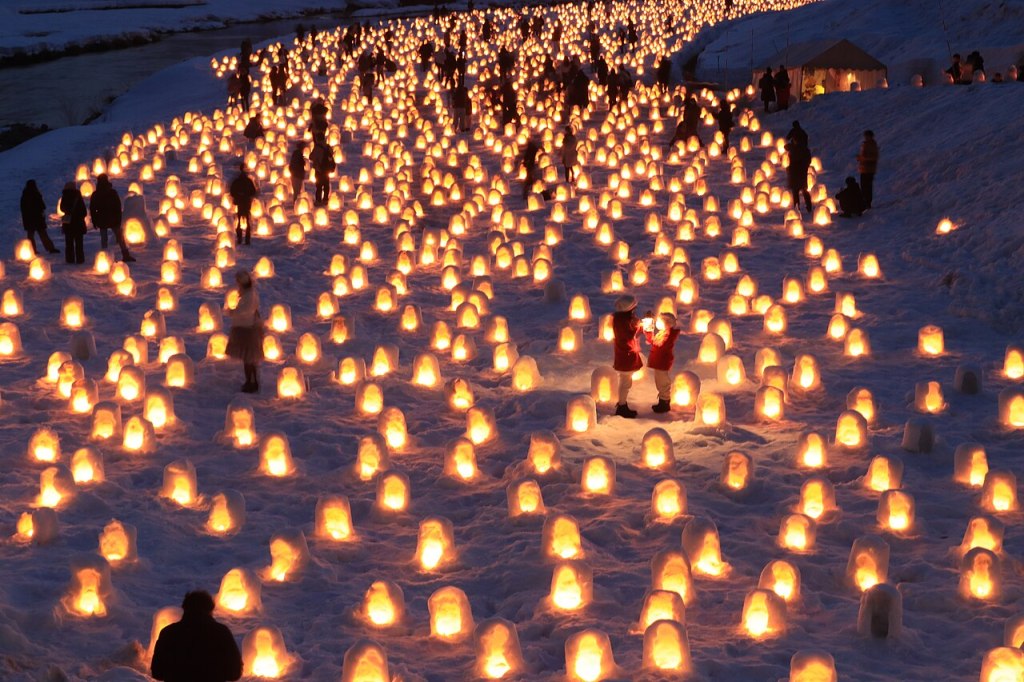
Along the Janosaki river, hundreds of small snow lanterns are lined up in rows, each with a candle inside, and the effect from the bridge is a field of warm points of light in the snow. They are built by schoolchildren and volunteers, and they are smaller and more delicate than the huts in the park. The riverbed is a short walk from the station and is usually quieter than the castle slope. This is the image most people bring home from Yokote.
Yokote castle at night
The keep on the hill above the park is a modern reconstruction, but its position is original and the view over the town and the snow is the reason to climb the slope. During the festival it is lit, and from the top of the park you can see the clusters of huts and the lights of the riverbed at once. The walk up takes a few minutes and the path is cleared, though it can be slippery in the evening cold.
The kamakura museum
A small museum in the centre keeps a kamakura indoors at sub-zero temperature, so visitors can see one in any season and understand how it is built. The displays explain the history of the festival and the way households used to make the huts, and the cold room is a novelty in summer. It is a modest place, but it makes sense of what you see in February, and it gives the festival a context beyond the photographs.
Yokote yakisoba
Yokote has its own style of yakisoba, with thicker noodles, a sweet and slightly spicy sauce and a generous topping of cabbage, pork and a fried egg in some shops. It is served in ordinary restaurants and in specialist shops around the station, and it is cheap and filling after a cold evening outdoors. Several shops sell packs to take home, and the local rivalry over the best version is genuine.
The snow country streets
Outside the festival sites, Yokote in winter is a working snow-country town, with roofs cleared, banks of snow along the pavements and covered walkways over some shopping streets. Walking from the station to the castle park takes about fifteen minutes and passes ordinary shops and houses, and the everyday winter infrastructure is itself interesting if you come from a place without snow. Dress for it and the walk is part of the visit.
Akita’s winter food
The region’s winter cooking suits the season: kiritanpo hot pot with chicken and burdock, smoked daikon, and the pickles that appear on every table. In Yokote the restaurants around the station serve these dishes without ceremony, and a hot pot after an evening in the snow is the right way to end the day. The local sake is soft and clean and goes with all of it.
Food and drink
- Yokote yakisoba is the town’s signature dish, with thick noodles and a sweet-spicy sauce, and several shops near the station specialise in it.
- Kiritanpo nabe, the Akita hot pot of pounded rice on cedar sticks, appears on winter menus across the city and suits the February cold.
- The festival itself is fuelled by amazake and mochi offered inside the kamakura, and by stalls around the castle park selling hot drinks and grilled food.
- Iburigakko, the smoked daikon pickle of Akita, is served with rice and sake and is worth trying at breakfast.
- For a quick meal, the restaurants inside and around the station building cover noodles, rice bowls and coffee without requiring a reservation.
Getting there and around
- Yokote is on the JR Ou main line, about twenty minutes from Omagari, where the Akita Shinkansen stops, and around four hours from Tokyo with a change.
- From Akita city the train takes about an hour, and from Morioka the route via Omagari takes around two and a half hours.
- The castle park and the Janosaki riverbed are both walkable from Yokote station, fifteen and ten minutes respectively.
- During the festival the roads around the castle are closed and car parks fill early, so the train is the easier option.
- A local bus network covers the outskirts, but for the festival sites on foot is faster than waiting for a bus in the cold.
Where to stay
- Hotels in Yokote are limited and book out many months ahead for the festival dates, so reserve as soon as the dates are fixed.
- Omagari and Akita city are within an hour by train and have more rooms, which works if Yokote itself is full.
- Traditional inns in the surrounding hot spring areas offer evening meals and a soak, though you will need a car or a taxi to reach them.
- For a winter festival, choose accommodation within walking distance of the castle park if you can, so you are not dependent on taxis late at night.
Best time to visit
- February is the festival season and the reason most visitors come, with deep snow and temperatures well below freezing after dark.
- Late spring brings the cherry trees of the castle park and much easier walking, though the snow huts are long gone.
- Summer is hot and humid, and the town is quiet, with the surrounding countryside at its greenest.
- Autumn is mild and clear, good for the castle park and for driving in the Akita countryside, but the festival atmosphere is absent.
Practical tips
- Book accommodation as soon as the festival dates are announced; this is the busiest two days of the year.
- Wear insulated boots with grip, and expect pavements to be icy after dark.
- Carry cash for the stalls and for the small museums, which do not always take cards.
- Arrive before dark to see the huts being lit, and stay for the walk along the riverbed afterwards.
- Keep your camera warm and spare batteries inside your coat; cold drains them quickly.
- Respect the huts that are private homes, and accept the invitation only where it is offered.
Suggested day-trip outline
- Afternoon: arrive at Yokote station, check in and walk to the castle park before the light goes.
- Early evening: the kamakura on the castle slope, with amazake and mochi offered by the children inside.
- Evening: dinner of Yokote yakisoba or kiritanpo hot pot near the station.
- Night: the mini kamakura along the Janosaki riverbed, then the lit castle from below.
- Next morning: the kamakura museum and the shopping streets, then the train to Omagari or Akita.
- If time allows: continue to Kakunodate or Lake Tazawa on the same rail line for a second winter stop.
Before you go
Timetables, fares, admission fees, and seasonal access rules can change. Check the official tourism and transport sites linked below for the latest information before you travel.
Explore More of Japan
Published guides that pair with this one:
- Sendai Travel Guide: Gyutan, Jozenji-dori and the Gateway to Tohoku
- Kakunodate Travel Guide: Samurai Streets and Weeping Cherries
- Lake Inawashiro Travel Guide: The Bandai Plateau and the Lake
- Sannai Maruyama Travel Guide: The Jomon Settlement of Aomori
- Hiraizumi Travel Guide: UNESCO Temples and Gardens in Iwate
Browse every Tohoku guide on this site for the rest of the region.
Sources
- city.yokote.lg.jp (checked 2026-11-05)
- tohokukanko.jp (checked 2026-11-05)


Leave a Reply