A practical English guide to Hokuto in southern Hokkaido: the Trappist monastery at Tobetsu, the Ono river, the farmland and access from Hakodate.
Operational details such as opening hours, admission fees, and train times can change. Prefer official pages and reconfirm before you travel (sources checked on 06 November 2026).
Why visit
- Hokuto is a city in the south of Hokkaido, just north of Hakodate, and it is a farming place with an unusual monument: a Trappist monastery, founded in the 1890s by monks from France, which still runs a farm and makes butter and cookies. It is one of the oldest monastic communities in Japan and the reason many visitors come.
- The monastery is the main attraction. The community at Tobetsu lives by the rule of Saint Benedict, with the church, the guest house and the farm around a courtyard, and the monks still work the fields and the dairy. Visitors can see the church and buy the products at the shop, and the silence of the place is part of the experience.
- The second is the landscape. Hokuto sits on the Ono river, which runs from the mountains to the sea at Hakodate, with a gorge, forest and farmland along its course, and the plain around the city is a patchwork of rice, vegetables and orchards. The Ono river park and the forest roads are the local escapes.
- The third is the food and the position. The city is close to Hakodate and its markets, and it has its own farm stands, dairy and a sake brewery, along with the cheese and butter of the monastery. It is a practical stop on the way between Hakodate and the hot springs of Yunokawa and the mountains of Nanae.
Top places and highlights
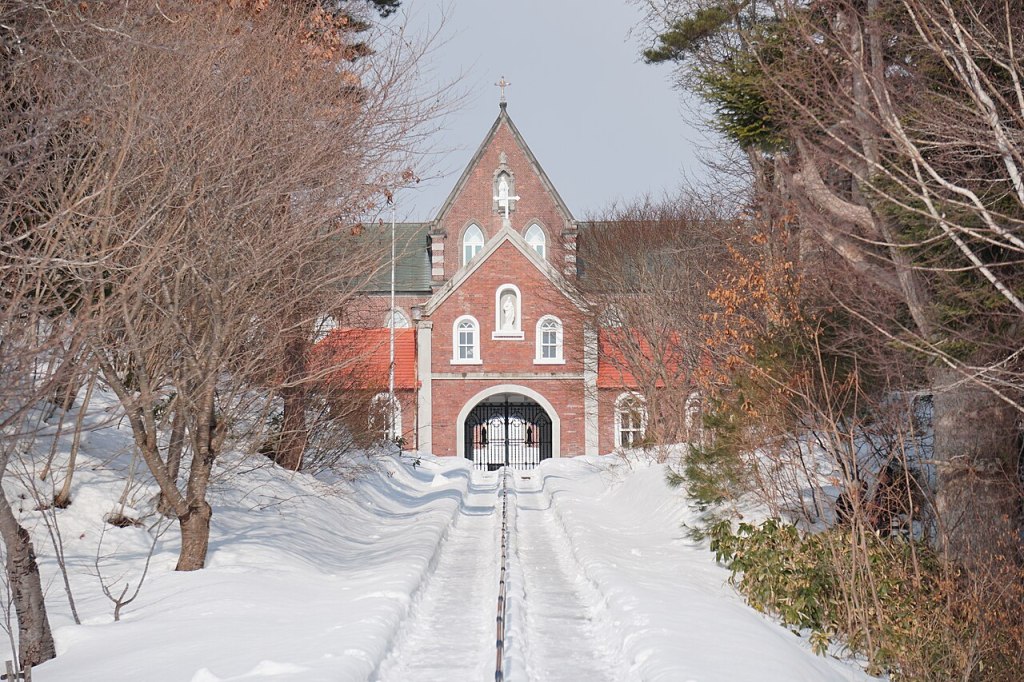
The Trappist monastery
The community at Tobetsu was founded in the 1890s and still follows the Benedictine rule, with the church, the guest house and the farm around a courtyard, and the monks work the fields and the dairy. Visitors can see the church and buy the butter and cookies at the shop. The atmosphere is silent and reserved.
The monastery shop
The shop sells the butter, the cookies and the other products of the farm, made by the community, and they are the reason many people drive out. The stock is limited and the opening hours are short. It is the practical side of the visit.
The Ono river
The river runs from the mountains to the sea at Hakodate, with a gorge, forest and farmland along its course, and the park and the riverside paths are the local escape. The fishing and the walking are good in summer. The autumn colour is fine.
The farmland
The plain around the city is a patchwork of rice, vegetables and orchards, with the farm stands selling the produce in season, and the scale is the open Hokkaido landscape. The roads are straight and the views long. The morning market is the local ritual.
The dairy and the cheese
The city is dairy country, and the local cheese, the butter and the ice cream are sold at the farms and the roadside stops. The monastery products are the best known. The quality is high and the prices are fair.
The sake brewery
The city has a small brewery using the local rice and water, with tours and tastings in some seasons, and the shop sells the bottles. It is a quiet, local operation. Check the opening days.
The access to Hakodate
The city is next to Hakodate, with the markets, the mountain and the port a short train ride away, and it makes a practical base or a stop on the way north. The trains run frequently. The combination fills a day or two.
Food and drink
- The monastery butter and cookies are the best-known local products.
- The dairy farms sell the cheese, the milk and the ice cream.
- The farm stands sell the vegetables, the rice and the fruit in season.
- The local sake from the brewery is worth trying.
- The restaurants and the roadside stops serve the simple meals of the region.
Getting there and around
- Hokuto is about twenty minutes from Hakodate by the JR Hakodate main line.
- The shinkansen stops at Shin-Hakodate-Hokuto, which is in the city.
- The monastery is a bus or taxi ride from the station, and the service is limited.
- A car is the practical way to reach the monastery, the river and the farms.
- The expressway connects the city with Hakodate and Sapporo.
Where to stay
- Business hotels near the station are the practical choice.
- Hakodate has the larger hotels and the onsen and is twenty minutes away.
- A few farm stays operate in the countryside.
- Book ahead in summer and around the monastery events.
Best time to visit
- Spring is late, with the orchards in blossom in May.
- Summer is cool and green, the best season for the river and the farms.
- Autumn is clear and cool, with the harvest and the colour.
- Winter is cold and snowy, with the monastery at its quietest.
Practical tips
- The monastery is a religious house; dress modestly and keep quiet.
- The shop has limited stock and short hours; go early.
- The buses are infrequent; a car or taxi is easier.
- The farm stands close in winter.
- The river paths are unpaved in places; wear proper shoes.
- Combine the visit with Hakodate and the Yunokawa onsen.
Suggested day-trip outline
- Morning: the train from Hakodate to Hokuto.
- Late morning: the Trappist monastery and the shop.
- Lunch: a local restaurant or the roadside stop.
- Afternoon: the Ono river and the farmland.
- Late afternoon: a dairy farm or the brewery.
- Evening: back to Hakodate.
Before you go
Timetables, fares, admission fees, and seasonal access rules can change. Check the official tourism and transport sites linked below for the latest information before you travel.
Explore More of Japan
Published guides that pair with this one:
- Bihoro Travel Guide: The Pass Above the Akan Caldera
- Wakkanai Travel Guide: Japan’s Northernmost City and Cape Soya
- Mashike Travel Guide: A Hokkaido Herring Town and Its Sake
- Takinoue Travel Guide: The Moss Phlox Hills of Northern Hokkaido
- Tsurui Travel Guide: Red-Crowned Cranes in Eastern Hokkaido
Browse every Hokkaido guide on this site for the rest of the region.
Sources
- city.hokuto.hokkaido.jp (checked 2026-11-06)
- visit-hokkaido.jp (checked 2026-11-06)


Leave a Reply