A practical English guide to Mitoyo in Kagawa: the Chichibugahama tidal mirror at sunset, the islands, the local food and access from Takamatsu and Kotohira.
Operational details such as opening hours, admission fees, and train times can change. Prefer official pages and reconfirm before you travel (sources checked on 06 November 2026).
Why visit
- Mitoyo is a city on the western coast of Kagawa, facing the Seto Inland Sea, and it is made of small towns, fishing ports and islands. It is not a famous destination, but it has one of the most photographed sights in Shikoku: Chichibugahama, a shallow beach where the water left on the sand at low tide acts as a mirror, and the sunset reflects in it like a salt flat.
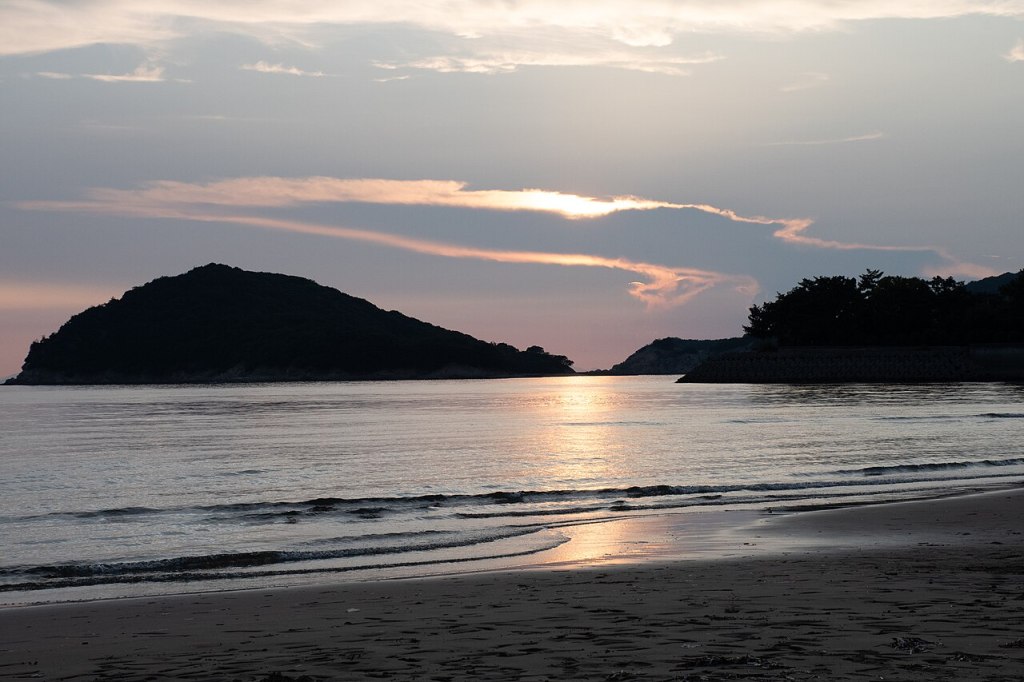
- The mirror effect is the reason people come. The beach is wide and shallow, and at low tide a thin film of water covers the sand, so that the sky, the clouds and the sun are reflected in the surface. The best conditions are a calm evening after the tide has gone out, and the photographs look like the Uyuni salt flat. The effect is natural but conditional.
- The second attraction is the sea and the islands. The city faces the Seto Inland Sea, with the islands of Shiwaku and the smaller islets offshore, the ferries between them, and the views from the hills. The area is quiet and rural, with the pace of the islands, and the cycling and the drives along the coast are good.
- The third is the food and the setting. Mitoyo has udon shops and fishing ports, and the local food is the Kagawa standard: the thick sanuki udon, the fish of the inland sea and the local vegetables. The city is also the gateway to the Kotohira and Kanonji area, which makes it easy to combine.
Top places and highlights
Chichibugahama
The beach is wide and shallow, and at low tide the thin water left on the sand reflects the sky, making a mirror at sunset. The effect depends on the tide, the wind and the light, and the best conditions are a calm evening. It is free and open, with a car park.
The sunset
The beach faces west, and the sun sets over the sea beyond the islands, with the reflection on the wet sand. The hour before and after the sunset is the best. Photographers gather with tripods, and the car park fills on weekends.
The Shiwaku islands
The islands off the coast are reached by small ferries, with fishing villages, terraced fields and a quiet pace. The crossings are short and the timetables limited. The islands are the rural Seto Inland Sea at its most intact.
The coastal drives
The coast road passes fishing ports, small beaches and the hills above the sea, with the islands offshore and the bridges between them. The drive is quiet and scenic. The viewpoints on the hills are the best places for the panorama.
The udon
Kagawa is the udon prefecture, and the self-service shops and the small noodle places in the city serve the thick sanuki udon with the simple broth. The prices are low and the portions are generous. The local shops are the real thing rather than the tourist version.
The fishing ports
The ports of the city are small and working, with the boats, the nets and the fish shops, and the morning is the time to see them. The catch of the inland sea is the local food. The walks along the quays are short and calm.
The Kanonji and Kotohira access
The city is within reach of the Kotohira shrine and the Kanonji area, with its Zen temple and the sand sculpture museum, and it fits into a loop of western Kagawa. The trains and the buses connect the towns. The combination makes a full day.
Food and drink
- Sanuki udon is the local staple, served in the self-service and small noodle shops.
- The fish of the Seto Inland Sea, including the sea bream and the octopus, is served at the port restaurants.
- The local vegetables and the citrus appear in the set meals.
- The small bakeries and cafes in the towns are cheap and good.
- The local sake of Kagawa is dry and light.
Getting there and around
- Mitoyo is reached by the JR Yosan line, about an hour from Takamatsu and forty minutes from Kotohira.
- The stations of the city are small, and the main sights need a car or a bus.
- The coast road connects the ports and the beach, with a limited bus service.
- The expressway has an interchange near the city, and a car makes the coast practical.
- The ferries to the islands leave from the ports, with a limited timetable.
Where to stay
- A few small inns and guesthouses operate near the coast.
- The islands have simple minshuku with meals.
- Takamatsu and Kotohira have the larger hotels and are within an hour.
- Book ahead in summer, when the beach and the sunset draw visitors.
Best time to visit
- Spring is mild, with clear days and the Seto islands at their best.
- Summer is warm, with the beach and the sunset at their most popular.
- Autumn is clear and cool, the best season for the coast and the reflections.
- Winter is cold and windy, with few visitors and the sea at its greyest.
Practical tips
- The mirror effect depends on the tide and the wind; check the tide table before going.
- The car park at the beach fills on weekend evenings.
- The beach is a public place; do not block the view with equipment.
- A car is the practical way to reach the coast and the islands.
- The ferries are infrequent; check the return times.
- The udon shops close early in the afternoon.
Suggested day-trip outline
- Morning: the train from Takamatsu to Mitoyo.
- Late morning: the fishing ports and the coast road.
- Lunch: sanuki udon at a local shop.
- Afternoon: the islands, or the hills and the viewpoints.
- Late afternoon: Chichibugahama before the sunset.
- Evening: the sunset on the wet sand, then back to Takamatsu.
Before you go
Timetables, fares, admission fees, and seasonal access rules can change. Check the official tourism and transport sites linked below for the latest information before you travel.
Explore More of Japan
Published guides that pair with this one:
- Sukumo Travel Guide: The Port at the Western Edge of Shikoku
- Yawatahama Travel Guide: The Fish Market Port of Western Shikoku
- Hiwasa Travel Guide: Sea Turtles, Yakuoji and the Pilgrimage Road
- Shikokumura Open-Air Architecture Museum Travel Guide: Highlights, Access, and Planning
- Cape Ashizuri Guide: Kochi’s Southern Tip
Browse every Shikoku guide on this site for the rest of the region.
Sources
- city.mitoyo.lg.jp (checked 2026-11-06)
- my-kagawa.jp (checked 2026-11-06)


Leave a Reply