A practical English guide to Muro-ji in Nara: the five-storey pagoda, the halls on the hillside, the autumn colour and access from Nara and Osaka.
Operational details such as opening hours, admission fees, and train times can change. Prefer official pages and reconfirm before you travel (sources checked on 06 November 2026).
Why visit
- Muro-ji is a temple deep in the mountains east of Nara, at the end of a valley of cedar and maple, and it is one of the most beautiful of the old temples of Japan. It was founded in the eighth century, and it has a small five-storey pagoda, a main hall with a roof of cypress bark, and a set of buildings spread up a wooded slope.
- The pagoda is the reason many people come. It is unusually small and slender, with a proportion that is unlike the great pagodas of Nara and Kyoto, and it stands among the trees with the hillside behind it. The main hall and the other buildings are National Treasures, and the whole compound has the quality of a mountain hermitage.
- The second attraction is the garden and the setting. The temple is famous for its azaleas in spring and its maples in autumn, when the slopes are red and the halls are framed by the colour, and the moss, the stone lanterns and the stream complete the scene. It is a place to walk slowly.
- The third is the journey. The temple is reached by a rural railway and a winding bus, through the villages and the fields of the Nara basin, and the trip is part of the visit. It is quiet, and the crowds are smaller than at the famous temples of the city.
Top places and highlights
The five-storey pagoda
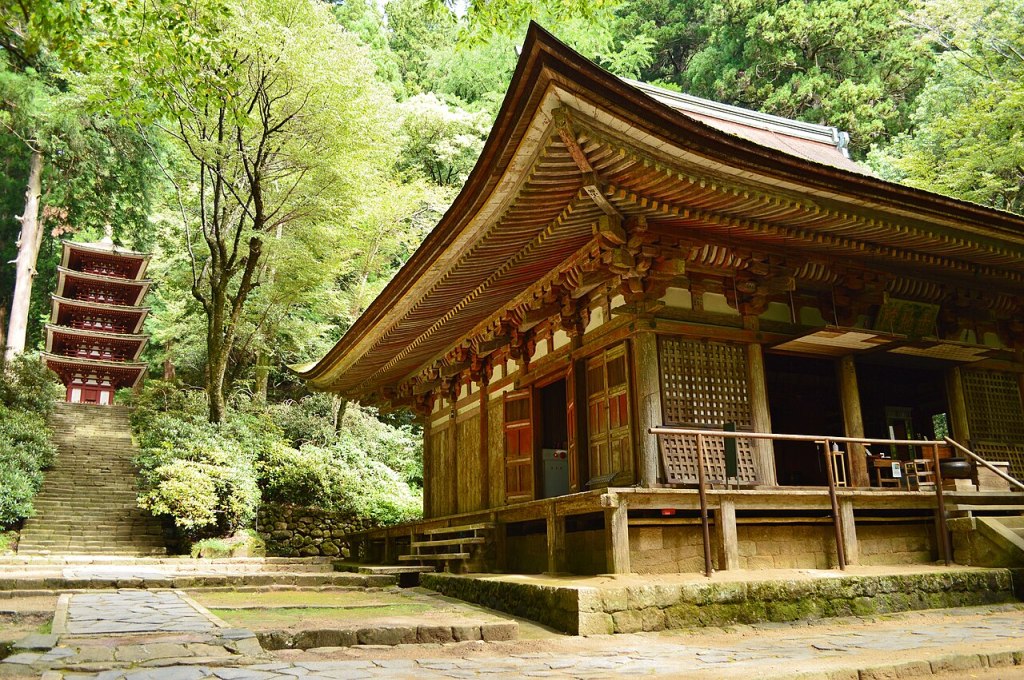
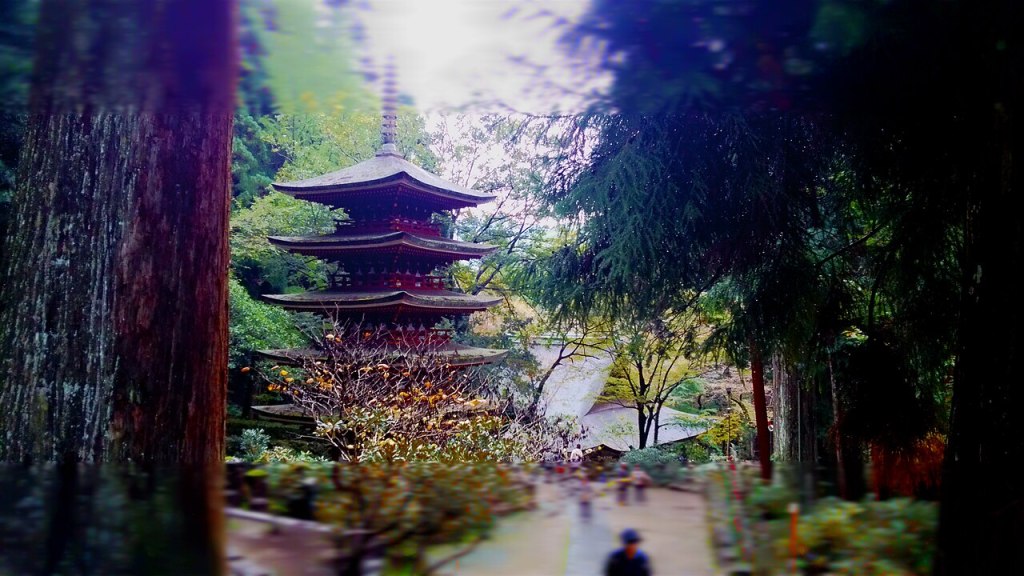
The pagoda is small and slender, with a proportion unlike the great pagodas of Nara and Kyoto, and it stands among the trees on the hillside. It is a National Treasure. It is the image of the temple.
The main hall
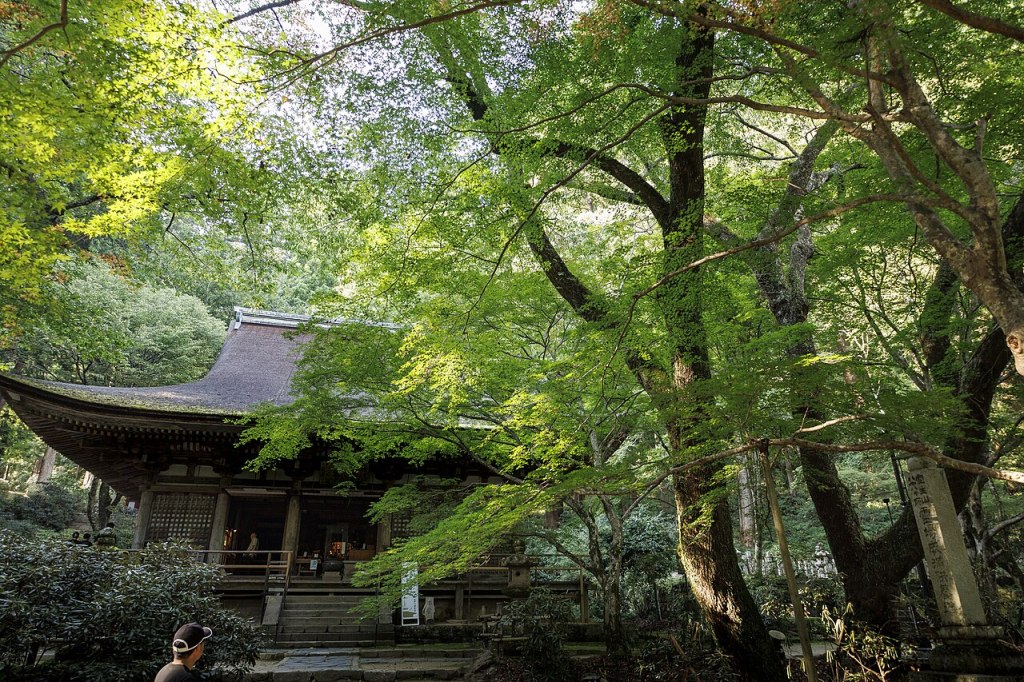
The hall has a roof of cypress bark and a set of old images inside, and it is a National Treasure, with the timber and the proportions of the eighth century. The interior is dark and quiet. It is the centre of the worship.
The autumn colour
The temple is famous for its maples, which turn red and yellow in November and frame the halls and the pagoda, and the slopes are covered with the colour. The light in the morning is best. The season is the busiest.
The azaleas
In spring the slopes are covered with the azaleas, in pink and white, and the temple holds a festival for them. The combination with the old halls is the classic image of the place. The season runs from late April.
The hillside paths
The buildings are connected by stone steps and paths through the trees, with the moss, the lanterns and the stream, and the walk through the compound takes an hour. The paths are steep in places. The quiet is the point.
The Niomon gate
The gate at the entrance is an old structure with the guardian figures, and it marks the boundary of the sacred ground. It is a National Treasure. The walk from the bus stop to the gate is short.
The journey
The temple is reached by the Kintetsu line to Murou-Akameguchi and then a bus up the valley, through the villages and the fields, and the trip is part of the visit. The service is limited. The drive is also scenic.
Food and drink
- The temple has a small tea house serving the simple sweets and the tea.
- The restaurants near the station serve the soba and the local vegetables.
- The shops sell the amulets and the postcards of the temple.
- The local produce of the valley is sold at the roadside stands.
- The food is simple and cheap; eat before or after the visit.
Getting there and around
- Muro-ji is reached by the Kintetsu Osaka line to Murou-Akameguchi, then a bus.
- The bus takes about twenty minutes and runs a few times a day.
- The temple is about an hour and a half from Osaka and an hour from Nara.
- A car is the practical alternative, with a car park at the entrance.
- The bus timetable is the constraint; check the last return.
Where to stay
- A few inns operate in the valley and the nearby onsen.
- Nara and Osaka have the wider choice and are within reach.
- The temple has a simple lodging for the pilgrims.
- Book ahead in the autumn colour season.
Best time to visit
- Spring is the azalea season, from late April.
- Summer is green and cool in the valley, with few visitors.
- Autumn is the maple season, in November, and the busiest.
- Winter is cold and quiet, with the temple under snow.
Practical tips
- The bus is infrequent; check the last return before the visit.
- The paths are steep and stone; wear proper shoes.
- The autumn weekends are crowded; go early in the morning.
- The halls have limited opening hours.
- Cash is needed at the tea house and the shops.
- The temple is a place of worship; keep quiet and do not photograph the images.
Suggested day-trip outline
- Morning: the train to Murou-Akameguchi.
- Late morning: the bus up the valley and the gate.
- Late morning: the pagoda and the main hall.
- Lunch: soba near the station.
- Afternoon: the hillside paths and the garden.
- Evening: back to Nara or Osaka.
Before you go
Timetables, fares, admission fees, and seasonal access rules can change. Check the official tourism and transport sites linked below for the latest information before you travel.
Explore More of Japan
Published guides that pair with this one:
- Tenkawa Travel Guide: Dorogawa Onsen and the Omine Mountains
- Yoshino Guide: Japan’s Most Famous Cherry Blossom Mountain
- Asuka Travel Guide: The Birthplace of Japan in a Nara Valley
- Sakurai Travel Guide: Omiwa Shrine and the Tombs of Early Japan
- Horyu-ji Travel Guide: The Oldest Temple in Japan
Browse every Kansai guide on this site for the rest of the region.
Sources
- narakko.jp (checked 2026-11-06)
- japan.travel (checked 2026-11-06)


Leave a Reply