A practical English guide to Jozankei Onsen near Sapporo: access by bus, day-use baths, foot baths, the Futami bridge walk, Hoheikyo Dam and winter events.
Operational details such as opening hours, admission fees, and train times can change. Prefer official pages and reconfirm before you travel (sources checked on 05 November 2026).
Why visit
- Jozankei is the hot spring resort closest to Sapporo, 50 minutes by car or an hour by direct bus from the city centre, and it sits in a deep river valley inside Shikotsu-Toya National Park. That combination is unusual: a full onsen town with hotels and public baths, reachable as an afternoon out from a city of two million people.
- The valley opens in 1866, when the monk Miizumi Jozan, after whom the place is named, found the springs while guiding settlers into the mountains. The town grew as a retreat for Sapporo residents and still works that way, which is why it feels like a resort for locals rather than a destination built for tour buses.
- The setting is the reason to come rather than any single attraction. The Toyohira River runs through the middle of the town, red bridges cross it, a riverside path follows the gorge, and the forest rises steeply on both sides. In autumn the slopes turn, in winter the gorge fills with snow, and in summer the water and shade make it noticeably cooler than the city.
- Beyond the town, the Hoheikyo Dam and Lake Sapporo sit upstream, and Hoheikyo Onsen nearby is one of the best-known day-use baths in Hokkaido, with a large open-air pool and an Indian restaurant that has become a destination in its own right. Winter brings the Snow Lantern Path at Jozankei Shrine, and summer brings a night illumination event in Futami Park. None of it is blockbuster sightseeing; all of it is easy, comfortable and close to Sapporo.
Top places and highlights
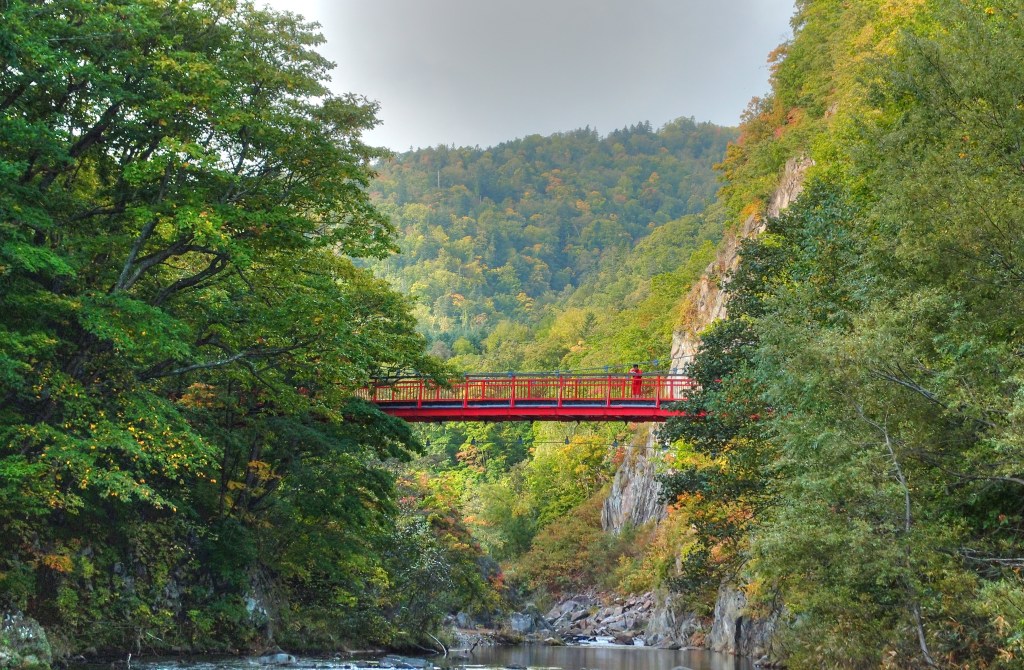
The Futami suspension bridge and the gorge path
The red Futami suspension bridge is the symbol of Jozankei and the single best short walk in the valley. It hangs over the Toyohira River about ten minutes’ walk from the tourist information office, and from the middle you look up and down the gorge at cliffs, the two rocks called Futami Iwa that give it its name, and a pool below known in kappa folklore as Kappa-buchi. The riverside path, the Futami Jozan-no-Michi, runs from Futami Park along the water through forest where several hundred species of wild plants grow, and it is a gentle 800-metre stretch rather than a hike. Note that the bridge is closed from late December to late April because of snow, so a winter visit means the town and the baths rather than the crossing.
Futami Park and the free foot baths
Futami Park sits at the downstream end of the town beside the bridge, and it holds two free foot baths that make a hot spring visit possible without booking anything. The Jozankei Gensen Park foot bath is open from 7:00 to 21:00, and the Taroyu foot bath near the river runs from 7:00 to 20:00; both are free, open all year, and a good way to warm up while walking the town. The park also has a drinking fountain fed by the spring, and in summer it hosts an illumination event, the Jozankei Nature Luminarie, which lights the trees and the bridge with projections for several months from early June to late October. For anyone arriving by bus with only two or three hours, this park plus one day-use bath is a complete visit.
Day-use bathing in the town
Jozankei is a working onsen town, and most of its hotels and ryokan sell daytime bathing to non-guests, usually for a modest fee and usually with a cut-off in the mid-afternoon before dinner preparation. The springs are sodium chloride, salty and warming, which is why the town is popular in winter. Two places also offer private baths by the hour for day visitors, Nukumori no Yado Furukawa and Yumoto Kogane-yu, which suits couples or families who would rather not share. The tourist association keeps a list of which facilities are open for day use on any given day, so check that rather than walking into a lobby. Kogane-yu, a little back towards Sapporo, is a separate small onsen area with its own bathhouse and is worth knowing about if the town is busy.
Hoheikyo Onsen
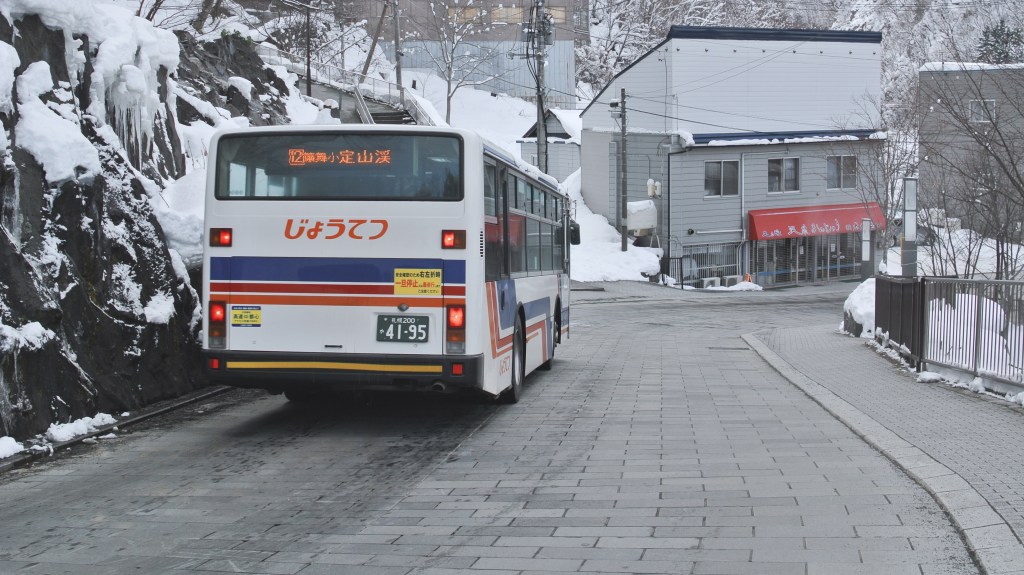
Up the valley beyond the town, Hoheikyo Onsen is a day-use bath with a large open-air pool, water flowing straight from the source without recirculation, and a view into the forest that makes it the most memorable soak in the area. Its water is a sodium-calcium bicarbonate-chloride spring, different from Jozankei’s, and there is a drinking tap. The attached restaurant serves proper Indian curry, naan and chai, a combination that sounds odd and has become the reason many Sapporo residents drive out here; there is also local soba and Genghis Khan lamb. A free shuttle runs from Makomanai subway station, first come first served and not reservable, and the direct Kappa Liner bus from Sapporo Station continues to Hoheikyo Onsen. It is a 30-minute walk from the last bus stop at the dam area, so most people use the bus that goes right to the bath.
Hoheikyo Dam and Lake Sapporo
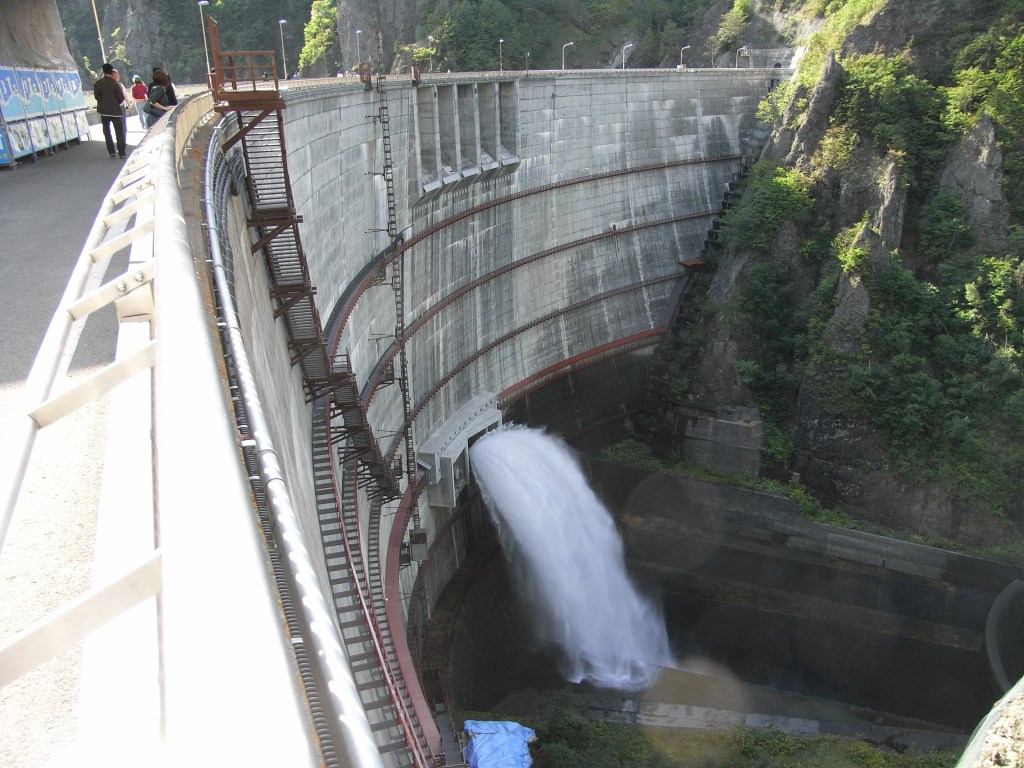
The Hoheikyo Dam holds back Lake Sapporo on the Otarunai River and is reached from a car park at the end of the road, from where an electric bus runs through two tunnels to the dam grounds. The ride is part of the visit: the outbound side passes the Kudan waterfall between the tunnels and the return side looks across to the Senjo rock face, so take the left-hand seat going in. From the dam crest there is a view over the lake and the surrounding ridges, and the grounds below have fountains and lawns. Note that the road and shuttle access are seasonal and the dam area is usually closed by snow in winter, and that from the Jozankei bus terminus it is about a 30-minute walk to the dam car park. Dam cards are issued at the dam management office and the small museum.
Jozankei Shrine and the Snow Lantern Path
Jozankei Shrine stands on high ground above the town, founded in 1905, and enshrines five deities including Onamuchi and Sukunabikona alongside Miizumi Jozan, the monk who opened the springs. It is a quiet place for most of the year, with blue Ezoengosaku flowers along the approach in spring and good autumn colour, and the trailhead for Mount Yugi is at the back of the grounds. In winter it becomes the site of the Snow Lantern Path, when around a thousand snow candles made by local residents are lit through the precinct, joined in recent years by light and sound installations and a section called the Forest of Prayer. Shuttle buses run between the town and the shrine during the event. It is the one genuinely atmospheric winter event in the area and the reason a winter overnight stay makes sense.
Food and drink
- Genghis Khan, Hokkaido’s lamb grilled on a domed iron plate, is the regional dish to eat here, and the Matsuo Genghis Khan chain has a branch in Jozankei. It is a robust, smoky meal that suits a cold evening after bathing.
- The Indian curry at Hoheikyo Onsen is the area’s unlikely speciality: proper spice, tandoor-baked naan and chai, served next to the bathhouse. It has become famous enough that locals drive out for lunch.
- Ryokan in the town generally include dinner and breakfast, and the meal is usually the highlight of a stay: multi-course Japanese cooking with Hokkaido vegetables, river fish and local dairy rather than anything exotic.
- Soba made with Hokkaido buckwheat appears at Hoheikyo Onsen and at a few places in the town. It is a light option between baths.
- Soup curry, Sapporo’s own dish, is easy to find on the drive out and in the city; it is not a Jozankei speciality but it is the obvious meal before or after a bus ride.
- Compared with a city, the town has few restaurants and they close early. If you are staying without meals, eat before you arrive or confirm with your accommodation that dinner can be added.
Getting there and around
- From Sapporo Station, the direct Kappa Liner bus takes about 60 minutes to Jozankei Onsen, and the ordinary Jotetsu route bus takes about 80 minutes. The Kappa Liner requires a reservation by phone or web and some departures are cancelled if nobody books, so book it rather than turning up.
- From Makomanai subway station on the Namboku line, Jotetsu buses run to Jozankei in about 45 minutes. This is the most frequent option and needs no reservation, and the subway ride from central Sapporo takes about 20 minutes.
- By car, Jozankei is about 50 minutes from central Sapporo via Route 230, about 60 minutes from Otaru and about 80 minutes from New Chitose Airport. Fixed-fare taxis from Sapporo are also offered and take roughly the same time as driving.
- The last buses back are at 21:00 to Sapporo Station and 21:55 to Makomanai, which sets the practical limit on an evening visit unless you are staying.
- The town itself is walkable: the tourist association suggests about two hours to stroll the whole onsen street. Kogane-yu, Hoheikyo and the dam areas are beyond walking distance for most people and need a bus or car.
- For Hoheikyo Onsen specifically, a free shuttle runs from Makomanai station, first come first served, and the Kappa Liner continues to the onsen. The dam car park is a further walk from there.
- Many hotels run free shuttles for guests from Sapporo Station, Odori or Makomanai, which removes the bus planning entirely if you are staying overnight. Ask when booking rather than assuming.
Where to stay
- Jozankei has a full range of accommodation, from large resort hotels with multiple baths and buffet dinners to small ryokan and modern boutique inns. The luxury end here is genuinely good, with several places known for kaiseki cooking and private open-air baths.
- Staying overnight is what makes the trip rather than a day out: the town empties in the late afternoon, the baths are quiet in the evening and early morning, and the winter snow lanterns and summer illumination both reward an overnight stay.
- Some hotels are aimed at couples and solo travellers and do not accept children, while others are family resorts with pools and games areas. Check the policy before booking, since the difference is large.
- For a cheaper base, Sapporo itself works: the bus from Makomanai is quick and frequent, and a day trip with one bath and the bridge walk is a reasonable half-day. The trade-off is missing the evening and morning soaks.
Best time to visit
- Autumn is the classic season: the valley turns in mid-October in a normal year, the bridge and the gorge path are at their best, and the town runs shuttle buses to five designated viewing areas. Note that the colour has often finished by early November, so plan for the first half of October.
- Winter is the other strong season, when the Snow Lantern Path lights Jozankei Shrine, the gorges fill with snow and the salt springs feel their best. The Futami bridge is closed from late December to late April, and roads and walks are snowy.
- Summer is cooler than Sapporo and the illumination event runs from early June to late October, with the riverside path at its greenest. It is the easiest season for walking and for combining the town with the dam and Hoheikyo.
- Spring arrives late, with snow lingering and the Ezoengosaku flowers at the shrine in May. It is quiet and cheap, but the gorge path may still be wet and the bridge can remain closed into late April.
- The illumination and the snow lanterns are both seasonal events with published dates, so check the tourist association’s news page before building a trip around either.
Practical tips
- Book the Kappa Liner if you want the fast direct bus. It is reservation-only and unbooked departures can be cancelled; the ordinary bus from Makomanai needs no booking and runs more often.
- Bring a small towel and cash for day-use baths. Many facilities sell bathing without notice and a few only take cash at the counter.
- Do not plan on the Futami bridge in winter. It is closed from late December to late April for snow, which is worth knowing before you build a walk around it.
- If you want the Hoheikyo Onsen curry at lunch, go early: the restaurant is popular with day visitors and locals and fills at midday, especially at weekends.
- Take the left-hand seat on the electric bus into the Hoheikyo Dam grounds for the waterfall on the way in, and the left again for the rock face on the way out.
- The town is small and restaurants close early. If you are not on a meal-included plan, settle dinner before 19:00 or eat in Sapporo first.
- Check which baths are open for day use on the day. The tourist association publishes a list, and hotel baths close to day visitors in the late afternoon before dinner service.
- Any walk beyond the town, including the dam and Kogane-yu, needs a bus or car. Do not assume you can walk between the onsen areas, even though they look close on a map.
Suggested day-trip outline
- Morning: bus from Sapporo Station or Makomanai, arriving in Jozankei before midday, then a short walk to Futami Park for the free foot bath.
- Late morning: cross the Futami suspension bridge and follow the riverside path upstream, allowing about 45 minutes return.
- Lunch: Genghis Khan or soba in the town, or take the bus up to Hoheikyo Onsen for the curry.
- Afternoon: a day-use bath in the town, or the open-air pool at Hoheikyo, followed by the electric bus to the Hoheikyo Dam grounds if the season allows.
- Evening: if staying, dinner at the ryokan and a late soak; in winter, the shuttle to the Snow Lantern Path at Jozankei Shrine, and in summer the illumination in Futami Park.
Before you go
Timetables, fares, admission fees, and seasonal access rules can change. Check the official tourism and transport sites linked below for the latest information before you travel.
Explore More of Japan
Published guides that pair with this one:
- Sapporo Travel Guide: Food, Parks, and a Hokkaido Base
- Noboribetsu Onsen Travel Guide: Hell Valley and Hokkaido Hot Springs
- Lake Toya Travel Guide: A Caldera Lake and Volcanic Shore in Hokkaido
- Niseko Travel Guide: Ski Slopes, Summer Trails, and Mount Yotei
- Lake Mashu and Lake Kussharo Guide: Akan-Mashu National Park
- Sapporo Snow Festival Guide: Three Sites in February
- Sounkyo Gorge Travel Guide: Waterfalls, Kurodake and Daisetsuzan
- Akan-Mashu Travel Guide: Lakes, Marimo, and Ainu Culture in Hokkaido
- Rishiri Island Travel Guide: Rishiri Fuji, Kombu and the Far North
Browse every Hokkaido guide on this site for the rest of the region.
Sources
- jozankei.jp — Access (checked 2026-11-05)
- jozankei.jp — FAQ (checked 2026-11-05)
- jozankei.jp (checked 2026-11-05)
- city.sapporo.jp (checked 2026-11-05)


Leave a Reply