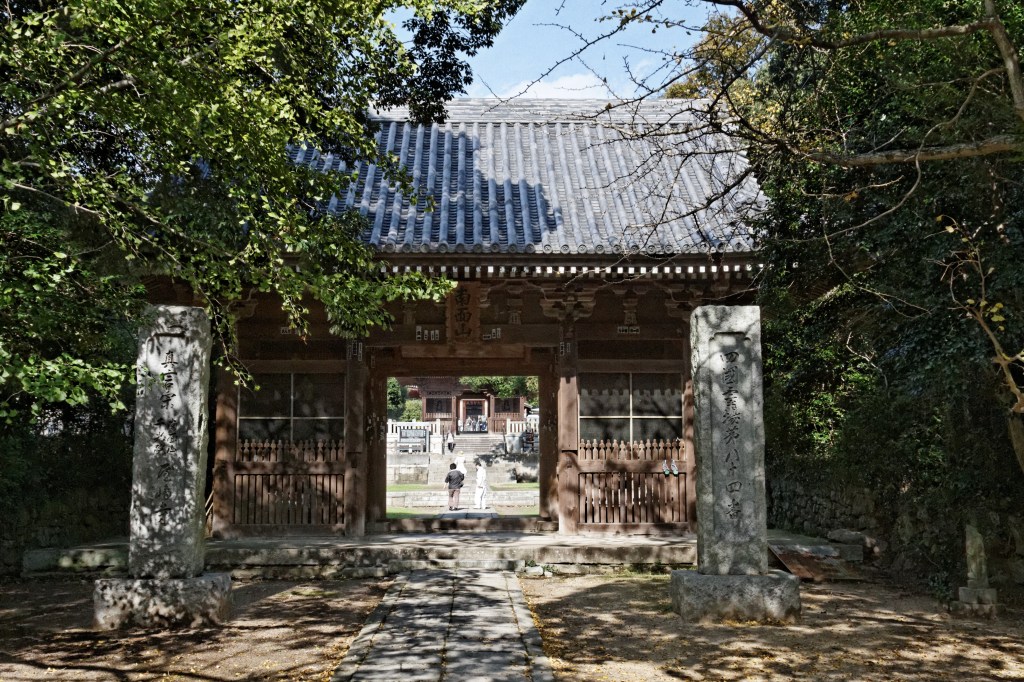
A practical English guide to Yashima in Takamatsu: Yashima-ji temple 84, the Genpei battle sites, three viewpoints, shuttle bus access and local food.
Operational details such as opening hours, admission fees, and train times can change. Prefer official pages and reconfirm before you travel (sources checked on 05 November 2026).
Why visit
- Yashima is a flat-topped lava plateau 293 metres above the coast east of central Takamatsu, and from the water it looks like a roof, which is what the name means. On top is a small world: a temple on the Shikoku pilgrimage, three viewpoints over the Seto Inland Sea, the sites of a famous twelfth-century battle, a drive-in road, and the kind of low-key snack shops that exist at Japanese lookouts everywhere.
- The plateau matters for two reasons. First, it is the site of the Battle of Yashima in 1185, part of the Genpei War, when the Minamoto attacked the Taira across the water below. The stories from it are among the most quoted in Japanese literature, including Nasu no Yoichi shooting the fan off a boat mast and Yoshitsune’s bow being fished out of the sea. The landscape those stories describe is exactly what you see from the top.
- Second, Yashima-ji is temple 84 of the Shikoku 88 Temple Pilgrimage, the only one of the 88 on the Takamatsu plateau, and one of the last stops for pilgrims walking the circuit clockwise. It was founded by the Chinese monk Ganjin in the eighth century and its main hall and main image are both national Important Cultural Properties. The temple is free to enter and, unusually for a major pilgrimage site, requires no planning to visit.
- Practically, Yashima is the easiest half-day out of Takamatsu: a shuttle bus from the stations below climbs in ten to eighteen minutes, and the plateau is compact enough to walk between the temple, the viewpoints and the shops. It combines well with Takamatsu’s other sights, and it is a good first taste of the Shikoku pilgrimage without committing to a multi-day walk.
Top places and highlights

Yashima-ji, temple 84
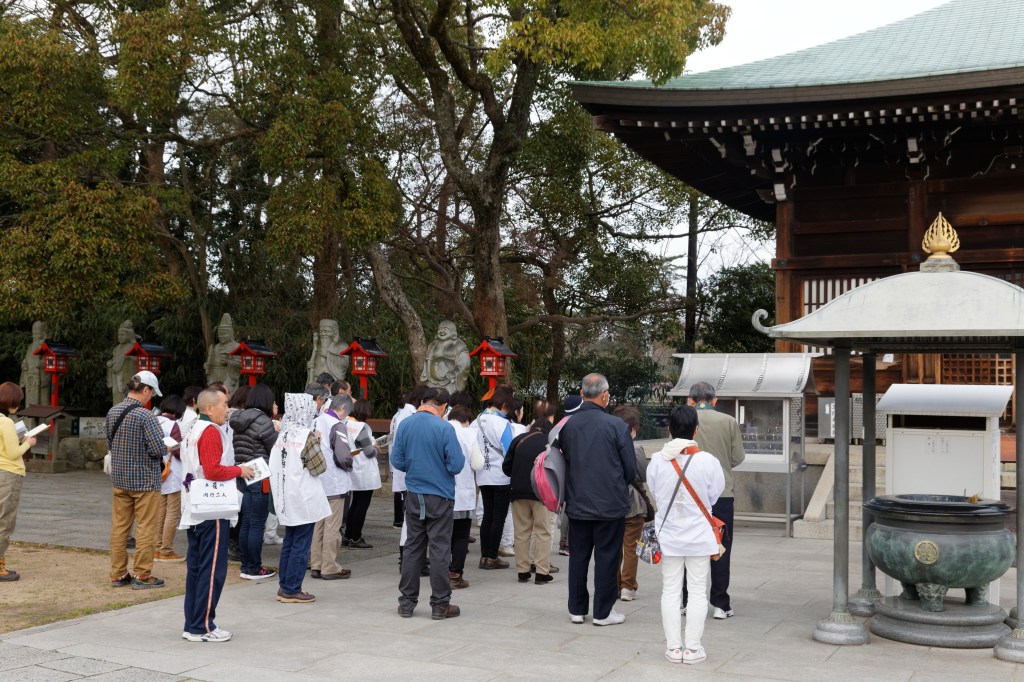
The temple stands on the southern ridge of the plateau, founded in the eighth century by Ganjin, the Chinese monk who reached Japan after five failed voyages and arrived blind. The story is that he saw a light rising from the mountain as his ship passed and climbed it, building a hall for a Fugen statue he had brought with him. Kobo Daishi later moved the complex from the northern ridge to its present position, carved the eleven-faced thousand-armed Kannon that remains the main image, and the temple became the eighty-fourth stop on the Shikoku circuit. Both the main hall, built in the late Kamakura period, and the Kannon image are national Important Cultural Properties. Entry to the precinct is free, the office for pilgrimage books and seals is open from 7:00 to 17:00, and the treasure hall charges 500 yen for adults and 300 for children, with no set closing day. Allow half an hour at least, more if you walk the whole precinct.
Minoyama Daimyojin and the tanuki
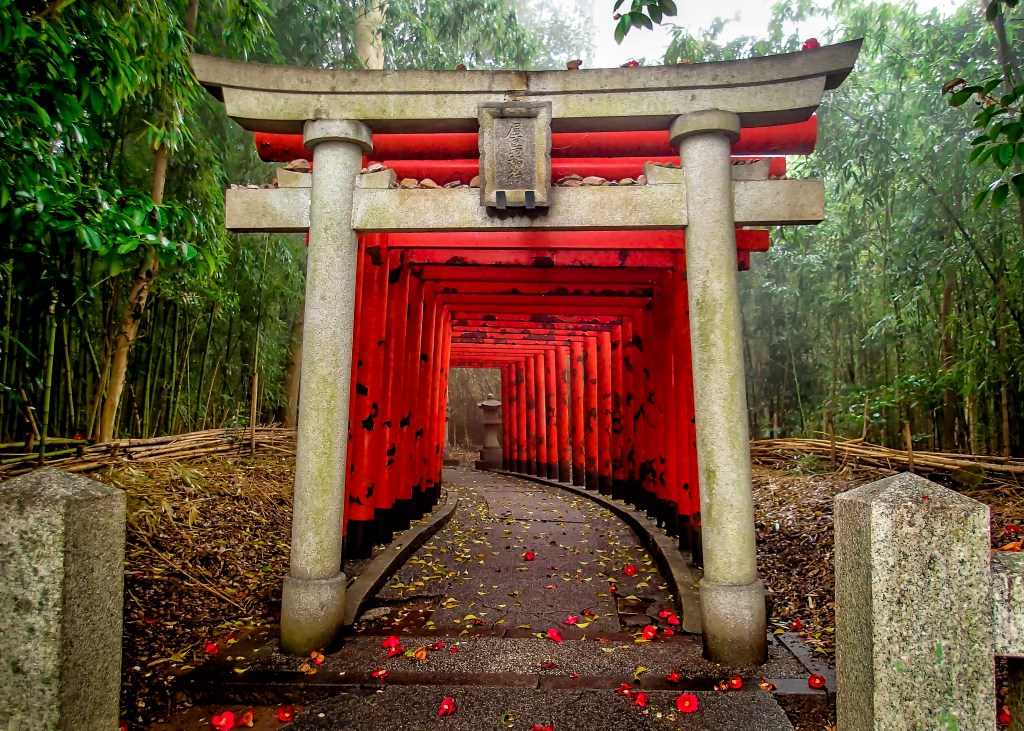
Just to the right of the main hall stands a small shrine with a row of torii and a large statue of a tanuki, and it is the reason many Japanese visitors come to Yashima at all. The deity is Yashima Tasaburo-danuki, the chief of the tanuki of Shikoku, a legendary animal said to have served the temple’s Kannon so well that it was enshrined as the local guardian. It is counted among the three most famous tanuki in Japan and is the model for the characters in the Studio Ghibli film Pom Poko. People come to pray for easy childbirth, matchmaking and family harmony, and the shrine is a couple of minutes from the main hall. Beyond it, at the back of the precinct, Yashima Inari is quieter and easy to miss, with a small path and a row of torii that most visitors walk past.
The treasure hall
The temple’s treasure hall holds objects connected to the 1185 battle, and it is the best short explanation of why this mountain matters. Among them are the mortar in which Benkei is said to have pounded rice cakes to celebrate the Minamoto victory, the white and red banners of the two clans, a folding screen of the Battle of Yashima, and materials donated by the descendants of Nasu no Yoichi, the archer whose arrow hit the fan. It is a small museum rather than a national collection, but the objects are exactly the ones the stories refer to, which makes it worth the 500 yen. It is open from 9:30 to 16:30, closes irregularly, and photography inside is not allowed. If you only have an hour on the plateau, this or the viewpoints are the choice to make.
Shishi no Reigan and the tile throwing
The Shishi no Reigan viewpoint sits beside the temple, and it looks straight down over Takamatsu harbour and the islands of the Seto Inland Sea. The name refers to a rock shaped like a lion, and the legend attached to it says Ganjin waved his fan to hold back the setting sun so that the temple could be finished in a single day. Around the viewpoint, unglazed roof tiles are sold, and visitors throw them out over the drop while making a wish for luck or the averting of misfortune. It is a small, cheerful ritual that costs almost nothing and takes a minute. The view is at its best in clear morning light, when the islands are distinct and the city below is still hazy.
Dankorei and the northern viewpoints
Dankorei is the viewpoint on the northern side, reached by a walk of a few minutes from the car park along the path towards the northern ridge, and it looks over the water where the battle was fought, with Shodoshima and the Gokenzan peaks beyond. It was named in 1897 by a Buddhist nun who climbed the mountain and named it in memory of the warriors on both sides. The northern plateau also has a viewpoint called Yuzurutei and a walking course across the flat top that takes in the old battlefield earthworks, and the whole circuit on foot is gentle, mostly level and about two kilometres. Because the plateau is flat and the paths are paved or gravelled, this is one of the more accessible viewpoints in the region, though the drop beyond the railings is real and children need watching.
Yashima Skyway and the drive up
The road up, the Yashima Skyway, is a toll drive with a gate near the base, and it is the alternative to the shuttle bus for anyone with a car. The climb is short and the views open quickly, and there is a paid car park on top, 300 yen for a normal car, 200 for a motorcycle and 1,200 for a bus, open from 6:30 to 22:00 except on New Year’s Eve and New Year’s Day when the hours change. Walking up from Kotoden Yashima Station along the skyway takes about an hour and is a pleasant climb for anyone who wants the exercise, though the road has traffic and no pavement for stretches. The plateau also has the New Yashima Aquarium, one of the few aquariums in Japan built on a mountain top, which is a reasonable wet-weather option with children.
Food and drink
- Iidako, the small octopus caught in the Seto Inland Sea, is the local speciality and appears in oden at the shops near the temple and in udon at the drive-in restaurant beside the shuttle bus stop. It is small, firm and sweet rather than chewy.
- Iidako udon, small octopus on top of a bowl of Sanuki udon, is sold at the restaurant run by the Yashima Skyway near the shuttle bus stop and car park, in a limited daily quantity. It is a novelty but a good one, and the udon itself is the real Kagawa article.
- Sanuki udon is the regional dish throughout Kagawa, and Takamatsu has one of the highest concentrations of udon shops in Japan. Eating a bowl before or after Yashima is more or less obligatory.
- The shops near Yashima-ji sell snacks and drinks for pilgrims and day visitors, including oden and soft serve. They are simple and inexpensive and close in the late afternoon.
- For a proper meal, come down into Takamatsu, where the choice is far wider: udon, seafood from the Seto, and the city’s own chicken-on-the-bone style.
- Note that the plateau has few restaurants and they keep short hours, so plan lunch either on the mountain at the drive-in or back in the city rather than expecting a choice at three in the afternoon.
Getting there and around
- The shuttle bus runs from JR Yashima Station, Kotoden Yashima Station and the Shikoku Mura museum up to the plateau, taking ten to eighteen minutes. It is the standard way up and accepts IruCa and standard transport IC cards.
- A direct bus from Takamatsu Station to the plateau started in July 2026 and runs during the summer and New Year holiday periods, which removes the need to change at Yashima Station at those times.
- From Takamatsu Station, take the Kotoden Kotohira line to Kotoden Yashima Station, a short ride, then the shuttle bus. The train and bus combination is the simplest route without a car.
- By car, the plateau is about 20 minutes from central Takamatsu via the Yashima Skyway, about 30 minutes from the Takamatsu-Chuo interchange. Parking on top costs 300 yen for a normal car.
- Walking up from Kotoden Yashima Station along the skyway takes about an hour. It is a real climb on a road with traffic, so it suits people who want the exercise rather than a shortcut.
- On the plateau, everything is walkable: the temple, the two main viewpoints, the car park and the shops are within a few minutes of each other, and the circuit across the northern ridge is about two kilometres.
- Evening buses run on selected dates rather than every night, so check the timetable if you want the plateau after dark, and note that the last shuttle back leaves well before the car park closes.
Where to stay
- Almost everyone visits Yashima from Takamatsu, which is 20 minutes away and has the widest range of hotels, from business hotels near the station to larger city hotels and a few ryokan.
- There is very little accommodation on the plateau itself, and none of it is aimed at tourists wanting a view. Staying on the mountain is not part of how this place works.
- Takamatsu’s covered shopping arcades and udon shops make it a comfortable base for two or three nights while covering Yashima, Ritsurin Garden, Shikoku Mura and the islands.
- For pilgrims walking the 88-temple circuit, Yashima-ji is temple 84 and most walkers stay in Takamatsu rather than on the mountain, taking the bus up and resuming on foot from the base.
Best time to visit
- Spring is the most comfortable season, with mild weather and clear views across the Seto. Cherry blossom on the plateau is brief but the walking is at its best.
- Summer is hot and humid, and the plateau has little shade on the paved areas; the sea views are hazy in the middle of the day, so early morning is worth the effort.
- Autumn brings clear air, which matters more here than foliage: the views across the islands are sharpest from October, and the walk along the northern ridge is pleasant.
- Winter is cold and windy on an exposed plateau, and the views can be superb on clear days, but the shrine and viewpoints are bleak in rain. The shuttle runs all year apart from the evening extras.
- Yashima is also a New Year destination for the shrine and the temple, so the first few days of January are busy and the car park hours change.
Practical tips
- Take the shuttle bus rather than driving if you are staying in Takamatsu. The bus is cheap, frequent enough and drops you at the centre of the plateau.
- Bring cash for the 300-yen car park, the 500-yen treasure hall, the tiles at the viewpoint and the snack shops. Not everywhere on the mountain takes cards.
- Check the treasure hall’s opening day before planning around it. It closes irregularly, and a closed hall changes the shape of a visit.
- The temple’s seal office is open from 7:00 to 17:00 and the precinct is open all day. If you want a quiet visit, come early, before the shuttle brings the day-trippers up.
- Do the viewpoint tiles and the temple in the same stop; they are metres apart, and the ritual is a two-minute thing rather than a separate attraction.
- Walk the northern ridge if you have an extra hour. The battlefield earthworks and the Dankorei view are the part of Yashima that most day visitors skip.
- Wear shoes for walking and hold on to small children at the railings. The plateau ends in a cliff, and the viewpoints are unfenced in places.
- Combine it with Shikoku Mura at the base of the mountain, which is on the shuttle route and covers the region’s old buildings in an open-air museum.
Suggested day-trip outline
- Morning: Kotoden from Takamatsu to Kotoden Yashima Station, shuttle bus up, and straight to Yashima-ji before the crowds, with the main hall and Minoyama Daimyojin.
- Late morning: the treasure hall, then the Shishi no Reigan viewpoint and a throw of the tiles over the harbour.
- Lunch: iidako udon or oden at the drive-in near the bus stop, or back down in Takamatsu for proper Sanuki udon.
- Afternoon: walk the northern ridge to Dankorei for the battle site view, then return to the car park and take the shuttle down.
- Optional: Shikoku Mura at the base of the mountain on the way back, which takes another hour or two.
Before you go
Timetables, fares, admission fees, and seasonal access rules can change. Check the official tourism and transport sites linked below for the latest information before you travel.
Explore More of Japan
Published guides that pair with this one:
- Takamatsu Travel Guide: Ritsurin Garden, Udon, and Seto Sea Gateways
- Shikokumura Open-Air Architecture Museum Travel Guide: Highlights, Access, and Planning
- Kotohira Travel Guide: Konpira Shrine Stairs and Shikoku Pilgrim Town
- Naoshima Travel Guide: Art Islands, Museums, and the Seto Inland Sea
- Kotohiki Park Travel Guide: Kagawa’s Sand Coin and Coastal View
- Cape Ashizuri Guide: Kochi’s Southern Tip
- Marugame Castle Travel Guide: An Original Keep on a High Stone Wall
- Shodoshima Travel Guide: Olive Groves, Coast Roads, and a Seto Inland Sea Ferry
- Kochi Sunday Market Travel Guide: 300 Years of Street Food and Produce
Browse every Shikoku guide on this site for the rest of the region.
Sources
- my-kagawa.jp (checked 2026-11-05)
- kotoden.co.jp (checked 2026-11-05)
- shikoku-tourism.com (checked 2026-11-05)


Leave a Reply