Plan a visit to Cape Erimo in southern Hokkaido for the wind museum, the seal colony, the lighthouse, and the coastal road, with access and seasonal notes.
Operational details such as opening hours, admission fees, and train times can change. Prefer official pages and reconfirm before you travel (sources checked on 03 November 2026).
Why visit
- Cape Erimo is the point where the Hidaka Mountains, the spine of Hokkaido, run out of height and sink into the Pacific. The town describes the view as watching the range descend into the sea, and that is literally what you see: ridges falling away to the south, a lighthouse on the last grass headland, and nothing beyond it. It is a landscape with a clear end point rather than a scenic overlook, and that is the reason to drive this far.
- The cape is also a geological oddity. The rocky shelf that runs out from the point continues for about two kilometres offshore, and the town’s own material notes that it carries on for another six kilometres underwater. The Erimo Seamount, some 185 kilometres to the south-east, rises about 4,200 metres from the ocean floor and still has its summit 3,735 metres below the surface, which is a useful reminder that what you are standing on is the top of something much larger.
- Wind is the other subject, and it is not a joke. Erimo records more than 260 days a year with winds of 10 metres per second or more, and days above 30 metres per second are not rare. The town has built its identity around this: the cape’s museum is called the House of Wind, it is shaped like the vortex that wind makes when it passes an obstacle, and it lets you stand in a 25 metre per second gale indoors. If you visit on a calm day you have been lucky rather than typical.
- The wildlife is the part most visitors do not expect. The reefs off the cape are the largest habitat in Japan for the spotted seal, and because the water is too dangerous for small boats, the seals use it undisturbed. You do not need a boat: the House of Wind has telescopes and a live camera aimed at the rocks, and on a normal day you can watch seals hauled out and sunning themselves from inside a warm building while the wind tries to take the roof off.
- The location has a cultural layer that is easy to miss. In August 2010 the cape was designated a national Place of Scenic Beauty under the Ainu name Pirika Noka, recognising it as a spiritually important site, and the two song monuments by the observation point commemorate the two different Japanese songs both called Erimo Misaki. It is one of the few places where you can see two monuments to two unrelated songs with the same name standing side by side.
Top places and highlights
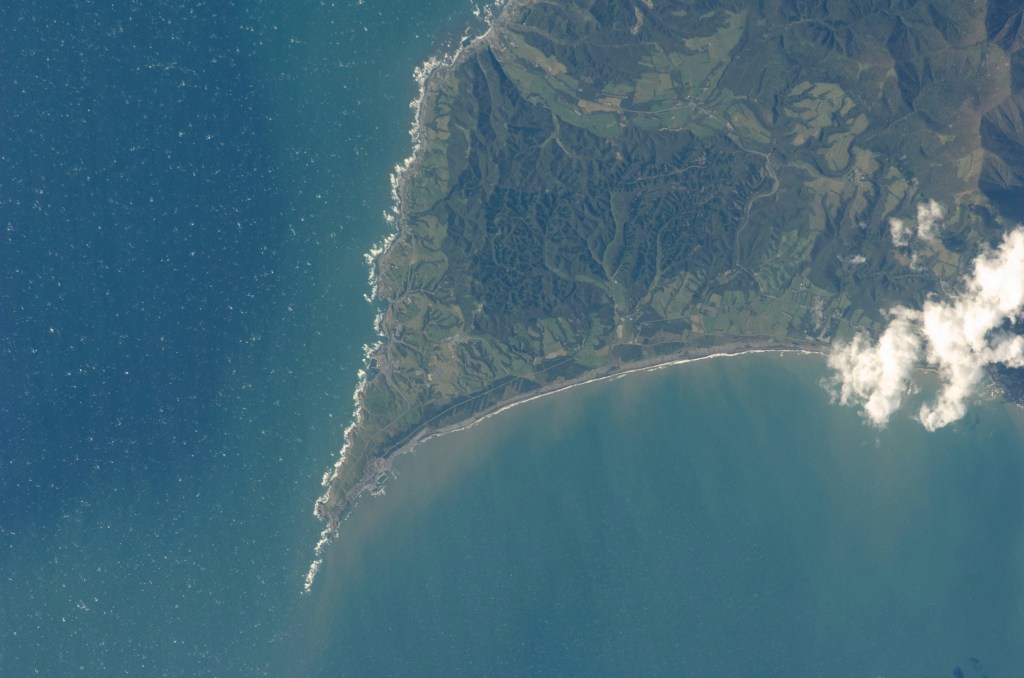
The headland and the lighthouse
The cape’s lighthouse is a white tower of 13.7 metres, standing at 73.3 metres above sea level, first lit in June 1889 and rebuilt in February 1950 after being destroyed by bombing in 1945. It carries a third-order Fresnel lens with a luminous intensity of 720,000 candela and a range of 22.5 nautical miles, about 41 kilometres, and it is on the list of Japan’s 50 selected lighthouses. The reason it is so powerful is the sea fog, which occurs on around 100 days a year where the warm and cold currents meet.
The House of Wind and its 25 metre wind
The House of Wind is the cape’s museum and the reason a windy headland has an indoor attraction. Its most popular corner is a wind tunnel where you experience a 25 metre per second gale in full, and the building itself is designed around the Karman vortex, the pattern wind makes as it passes an obstruction. It is built partly into the ground so that it does not block the lighthouse light, which is a detail worth noticing as you approach.
Watching spotted seals from indoors
The reefs below the cape are Japan’s largest habitat for the spotted seal, and the museum provides telescopes and a live camera so you can watch them without going near the water. The observation room is glazed and warm, which matters in a place with this much wind, and the seals are usually visible on the rocks when the sea is not too rough. This is the closest thing to a guarantee at the cape: the wind is certain and the seals are frequent.
The two Erimo Misaki song monuments
Beside the observation point stand two monuments to two different songs, both titled Erimo Misaki. The first was erected in 1971 to mark the town’s change of name and commemorates the song recorded by Shimakura Chiyoko; the second was put up in 1997 when Mori Shinichi visited for the opening of the House of Wind. Two unrelated songs with one title, each with its own stone, is an oddity you will not see elsewhere, and it takes a moment to work out what you are looking at.
The coastal approach road
The drive along the coast from Samani or from Hiroo is part of the visit rather than transport. The road runs between the sea and the mountains, with long straight sections and almost no buildings, and the landscape changes from cliffs to grassland as you come south. It is also the reason the cape feels remote: the distances look short on a map and take far longer than you expect, and there is very little between the towns.
Pirika Noka and the Ainu significance
The cape was designated a national Place of Scenic Beauty in August 2010 as Pirika Noka, in recognition of its importance as a spiritually and culturally significant site for the Ainu. That designation is not just a plaque: it frames the headland as a sacred landscape rather than a viewpoint, which changes how you read the place once you know it. It is one of the few scenic designations in Hokkaido made explicitly on cultural rather than purely aesthetic grounds.
Food and drink
- Erimo is a fishing town, and the useful food here is seafood rather than destination dining: the konbu that the cold current produces, and the seasonal catch landed at Erimo and Samani. The restaurants are few and clustered around the town centre and the cape, with hours that follow the sightseeing season rather than the clock.
- Near the cape, the House of Wind has a shop rather than a restaurant, and the eating options are limited to a small number of places that open for the season. Count on a simple meal rather than a choice, and treat lunch as something to plan around rather than something to discover on arrival.
- Samani, about 40 minutes north along the coast, has more options and is the natural place to eat before or after the cape. It is also where the JR Hokkaido bus from Samani Station to the cape starts, so a meal there fits the transport rather than competing with it.
- Obihiro, about two hours inland, is the serious food destination of the region and the place to eat properly before or after the drive. The town is known for its pork and its sweets, and it is the sensible base if you are visiting the cape as a day trip rather than staying on the coast.
Getting there and around
- By car, the distances are the plan. Sapporo is about 235 kilometres and roughly four hours using the expressway, or four and a half on ordinary roads; New Chitose Airport is about 200 kilometres and three and a half hours; Tomakomai about 180 kilometres and three hours; Obihiro about 130 kilometres and two hours; Kushiro about 180 kilometres and three and a half hours. The last stretch is a coastal road with few services.
- Public transport exists but requires commitment. The JR Hokkaido highway bus Erimo-go runs between Sapporo Station and Erimo in about four hours, leaving Sapporo at 16:30 and arriving at 20:30, with the return leaving Erimo at 5:30 and reaching Sapporo at 9:30, and it must be reserved by the day before. From Erimo town, a local bus reaches the cape in about 20 minutes.
- The other rail-and-bus route goes via Tomakomai: a limited express from Sapporo takes 58 minutes, the Tomamo-go highway bus from Tomakomai Station to Erimo takes three hours 50 minutes, leaving at 14:00 and arriving at 17:50, reserved by the previous day, and the cape is 20 minutes further by local bus. From Urakawa, the Pegasus highway bus from Sapporo takes about three hours, a JR Hokkaido bus covers Urakawa to Samani in 30 minutes, and Samani to the cape is one hour.
- From Obihiro the route is by bus: the Tokachi bus to Hiroo takes about two hours, and the JR Hokkaido bus from Hiroo to the cape takes another hour. None of these connections is frequent, and several require a reservation, so the cape is realistically a car trip or a carefully planned overnight rather than a casual day out by public transport.
- The one local service worth knowing is the bus from Erimo town to the cape, about 20 minutes, which is what makes the highway bus routes work at all. Without it the highway buses leave you in the town with another 20 minutes of nothing between you and the lighthouse.
Where to stay
- Erimo town has a small number of inns and guesthouses, and staying here is the only way to see the cape in early morning or late evening light without a long drive in the dark. The town is functional rather than charming, and the appeal is proximity to the cape and the quiet.
- Samani, about 40 minutes north, has more accommodation and is a sensible base for the coast, with the cape as a half-day excursion and the cliffs and the station area as the rest of the day. It is also on the bus route, which matters if you are not driving.
- Obihiro is the comfortable base for the region, two hours away, with the full range of hotels and restaurants. It turns the cape into a long day trip rather than a stay, and for most travellers coming from Sapporo or the airport this is the realistic arrangement.
Best time to visit
- The House of Wind is open from March to November and closed from December to February, with one exception: it opens from 5:00 to 8:00 on 1 January for the first sunrise of the year. That single opening is the town’s own tradition, and it tells you what the winter here is like, since the building is otherwise shut for a quarter of the year.
- Summer, from May to August, is the long-hours season, with the museum open until 18:00 and the coast at its most accessible. It is also when the sea fog is common, so a clear view of the cape is not guaranteed even in the best month, and the wind does not take a summer holiday.
- March, April, September, October and November run shorter hours, closing at 17:00 with last entry at 16:30, and autumn is the strongest season for the drive: the grass turns, the light is low and long, and the Pacific is at its most dramatic. November is also when the first snow can arrive on the pass roads inland.
- Winter is closed at the museum and the cape is a serious proposition, with snow, ice and winds that regularly exceed what most coastal roads see. The reward is the place entirely to yourself, and the risk is that the roads and the facilities do not cooperate. Anyone attempting it should check conditions the same day rather than the week before.
Practical tips
- Check the House of Wind calendar before you go. It is open March to November only, with hours of 9:00 to 18:00 from May to August and 9:00 to 17:00 in March, April, September, October and November, last entry 30 minutes before closing. In December, January and February it is closed apart from 5:00 to 8:00 on 1 January.
- Admission is modest and worth it. Adults and university students pay 300 yen, school students 200 yen, preschool children are free, and there is an annual pass at 600 yen and 400 yen. Visitors with a disability certificate at grades 1 to 3 enter free, though a companion pays.
- Do not plan to see the seals from the shore. The reefs are dangerous and the point of the museum’s telescopes and live camera is that you do not need to go near the water. Use the indoor observation room, which is also the only sane place to be when the wind is at 25 metres per second.
- Treat the drive as the main event and the cape as the destination. The coastal road from Samani or Hiroo has almost no services, and the distances take longer than the map suggests. Fill the tank before the last stretch and carry food, because the shops near the cape keep seasonal hours.
- Book the highway bus in advance if you are not driving. The Erimo-go requires a reservation by the previous day and runs once each way, with the Sapporo departure at 16:30 and the return at 5:30, which makes it an overnight trip rather than a day return. The Tomamo-go route via Tomakomai is the same story.
- Expect fog and wind at any time of year. The cape sees sea fog on around 100 days a year and winds over 10 metres per second on more than 260 days, so a clear, still day is a gift rather than a baseline. Build the trip so that a white-out is a disappointment rather than a disaster, and have the museum as the fallback.
- Notice the design of the building. The House of Wind is sunk into the ground so that it does not block the lighthouse beam, and its plan follows the Karman vortex, the pattern wind makes around an obstacle. It is a small thing that makes the architecture legible, and it explains why the entrance corridor curves the way it does.
Suggested day-trip outline
- Drive south from Sapporo or Obihiro along the coast, aiming to reach the cape before mid-morning. The coastal approach from Samani or Hiroo is the scenic half of the trip, and the light on the water is best before the afternoon wind builds.
- Start at the House of Wind for the wind tunnel and the indoor observation room, and use the telescopes and the live camera to find the spotted seals on the rocks. Check the day’s wind speed on the display, because the museum’s whole argument is that the number here is not a novelty.
- Walk out to the headland and the lighthouse, and find the two Erimo Misaki song monuments beside the observation point. This is the part that needs no ticket, and it is also where the wind is at its most physical.
- Eat in Erimo town or drive north to Samani for a later lunch, then continue up the coast rather than turning inland immediately. The road between the cape and Samani is the section worth taking slowly, and it is where the landscape reads most clearly as mountains falling into the sea.
- If you are staying, come back to the cape for sunset, which is when the headland is at its best and the wind has usually dropped slightly. If you are returning to Sapporo or Obihiro, leave with enough daylight for the drive, because the coastal road has no lighting and few services after dark.
Before you go
Timetables, fares, admission fees, and seasonal access rules can change. Check the official tourism and transport sites linked below for the latest information before you travel.
Explore More of Japan
Published guides that pair with this one:
- Sapporo Travel Guide: Food, Parks, and a Hokkaido Base
- Hakodate Travel Guide: Night Views, Morning Market, and Southern Hokkaido
- Obihiro Guide: Pork Bowls and the Tokachi Plain
- Kushiro Marsh Guide: Japan’s Largest Wetland and Its Cranes
- Lake Shikotsu Travel Guide: Highlights, Access, and Planning
- Nikka Whisky Yoichi Distillery Travel Guide: Highlights, Access, and Planning
- Sapporo Beer Museum Travel Guide: Highlights, Access, and Planning
- Lake Mashu and Lake Kussharo Guide: Akan-Mashu National Park
- Shiraoi and Upopoy Guide: Ainu Heritage on Hokkaido’s South Coast
- Sapporo Snow Festival Guide: Three Sites in February
Browse every Hokkaido guide on this site for the rest of the region.
Sources
- town.erimo.lg.jp (checked 2026-11-03)
- town.erimo.lg.jp (checked 2026-11-03)
- town.erimo.lg.jp (checked 2026-11-03)
- town.erimo.lg.jp (checked 2026-11-03)


Leave a Reply