Plan a visit to Matsumae in southern Hokkaido for the castle, the cherry blossom and the town’s history, with access notes.
Operational details such as opening hours, admission fees, and train times can change. Prefer official pages and reconfirm before you travel (sources checked on 03 November 2026).
Why visit
- Matsumae is the northernmost castle town in Japan, at the tip of the southern Hokkaido peninsula facing the Tsugaru Strait, and it was for two and a half centuries the only place in Hokkaido where a Japanese domain governed. The Matsumae clan held the right to trade with the Ainu and with the continent, and the town that grew around their castle was, at the end of the Edo period, said to have 8,000 households and 30,000 people, making it the largest city north of Sendai. That history is the reason a small town at the end of a long peninsula has a castle, a temple district and a museum.
- The castle is a reconstruction rather than an original, but the site is the real thing and the story is unusually specific. The original donjon was built in 1601, burned in 1637, rebuilt in 1642, and finally destroyed by fire in 1949; the present tower was rebuilt in 1960 and now holds the Matsumae Castle Museum. Knowing that sequence changes what you are looking at, and the museum’s collection of armour, documents and household goods is what carries the history rather than the building.
- The cherry blossom is the other reason people come, and it is not an exaggeration to call it the best in Hokkaido. The park holds around 250 varieties and 10,000 trees, which is a collection rather than a grove: because Matsumae is one of the northern limits for cherries, the town has spent decades assembling varieties from across Japan to see which will grow, and the result is a flowering season that runs from late April into late May as different varieties open in sequence. There is a cherry specimen garden in the park that functions as a living catalogue.
- The town also has a serious temple district. The Matsumae clan moved the temples of their domain here, and the streets behind the castle hold a concentration of Buddhist temples of different sects, several with graves of the Matsumae lords, that is disproportionate to the size of the town. Walking them is free and quiet, and it explains how a frontier domain organised itself: the castle, the temples, the merchant streets and the port, all in a few blocks.
- The practical point is that Matsumae is far. It is about 90 minutes by bus from Kikonai, which is itself on the Shinkansen from Tokyo, and the drive from Hakodate is around two hours. That distance is the filter: the town is not on the way to anywhere, and the people who come have decided to come. The reward is a place that has not been rebuilt around tourism, with free parking, modest admission charges and a festival that is still run by the town rather than for it.
Top places and highlights
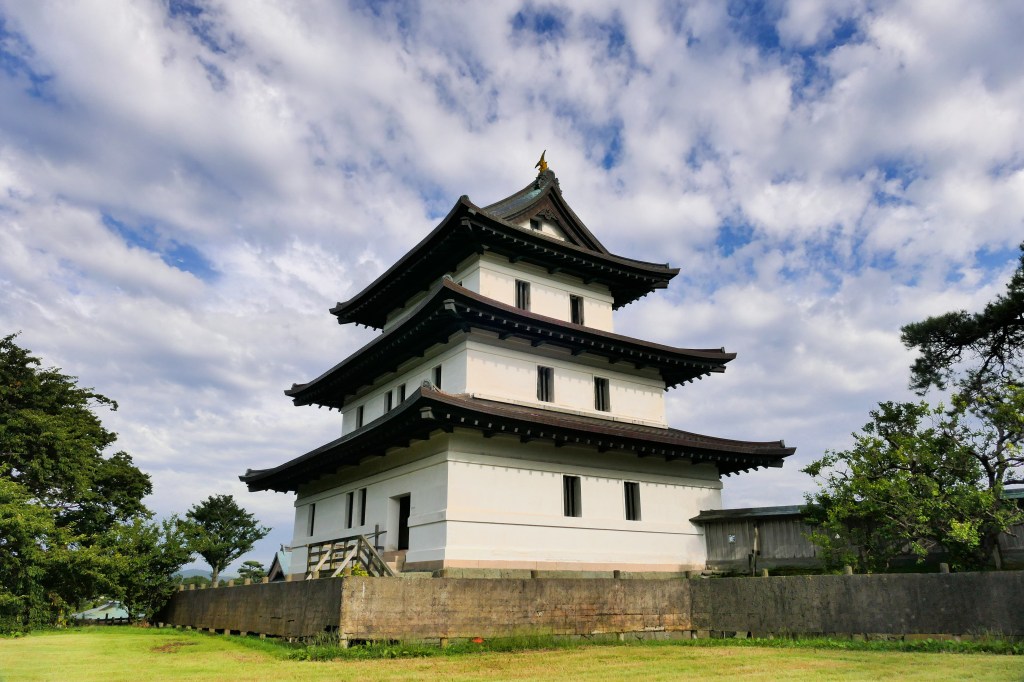
Matsumae Castle and its museum
The present donjon dates from 1960 and is a reconstruction of the 1642 tower, which burned in 1949, but it stands on the original castle grounds and holds the Matsumae Castle Museum. The collection covers the clan’s armour, documents and daily life, and it is the place to understand how a frontier domain that controlled trade with the Ainu and the continent actually operated. The museum is open from 10 April to 10 December, 9:00 to 17:00 with last entry at 16:30, and it closes entirely for the winter.
The cherry collection
Matsumae Park holds around 250 varieties and 10,000 cherry trees, which is a collection assembled over decades to test what will grow at the northern limit of the species. The result is a flowering season that starts in late April and runs into late May as early and late varieties open in turn, rather than a single week of bloom. The park has a cherry specimen garden and a second specimen garden, and walking them with the labels is the way to see why this place matters to Japanese horticulture.
The Sakura Matsuri and the light-up
The Sakura Matsuri is the town’s main event, and the 78th was held from 18 April to 10 May 2026 over 23 days, with vehicle restrictions, temporary car parks and evening illumination using LED lights made for cherry trees. The light-up runs from dusk to around 21:00 at spots including the Meoto-zakura and the Nanden square. Events on the main stage include local kagura and taiko, and the festival is the one time the town is genuinely busy.
The Matsumae clan temple district
Behind the castle, the streets hold a dense cluster of temples that the Matsumae clan brought together as the domain’s religious centre, several of them containing the graves of the lords. It is free, it is quiet even during the festival, and it is the part of Matsumae that most visitors walk past on the way to the cherry trees. The concentration of sects in a town this size is the clearest physical evidence of how the domain organised itself.
The Matsumae Hanyashiki
The Hanyashiki is a reconstruction of the domain’s Edo-period townscape, with 13 buildings including a magistrate’s office, a shrine, a merchant house and a guard post, arranged as a street rather than as separate exhibits. It runs armour-dressing and Matsumae-zuke pickling experiences, both paid and by reservation, with the pickling suspended during the cherry festival. It is open 9:00 to 17:00 with last entry at 16:30, 360 yen for adults and 240 for junior high and younger, and a combined ticket with the castle museum is better value.
The view over the Tsugaru Strait
The second park, on the high ground above the castle area, looks out over the whole town and across the Tsugaru Strait towards Aomori. On a clear day the Shimokita Peninsula is visible on the far side, which is a useful reminder of how narrow the strait is and why this particular headland mattered so much for trade and defence. It is a short walk uphill and the best free view in town.
The hydrangea waterway in July
In July the Hanyashiki puts hydrangea flowers into its water channels for an event that runs for about ten days, with the site open until 21:00 and lit in the evening on the opening and closing Saturdays. It is a small, local event rather than a national one, and it is the best reason to come outside the cherry season. The flowers are cut and floated rather than planted, which is the specific charm of it.
Food and drink
- Matsumae-zuke is the local food: squid, kelp and daikon pickled in soy and mirin, invented in this town and now sold across Japan. The Hanyashiki runs a pickling workshop by reservation, and the shops around the castle sell it in every variation, which makes it the one thing to buy rather than eat on the spot.
- The town’s restaurants are few and clustered near the castle and the port, and they keep the hours of a small seasonal destination rather than a city. During the cherry festival there are stalls and a food market, and outside it the choice narrows sharply, so a lunch plan is worth having before you arrive.
- Matsumae is a fishing town on the strait, so the seafood is the other local speciality, with squid and the strait’s catch at the centre of it. The port area has the working side of the town, and the sushi and seafood restaurants there are a better bet than anything aimed at the festival crowd.
- Hakodate, two hours away, is the serious food destination of the region, with the morning market and the seafood donburi that the city is known for. Most visitors treat Matsumae as a day trip from Hakodate rather than a place to eat seriously, and that is a fair division.
Getting there and around
- By public transport, take the JR Hokkaido Shinkansen to Kikonai, then the Hakodate bus towards Matsumae, which takes about 90 minutes to the Matsushiro bus stop, from which the park is about seven minutes on foot. This is the only rail-based route, and the bus frequency is limited, so the timetable decides the day.
- By car from Hakodate, the drive is around two hours along the southern peninsula, and from Kikonai it is shorter. The route follows the coast for much of the way, with the sea on one side and the hills on the other, and the last stretch into Matsumae passes through the town’s outskirts before reaching the castle.
- Parking at Matsumae Park is free, with 170 spaces, but it becomes paid during the cherry festival when the town also closes roads and opens temporary car parks. The festival period also shifts by about a week either side depending on the bloom, so the restrictions can start earlier or later than the published dates.
- On foot, the castle, the museum, the Hanyashiki, the temple district and the second park are all within a compact area, and the walk between them is the visit. The bus stop is at the edge of that area rather than in the middle, and the seven-minute walk in is uphill in places.
- There is no train station in Matsumae, and the nearest is Kikonai on the Shinkansen line. Anyone planning to arrive by rail should check the bus times before booking the train, because a missed bus means a taxi or a long wait in a small town.
Where to stay
- Matsumae has a small number of inns and guesthouses, and staying here is the way to see the cherry trees at the light-up and again at dawn without a two-hour drive in the dark. The accommodation is limited, so the festival period needs booking well ahead.
- Hakodate is the practical base for most visitors, two hours away, with the full range of hotels and the food and night views the city is known for. Matsumae becomes a long day trip, which suits most itineraries.
- Kikonai, at the Shinkansen station, is the alternative for anyone arriving from Tokyo and wanting to break the journey, with a few business hotels and an easy start on the bus in the morning. It is functional rather than scenic.
Best time to visit
- The cherry season from late April to late May is the reason the town exists as a destination, with around 250 varieties opening in sequence and the festival running for 23 days in 2026 from 18 April to 10 May. It is the only period when the town is crowded, the roads are restricted and the car parks are paid.
- July brings the hydrangea event at the Hanyashiki, with flowers floated in the water channels and evening opening on the first and last Saturdays. It is a quiet, local event, and the weather is warmer and greener than in spring.
- Summer and early autumn are the quietest seasons in terms of events, with the castle museum open until 10 December and the town largely to yourself. The strait is at its bluest in clear autumn weather, and the view from the second park is at its best.
- Winter closes the town’s main sights: the castle museum shuts from 11 December to 9 April, the Hanyashiki normally ends on 31 October apart from limited November openings, and snow can cancel even those. Matsumae in winter is a working town and a castle site under snow rather than a sightseeing destination.
Practical tips
- Check which buildings are open before you go. The castle museum runs only from 10 April to 10 December and is closed all winter, while the Hanyashiki normally ends on 31 October and then opens on selected dates in November, 10:00 to 15:00 with last entry at 14:30, without the combined ticket. The two do not always overlap, and a November visit can find one open and the other shut.
- Buy the combined ticket when both are open. The castle museum is 360 yen for adults and 240 for children, the Hanyashiki is the same, and the combined ticket is 620 and 420, which is a real saving for two sites a short walk apart. The combined ticket is not sold during the November limited opening.
- Come for the festival or accept that you will miss the blossom. The Sakura Matsuri in 2026 ran 18 April to 10 May, and the bloom moves by about a week either way, so the town treats the week before and after as a quasi-festival period with the same traffic restrictions. Booking accommodation for a specific week is a gamble that the town itself acknowledges.
- Use the bus times as the spine of the day. The bus from Kikonai takes about 90 minutes and does not run often, and the town is small enough that missing the last bus means a taxi to Hakodate or a night you did not plan. Check the return times before you set out from Kikonai.
- Walk the temple district. It is free, it is quiet even in festival week, and it holds the graves of the Matsumae lords and a concentration of sects that explains how the domain worked. Most visitors go straight from the car park to the cherry trees and never see it.
- Climb to the second park for the strait view. It is a short walk uphill from the castle area, it is free, and on a clear day the Shimokita Peninsula is visible across the water. It is the best explanation of why the town is where it is, and it takes ten minutes.
- Do not plan a winter visit around the sights. The museum is shut from 11 December to 9 April, the Hanyashiki is closed, and the town’s facilities follow the season. Winter here is for the landscape and the strait rather than for the castle and the cherry trees.
Suggested day-trip outline
- Take the Shinkansen to Kikonai and the Hakodate bus towards Matsumae, about 90 minutes, arriving at the Matsushiro stop and walking seven minutes into the park. If you are driving from Hakodate, leave early enough to arrive by mid-morning, because the castle museum’s last entry is 16:30 and the day fills quickly in festival week.
- Start with the castle and the Matsumae Castle Museum, which is the context for everything else: the clan, the trade with the Ainu and the continent, and the fires that destroyed the original towers. Give it an hour rather than twenty minutes, because the collection is the substance and the building is the reconstruction.
- Walk the temple district behind the castle, then the cherry specimen gardens if you are there in season. The order matters less than the walking, but doing the temples before the blossom means you see them without a crowd and understand the town’s layout before it fills.
- Go through the Matsumae Hanyashiki for the reconstructed street, the armour dressing or the pickling workshop, and buy the combined ticket if both sites are open. Eat near the castle or the port, keeping in mind that the town’s restaurants are few and close early.
- Finish at the second park for the view over the Tsugaru Strait, then take the bus back to Kikonai or drive to Hakodate. In cherry season, stay for the light-up from dusk to around 21:00 before leaving, since that is the one thing the day visitors miss.
Before you go
Timetables, fares, admission fees, and seasonal access rules can change. Check the official tourism and transport sites linked below for the latest information before you travel.
Explore More of Japan
Published guides that pair with this one:
- Hakodate Travel Guide: Night Views, Morning Market, and Southern Hokkaido
- Goryokaku Travel Guide: The Star Fort in Hakodate
- Otaru Travel Guide: Canal Warehouses, Seafood, and a Day Trip from Sapporo
- Sapporo Travel Guide: Food, Parks, and a Hokkaido Base
- Cape Erimo Travel Guide: Wind, Seals, and the End of the Hidaka Mountains
- Lake Shikotsu Travel Guide: Highlights, Access, and Planning
- Nikka Whisky Yoichi Distillery Travel Guide: Highlights, Access, and Planning
- Sapporo Beer Museum Travel Guide: Highlights, Access, and Planning
- Lake Mashu and Lake Kussharo Guide: Akan-Mashu National Park
- Shiraoi and Upopoy Guide: Ainu Heritage on Hokkaido’s South Coast
Browse every Hokkaido guide on this site for the rest of the region.
Sources
- travel-matsumae.jp (checked 2026-11-03)
- travel-matsumae.jp (checked 2026-11-03)
- travel-matsumae.jp (checked 2026-11-03)
- town.matsumae.hokkaido.jp (checked 2026-11-03)
- pref.hokkaido.lg.jp (checked 2026-11-03)


Leave a Reply