Plan a visit to Monbetsu on Hokkaido’s Okhotsk coast for drift ice, the Garinko icebreaker and the winter sea.
Operational details such as opening hours, admission fees, and train times can change. Prefer official pages and reconfirm before you travel (sources checked on 03 November 2026).
Why visit
- Drift ice is the reason to come to Monbetsu, and it is a phenomenon rather than a sight: each winter, ice that forms in the shallow, low-salinity surface water of the Sea of Okhotsk is pushed south by wind and current until it reaches the coast of Hokkaido. It arrives off Monbetsu usually from late January and stays into mid-March, with the peak in early February to early March. It is the southernmost drift ice in the northern hemisphere, and the town is one of the few places where you can go out into it.
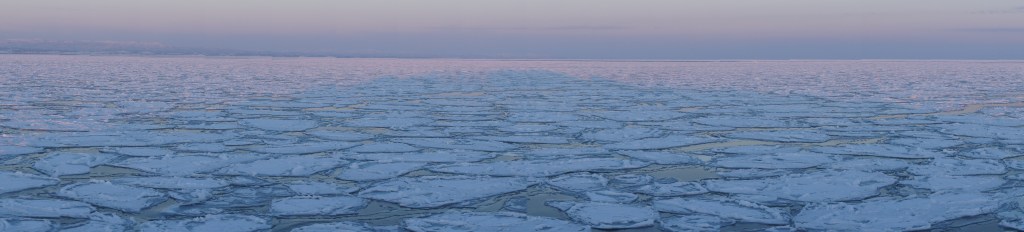
- The Garinko-go is the way to do that. It is an icebreaker with two large Archimedean screws at the stern that grind through the floes rather than pushing them aside, and the third vessel, the Garinko-go III IMERU, runs daily from 15 January to 31 March. The cruise is about an hour, and what you see is not a smooth white field but broken ice and open water in every shade from turquoise to deep blue, with the ice turning over beside the hull. It is loud, cold and unlike any other boat trip in Japan.
- The wildlife is the second draw and it is not guaranteed. Steller’s sea eagles and white-tailed eagles winter on the ice off the Okhotsk coast, seals haul out on the floes, and the boat sometimes passes them. The eagles are the reliable part of the winter coast and the seals are the luck. Anyone serious about them should also drive the coast road and the lakes, where the concentrations are higher than out at sea.
- The Okhotsk Tower is the other fixed attraction, and it is included with the cruise ticket for the day. It is the world’s first undersea observation tower built in a drift-ice sea, with windows below the waterline looking into the Okhotsk, a small aquarium of the local marine life, and a 360-degree observation deck on the third floor with a cafe. It is the thing to do while waiting for a sailing and the thing to do on a day when the boat is cancelled.
- The town itself is a working fishing port rather than a resort, and that is part of the appeal. Monbetsu is known for scallops and for the Okhotsk sea, and the winter streets are quiet and cold and honest. The food is the reward: scallops, crab, salmon and the local seafood bowls, and the harbour market where the boats land.
- The honest caveat is that the ice is weather. The operator says plainly that the drift ice is a natural phenomenon that comes and goes with wind and current, that it may not be there on the day you book, and that they will not refund a cruise where the ice was absent. The peak weeks give the best odds, the shoulder weeks are a gamble, and a storm can cancel a sailing with no notice beyond a line on the website.
Top places and highlights
The Garinko-go III IMERU
The icebreaker runs daily from 15 January to 31 March, with sailings at 10:00, 12:00, 14:00 and 16:00 in mid-January and a fuller timetable from 1 February that includes 8:45, 10:30, 12:30, 14:30 and 16:15. The crossing is about an hour and can be extended by up to 30 minutes if the ice is good. Adults pay 5,000 yen, children 2,500, and under-fives travel free but still count towards the capacity.
The ice itself
The screws at the stern break the floes and the fragments rise alongside the hull, and the colour of the water under the broken ice is the thing people remember: turquoise in the shallows, deep blue where it is clear, white where the ice is thick. The boat does not go looking for scenery, it goes looking for ice, and a sailing with heavy ice is the one to hope for. The operator is explicit that the ice may be absent on any given day.
The Okhotsk Tower
The tower is included with the cruise ticket on the day of sailing, and it is worth going up before the boat rather than after, since the building closes at 17:00 with last entry at 16:30 and the 16:00 and later sailings would miss it. The undersea level has observation windows into the Okhotsk and a small aquarium, and the third-floor deck is a 360-degree panorama with a cafe open 11:00 to 16:00.
The eagles
Steller’s sea eagles and white-tailed eagles winter along this coast, and the Okhotsk side of Hokkaido holds one of the densest winter populations in the world. They perch on the ice and on the harbour structures rather than flying past, and the coast road north and south of Monbetsu, and the lakes inland, are better for them than the boat. Bring binoculars and a long lens.
The New Year’s Day cruise
On 1 January the Garinko-go sails at 6:30 for about 45 minutes to meet the sunrise over the Okhotsk horizon, with a limited-edition stamp, a lottery on board and hot drinks, and it is capped at 110 passengers. Adults pay 7,800 yen and children 3,900, and the boat sails even if the sunrise is hidden by cloud, with no refund for a grey dawn. A shuttle runs from the Prince Hotel at 5:50 and back at 7:30, booked separately by phone.
The harbour and the scallops
Monbetsu is a scallop town, and the winter catch is landed at the port and sold in the market and the restaurants. The seafood bowls, the grilled scallops and the crab are the local food, and the harbour is a working place rather than a tourist one. Eating here after a cold hour on the water is the natural end to the day.
The Okhotsk coast road
The coast north towards Cape Nosappu and south towards Abashiri is one of the emptiest and most beautiful winter drives in Japan, with the sea on one side, the frozen fields on the other and almost no traffic. The drift ice can be seen from the shore at the right time of year, and the lakes behind the coast hold the eagles and the swans. It is the reason to have a car.
Food and drink
- Scallops are the town’s identity, and Monbetsu lands them in quantity through the winter. They are served raw, grilled, in bowls and in the local ramen, and the harbour market is where to eat them freshest.
- Crab, salmon and the other Okhotsk fish are the rest of the menu, and the seafood bowls of the port restaurants are the standard order. The town’s food is plain and generous rather than refined, which suits the weather.
- The Okhotsk salt and the local dairy are the take-home items, and the Hokkaido milk and ice cream are worth having even in winter. The scallop crackers and the dried fish are the practical gifts.
- There is a restaurant at the Okhotsk Tower with a view over the sea, and it is convenient before or after a sailing. The better eating is in the town, where the boats land and the prices are lower.
Getting there and around
- By air, the nearest airport is Memanbetsu, about an hour and a half by bus or car to Monbetsu, and Okhotsk Monbetsu Airport is closer with a limited number of flights. Most visitors come by car from Abashiri or via Asahikawa.
- By train, the Sekihoku Line runs from Asahikawa to Engaru and on to Abashiri, and Monbetsu has no station. The nearest stations are Engaru and Rubeshibe, both of which need a bus or a car for the last stretch, so the train is not the practical way here.
- By car, Monbetsu is about two hours from Abashiri, about three from Asahikawa and about four and a half from Sapporo. The roads are straight and open but snow-covered and icy in winter, and winter tyres are mandatory and four-wheel drive is advisable.
- The Garinko-go sails from the Marine Exchange Centre at the port, where boarding reception opens 60 minutes before departure and closes 30 minutes before, and boarding itself closes 10 minutes before. The ticket counter is in the same building.
- The Okhotsk Tower is open 10:00 to 17:00 with last entry at 16:30, the cafe on the third floor 11:00 to 16:00, and the tower is included with a cruise ticket on the day. The building and the boat are next to each other at the port.
Where to stay
- Monbetsu has business hotels and a few larger hotels near the port and the centre, including the Prince Hotel, which runs a shuttle to the New Year’s Day cruise. The town is small and the hotels are functional rather than luxurious.
- Abashiri, two hours away, has more hotels, the drift ice museum and its own icebreaker, and it is the larger base for the Okhotsk coast. The two towns can be combined in a winter loop.
- Asahikawa and Sapporo are the gateway cities, and staying there makes Monbetsu a long day trip or an overnight. In winter the drive from Asahikawa takes about three hours and should not be done in the dark.
Best time to visit
- The drift ice season runs from late January to mid-March, with the peak in early February to early March. That is the window for the cruise, and outside it the boat runs summer scallop cruises instead.
- January is cold and the ice is arriving, and the New Year’s Day cruise on 1 January is a separate event that does not depend on the ice being present. The days are short and the light is low.
- February and early March are the best odds for heavy ice and the most reliable weeks for the eagles, and they are also the coldest. The sailing timetable is at its fullest from 1 February.
- Summer is a different town, with the scallop fishing cruises, green hills and long days, and the Okhotsk Tower still open. It is pleasant and it has nothing to do with the reason the place is famous.
Practical tips
- Book for February if you can choose. The ice arrives around late January, the peak is early February to early March, and the shoulder weeks are a gamble. The operator does not refund a cruise on which the ice was not visible, and that condition is stated before you pay.
- Arrive early at the ticket counter. Reception opens 60 minutes before departure and closes 30 minutes before, and boarding closes 10 minutes before. The 10:00 sailing is the popular one and the port fills.
- Go up the Okhotsk Tower before your cruise, not after. It closes at 17:00 with last entry at 16:30, and the 16:00 or later sailings would leave you no time. The ticket is included on the day.
- Dress for the wind, not the temperature. The deck is open and the boat is moving, and the effective temperature on the water is far below the town’s. Boots with grip, a windproof outer layer, gloves and a hat are the difference between enjoying an hour and enduring it.
- Check the sailing status on the website on the morning. The company does not contact passengers individually about cancellations, and a sailing is cancelled if fewer than 15 adults book or if the weather turns. The information is posted on their site.
- Do not plan the trip around a single sailing. Schedule a spare day or book the earlier slot, because a cancellation for weather is common in winter and the refund is straightforward but the itinerary is not.
- Bring binoculars for the eagles. The birds are on the ice and on the harbour structures, and the coast road and the lakes are better than the boat for seeing them. A long lens is the photographic equivalent.
Suggested day-trip outline
- Drive to Monbetsu from Abashiri or Asahikawa, allowing for snow and ice, and stay the night before so the morning sailing is not a gamble on the road. Eat scallops in the town in the evening.
- Go to the port in the morning and check in at the Marine Exchange Centre an hour before the 10:00 sailing. Go up the Okhotsk Tower first, since the ticket is included and the undersea windows and the panorama deck take about 40 minutes.
- Board the Garinko-go for the hour-long cruise into the ice. Stay on the open deck for the light and the colour, and come inside when the cold wins. Watch for seals on the floes and eagles overhead.
- Eat a seafood bowl at the harbour market, then drive the coast road north or south for the eagles and the shore ice. In the late afternoon the low sun on the ice is the best light of the day.
- Stay a second night if the ice was light on the first day and try another sailing, or drive on to Abashiri for the drift ice museum and the northern coast. On 1 January, the sunrise cruise leaves at 6:30 and the rest of the day is free.
Before you go
Timetables, fares, admission fees, and seasonal access rules can change. Check the official tourism and transport sites linked below for the latest information before you travel.
Explore More of Japan
Published guides that pair with this one:
- Abashiri Drift Ice Travel Guide: Winter on the Okhotsk Coast
- Shiretoko Travel Guide: UNESCO Wilderness at the Edge of Hokkaido
- Asahikawa Travel Guide: Zoo, Ramen, and a Base for Central Hokkaido
- Sounkyo Gorge Travel Guide: Waterfalls, Kurodake and Daisetsuzan
- Lake Mashu and Lake Kussharo Guide: Akan-Mashu National Park
- Cape Erimo Travel Guide: Wind, Seals, and the End of the Hidaka Mountains
- Lake Shikotsu Travel Guide: Highlights, Access, and Planning
- Matsumae Castle Travel Guide: Hokkaido’s Southern History Town
- Nemuro and Cape Nosappu Travel Guide: Japan’s Eastern Edge
- Nikka Whisky Yoichi Distillery Travel Guide: Highlights, Access, and Planning
Browse every Hokkaido guide on this site for the rest of the region.
Sources
- o-tower.co.jp (checked 2026-11-03)
- o-tower.co.jp — FAQ (checked 2026-11-03)
- booking.o-tower.co.jp (checked 2026-11-03)
- mombetsu.net (checked 2026-11-03)


Leave a Reply